








býv.vodný mlyn Electric mill
The former electric mill, located in the village Plavecký Peter in Trnava region, is a national cultural monument of Slovakia. According to data from the Central Record of Memorials and Colorful Monuments (ÚZPF) with the number 215-10651 it is a mill electric, which dates back to the turn of the 19th and 20th centuries. Architecturally takes place within the folk architecture.
The area of the monument consists of a single object: an electric mill, which is designed as a brick-combined building. This type of construction and its period of creation are evidence of technological progress from the turn of the century.
In terms of building characteristics, data on available, flooring, floor plan and material used are not included in the available information. These details remain unknown aspects of this monument.
The monument is located at No. 98 in the village Plavecký Peter, Trnavský kraj. It is protected as a national cultural monument, but the specific date of the declaration and information on the conservation bands or protection zones are not included in the available data. The current state and current use of this monument also unknown.
This electric mill is an important part of the cultural heritage of the village Plavecký Peter, where it is located. Its history and technological aspects represent an example of the breakthrough period in the electrification and mechanisation of millery. Visiting this monument offers a unique view of technological progress from the time traditional natural energy began to modernise.
This mill is an important part of the cultural heritage of the village Plavecký Peter and offers visitors a view of technical progress from the turn of the 19th and 20th centuries. His visit is a challenge for anyone who wants to immerse in the history of milling and electrification in Slovakia.
Tehdy a dnes
Drag the slider and compare how the monument might have looked when it was built with the view today.

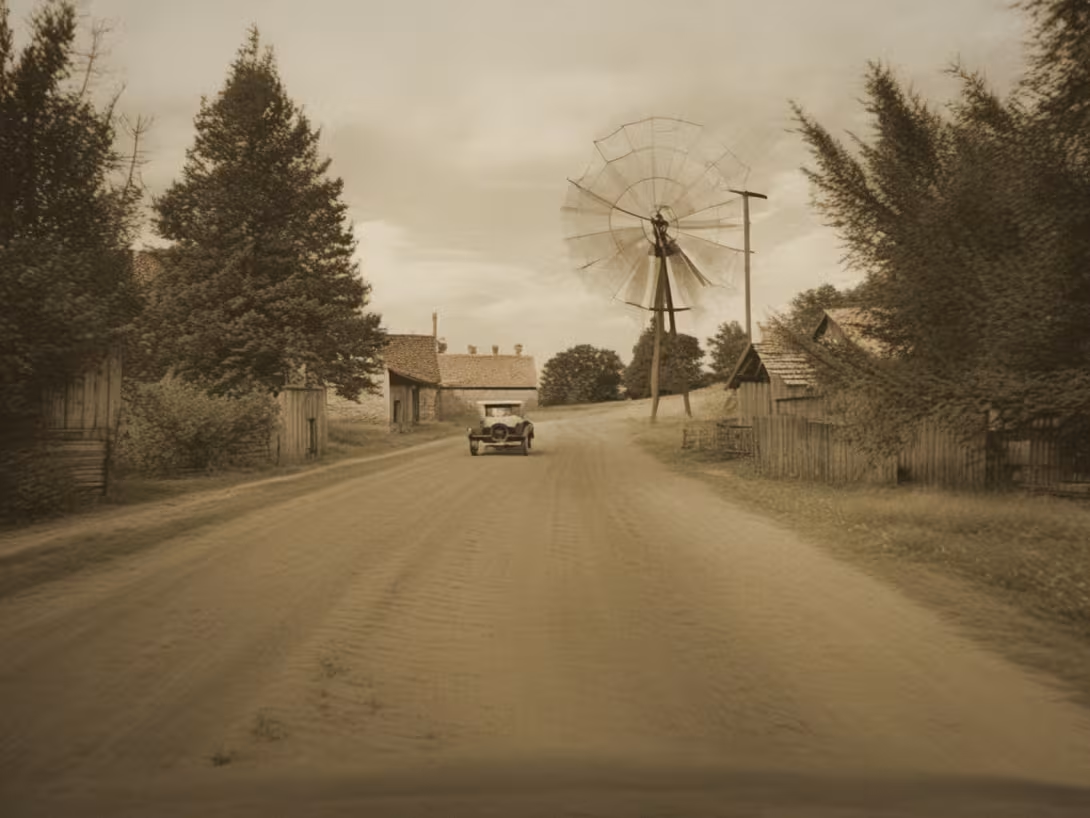
The historical view on the left is a visualisation generated by artificial intelligence and serves as inspiration.
Historical Milestones
- round 1890-1900
- Creation of an electric mill as a modernization of the trad. water mill
- first half of the 20th century
- Use as an electric mill in the period of electrification of the mill
- 2000
- Record in the ÚZPF as a national cultural monument
Interesting facts
- Former electric mill in Plaveckom Petere is a national cultural monument of Slovakia. - Construction of the building belongs to the types of folk architecture from the turn of the 19th and 20th century. - Technological progress in this monument reflects the beginnings of modernization of millery and electrification in Slovakia.
Guide
Show guide text
The text was prepared by artificial intelligence and has not been editorially reviewed. It may contain inaccuracies.
Welcome to this historical monument standing on the edge of Plavecký Peter. You are standing in front of a former water mill, which today bears the name Mill electric. Just in front of you, it is a simple but substantial structure that is forming into the country as a proof of the past that has flowed through the streams.
Let's move a few steps to history. It is not known when this mill was built. Like his creators who left their message here. Mills like this have, however, been a frequent rural element in our countries since the Middle Ages, when water energy was used to wash grains, grind grain, or power other craftsmen. This particular mill, which you see today, is one of the so-called electric mills - buildings that were built at the time when electric lighting and power began to spread. Although the exact date of its origin is not known, it is clear that it was part of this revolution that changed the way of life in the countryside.
Nine look at his architecture. Before you is a simple but functional building, which consists of the main building and probably several pendants. Note its simple lines that form into the environment. The windmill is typical for rural architecture - simple, without excessive decoration, but with a stronghold that proves that it was built for many years. Note how the building is built into the field, how it connects to the natural environment. Some details, such as windows or entrances, may already be somewhat abandoned, but this contributes to the authentic feeling that you are here in the time that has stopped.
It is not known who worked here and how it lived here. Mills like this, however, were often community centres. Here grain milling became more than just a working process - a social gathering where people met, exchanged news, and helped each other. The millers were popular characters because their work was inconsolable for the whole village. Although there is nothing known about the specific personalities associated with this mill, we can imagine how everyday life sounded here - how it worked here, how it lived here, and how relationships were created.
One of the interesting things to find here is the fact that this mill is one of the so-called electric mills. This means that it was built at the time when electric lighting and power began to spread. Although the exact date is not known, we can assume that it was built in the first half of the 20th century when electrification became mass. This means that there could be elements of electric lighting or power that were innovation at the time. Although they are not visible, it is interesting to imagine how the way of work and life changed here when electricity became part of everyday life.
Let's go see the neighborhood now. The electric mill is located in a picturesque country typical for Trnava region. The surrounding nature, forests and fields create an ideal background for this historical construction. Note how the mill forms into the landscape as it becomes part of its nature. This is a unique thing that distinguishes this mill from many other monuments - its simplicity and nature.
Before you leave, we would like to invite you to stay a while longer and see the atmosphere of this place. You stand before a monument that is evidence of how people in the past have dealt with nature and how their way of life has changed. The electric mill is just one of many examples of how our country has changed and how it preserved monuments that remind us of our history.
How are you liking this place? You can imagine how everyday life sounded here, how it worked here and how relationships were created. Before you leave, we would like to invite you to stay a while longer to see this unique atmosphere. Plavecký Peter and his surroundings offer many other attractions that await you to discover them. So look forward to further discoveries and to what is still waiting for you in this picturesque country. Once we meet again, once again we can share in discovering the beauty and secrets of our history. To rachmet.
Tips for visitors
The best time to visit the former water mill is in the autumn months when the landscape is surrounded by vivid colors and the temperature is comfortable. Behind you, get protective clothing because the place may be colder. The photo is also recommended to bring the standard camera, as the best moments can be found in sunlight.
The surroundings of the former water mill are suitable for families with children who are interested in historical and natural elements. Children can learn a few things about historical technologies.
Nearby you will find other history that is interesting for a wider audience. Visit these sites for 30 minutes and expand your experience.
Frequently asked questions
Can the monument be visited?
This is a technical monument. Some are open as exhibitions, others are out of use or on private land. We have not verified whether this one is accessible.
What are the opening hours and admission?
We have not verified the opening hours or admission. Current information is published by the operator.
Where is the monument?
Location: č. 98, Plavecký Peter, Trnavský kraj. The map on this page shows the exact spot.
Why is the monument protected?
It is listed in the Central List of the Monuments Fund of the Slovak Republic as a national cultural monument (ÚZPF no. 215-10651).
For children
Water mill in Plavecký Peter - hidden monument with history
Water mill in Plaveckom Peteri is a technical monument created in 2000. Its original function was associated with the production of electricity, but also the elements of the original water drive were preserved here.
In the past, the mill served as an energy source for local textile production. The water from the stream was powered by mechanical devices that supplied the factories in the area. The workers lived and worked here for centuries, and their lives were intertwined with the history of the factory.
Nearby
🏰 Historic sites (157)
- sv. Florián 0.1 km
- sv. Anton Paduánsky 0.2 km
- Padlým v 1. a 2. svetovej vojne 0.2 km
- Štefan Polák 0.2 km
- Pieta 0.3 km
- sv. Ján Nepomucký 0.3 km
- sv. Vendelín 0.5 km
- Padlým červenoarmejcom 3.1 km
- Padlým v 1. svetovej vojne 3.1 km
- Oslobodenie obce Červenou armádou 3.1 km
- sv. Florián 3.1 km
- Pomník repatriantov 3.3 km
- Ostrý Kameň 3.8 km
- Erik Sitár 4.6 km
- Rus U kapitána - hrob Ruského vojaka 4.9 km
- kríž Zuzka Nahálková 5.0 km
- Mon Repos 5.1 km
- Kaťuša na pamiatku padlých sovietskych vojakov 5.2 km
- Padlým v 2. svetovej vojne 5.2 km
- Ivan Košický 5.3 km
🍽️ Restaurants and dining (73)
- Pohostinstvo Eva 0.2 km
- Bufet lážo plážo 2.6 km
- Stodola 2.8 km
- Šandorf 3.1 km +421 34 659 91 04 web
- Šandorf 3.1 km web
- Centrum Club 3.1 km
- Mikulášsky dvor 3.2 km +421 918 597 550 web
- Hostinec u štvrťáka 5.2 km
- Hostinec Pod Vrškom 5.4 km
- Penzión Korlat 6.7 km
- Škarbák 7.1 km web
- Bistro Varalja 7.2 km +421 918 400 985
- Koniareň 7.2 km
- Hostinec Modu 7.5 km
- Karpaty Kafe 8.0 km web
- Bufet u Stana 8.1 km
- Reštaurácia Eden 8.2 km Obrancov mieru 1238/56A +421 918 968 862 web
- Galéria na zámku 8.3 km
- Hostinec pod zámkom 8.3 km +421 908 467 552
- U kumana 8.4 km SNP 275/117
🏨 Accommodation (24)
- Romantická chalúpka 0.5 km
- Šandorf 3.1 km +421 911 012 043 web
- Malvázia 5.7 km +421 903 90 42 78 web
- Záruby resort 6.3 km web
- Chata SNP 6.4 km +421 904 870 940 web
- Agropartner 7.1 km
- Koniareň 7.2 km web
- Rekreačné stredisko Jahodník-Škarbák 7.2 km
- Penzión Villa Agnes 8.2 km +421 907 775 998 web
- Penzión Eden 8.2 km Obrancov mieru 118/56 +421907662771 web
- Penzión Smolenice 8.2 km Obrancov mieru 210/43 +421 911 553 204 web
- Turistická ubytovňa 8.5 km
- Turistická ubytovňa 8.7 km Za bránou 323/1
- Garni Hotel 9.5 km
- Kaštieľ Alfonz 10.4 km +421 910 826 072 web
- Chata Diana 10.8 km
- Penzión Záhoran 11.2 km +421 34 658 31 44 web
- Farma na samote 11.6 km +421 948 171 608 web
- Horáreň Šišoretné 11.8 km +421 905 613 211 web
- Penzión U Zemanov 13.2 km +421 902 303 143
🚲 Rentals and sport (10)
- Zelený bicykel 8.3 km +421 905 55 53 88 web
- Zelený Bicykel 8.4 km web
- Bike Service 8.5 km +421 903 402 782 web
- Zelený Bicykel 9.8 km web
- Boxerňa Rohožník 14.3 km
- Motokáry Dlhá 14.4 km +421903735188
- Senica Bajk 14.5 km +421 915 244 244 web
- Danip-centrum 14.7 km +421 907 114 900 web
- Senica Bajk 14.7 km +421 915 244 244 web
- Senica Bajk 15.0 km +421 915 244 244 web
🥾 Hiking and nature (292)
- Prameň vajcovka 0.6 km
- Motýlí štít 0.9 km
- Skalka 0.9 km
- Klenie 1.5 km
- Ježovka 1.7 km
- Studénka pri Feneši 2.0 km
- Končival 2.2 km
- Studénka Heršlúfka 2.3 km
- Prameň pred domom č.229 2.5 km
- Škrekov 2.7 km
- Hurtovec 2.7 km
- Deštova 2.7 km
- Františková 2.7 km
- Jeklova 2.7 km
- Scoliopterixová 2.9 km
- Dubový vŕšok 2.9 km
- Koženokabátová 3.0 km
- Kršlenica-2 3.0 km
- Orlie skaly 3.0 km
- Kršlenica-1 3.0 km
Thematic route
Daily route to the electric mill in Plavecký Peter
1. Electric mill - cultural monument Historical building from 1904, first electric mill in Slovakia. Interesting with its technical and architectural value, it reflects energy innovation in the first half of the 20th century.
2. Garden area of the mill - courtyard and park The surroundings of the electric mill are surrounded by ancient trees and small park, which is shared with the surrounding land. It is a clean environment suitable for short walks.
3. Church of St. Peter and Paul - cultural and historical object It is located near the mill and belongs to the oldest buildings in Plavecký Peter. The 18th century church is an example of Baroque architecture with rich decorations.
Path impact: From the Elektro mlýn, he will head out to the surroundings, where he visits the Church of St. Peter and Paul (about 5 minutes walk). It walks in green areas where the surrounding landscape can be observed. The whole route takes about 1.5 hours and is available to families and individuals.
Tip: It is advisable to visit during the weather.
Seasonal recommendations
Jaro
During this period, the water mill is filled with vivid tones when the first sub-winter flowers bloom and the green landscape spreads around the mill. The atmosphere is warm and the air full of excitement when people return to the villages for the first time Sunshine. It is best to visit the mill in the morning, when the smaller crowd and nature is the cleanest. For clothing it is suitable to wear light, durable clothing that is apparently removed after passing through wet terrain. Leto
In the main summer season, the former water mill is full of activities when summer trips and family trips are around the watercourse. The atmosphere is energetic when people come back from summer holidays. It is best to visit the mill in the morning when there is a smaller crowd. For clothing, it is suitable to wear soft, durable materials for warm days and to carry protective armor and sun denim. -- -
Podzim
During this period nature turns into a golden and red palette when the first winter flowers bloom. The atmosphere is warm and the air filled with excitement when people prepare for the winter. It is best to visit the mill in the middle hours when there is a smaller crowd. For clothing, it is advisable to wear warm, durable clothing and to carry soft clothes to protect against precipitation. -- -
Winter
In the winter season the water mill can be closed. The atmosphere is magical when a dream landscape spreads around and people enjoy winter joys. It is best to visit the mill in the middle hours when there is a smaller crowd. For clothing it is suitable to wear warm, durable materials and to carry protective denims and warm clothes. It's good to find out the open days before.
Visualisations and artistic views


The visualisations are generated by artificial intelligence and serve as inspiration.
Photographs from the area
Real photos taken near the monument

Source and licence are given for each image.
Visitor Tips
No tips yet. Be the first!
Log in and add your tip.
Location on Map


Visitor photos
No photos yet. Be the first to add a photo from your visit!
Log in and add your photo or leave a rating.
You get more points for a visit verified in the app — we can tell from the GPS that you are there.
Reviews and comments