








ľudový dom Vernacular house
The folk house in the village Čičmany, Žilinský kraj, is a respected national cultural monument of Slovakia. This object is located at No. 136 and is registered under number ÚZPF 31B-2134. The house was built in 1936 and represents the first half of the 20th century, namely the type of folk house with log structure.
The site of the monument is located from one object: Folk house (rubový construction, folk construction, 1936). This house is an example of folk architecture that reflects the traditions and techniques of its time.
Details of building features such as layout, flooring, floor plan or material used are not provided in the available data. This information could provide further insights into the technical and aesthetic aspects of the house.
The folk house is located on the geographical coordinates 48.95688, 18.51704 in the village Čičmany, Žilinský kraj. Information on the cadastral territory, the date of declaration as a monument or the existence of a conservation zone is not provided. The current state and use of the house was also not recorded.
The folk house in Čičmany is an important part of the historic heritage, which preserves the elements of traditional Slovak construction. Its location in the village Čičmany makes it interesting for visitors and local residents who are curious about the historical and cultural aspects of the region. This object is an opportunity to immerse yourself in the rich heritage of Slovakia and to understand the importance of folk architecture for the historic culture.
Visiting the House of Folk in Čičmany offers a unique view of the traditions and techniques of the past, making it an interesting destination for anyone interested in historical monuments of Slovakia.
Tehdy a dnes
Drag the slider and compare how the monument might have looked when it was built with the view today.
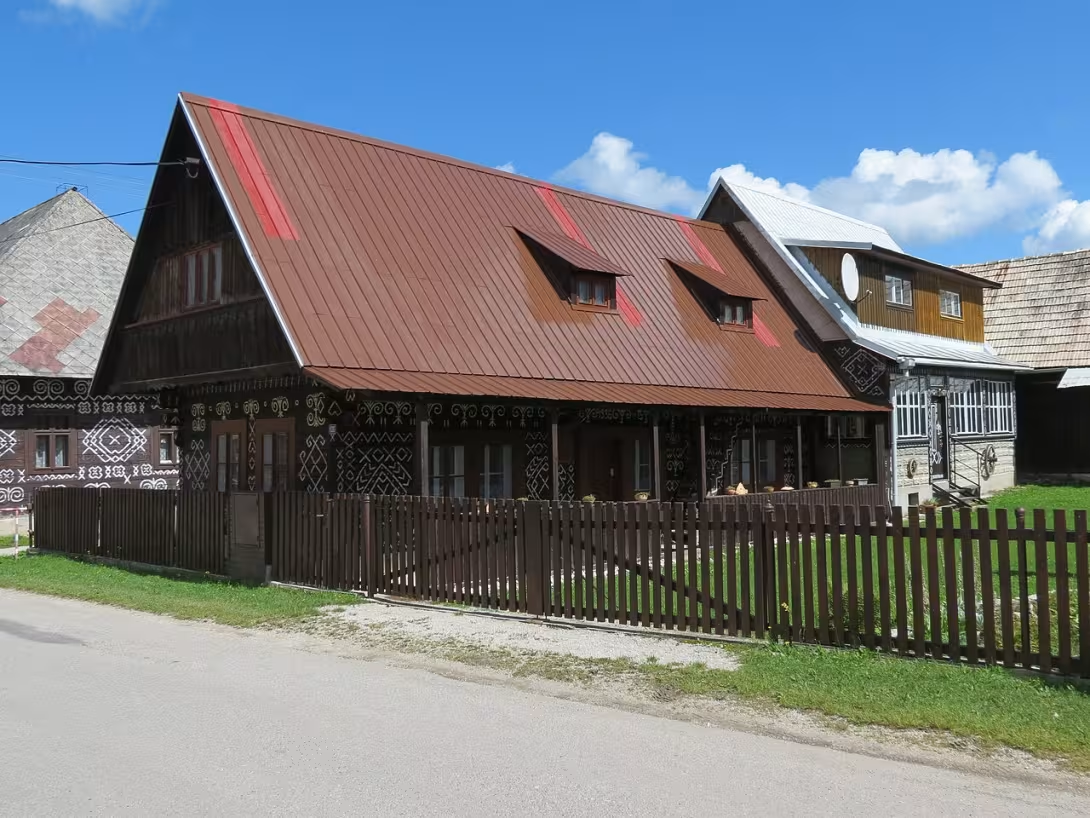
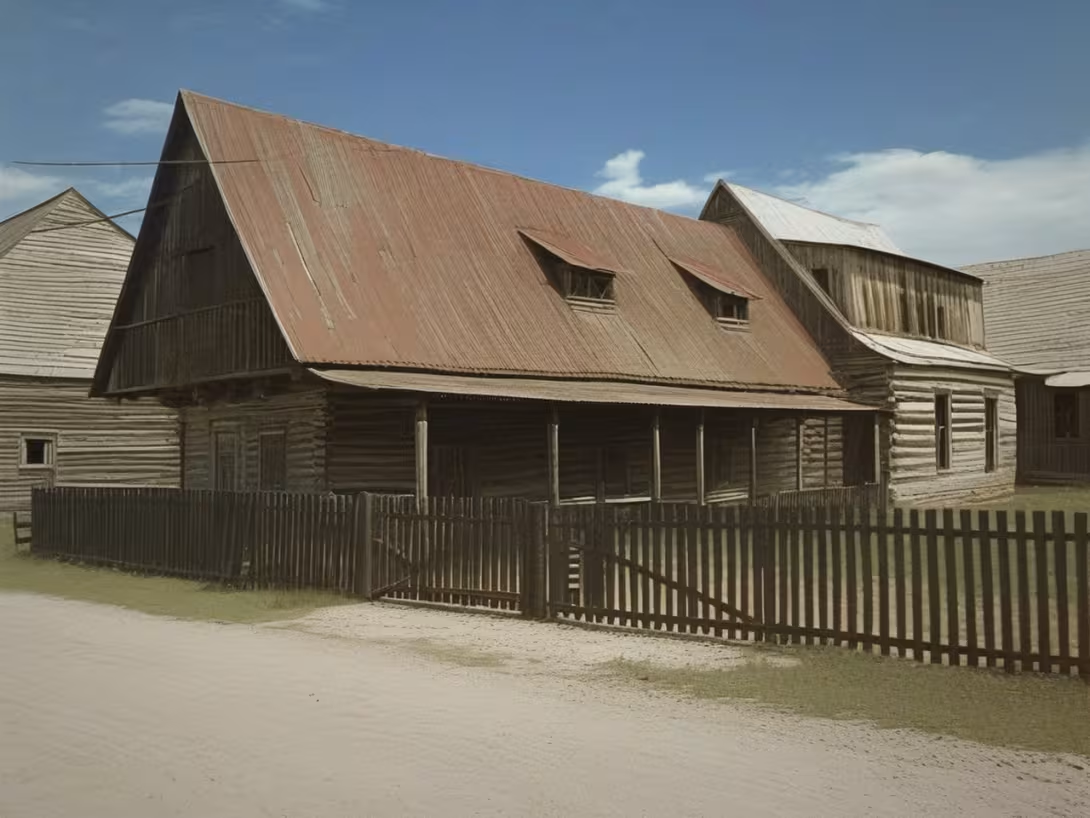
The historical view on the left is a visualisation generated by artificial intelligence and serves as inspiration.
Guide
Show guide text
The text was prepared by artificial intelligence and has not been editorially reviewed. It may contain inaccuracies.
Welcome to Čičmany, one of the most prominent and most beautiful villages of Žilina region. Right now you are facing an object that is the embodiment of traditional Slovak country - in front of a folk house. Stop for a moment, take a breath of clean mountain air, and just don't miss the atmosphere of this place. In front of you the rods building, which is not just a set of walls and roofs, but a living monument to ordinary people, their work, dreams and everyday struggle for survival in a harsh environment. The first impression this house likely gives you is that of peace and deep belonging to the earth. It's an architecture that doesn't try to dominate the country, but rather combines with it as if it grew up naturally.
When we consider the origin of this house and its historical context, we find ourselves in the area of mystery. The exact chronology of the construction of this particular house is not known, which paradoxically gives it some charm. It is not a building with a clearly defined date in a calendar designed by a famous architect with a name written in chronicles. This house is the fruit of collective memory and generational experience. It originated at a time when it was built as needed, according to the available materials and, above all, the rules that people passed on from their father's hand to their sons. There were no plans on paper, just intuition, habit and a deep conscious relationship between man and nature. Houses in this area were created to provide shelter from winter, to preserve heat, and to grow a new generation of inhabitants of these mountains.
Now I ask you to pay full attention to the architecture you have right in front of you. Look at the overall composition of the construction. Note how the house is situated in space and how its silhouette acts against the sky. Although we will not look for specific technical details that would be in official records, look at the facade and see its rhythm. Notice how the surfaces meet, how the entrance is solved, and how you feel about the overall proportion of the house. There is nothing random in folk architecture. Each element had its practical meaning. The location of windows, the slope of the roof or the height of the foundations were dictated by climatic conditions and way of life. Look up on the roof and imagine how the inhabitants of this house have been waiting for the heavy rains or deep snows that are so typical of Žilina region for centuries. Feel the texture of the surfaces and feel that every part of this house tells a story about patience and precision.
Who lived in this house? Who lit this morning in the oven and who sat by the light of the lamp tonight? The names of specific individuals who have survived their lives in these walls may not have been lost in historical records but remained anonymous. And it is in this anonymity that the power of this place unites. This house does not belong to one famous person, but belongs to all thousands of unknown craftsmen, housekeepers and housekeepers who formed the identity of the Slovak village. Imagine their hands that processed the material, their feet, which went through a thousand times the same way to the door and their voices that rang in the interior. These are stories of hard work in the field, animal breeding, family celebrations and quiet evenings. Although we do not know their names, their presence is still in this area. These are the traces of people who lived in a close relationship with the rhythm of nature and the lives of the cors were defined by alternating seasons.
Perhaps you will now be interested in one interesting thing connected with the nature of such memories. The greatest mystery of folk houses is not exactly when they were built, but how they managed to survive centuries in such an unstable world. The secret of linking simplicity and sincerity. Nowadays, when we look for everything in the digital world and build houses of concrete and glass, this house acts as an anchor. It's a mystery of how people with so little means could create something that is aesthetically balanced and functionally perfect. When you look at the house, you may feel strange peace. It's because this house doesn't lie. He's exactly what he's supposed to be - home. It is the intercourse between a sense of beauty and absolute practicality.
Now, slowly separate with us this first view from the outside. This house is just one of many pieces of puzzle, which together form a unique picture of the village Čičmany. I suggest you walk around the house slowly, bypass it from all sides, and try to imagine what your day would look like if you lived in this house hundreds of years ago. Feel the silence that surrounds you and let yourself be guided by your own imagination.
There are also other attractions of this village that will help you to understand even more why Čičmany is such an exceptional place on the map of Slovakia. Let yourself be guided by paths that will lead you deeper into the heart of this traditional architecture and give yourself a moment to think about what it means to be part of tradition.
Thank you for your attention and I wish you a pleasant continuation in discovering the beauty and secrets of this magical place. May you burn well in Čičmany and let the simplicity and sincerity of this folk home inspire you. I wish you a quiet and interesting walk.
Tips for visitors
The best time to visit the folk house is in summer, especially in July and August. Check the current connections and times before you travel.
See to take the camera with you because some places are ideal for photos. Morning or evening light can provide the best effects.
In the vicinity of the folk house there is also a national museum in Čičmany, which is suitable for families with children. The museum offers interactive exhibitions and programmes designed for the youngest.
It is recommended for families to visit the surrounding park, where children can play on big jobs. This area is suitable for relaxation after visiting the monument.
Frequently asked questions
Can the monument be visited?
This is a residential or farm building, not a museum with opening hours. Please view it from public space and respect the owners' privacy. We have no information about access to the interior.
Where is the monument?
Location: č. 136, Čičmany, Žilinský kraj. The map on this page shows the exact spot.
Why is the monument protected?
It is listed in the Central List of the Monuments Fund of the Slovak Republic as a national cultural monument (ÚZPF no. 31B-2134).
For children
Imagine teleporting until 1936, some 90 years ago, when computers and the Internet did not yet exist. The world around you is completely different. Instead of the noise of cars, you only hear the cricket of roundabouts and the cocksuckering. This is how you could see the village of Čičmany.
Nearby
🏰 Historic sites (40)
- Radenov dom 0.0 km +421 918 187 683 web
- Dom č. 42 0.0 km +421 918 187 683 web
- Múzeum Na dreve maľované 0.2 km +421904454111
- Univ. Prof. Jozef Kresánek 0.3 km
- Kaštieľ Čičmany 0.3 km web
- sv. Ján Nepomucký 5.3 km
- Včelársky skanzen 6.5 km
- sv. Florián 7.0 km
- sv. Florián 7.1 km
- Obetiam 1. svetovej vojny 7.3 km
- Pamätník SNP 7.3 km
- Štefan Závodník 7.5 km
- Hrob neznámeho rumunského vojaka 7.7 km
- Prameň rieky Nitra 7.8 km
- Mesciská 8.6 km
- sv. Cyril a Metod 8.7 km
- Ladislav Škultéty-Gábriš 8.8 km
- Obetiam 2. svetovej vojny a vypálenia osady Ritka 8.9 km
- Bošániho útulňa 9.5 km
- Panna Mária 10.0 km
🍽️ Restaurants and dining (51)
- Humno Ondreja Gregora 0.1 km +421 918 633 878 web
- Penzión Katka 0.1 km +421 948 975 136 web
- Čičmanská krčma 0.2 km
- Kaštieľ Čičmany 0.3 km +421 917 997 229 web
- Javorina 0.5 km +421 905 835 089 web
- penzión Dolinka 5.1 km
- Pizzeria pod Orechom 5.6 km
- Pusta Pub 6.3 km
- U Pagáča 6.3 km
- Jazero Hofer 6.7 km
- Salaš Kľak 6.9 km +421 918 397 949 web
- Poľovnícky raj 7.2 km
- Koliba 7.3 km
- Pružan 7.3 km
- Bowling bar 7.3 km
- Penzión pod Strážovom 7.3 km
- Pizzeria Včielka 7.5 km
- Salaš Pružina 7.7 km +421424358728 web
- Penzión Barborka 8.1 km
- Hostinec Urbár 8.3 km web
🏨 Accommodation (30)
- Penzión Katka 0.1 km +421 948 975 136 web
- Penzión Bystrík 0.1 km +421 903 483 454 web
- Drevenica Čičmany 0.1 km +421 905 934 938 web
- Filipovce pod Žiarom 0.1 km +421 902 450 005 web
- Chata Erika 0.2 km
- Kaštieľ Čičmany 0.3 km +421 917 997 229 web
- Chalupa Nad lipou 0.4 km +421903244980 web
- Penzión Javorina 0.4 km +421 905 835 089 web
- Drevenica Čičmany 0.7 km web
- Horský hotel Kľak 6.7 km +421 918 397 949 web
- Horský hotel Magura 7.2 km
- Chata Pod Kľakom 7.9 km web
- Chata na Rúbani 8.2 km
- Apartmánový dom Mojtín 8.6 km web
- Chalupa Martin 8.7 km web
- Relax centrum Lupena 10.2 km +421 917 473 851
- Chata Roveň 11.4 km
- Hotel Bonums 11.4 km
- Penzión Ruža 11.5 km
- Go Kľačno 11.6 km +421 918 326 711 web
🚲 Rentals and sport (2)
- Športový areál Ďurďové 8.6 km
- eMTe Bike Šport Servis 12.8 km +421 907 684 112 web
🥾 Hiking and nature (304)
- Žiar 0.6 km
- Obria lavička 0.7 km
- Paškov vŕšok 0.7 km
- Vyhnaň 1.4 km
- Javorinka 1.6 km
- Vrábľová 1.7 km
- Karlova studnička 2.1 km
- Kudľajov vrch 2.1 km
- Úbočka 2.1 km
- Miklovské 2.2 km
- Diamami 2.4 km
- Čierny vrch 2.5 km
- Jedľovec 2.7 km
- Diamamy 2.9 km
- Hrubá Kečka 3.0 km
- Javorina 3.1 km
- Samostriel 3.2 km
- Kozol 3.2 km
- Oselná 3.4 km
- Paškov vŕšok 3.5 km
Thematic route
1. House folk, folk architecture: Facades are decorated with traditional geometric patterns, which form the visual character of the place.
2. The area of traditional courtyard, architectural complex: During the transition between houses, the organization of life in the past is known.
3. Musical exhibition in the interior, cultural exhibition: Inside the houses are demonstrated authentic lifestyle, traditional clothes and furniture of local residents.
Seasonal recommendations
Jaro: In spring, the folk house in Čičmany is adorned with growing flowers and greenery. In sunlight, trees and landscapes turn into vivid colors, adding a cold to the atmosphere of recovery. It is best to visit this histórical monument in the early spring when visitors are even less chatty and you can enjoy a peaceful atmosphere. We recommend wearing practical clothes suitable for sunny days, including a cup for the first cool evenings.
Leto: In summer there is a folk house in Čičmany surrounded by full greenness and flowering plants. Sundays add shine to the landscape, but can also be very warm. The best time to visit is in the morning or afternoon, when there are lower temperatures and smaller crowds. We recommend wearing soft clothing, sunglasses and plenty of drinking water.
Under: In the middle of the folk house in Čičmany turns into a stunning garden full of growing leaves. Sunny days are usually warm and ideal for a relaxing visit. We recommend visiting this memorial in the morning, when visitors are even less chatty. Wear warm shower cups and warm clothes for cooler afternoons.
Winter: In winter there is a folk house in Čičmany surrounded by dream, which adds beauty to the country. Sunny days are ideal for watching as light is roasted from snow, and also provide the opportunity for morning trips without crowds. The monument is usually open for shorter days, so we recommend visiting it earlier in the day. You wear warm clothes, including cups and snorkels.
Visualisations and artistic views


The visualisations are generated by artificial intelligence and serve as inspiration.
Photographs from the area
Real photos taken near the monument


Source and licence are given for each image.
Visitor Tips
No tips yet. Be the first!
Log in and add your tip.
Location on Map
More monuments – Čičmany
Show all in the town



Visitor photos
No photos yet. Be the first to add a photo from your visit!
Log in and add your photo or leave a rating.
You get more points for a visit verified in the app — we can tell from the GPS that you are there.
Reviews and comments