








roľnícka usadlosť Farmer's farmstead
This monument is a farmyard in the village Ždiar in Prešov region. The building dates back to 1926 and represents folk architecture from the first half of the 20th century.
The area consists of two objects: a folk house, which was founded in 1926, and a barn with a stable, which is also dating back to this year. Both buildings are driven from the log structure and belong to the area of folk construction.
The courtyard is located at number 67 in the village Ždiar. The building is declared a national cultural monument and is registered in the Central List of Monument Fund under the number 416-4636.
The monument documents the form of the farm estate from 1926.
Tehdy a dnes
Drag the slider and compare how the monument might have looked when it was built with the view today.
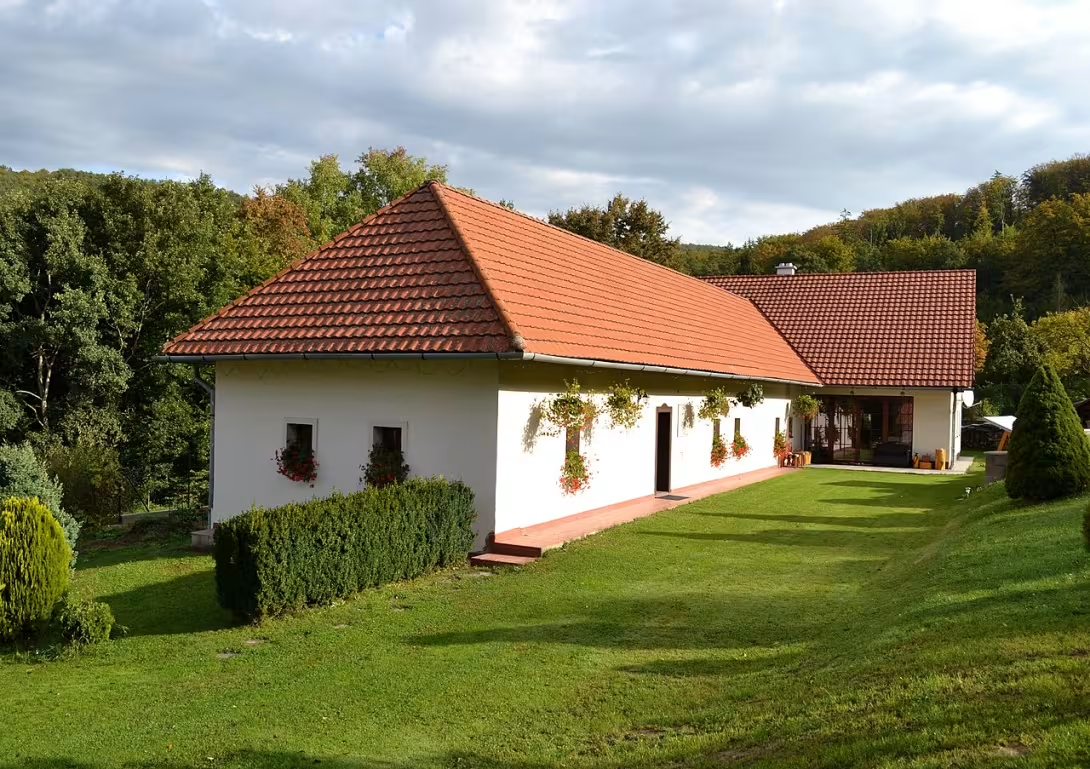

The historical view on the left is a visualisation generated by artificial intelligence and serves as inspiration.
Interesting facts
- The court is from 1926 and represents folk architecture from the first half of the 20th century. - The area consists of a folk house and barn with a stable, both buildings were created in 1926. - Both buildings are taken from the log structure. - The building is declared a national cultural monument.
Guide
Show guide text
The text was prepared by artificial intelligence and has not been editorially reviewed. It may contain inaccuracies.
Welcome to Zdiar. You stand by one of those unique places where time seems a little slower, and where every trace in the earth tells a story that tries to survive despite the wasteful gas of the modern world. Before you lies the farming estate, in local records also known as the Court of Farmers. The first impression you may have is a feeling of peace and deep connection with the surrounding nature. It is not a monumental building that will impress you with its height or golden throne, but it is a place that will impress you with its authenticity and how it naturally fits into this mountain landscape. Feel this atmosphere. Feel the silence, which is not just the absence of noise, but it is a silence full of history that still breathes here.
If you look at this entire location, you might start asking questions about how this place came about and who used to live here. Although accurate chronological data on the origin of this settlement are not preserved in our archives and the exact century of its birth remains in the shadow of uncertainty, its presence here is indisputable. This settlement did not arise from a sudden impulse, but was the result of a long process of adapting to life in the difficult environment of Prešov region. It was a life that was directly linked to the rhythm of nature, the cycles of going and coming winter, working in the field and caring for the economy. The court of peasantism is not just a set of buildings, it is the theme of our ancestors who have built their security here in an environment that required them to remain alert and strong.
I will now tell you what you should notice during your stay right in front of this memorial. Look at this whole architecture. Even if you do not see magnificent works of art, see the functionality and logic that dominates here. In every detail you see here, you feel a smile of practicality. Look at the way the buildings are arranged. In a traditional farming estate, space is not just randomly divided; each part of the court had a clearly defined purpose. Feel the harmony between the inhabited parts and the space for work and the economy. In this architecture, the aim is not to disprove nature, but to live with it in symbiosis. Feel the texture of the materials you see here, and how these materials become part of the country itself through their age. It is an architecture that did not roll, but provided protection and stability.
Let's go mentally to the people who made this place. Although we do not know the names of the particular historical figures that lived here, and although the architect who designed this settlement remained anonymous in history, their presence is still there. Imagine these people. They were not kings or great dukes, but ordinary people, farmers, who did their work here every day. Their unknown hands, their sweat and their tireless efforts to keep the family in this mountain area have created this place. Every bit of this settlement is a message from these anonymous heroes of everyday life. When you look at the yard, you see not only wood and stones, but you see the result of their efforts, their efforts to create a home in a place that was not easy.
At this point, you may wonder what the greatest secret of this place is. Perhaps you would expect some legendary story about treasures or dramatic events, but the real mystery of this settlement is much deeper. It's this confusion, the ignorance of time. That we don't know exactly when this court first stood up gives the place a strange, almost mystical charm. It is a reminder that history is not just about textbook dates, but about the constant presence of the past in our present. This unknownness forces us to create an image, to become part of the story ourselves. What was going on here hundreds of years ago? What kind of voices were there during the summer evenings? This question remains unanswered and that is where its strength lies.
Feel this atmosphere deeper. It's not just what you see with your eyes, it's what you feel in your soul. You are standing in a place that has surpassed many centuries that has survived changes in political systems, changes in farming patterns and changes in the very structure of human society. And yet he still stands there quietly and with dignity.
I won't be keeping you on this call much longer. I just want to let you get carried away by this place. Let your own imagination guide you. Look at the surrounding Zdiar, the mountain peaks guarding this place, and try to imagine how this court changed with every spring coming May or every first autumn blow. Look at the details you may have gone through your eyes, but now try to see them with your heart.
Go on, discover other parts of this site and do not just be a passive observer. Be an active participant in this journey over time. The court of the peasant offers you the opportunity to stop for a moment and think about what we are building, what remains of us. Thank you for being here with us and for esteeming this cultural heritage. We wish you a pleasant and inspiring stay in this beautiful part of our region. We'll say goodbye, but let this experience stay in your memory long after you leave this yard.
Tips for visitors
The best time to visit is from spring to autumn when the environment of Ždiar is more accessible and the architecture of the settlement is better visible. You can reach the site by car or public transport; check your online search engine for updates on the links. It is recommended to bring comfortable shoes and clothes adapted to mountain weather. Use natural daylight to highlight the details of historical wooden construction. The visit is also suitable for families with children who can get to know the history and older ways of living in the region.
Frequently asked questions
Can the monument be visited?
This is a residential or farm building, not a museum with opening hours. Please view it from public space and respect the owners' privacy. We have no information about access to the interior. According to the heritage register restoration is under way, so access may be restricted.
Where is the monument?
Location: č. 67, Ždiar, Prešovský kraj. The map on this page shows the exact spot.
Why is the monument protected?
It is listed in the Central List of the Monuments Fund of the Slovak Republic as a national cultural monument (ÚZPF no. 416-4636).
For children
Close your eyes. Imagine pressing a secret button on a time machine. Boom! It'll take you exactly 100 years back. It's 1926. There are high mountains around you, clean air and strong smell of freshly chopped wood. Welcome to Zdiar, the magical world of farmers' settlements.
Nearby
🏰 Historic sites (32)
- Penzión Tatra 1.7 km
- Ždiarsky dom 1.8 km web
- Múzeum ľudovej kultúry Lendak 6.2 km
- prof. Alfred Grosz 7.2 km
- Najsvätejšie Srdce Ježišovo 7.3 km
- 700 r. obce 7.8 km
- Padlým rodákom v 1. sv vojne 7.9 km
- Dino Kuráň 1971-2012 8.9 km
- Lukáš Mánek 9.2 km
- Prvym 7 horárom, ktori spravovali lesny majetok v Spišskej Belej 1922-34 9.4 km
- Galéria Encián 10.5 km web
- Lovecký zámoček Hohenlohe 10.6 km +421 905 243 618 web
- Szałasy 10.7 km
- Pamätník Franza Kafku 10.9 km
- Grandhotel Praha 11.7 km web
- Múzeum TANAPu 12.0 km web
- Galéria Lomnica 12.1 km
- Hotel Lomnica 12.1 km +421 52 285 3500 web
- Ski museum 12.2 km web
- Expozícia bábik a hračiek 12.4 km
🍽️ Restaurants and dining (101)
- Strachan 1.4 km
- Reštaurácia Goral 1.6 km
- Ždiarsky dom 1.8 km
- Ždiaran 1.9 km web
- Bufet Livia 2.3 km
- Panorama 2.3 km web
- Hniezdo 2.3 km
- Pizzeria Rustika 2.3 km
- Hotel Sova Ždiar 2.4 km +421 905 926 601 web
- Penzión Kamzík 3.3 km
- Penzión Ždiaranka 3.7 km +421910999571 web
- Reštaurácia Medvedí brloh Strachan 3.8 km +421919171519 web
- Penzion Strachan 3.9 km
- Bistro Strednica 4.3 km
- U furmana 5.4 km
- Koliba 5.4 km web
- Bufet u pavúka Elvisa 5.5 km
- Hučava 5.6 km
- Pohostinstvo u Emila 7.0 km
- Mocova Koliba Pohostinstvo Pavlik Ján 7.8 km +421 911 835 392 web
🏨 Accommodation (190)
- Belianska Chata 0.5 km
- Chata na Antošáku 0.6 km web
- Vila Panorama 0.6 km web
- Penzión Spa&Wellness Zorhill 0.7 km +421 902 449 290 web
- Penzión Budzák 0.8 km +421 907 437 888 web
- Privát U Jany 1.0 km web
- Chata U Jany 1.0 km web
- Enrico 1.3 km
- Penzión Bayer 1.3 km
- Strachan 1.4 km
- Penzión Tatry 1.5 km
- penzión Burger 1.6 km
- penzión Havran 1.6 km
- Privát 249 1.6 km
- Diana 1.8 km
- Privát KRIŠŠÁK I. 1.9 km
- Privát KRIŠŠÁK II. 1.9 km web
- Ždiaran 1.9 km web
- The Ginger Monkey 1.9 km +421 524498084 web
- Privát Silon 2.0 km
🚲 Rentals and sport (14)
- E-bike Strachan 4.3 km web
- Spider park 5.5 km
- Centrum Rekreacji i Wypoczynku "HAWRAŃ" Sp. z o.o. 10.8 km Podokólne 1 +48 696 232 312 web
- wypożyczalnia i szkoła narciarska Ski-Plus 10.8 km Podokólne 1
- Relax park jazierko 11.8 km +421 944 714 302 web
- FK Vysoké Tatry 12.1 km
- Walter Renner Šport 12.2 km
- INTERSPORT 12.2 km
- Norway Shop Outlet 12.3 km web
- Norway Shop 12.3 km web
- TiMa Tatry 12.4 km
- Stienka 12.5 km web
- Bike Rental&Guiding 13.9 km Zimná +421 903 775 989 web
- Prístav Pltí 14.5 km web
🥾 Hiking and nature (359)
- Na Skalku 0.7 km
- Antošovský vrch 1.0 km
- Slodičovský vrch 1.3 km
- Filipský vrch 1.5 km
- Tokáreň 2.0 km
- Bachledova dolina 2.2 km
- Vyhliadková veža - chodník v korunách stromov 2.3 km web
- Magurka 2.4 km
- Rozhľadňa Bachledova dolina 2.5 km
- Bukovina 2.8 km
- Javorinka 2.9 km
- Skalka 3.0 km
- Vysoký vrch 3.1 km
- Kardolinsky vrch 3.3 km
- Čierny vrch 3.4 km
- Solisko 3.7 km
- Priehrštie 3.9 km
- Plošové Turne 4.2 km
- Plešný vrch 4.2 km
- Alabastrová jaskyňa 4.3 km
Thematic route
Thematic trip: Roľnícka settlement Dvor peasant and surroundings
1. Farmhouse Peasant's Court - Type: Historical monument - Why visit: The object shows the life and work of farmers from the 18th and 19th centuries through buildings and equipment.
2. St John's Chapel Nepomuk - Type: Religion monument - Why visit: Chapel located near the settlement.
3. Surrounding agricultural park - Type: Green space - Why visit: Park around the settlement with traditional agricultural culture and paths.
4. Local Traditional Trade - Type: Local store - Why visit: In the local store you can buy traditional products from the surroundings.
5. Fun games in the outer courtyard - Type: Entertainment for children - Why visit: In the outer courtyard of the settlements are available traditional games for the whole family.
This route links history, culture and nature in the Ždiar area.
Seasonal recommendations
In spring the peasant settlement in Ždiar awakens. Nature around the court of greenery. We recommend waterproof shoes because the terrain can be wet after the melts. It is a good time to visit before the main season, when there are fewer people in the area.
Summer season in Prešov region brings sunny days and rich colors of mountain landscape. The sun highlights the details of wooden construction. Due to the large influx of tourists, we recommend you come in the morning to view the interiors in silence. Remember light clothes and sun protection.
Autumn dress Zdiar into gold and red tones. Soft light and fog are suitable for photography architecture. Due to colder mornings and evenings, dress with layers. Visiting on working days will allow you to focus on the history of the place without interference.
In winter there is a peasant settlement under snow. The contrast of dark wood and white landscape underscores the isolation of the mountain area. Cover warm and functional clothing including thermoregulatory layer.
Visualisations and artistic views


The visualisations are generated by artificial intelligence and serve as inspiration.
Visitor Tips
No tips yet. Be the first!
Log in and add your tip.
Location on Map
More monuments – Ždiar
Show all in the town


Visitor photos
No photos yet. Be the first to add a photo from your visit!
Log in and add your photo or leave a rating.
You get more points for a visit verified in the app — we can tell from the GPS that you are there.
Reviews and comments