

st.Margita church Church
The church of St. Margita in the village of Zborov in Prešov region is a national cultural monument from the first half of the 14th century. Gothic church has a Renaissance altar and oratorium of the Rákoczi family.
The original wooden church stood at the place of today's parish. Masonry construction dates to the first half of the 14th century historian Mencl architecture. The building is registered by the Monument Office of the Slovak Republic under number ÚZPF 264.
The outside composition of the church is in Gothic style. The floor plan takes the form of a two-armed cross, which probably caused the addition of two side chapels on the sides of the main altar. Sacristia was later built on the left side of the ship. The vault of both side chapels around the main altar is Gothic, arch of the south side chapel is baroque. Church choir shows signs of Renaissance.
In 1655 the church had a plate attic and a simple wooden tower. In May 1662, Count Ladislav Rákoczi had the tall brick tower attached and the boat inside glazed. The tower roof from 1762 was a low square pyramid. The church choir remained wooden until 1769.
In 1663 the southern chapel, the Rákoczi family oratorium, was decorated with an artistic stucco ornamentic at the direction of Countess Elizabeth Rákoczi's elder. The main altar of St Margita and Ladislav from 1635 is made in German Renaissance style. In the middle of the altar is the statue of St. Margita and the paintings of four Hungarian kings: St. Stephen, St. Louis, St. Ladislav and St. Imrich. To the left of the main altar is the picture of the Virgin Mary with the little Jesus. The picture has a silver garment with 116 grenades, purchased by the congregation people in the mid - 18th century.
At the turn of the century, the monument passed through general exterior and interior repair, while the windows were glazed with painted glass. After damage during World War I, the church was repaired in 1917 under the direction of parish priest John Beliš. In 1920 the S.CYRILLUS, S. MARGITA and AVE MARIA bells were imported from the gifts of emigrants from America, in 1921.
Tehdy a dnes
Drag the slider and compare how the monument might have looked when it was built with the view today.
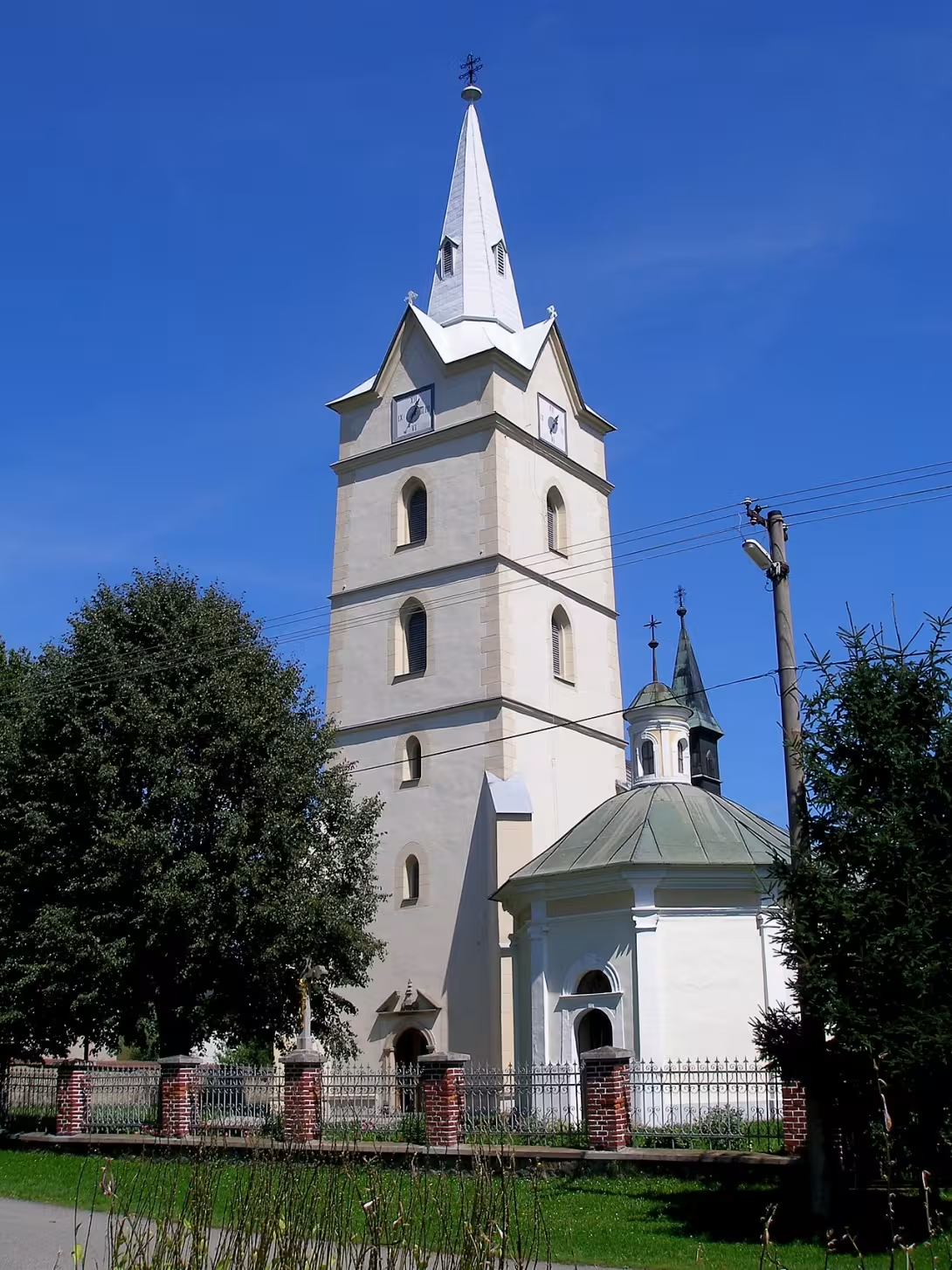
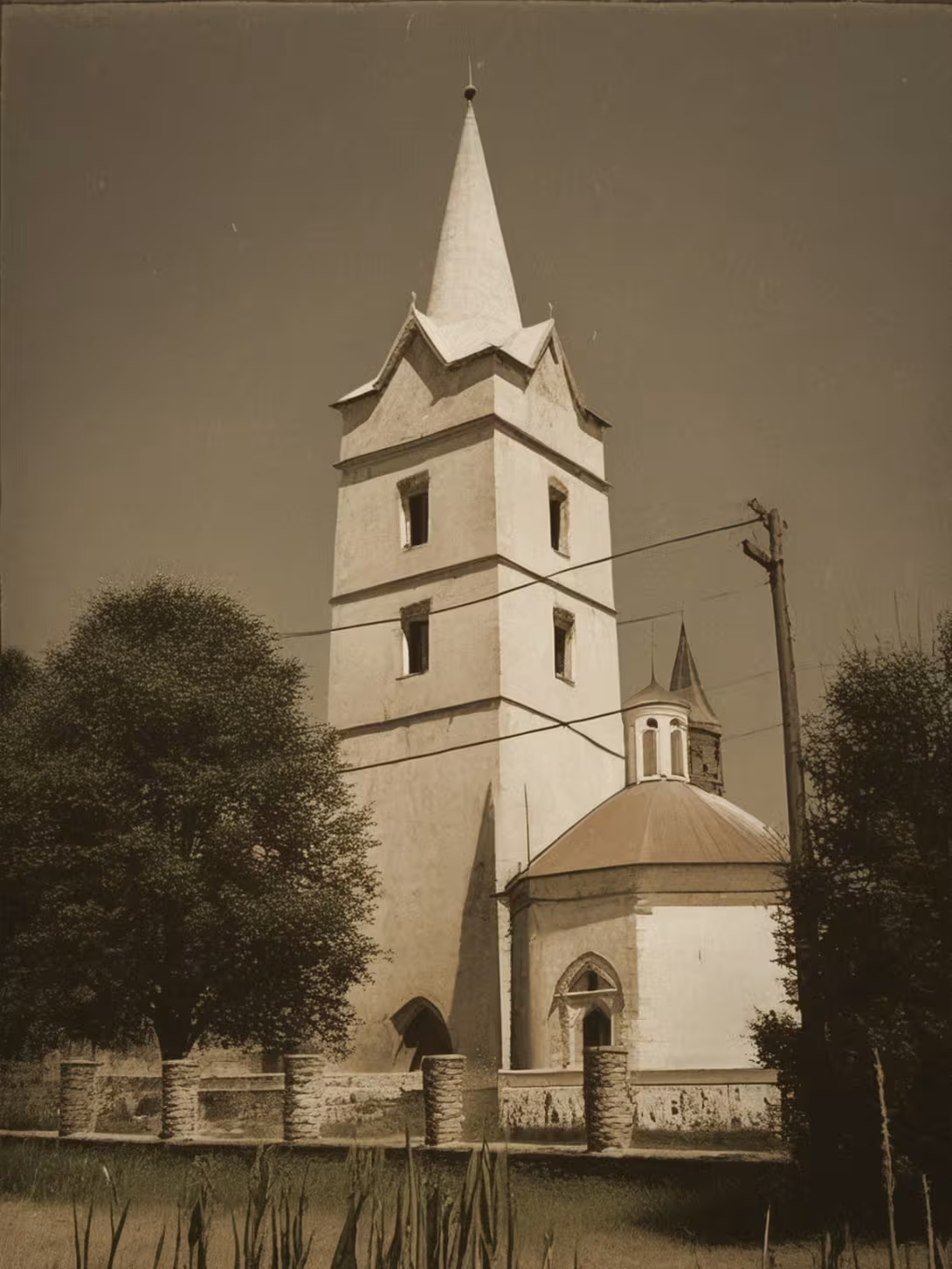
The historical view on the left is a visualisation generated by artificial intelligence and serves as inspiration.
Historical Milestones
- 1655
- The church had a plate attic and a simple wooden tower.
- 1662
- Count Ladislav Rákoczi had a tall brick tower built, and the boat inside he let the glass.
- 1663
- Countess Elizabeth Rakoczi's elder decorated the southern chapel with an artistic stucco ornament.
- 1762
- The tower had a simple squared low pyramid.
- 1769
- Until this year the church choir was wooden.
- 1917
- Repair of the church led by parish priest John Beliš after damage during World War I.
- 1920
- Getting new bells from S.CYRILLU
Interesting facts
- Gothic church from the first half of the 14th century has a Renaissance altar and oratorium of the Rákoczi family. - The layout of the building takes the form of a two-armed cross, which probably caused two side chapels at the main altar. - In 1662, Count Ladislav Rákoczi built a tall brick tower and let the ship glazed. - The main altar from 1635 is made in German Renaissance style with paintings of four Hungarian kings. - Virgin image Mary and little Jesus had a silver garment of 116 grenades purchased by the congregation people in the mid - 18th century.
Guide
The guide was voiced by a synthetic voice created by artificial intelligence.
Show guide text
The text was prepared by artificial intelligence and has not been editorially reviewed. It may contain inaccuracies.
Welcome to the Corps. You stand at one of the most important historical points of this location, near the church of St. Margita. Before you begin your tour, try to ease your step for a while, stop and just feel the atmosphere of this place. In front of your eyes, the rods of a building that is not just a hundred stones and mortar, but a living witness to the centuries that raced here. Feel the monumental and tranquillity that this Gothic temple radiates. It is a place where ancient history meets the artistic expression of noble genders and where every part of the building tells a story about transformations, royal influence and human endurance.
If you look at the overall silhouette of the church, you may think that it has gone a tremendous way since its creation. This history did not begin a few decades ago, but in the ancient past, namely the first half of the fourteenth century. That is when this Gothic temple was formed, laying the foundations for everything you see today. It is fascinating to think about how this object has changed over the centuries. If we went back to time, for example, 1655, you would see a completely different view. At that time the church still had a plate attic and its tower was simple, wooden. It was not as dominant as it is for us today, but a more humble home for prayer.
A turning point for the look you see today came in the 17th century. In 1662 there was a fundamental change that was influenced by Count Ladislav Rákoczi. This man decided that the church deserves a new, more lasting and noble form. Just then, a tall brick tower was built, which provided the building with its characteristic profile. However, part of the interior remained inactive. In the same year, the Count glazed the church boat, turning the interior into a space with new, deeper depth and stability. This was the transition from wooden structures to more durable stone architecture.
Now that you stand so close, pay attention to the details that make up the soul of this building. If you look at the layout of the building, you can notice one interesting thing. The church takes the form of a two-armed cross. This shape is not a coincidence. It was probably caused by two side chapels located at the main altar. This geometry gives the building a specific character and creates a space that acts harmoniously but comprehensively.
Various epochs meet in the church architecture. Although the roots are gothic, you will find a renaissance touch in the interior. Note the Renaissance altar and the Rákoczi family oratorium located in this area. These elements show how artistic styles have erupted over the centuries and how the wealth and power of noble genders have been reflected in religious life.
The Rákoczi family is the strongest connected to this place. In addition to Count Ladislav, mentioned earlier, countess Elizabeth Rákoczi is also an important figure. Her contribution was artistic and aesthetic. In 1663 she decided that the southern chapel would be decorated with art stucco ornament. If you ever look closer into this chapel, you will see this fine and detailed work that gives the place elegance and playfulness. It is a beautiful example of how architecture began to focus not only on functionality but also on visual beauty and decorativeness in the seventh century.
However, it is important to realize that this church was not only about building and decorating, but also about survival. Every building faces time and calamity. St. Margita's church also had to survive periods of unrest and war chaos. One of the most difficult moments for this monument was World War I. The damage suffered during this conflict was significant. Yet, history teaches us that ruins can be resurrected. In 1917 an important repair was made under the direction of parish priest John Beliš. Thanks to his efforts and care, the church got out of that period and could continue its existence for future generations. This repair story shows that human efforts to preserve cultural heritage are stronger than the destruction caused by war.
Now that you look toward the tower, remember how its appearance changed in later centuries. In 1762, the tower had a different appearance than it has today - a simple square - edged low pyramid. This constant transformation, from wooden elements to brick structures to various toe shapes, is exactly what makes this church so unique. It is not a static object, but a dynamic monument that has constantly evolved along with the needs of people and changing tastes of time.
View this architecture as a layer of time. You have a Gothic base, Renaissance elements, aristocratic ornaments and modern repairs that ensure that we can stand here today. It is fascinating how the simpleness of the 1655 wooden tower can be combined in one space with the artistic depth of stucco ornaments from 1663.
Now we invite you to enjoy this space and its surroundings in its entirety. Look carefully at every wall, every detail that architecture offers you. Let yourself be carried away by the history of the Zborov and feel the peace this place brings. Thank you for joining us on this short journey in time. We firmly believe that this view of St. Margita's church has brought you new knowledge and deeper respect for the past that molds us all. We wish you a pleasant next tour.
Tips for visitors
We recommend a visit in spring or autumn when the temperatures and colors of the country around the village of Zborov highlight the architecture of the church of St. Margita.
To the church and its surroundings, wear comfortable shoes suitable for walking on historical terrain. Since it is sacral construction, we recommend clothing that match the dignity of this place.
For photographers are the most suitable morning and evening hours when the low sun creates a game of shadows on the facade of the building. Pictures from the exterior capture the overall silhouette of the church in the context of the village.
Families with children can connect the visit with a short walk around Prešov region.
Frequently asked questions
Can the monument be visited?
Religious buildings are usually open mainly during services; at other times a visit is normally arranged with the parish or the operator. We have not verified specific times.
Where is the monument?
Location: č. 528, Zborov, Prešovský kraj. The map on this page shows the exact spot.
Why is the monument protected?
It is listed in the Central List of the Monuments Fund of the Slovak Republic as a national cultural monument (ÚZPF no. 411-264).
For children
Close your eyes and imagine pressing a secret button on a time machine. Boom! You fly deep into the past, exactly 626 years ago. Cars, cell phones and asphalt roads will disappear around you. You are standing in the village of Zborov and something fascinating is growing before you. It's St. Margita's church. At the time, it was not just an old building, but a center of the world for the people who lived here.
Nearby
🏰 Historic sites (49)
- František II. Rákoci 0.2 km
- sv. Ján Nepomucký 0.4 km
- Kaštieľ Šerédiovcov 0.4 km web
- Panna Mária 0.9 km
- Hlavná veža 2.0 km
- Zborov 2.0 km web
- Alžbeta 5.2 km
- Kúpeľný dom Astória 5.3 km Bardejovské kúpele 1994/32
- B.K.I. 1882 5.3 km
- Padlým 5.3 km
- Múzeum ľudovej architektúry - Skanzen Bardejov 5.4 km web
- Poorova chata 5.7 km
- Pramen rieky Ondava 7.5 km
- Prameň Ondavy 7.7 km
- Panteón osobností 1.sv. vojny 8.1 km
- Pomník Jozefa II. 8.2 km
- Las Pamięci Jana Pawła II 8.4 km
- Bazilika svätého Egidia 8.9 km Radničné námestie 47/47
- sv. Florián 8.9 km
- Cmentarz wojenny nr 46 - Konieczna-Beskidek 8.9 km
🍽️ Restaurants and dining (114)
- Starý kaštieľ 0.3 km +421 940 601 114
- Bar u Maťa 0.5 km
- Kopa u Braňa 4.0 km
- Srdiečko 5.3 km
- Srdiečko 5.3 km
- Espresso Srnka 5.3 km
- Grand Coffee 5.3 km web
- Magnólia 5.4 km
- Kinobar Žriedlo 5.4 km
- U Jožiho 5.4 km
- Fiori 5.4 km
- Reštaurácia Marianna 5.4 km
- Kleopatra 5.4 km
- Ľudové jedlá 5.4 km
- Grand Coffee - kúpeľná pražiareň kávy 5.4 km
- Lipka 5.9 km +421 950 589 575 web
- Ranč Regetovka 5.9 km +421 911 338 813 web
- Reštaurácia Les 6.0 km
- Cactus Aprés Ski Bar 6.1 km
- Stodola 6.3 km +421 911 389 771 web
🏨 Accommodation (61)
- Penzión Jana 0.5 km
- Geffertova chata 3.8 km
- Ozón 5.2 km +421544772101 web
- Hotel Mier 5.3 km Bardejovské kúpele 2009/46 web
- Alexander 5.3 km web
- Penzión Zunama 5.4 km Bardejovské kúpele 4309/70A +421 903 642 820 web
- Kolibrik 5.5 km
- Lipka 5.9 km +421 950 589 575 web
- Regetovka 6.6 km
- Vila Makovica 6.8 km
- Penzión Adrián 7.7 km +421 903 633 210 web
- Mníchovský potok 8.1 km
- SEMAFOR 8.5 km +421 905 830 984 web
- Artin 8.7 km Fučíkova 25 +421905618118 web
- Hostel H18 8.8 km
- Le Monde 8.9 km +421 902 123 555;+421 948 636 100
- B&B Alibi 8.9 km +421948123500 web
- Hotel pod Bránou 9.0 km
- Hotel Šariš 9.1 km
- Magura 9.1 km
🚲 Rentals and sport (11)
- Letné kúpalisko Bardejovské Kúpele 5.3 km +421 54 477 4421 web
- Detský bazén 5.3 km
- Prírodné kúpalisko Makovica 7.0 km
- Sportisimo 8.0 km
- Intersport 8.2 km
- SLR sport Hockey shop 8.6 km
- Mc Sport 8.7 km
- Letné kúpalisko Bardejov 8.7 km
- Trespass 8.9 km
- Cycleland 9.1 km +421 949 815 775 web
- Lemko Bike 12.8 km +48781363637 web
🥾 Hiking and nature (230)
- Jubilejný háj RČS 1918-1928, Zborov 0.4 km
- Nemecký vojenský cintorín Zborov 1939-1945 0.6 km
- Hradské 2.3 km
- Koldorina 2.4 km
- Jedlina 2.6 km
- Zimná voda 3.7 km
- Gradlovo 3.7 km
- Minerálny prameň Dlha Lúka 3.9 km
- Kúty 4.0 km
- Studnička zimná 4.2 km
- Zbojnícka studnička 4.5 km
- Kohútov 4.6 km
- Stebnícka Magura 4.6 km
- Studnička skala 4.7 km
- Smilniansky vrch 4.7 km
- Suchý vrch 4.9 km
- Sidanka 5.0 km
- Tri studničky 5.2 km
- Alžbetínsky park 5.3 km
- Alžbeta 5.3 km
Thematic route
As there are no other objects in the area of the area of the main objective, I propose a thematic route:
1. Church of St. Margita - Visit the interior of the church and see its architecture. 2. Church area - Take a walk in the courtyard which shows the location of the building in the village of Zborov. 3. Details of the facade - See the exterior elements of the church from the time of its creation.
Seasonal recommendations
The spring return of life to the surroundings of Zborov brings fresh greenery to Prešov region. The church of St. Margita contrasts the stone walls with the flowering surroundings. The light is soft and diffuse in the spring months, making it easier to capture the details of architecture without sharp shadows. Visitors are advised to wear layered clothing and waterproof jacket, as spring is rainy. A morning clock is suitable when it is quiet around.
Summer brings long days and bright sun to the Zborov. Direct light emphasizes the texture of materials and creates significant shadow effects. The surroundings of the church are in full flower with rich vegetation. At summer temperatures, it is advisable to wear light, airy clothes and protect yourself from the sun hat or cap. Early mornings or late afternoons are recommended when the intensity of the sun is lower and the temperature is more pleasant.
Podzim in Prešov region turns tree leaves into golden, orange and red shades. The light is warmer and lower in this period. Since temperatures are falling, it is appropriate to layered clothing with long sleeves. Afternoon hours are suitable for softer light.
Winter brings to the Zborov silence and often snow cover, which white surrounding the church. The light is short and pale at this time. Winter temperatures are low, often below zero, so it is essential to wear warm clothing, including winter jackets, gloves and hats. A good time to visit are the noon hours, when light is the most intense and temperatures the highest.
Visualisations and artistic views


The visualisations are generated by artificial intelligence and serve as inspiration.
Photographs from the area
Real photos taken near the monument

Source and licence are given for each image.
Visitor Tips
No tips yet. Be the first!
Log in and add your tip.
Location on Map

Visitor photos
No photos yet. Be the first to add a photo from your visit!
Log in and add your photo or leave a rating.
You get more points for a visit verified in the app — we can tell from the GPS that you are there.
Reviews and comments