








two Vernacular house
This double house, located in the village Podbiel in Žilina region, is a recognised national cultural monument of Slovakia. The complex registers the Monument Office of the Slovak Republic under the number of ÚZPF 31A-2056 and consists of one object: Folk house, created at the end of the 19th century (2nd half). This house is an example of Jewish architecture from this period.
The complex is landfilled from one object - Folk House, which was built in 1900 and represents typical elements of folk construction. This double house is an example of log construction, indicating the use of wood as the main material in its construction techniques.
According to the available data, there is nothing accurate about the detailed construction characteristics of this house. No information is provided on the availability, flooring, floor plan or specific material used for its construction.
The folk house is located in the cadastral village Podbiel, Žilinský kraj. The address of this historic building is 127 and 126. The date of the declaration for the monument is not included in the available data, but its status as a national cultural heritage guarantees the protection and preservation of this example of Slovak Jewish architecture. The current state and use of the house are not exactly known, but its protected status ensures that it is maintained in good condition.
This double house in the village Podbiel is an example of Slovak cultural heritage and its preservation enables visitors to gain a better view of the life and traditions of Slovaks at the end of the 19th century. Its location in Žilina region makes this object another example of rich cultural heritage, which is known to Slovakia. A visit to this house offers a unique opportunity to gain an understanding of historical and architectural aspects of Slovak heritage.
Tehdy a dnes
Drag the slider and compare how the monument might have looked when it was built with the view today.
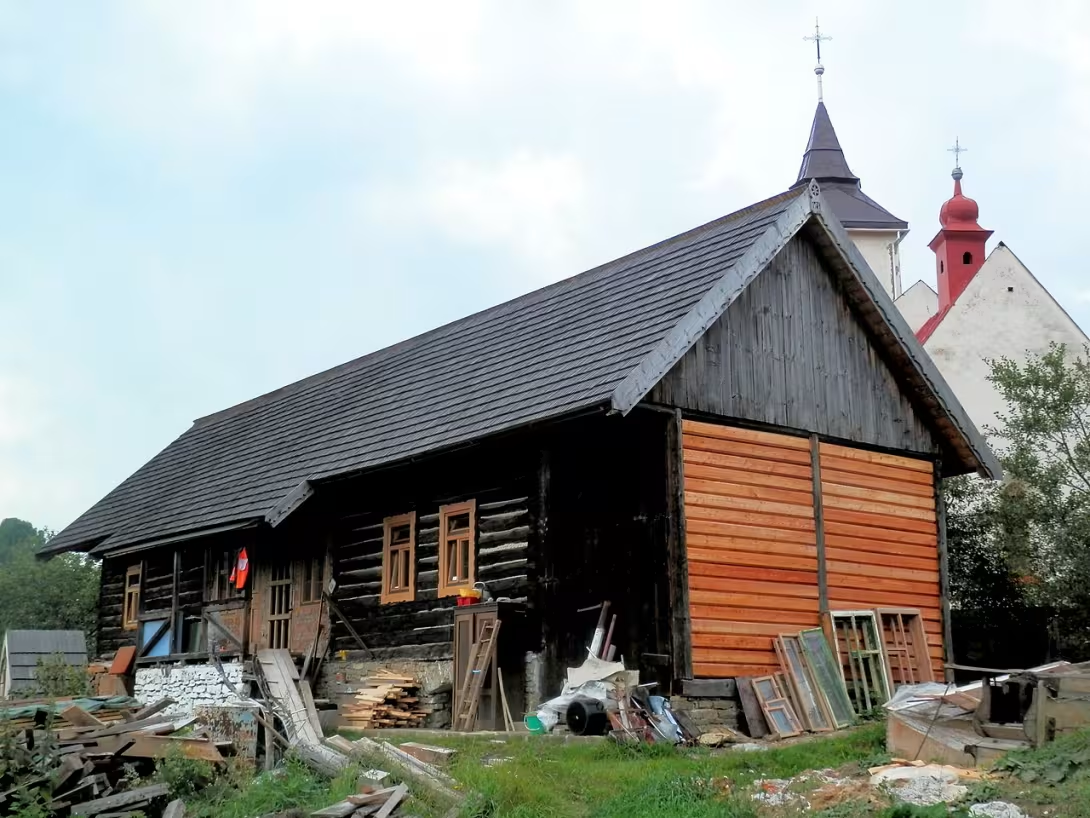
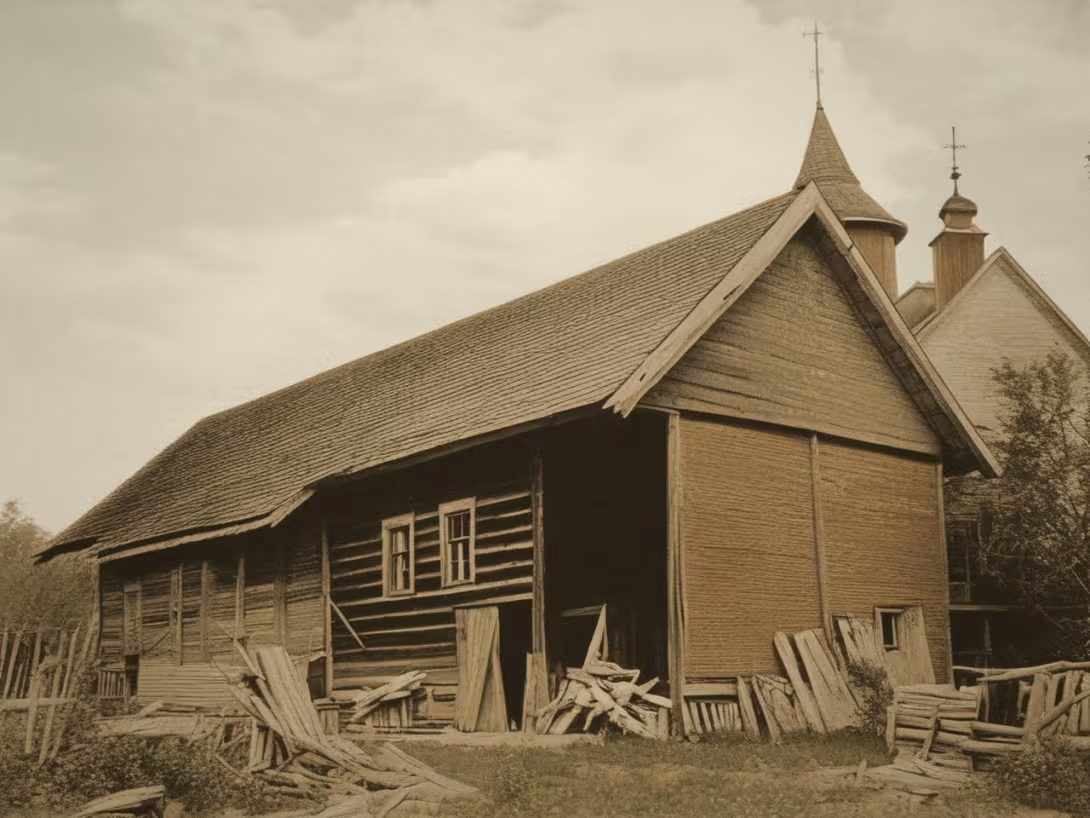
The historical view on the left is a visualisation generated by artificial intelligence and serves as inspiration.
Historical Milestones
- 1900
- Creation of the Folk House in the village Podbiel
- round 1900
- The house represents the typical log structure and the use of wood as the main material
Interesting facts
- This two-house is a respected national cultural monument of Slovakia. - The building was built at the end of the 19th century (2nd half) and represents typical elements of folk construction. - The house is an example of a log structure, indicating the use of wood as the main material in its construction techniques. - Double house is located in the cadastral village Podbiel, Žilina region and is a protected national cultural heritage. - The preservation of this object allows visitors to gain a better view of the life and traditions of Slovaks at the end of the 19th century.
Guide
Show guide text
The text was prepared by artificial intelligence and has not been editorially reviewed. It may contain inaccuracies.
Welcome to the picturesque village Podbiel, in the heart of the Kysuce region, where nature meets with the silence of human life. You are standing right in front of an object that carries a special peace and at the same time fascinating uncertainty - in front of the House of Folk, local inhabitants known as the two. Before we get to a deeper knowledge, just stop for a moment. Feel the atmosphere of this place. Take a sense of the silence surrounding this building and how it has been incorporated into the environment you are in. It's a moment when you can stop in time and just watch this historical trail communicate with the surroundings.
When you look at this house, you might wonder when it was built or who the creator was. However, we must admit that history has not provided clear answers in this case. The chronology of this house remains in the shadow of the past, unknown and mysterious. But it is in this uncertainty that its greatest strength lies. The folk house is not only a set of materials arranged into the shape of a building; it is a reflection of the lives of people who lived, worked and formed at a time when the world was perceived differently than today. This double home represents the archetype of home, which was the cornerstone of existence for our ancestors. In the context of Kysuce, where family proximity and mutual assistance were crucial, such a building has profound social significance. The name of the two-house indicates a specific way of housing, which probably reflected the need for shared space or the division of one building into two equal parts, which in many traditional communities was the normal way of organising life.
Now that you have imagined the context with which this house has grown, pay attention to the construction itself. Look at her face and how her overall composition works. Even if we do not know the names of architects who designed this construction, we can see in its shape the intention and deep understanding of the local environment. Feel the rhythm that forms the facade of this house. Look at how the building communicates with the terrain and how its volume balances within this double structure. In the architecture of folk houses we often encounter a fascinating balance between functionality and natural aesthetics. Look at the lines that define this object. See how the individual parts of the building complement each other and create a whole that works consistently and permanently. Although we do not see complex artistic decorations, each part of this building has a clear purpose. Look at how a house is stratified and how its presence in space is naturally, as if it has always been here. It is an architecture that does not operate by machine, but rather by a deep understanding of what it means to have a home.
Perhaps you would like to know what fates took place in these walls, what voices sometimes sounded like. Unfortunately, history has not given us the names of the specific people who inhabited this house. But it is this anonymity that allows us to do something much deeper - it allows us to see each of us in this house. Imagine the generations passing through, those days full of daily work and nights of rest. This house witnessed a normal but extremely important human life. It was a place where families in Podbiel's identity was built, where everyday challenges were addressed, and where links that lasted centuries were created. Even if the names of these people are forgotten, their presence is still felt at every angle in this building. They are here as silent companions who remind us that history is not only a major event but, above all, thousands of small, everyday moments of ordinary people.
And here we come to what makes this object truly special - its terrible and beautiful mystery. The secret of this place is not something you see, but what you cannot see. It's the unknown chronology, the unknown face of the creator. Why did this very two - made? What led people to this particular design? This uncertainty makes us think. We often look in history for clear facts, exact dates and verified names, but sometimes this empty room in history is the greatest attraction for our imagination. This house is like an open book in which some parties are missing, and it is the missing parts that force us to complete with their own intuition and respect for the past. It is a challenge for every visitor to try to understand the spirit of this place in his perception.
Our short time together in front of this house is slowly ending, but the road to learning The Podbiel is now opening. Let yourself be carried by the beauty of this location and look for further traces of history that are hidden in the surrounding environment. We invite you to continue your tour and to see any moment you spend here. The two is just one of the many stories this country tells - a story that is quite incomplete, but that is why so fascinating. Thank you for your company and we wish you a pleasant and inspirational day at the next discovery of the beauty of Podbiel.
Tips for visitors
The best time to visit is in the autumn months when the country around the two-house is most beautiful and the temperature is pleasant. This season time also offers the best conditions for photography. When visiting a double home, we recommend taking a photographer (which is useful for recording panoramas), protective clothing for unforeseen weather and a bracelet with drinking water. If you are interested in more detailed information, you can see the map or guide to the monument. Photography is best at the beginning and end of the day when light is mild. The most beautiful panoramas are located from the windows of the house and from the terrace. In the immediate vicinity you can visit the historical village Podbiel, where there is an exhibition about the history of the room. Families with children also benefit from visiting the surrounding forests, which offer opportunities for short walks or picnics.
Frequently asked questions
Can the monument be visited?
This is a residential or farm building, not a museum with opening hours. Please view it from public space and respect the owners' privacy. We have no information about access to the interior.
Where is the monument?
Location: č. 127, 126, Podbiel, Žilinský kraj. The map on this page shows the exact spot.
Why is the monument protected?
It is listed in the Central List of the Monuments Fund of the Slovak Republic as a national cultural monument (ÚZPF no. 31A-2056).
For children
Imagine one moment teleporting to the past. It's not a science fiction movie, it's a real journey of time. Exactly 126 years ago, when no one had even had a smartphone in their hands and did not know what Wi-Fi was, a whole new chapter began to be written in Podbiel. That's when this fascinating house was built, which is standing and waiting for you today.
Nearby
🏰 Historic sites (73)
- Malé Podbielanské etnografické múzeum 0.2 km +421 903 535 832 web
- Františkova huta 2.0 km
- Ruiny mostu 2.0 km
- pamätník Zdenky Schelingovej 2.7 km
- sv. Ján Evanjelista 2.9 km
- sv. Ján Nepomucký 2.9 km
- sv. Ján Krstiteľ 2.9 km
- Korunovanie Panny Márie 5.1 km
- sv. Ján Nepomucký 5.3 km
- SNP 1944 Kľačianska dolina 5.3 km
- XII 5.5 km
- XI 5.5 km
- XIV 5.5 km
- XIII 5.5 km
- X 5.5 km
- IX 5.6 km
- VIII 5.6 km
- VII 5.6 km
- VI 5.6 km
- V 5.6 km
🍽️ Restaurants and dining (131)
- U Bebejov 0.2 km
- Krčma u Urbana 0.2 km
- Pizzeria a Reštaurácia Pod Lipou 0.4 km
- Salaš Ostražica 1.4 km Družstevná 510/21
- Pejrák 2.2 km
- Mak Pub 2.6 km
- Hostinec Mlyn 2.6 km
- U Šimánka 2.7 km
- JAMA 2.8 km
- Reštaurácia Uhliská 3.0 km Uhliská +421 901 740 710
- Pamp 3.3 km web
- Top kebab 3.4 km
- Caffe Bar Europa 3.4 km
- Oravský zrub 3.5 km +421 915334488 web
- Biely Dom 4.9 km
- Hostinec u poľovníka 5.1 km
- Pizzeria Papo 5.2 km +421 910 139 399 web
- Stará krčma 5.3 km
- Pivnica 5.4 km
- Pizzeria NOVA 5.5 km
🏨 Accommodation (109)
- Drevenica Podbiel 0.4 km web
- Penzión Starý pivovar 1.2 km +421435381017
- Hotel ARMAN 2.7 km +421433709042 web
- Penzión Uhliská 3.0 km Uhliská 642/57 web
- Penzión Centrum 5.4 km +421 901 742 222;+421435395575 web
- Chata Roháče 5.4 km web
- Hotel Millenium 5.7 km Oravský Bilely Potok 123 +421 918 098 120
- Penzión Fortuna 5.9 km Oravské nábrežie 139/7 web
- Hotel Limba*** 6.0 km Hviezdoslavova 118/5 web
- Apartmány pri Studničke 6.0 km Oravský Biely potok 95
- Ubytovanie u Božky 6.3 km
- Drevenica Sedliacka Dubová 6.5 km Sedliacka Dubová 89 web
- Penzion Pohoda 8.0 km
- Penzion Bakala 8.3 km +421 949 432 187; +421 944 043 569 web
- Altis 8.8 km
- Chata Orava 9.1 km
- Ústie 9.1 km
- Penzión ORAVA 9.4 km
- Penzion Príslop 9.4 km +421 917 720 004 web
- Chata Panoráma 9.4 km Slanická Osada 307 web
🚲 Rentals and sport (13)
- Cyklošport 3.2 km
- Europa Gym 3.4 km
- Mestská plaváreň Tvrdošín 5.5 km
- Prístav č. 1 9.6 km
- White star ŠPORT 10.7 km Hlavná 356/15 +421 948 043 801
- Snowbox 10.8 km
- Prístav č. 2 10.8 km
- Kappa šport 11.1 km Štefaniková
- HEIKO šport 11.2 km Hviezdoslavovo námestie 213 +421 903 5405 05
- Bicykle X Sport 11.2 km Hviezdoslavovo námestie 213 +421 948 038 414
- Vápenka 12.8 km
- SKICENTRUM Brezovica 13.5 km
- Lanový Park Tarzanka 13.9 km +421 907 201 771 web
🥾 Hiking and nature (272)
- Rezervácia ľudovej architektúry 0.2 km +421 43 538 10 31 web
- Červená skala 0.8 km
- Červená skala 0.9 km
- Biela skala 1.4 km
- Lučivný vrch 1.4 km
- Kepeňovo 1.5 km
- Vŕšok 1.7 km
- Čížiková 2.0 km
- Studnička Teplica 2.1 km
- Malý vŕšok 2.3 km
- Búčie 2.5 km
- Ostrvka 2.5 km
- Vysoký grúň 2.6 km
- Príboj 2.7 km
- Zmrázov 2.7 km
- Petrovka 2.8 km
- Horné Osvaldovo 3.1 km
- Ostražica 3.2 km
- Grapy 3.2 km
- Skalka 3.5 km
Thematic route
Thematic cruise route: Podbiel and Folk House
1. People's House (Dvojdom) - Type: Historical monument - Proč is worth visiting: This double house is an example of architecture from the 19th century and provides insight into the life of the inhabitants of the time. In the courtyard you can discover details that reflect the historical context and art of periods. 2. Surrounding forest - Type: Natural location - Why is it worth visiting: Forest around the Folk House offers an opportunity for a relaxing walk in a small but comfortable environment. Ideal for this trip to choose a moment to observe the past flora and fauna. 3. Cottage under the mountain - Type: Traditional residential building - Why is it worth visiting: This object represents a typical cottage, which was in the past a user home. It is an opportunity to explore traditional building techniques and the lifestyle of the inhabitants of the region. 4. Old Path - Type: Historical communication - Proč is worth a visit: This stretch of old roads that led through the village Podbiel, is witnessed by the historical route along which traders and tourists moved. This route offers a combination of historical, cultural and natural elements.
Seasonal recommendations
Jaro: In spring the House of Folk in Podbiel manifests itself in its best form when the surrounding area is covered with growing flowers. In the sun, the building is illuminated by the color of green leaves and May flowers. The best time to visit is morning or early afternoon, when crowds are even less. It is recommended to wear clothes suitable for mists and sunglasses.
Leto: In summer, the House of Folk in Podbiel is a place with large crowds. In the sun, the building lights up brightest, and the surrounding area is full of flowering plants. The best time to visit is in the morning when temperatures are more favourable. It is recommended to wear lightweight clothing, sunglasses and plenty of drinking water.
Under: In the middle is the folk house surrounded by golden leaves. Sunny days are short, but temperatures are becoming more favourable. The best time to cross over is a trip before tonight. It is recommended to wear warm clothes and a hat or scarf.
Winter: In winter, the House of Folk is surrounded by dreams, which adds another hope to the atmosphere. With weaker lighting, the building is mystic. The best time to visit is in the morning. It is recommended to wear warm clothing including fur or other insulated material, trousers and a protective hat.
Visualisations and artistic views


The visualisations are generated by artificial intelligence and serve as inspiration.
Photographs from the area
Real photos taken near the monument


Source and licence are given for each image.
Visitor Tips
No tips yet. Be the first!
Log in and add your tip.
Location on Map
More monuments – Podbiel
Show all in the town



Visitor photos
No photos yet. Be the first to add a photo from your visit!
Log in and add your photo or leave a rating.
You get more points for a visit verified in the app — we can tell from the GPS that you are there.
Reviews and comments