








vinohradnícke domy a pivnica Vineyard houses
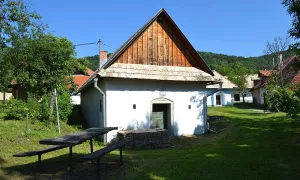
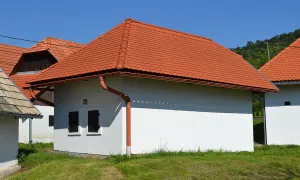
These wine-growing houses in the village of Sebechleby in the Banská Bystrica region are a national cultural monument registered in the register of ÚZPF under the number 3600. The building represents folk construction and comes from the second half of the 19th century, while the year of creation is officially dated to 1900.
The area of the monument consists of two separate objects. The first is the vineyard house designated 3600/1 and the second is the vineyard house marked 3600/2. Both of these objects have brick stone structure and are a characteristic example of folk construction from the late 19th century.
The monument is located in the village of Sebechleby with geographical coordinates GPS 48.28145, 18.91605. Architectural style of the whole area is defined as folk architecture.
These wine-growing houses are located in the village of Sebechleby and offer visitors a direct view of traditional construction from the turn of the century. Visiting this site allows you to discover the material heritage of the region through two preserved brick objects.
Tehdy a dnes
Drag the slider and compare how the monument might have looked when it was built with the view today.
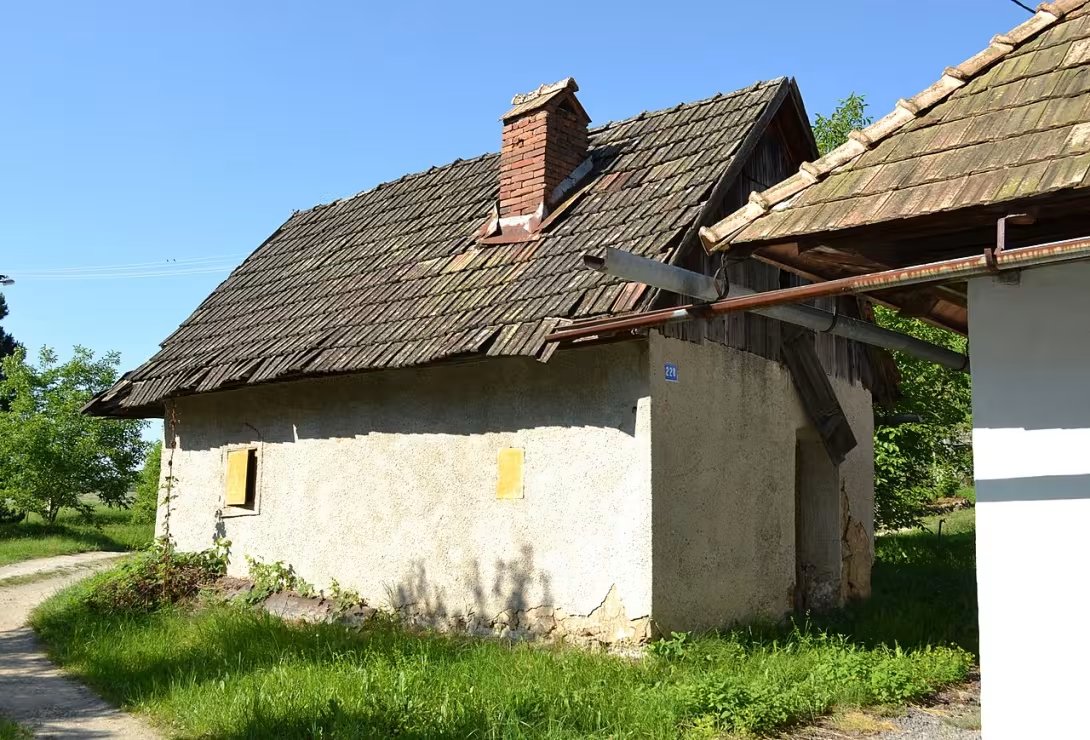

The historical view on the left is a visualisation generated by artificial intelligence and serves as inspiration.
Interesting facts
- The monument is a national cultural monument registered in the register of ÚZPF under the number 3600 and comes from the period of the second half of the 19th century, while the year of creation is officially dated to 1900. - The area of the monument consists of two separate buildings, which are a vineyard house marked 3600/1 and a vineyard house marked 3600/2. - Both buildings have a brick stone structure and are a characteristic example of folk construction from the late 19th century. - Architectural style of the whole area is defined as folk architecture and the site is located on GPS
Guide
Show guide text
The text was prepared by artificial intelligence and has not been editorially reviewed. It may contain inaccuracies.
Welcome to Sebechleb. You have just stopped at a place that carries the silent smell of history and tradition, although at first glance time may seem to be passing at a much slower pace. You stand before a set of wine houses and cellars that form a unique part of this site. As you roam around, you may be immediately reached only by the strange harmony that these structures elicit. They are not monumental buildings that want to dominate the landscape, but rather silent witnesses of the past that seem to be an integral part of the land itself on which they stand. Feel the atmosphere of peace and authenticity that this place demands. It is a place where man's work meets the gifts of nature, and although these houses may be modest, their significance to this neighborhood is immense.
When we try to understand why these buildings were created here at all, we need to look at the very essence of life in this region. Wine-growing houses and cellars are not just random constructions; they are the result of a long relationship between man and vineyards. In the past, the culture of growing plants and processing fruit was an integral part of everyday life. These houses served as basic nodes, where fieldwork and the need to preserve precious crops met. Although accurate chronological data on their origin were unknown to us, we can assume that their existence is deeply rooted in the tradition that has been passed on from generation to generation in this area. Each of these buildings had its clear purpose - to provide shelter, a place to process fruits, and, above all, a safe haven for the most important possession of the vine-grower.
Now that you have imagined their historical context, try to pay attention to the architecture itself and to what you have right before your eyes. When you look at the facade of these houses, try to perceive their overall composition and how they adapt to the terrain. Note how these structures work in harmony with the environment. Although we do not know the names of the specific architects who designed them, we see a deep understanding of the functionality and environment. The architecture of these objects is primarily practical. The dominant element here is the cellars, which are often buried deep in the ground or are part of the very foundation of the house. This element was crucial to maintaining a stable temperature, which was necessary for proper storage. Look at how the houses are stratified; their structure reflects the need to separate the living area from the premises for work and storage. Feel this divided function, which is typical of traditional agricultural and wine-growing buildings. Every detail, from the shape of roofs to the way the walls meet the soil, speaks of an effort to create a lasting and functional structure to last decades or even centuries.
Although history has not told us the names of the specific persons who built or lived in these houses, we can imagine them. Imagine these anonymous viticulturers who have done hard work here every day. They were people who understood the cycle of nature, who knew every change in the weather and every need for their land. Their lives were linked to these walls, to these cellars. Every step along these paths, every touch with the materials from which houses are built, is a message from these unknown people. Even though their names have lost time, their presence is at every angle and in every stone that makes up these structures. These are stories of perseverance, of families that have built their existence here, and of a community that has been united by a common goal and work.
What's most fascinating about this place is the unknown. There is something magical and at the same time somewhat mysterious that the exact century of these houses remains hidden in the shadows of the past. The unfamiliarity of architects and the unknownness of the specific historical events that have taken place here create space for your own imagination. What happened in these cellars on cold nights? What secrets do the walls you see carry? This uncertainty forces us to stop and think about how much information about our own past has been lost. It is this puzzle - this confusion - that gives this place its specific character. It's not just a collection of buildings, it's a lively, puzzle text that we're trying to read with you slowly.
Now I want to invite you to continue this silent discovery. Be carried away by the atmosphere of Sebechlebie and try to slowly pass around these wine-growing houses. Feel the silence, feel the texture of the surroundings, and try to imagine the life that once took place here. Every look at these buildings is a new opportunity to understand something more about how people in the region once lived. Let yourself be guided by your intuition and your own feeling from this place. Thank you for sharing this moment of discovery with us. We wish you a pleasant walk and let this place bring you peace and new thoughts. Goodbye.
Tips for visitors
To visit the wine-growing houses and cellars in Sebechleboch it is appropriate to choose a sunny spring or autumn day. The place can be reached by car, can be parked in the village or surroundings. We recommend solid shoes suitable for sloping terrain, drinking water, warmer months and head cover and sunscreen. Morning or evening light is suitable for photography. In the locality it is worth watching local tourist boards. The place is suitable for an easy trip connected with traditional folk architecture.
Frequently asked questions
Can the monument be visited?
This is a residential or farm building, not a museum with opening hours. Please view it from public space and respect the owners' privacy. We have no information about access to the interior.
Where is the monument?
Location: Sebechleby, Banskobystrický kraj. The map on this page shows the exact spot.
Why is the monument protected?
It is listed in the Central List of the Monuments Fund of the Slovak Republic as a national cultural monument (ÚZPF no. 325-3600).
For children
You're gonna find yourself in a time machine. You press the button and hop - you are in 1900, which is about a hundred and twenty years ago. There's a dupe of wooden wheelbarrows around you, the laughter of hardworking people and the tinkering of glasses. Right now, a place that looks like another planet is born in a picturesque country. Isou to Sebechleby and their famous vineyard houses and cellar. As much as you're in a secret base, there's the atmosphere of the good old days breathing on you. How did the bricks look like?
Nearby
🏰 Historic sites (87)
- Pamiatková rezervácia ľudovej architektúry Stará Hora 0.3 km web
- Kalvária 2.3 km
- Sedembolestná Panna Mária 2.7 km
- Svätý Ján Nepomucký 2.7 km
- Trojičný stĺp 2.8 km
- Osloboditeľom 2.8 km
- Svätý Vendelín 3.2 km
- Fafokan 4.6 km +421 915 777 673 web
- Kristus nesúci kríž 5.1 km
- Nemčianske múzeum v Turčanovom mlyne 5.2 km
- Svätý Ján Nepomucký 5.3 km
- Pamätník represie, 19. 2. 1944 5.3 km
- Dedinské múzeum 5.4 km
- Svätý Florián 5.5 km
- Svätý Vendelín 5.5 km
- Pamätník 5.5 km
- Mariánsky stĺp 5.5 km
- Golgota 5.7 km
- Tufové pivnice 6.0 km
- Svätý Ján Nepomucký 6.4 km
🍽️ Restaurants and dining (52)
- Pohostinstvo Kohút 1.9 km
- Pizzeria Vito 2.8 km web
- Hostinec Strehár 2.8 km
- Hostinec Štvorka 2.8 km
- Hostinec Strehár 5.5 km
- Furmanská - Pizza Hont 5.9 km
- Motorest Tranzit 6.9 km +421 911 738 416 web
- Lom Beach Bar 7.6 km
- Corgoň 7.9 km
- Motorest Devičie 8.6 km web
- Kaviareň Dream3 9.1 km
- Pajta 9.2 km
- Bažina 10.1 km
- Hostinec 10.3 km
- Počúvalská krčma 11.2 km
- Hostinec 11.7 km Hontianska 217/65
- Neptún Lipovina 11.8 km
- Kebab 11.8 km
- U sv. Petra 12.5 km
- Legent pub 12.5 km
🏨 Accommodation (40)
- Penzión Chateau Hunting 5.3 km web
- Malý Domček 8.5 km +421 908 649 404
- Biely Domček 8.6 km +421 908 649 404
- Chata Anka 9.2 km +421 45 55 81 620 web
- Pivnica pod Bralom 9.8 km
- Stodola Počúvadlo 11.1 km +421 908 727 577
- Krupinkovo 11.2 km +421 905 063 296 web
- Penzión - ubytovanie 11.2 km
- Chalupa Počúvadlo 11.3 km +421 915 223 606
- Heliolit 12.6 km Ľ. Štúra 210/7 web
- Prameň 12.6 km K. Braxatorisa 8/3 web
- Penzión Bystrica 12.6 km Okružná 157/29
- Pension Eko Leo 12.7 km
- Penzion Gabika 12.7 km
- Kúpeľný hotel Minerál 12.7 km Okružná 124/32 +421 45 550 6001 web
- Hviezda 12.8 km web
- Poľovnícka chata Rázdiel 12.8 km +421918 334 033 web
- Diamant 12.9 km Kúpeľná 107/1 web
- Penzión Žemberovce 13.0 km +421 948 127 283 web
- Penzión U Mlynárky 13.0 km K. Braxatorisa 2/9
🚲 Rentals and sport (5)
- OFK Sebechleby 2.4 km web
- OFK Štart Prenčov 9.1 km
- bicykle Mama šport 13.9 km
- Požičovňa vodných bicyklov 14.5 km
- Tepličky 14.9 km
🥾 Hiking and nature (316)
- Viničný vrch 1.4 km
- Pliešky 1.8 km
- Viničky 1.9 km
- Vitajte na Starej Hore 2.0 km
- Homoľa 2.1 km
- Šibač 2.9 km
- Prostredný vrch 3.2 km
- Háj 3.4 km
- Opátov vrch 3.7 km
- Kľúč 3.7 km
- Šipická cesta 3.8 km
- Sirákovec 3.8 km
- Sokol 3.9 km
- Turečka 4.5 km
- Mrázovka 4.5 km
- Novinská 4.5 km
- Kostolná 4.6 km
- Kukučka 4.6 km
- Ostrý vrch 4.6 km
- Tretí vrch 4.7 km
Thematic route
Design of the cruise route in the village of Sebechleby and its surroundings:
1. Old cellar in the area - Type: Historical object - Why it is worth a visit: The original cellar carved into the tufu approximates traditional wine storage techniques and allows for a tour of the underground area.
2. Wine-growing homes - Type: Monument reserve of folk architecture - Why it is worth visiting: Dwellings with straw roofs and stone basement are used for walking and getting to know traditional construction or once the history of local viticulture.
3. Vineyard and external exhibition - Type: Public space and outdoor exhibition - Why it is worth a visit: The space between monument houses allows you to explore architectural elements in the exterior of the wine-growing site.
Seasonal recommendations
Spring brings awakening nature and surrounding hillsides covered with vineyards are furnished in green. During this period you will meet the minimum number of visitors. Wear strong shoes suitable for muddled terrain and a warmer jacket. Make an appointment before noon.
Summer will cover the vineyard in the sun. During the holiday months visitors arrive, so it is advisable to arrive in the morning before nine o'clock. Don't forget your sunglasses, head cover, drinking water and light breathable clothing, as shadows are less in this area.
Autumn brings a change in the colors of the surrounding nature and the air smells terrible. During weekends, more people show up, so schedule an early afternoon. Wear layered clothing and non-promoting jacket, as autumn weather is changing.
Winter transforms Sebechleby into a quiet place covered with snow. During this period, you will hardly meet any visitors, but you have to count on a shortened daylight period. The necessities are winter shoes with non-slip soles, thermal whitening, warm cap and gloves. It is best to choose noon for outdoors.
Visualisations and artistic views


The visualisations are generated by artificial intelligence and serve as inspiration.
Visitor Tips
No tips yet. Be the first!
Log in and add your tip.
Location on Map
More monuments – Sebechleby
Show all in the town

Visitor photos
No photos yet. Be the first to add a photo from your visit!
Log in and add your photo or leave a rating.
You get more points for a visit verified in the app — we can tell from the GPS that you are there.
Reviews and comments