








vinohradnícky dom Vineyard house
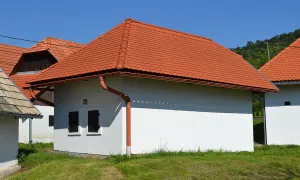
The vineyard house in the village of Sebechleby in Banská Bystrica region is a national cultural monument of Slovakia. The building was built in the late 19th century and represents folk architecture from the second half of this century.
The site of the monument is located only from one object: House viticultural with brick-stone structure. According to the Register of Monument Office of the Slovak Republic, this is an example of folk architecture from the end of the 19th century.
From the available data unknown specific details about the building character of the house, such as its layout, flooring or floor plan. The registration record shall only indicate the material and the period of origin.
The vineyard house is located at No. 1040 in Sebechleboch, with GPS coordinates 48.28269, 18.91433. This object is protected as a national cultural monument under number ÚZPF 325-3568.
The wine-growing house is an example of wine from the end of the 19th century and has historic value for the Sebechleby region.
Tehdy a dnes
Drag the slider and compare how the monument might have looked when it was built with the view today.
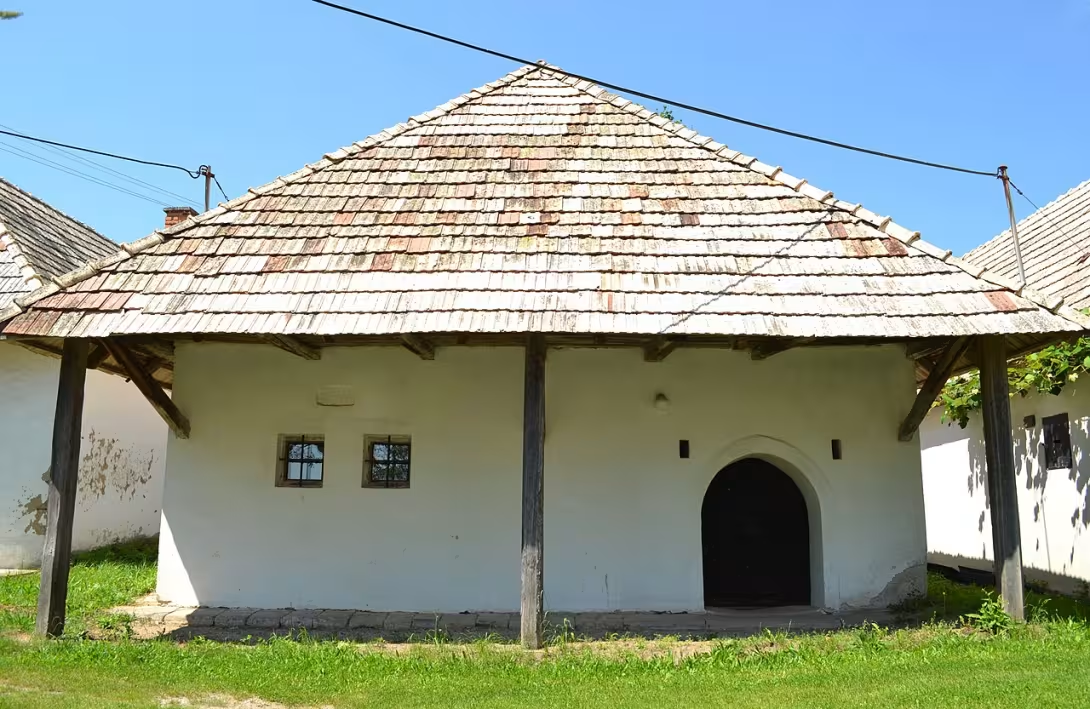

The historical view on the left is a visualisation generated by artificial intelligence and serves as inspiration.
Historical Milestones
- the end of the 19th century
- Creation of a vineyard house in the village Sebechleby.
- 20th century
- The house was entered in the register of national cultural monuments of Slovakia.
Interesting facts
- The house is a national cultural monument of Slovakia. - The building was built in the late 19th century and represents folk architecture from the second half of this century. - The vineyard house is located at No. 1040 in Sebechleboch, with GPS coordinates 48.28269, 18.91433. - This object is protected as a national cultural monument under number ÚZPF 325-3568. - The wine-growing house is an example of wine from the end of the 19th century and has historic value for the Sebechleby region.
Guide
Show guide text
The text was prepared by artificial intelligence and has not been editorially reviewed. It may contain inaccuracies.
Welcome to Sebechleb, a picturesque village in the heart of Banská Bystrica region. Allow me to stop you for a moment before this modest but extremely significant construction. There is a wine-growing house in front of you, which lies quietly in the background of a typical country. At first glance you will probably not be surprised by monumentality, but on the contrary, it will enchant you with its authenticity and peaceful presence. It's a place where time seems to slow down quietly, and where everyone has bounced, every stone and every detail of the facade tells a story about patience, work and respect to the ground. You are standing here, not in front of the palace, but in front of a home that was the heart of a family that made this territory a breeding ground for one of the most precious gifts of nature - grapes.
When exactly this house was created, unfortunately, historical records do not give us an unambiguous answer. Chronology of his position remains a mystery, but this adds a certain mystical touch to the whole place. We do not know exactly who laid the first stone, nor what architects stood for his proposal. However, this anonymity is typical of many rural buildings in this part of Slovakia. They were not built for the glory of individuals, but for the needs of the community and for the preservation of traditions that were passed on from generation to generation. The wine-growing house in Sebechleboch is no exception. It is a testimony to a time when the lives of the inhabitants were closely related to the cyclical nature, planting, care of the vine, and the blessing of the harvest. At that time, when stone fortresses and baroque cathedrals were built in cities, functional and solid structures were created in the countryside to serve generations.
Nyni pay attention to the architecture that surrounds you. Although we do not have detailed architectural plans, the building itself tells us a lot. Wine-growing houses in this area are characterized by practicality and strength. Note the proportions of the building, its height-to-width ratio, which gives the impression of stability and refuge. The facade, though perhaps no longer in its original condition, bears traces of long - standing weather. Try to imagine what this building looks like in different seasons. In winter, when the snow covers the surrounding vineyards, the house appears to be the only oasis of heat and light. In summer, when grapes mature and the air is saturated with sweet aroma, it becomes the center of social life. The doors and windows you see in front of you are not just openings inside, but windows until the last time. Every detail, from the shape of the roof covering to the arrangement of windows, was designed to maximize comfort and protection from adverse environmental effects.
Although the names of specific historical personalities directly associated with this place were lost in the fog of time, their presence here is felt. Imagine the viticulturers who lovingly and courageously cared for their vineyards. They were people who knew every line in the face of the country, every wind that could damage the harvest, and every raincap that was important for the vine's growth. Their lives were closely intertwined with this house. This is where the children were born, where the weddings were celebrated, and where they said goodbye to those who left. The house was their harbor, a place where after hard work in the vineyards rested and where joys and worries shared. These people, although not writing books and not known in the worldwide encyclopedias, were the builders of culture in the area. Their inheritance is not just in the building, but in the traditions that remain.
And now I'm gonna let myself share with you one interesting thing that might interest you. Sebechleby is a village with a long winemaking tradition, and this house is one of the last witnesses of this era. At a time when viticulture became a luxury and urban affair, it remained a living part of everyday life in the countryside. This building is not only a building but a living document that shows us what authentic rural life looks like. It's where the past and the present meet. When you look at this house, don't forget that behind every window sometimes there were things that were as important to their protagonists as historical monuments to us today.
The location of the house in connection with the surrounding terrain is also interesting. Wine-growing houses have often been located in such a way that they have a good view of the vineyards, so that their owners can watch the crop development and protect it from theft or damage. This strategic position may be less obvious today, but if you look around you, you can imagine what the vineyards once looked like. You can imagine how harvest festivals were held here in the autumn, how wine was cooked, and how songs were sung, which are rarely heard today. Thus, this house is not only an architectural work but also a cultural centre that connects people with their roots.
If you take a closer look at the details you may have missed at first sight, see how the building integrates into the country. There is no conflict between the building and nature, on the contrary, it seems that the house and the country together form a harmonious whole. This harmony is the result of centuries during which people learned to live in harmony with nature. Today, when we live in a time of rapid change and technological progress, this harmonisation is even more valuable. This house reminds us that not everything has to be new and modern in order to have value. Sometimes it is just old, proven and authentic, which brings us the greatest peace and satisfaction.
I'll invite you to look around and see the atmosphere that exists. Listen to the silence that rules here, and let the sounds of nature surround you. Let this house tell you its story, although the wording is not available. Let yourself miss the feeling that you are part of something bigger, something that has lasted for many years and may persist. This vineyard house is more than just a building. It is a symbol of resilience, love of the earth and respect for traditions.
If you are lovers of history, culture or simply want to experience something authentic, this place is for you. The sebechles and their surroundings offer many other attractions worth exploring. You can take a walk around the surrounding vineyards if they are still preserved or visit other historical buildings in the village. Each one has its own story waiting to be revealed. Let yourself miss the opportunity to know this beautiful part
Tips for visitors
The wine-growing house is an important cultural monument. Best to visit in the autumn months, when the climate is the most acceptable and less visitors. This vintage time also offers beautiful lighting conditions for photography.
The site is also available using public transport; a traffic search engine is recommended for current connections.
While preparing for your visit, take up protective clothing, shoes suitable for walking on the terrain surface, and nourishing food stamps. You should add a lens with a longer telephoto lens for architecture details.
Photography is best in the morning or in the evening when light is soft and stingy. The best places are the western façades of the vineyard house, where the sun does not shine directly into the lens.
In the vicinity of Sebechleb you can visit the historical village and its local monuments. For families with children, a short transition along a small road, where natural scenery can be viewed, can be an interesting goal.
Frequently asked questions
Can the monument be visited?
This is a residential or farm building, not a museum with opening hours. Please view it from public space and respect the owners' privacy. We have no information about access to the interior.
Where is the monument?
Location: č. 1040, Sebechleby, Banskobystrický kraj. The map on this page shows the exact spot.
Why is the monument protected?
It is listed in the Central List of the Monuments Fund of the Slovak Republic as a national cultural monument (ÚZPF no. 325-3568).
For children
Hello adventurers and adventurers! Today we get in the way with the garden of time to discover an extraordinary monument - the vineyard house in Sebechleboch. This old house was built exactly 126 years ago, so we are in an amazing world from the early 20th century.
Nearby
🏰 Historic sites (89)
- Pamiatková rezervácia ľudovej architektúry Stará Hora 0.1 km web
- Kalvária 2.5 km
- Sedembolestná Panna Mária 2.9 km
- Svätý Ján Nepomucký 2.9 km
- Trojičný stĺp 3.0 km
- Osloboditeľom 3.0 km
- Svätý Vendelín 3.4 km
- Fafokan 4.8 km +421 915 777 673 web
- Kristus nesúci kríž 5.2 km
- Nemčianske múzeum v Turčanovom mlyne 5.3 km
- Dedinské múzeum 5.4 km
- Pamätník represie, 19. 2. 1944 5.4 km
- Svätý Ján Nepomucký 5.4 km
- Svätý Florián 5.6 km
- Svätý Vendelín 5.6 km
- Pamätník 5.6 km
- Mariánsky stĺp 5.7 km
- Tufové pivnice 5.8 km
- Golgota 5.8 km
- Hláska na Kramárskom vrchu 6.4 km
🍽️ Restaurants and dining (53)
- Pohostinstvo Kohút 2.0 km
- Pizzeria Vito 2.9 km web
- Hostinec Strehár 2.9 km
- Hostinec Štvorka 2.9 km
- Hostinec Strehár 5.6 km
- Furmanská - Pizza Hont 6.0 km
- Motorest Tranzit 7.0 km +421 911 738 416 web
- Lom Beach Bar 7.7 km
- Corgoň 7.7 km
- Motorest Devičie 8.7 km web
- Kaviareň Dream3 9.0 km
- Pajta 9.4 km
- Bažina 10.1 km
- Hostinec 10.1 km
- Počúvalská krčma 11.0 km
- Neptún Lipovina 11.6 km
- Hostinec 11.8 km Hontianska 217/65
- Kebab 11.8 km
- Hostinec na námestí 12.6 km
- U sv. Petra 12.6 km
🏨 Accommodation (41)
- Penzión Chateau Hunting 5.4 km web
- Malý Domček 8.5 km +421 908 649 404
- Biely Domček 8.6 km +421 908 649 404
- Chata Anka 9.1 km +421 45 55 81 620 web
- Pivnica pod Bralom 10.0 km
- Stodola Počúvadlo 10.9 km +421 908 727 577
- Penzión - ubytovanie 11.0 km
- Chalupa Počúvadlo 11.1 km +421 915 223 606
- Krupinkovo 11.2 km +421 905 063 296 web
- Poľovnícka chata Rázdiel 12.7 km +421918 334 033 web
- Heliolit 12.7 km Ľ. Štúra 210/7 web
- Prameň 12.7 km K. Braxatorisa 8/3 web
- Penzión Bystrica 12.7 km Okružná 157/29
- Pension Eko Leo 12.8 km
- Penzion Gabika 12.8 km
- Kúpeľný hotel Minerál 12.8 km Okružná 124/32 +421 45 550 6001 web
- Penzión Žemberovce 12.9 km +421 948 127 283 web
- Hviezda 12.9 km web
- Ubytovanie v chatke 13.0 km Mjr. Daniela Gondu +421 948 127 283 web
- Caravan kemp 13.0 km Mjr. Daniela Gondu 16/36 +421 948 127 283 web
🚲 Rentals and sport (5)
- OFK Sebechleby 2.5 km web
- OFK Štart Prenčov 8.9 km
- bicykle Mama šport 13.9 km
- Požičovňa vodných bicyklov 14.3 km
- Tepličky 14.9 km
🥾 Hiking and nature (320)
- Viničný vrch 1.3 km
- Pliešky 1.7 km
- Viničky 1.7 km
- Homoľa 1.9 km
- Vitajte na Starej Hore 2.1 km
- Šibač 2.8 km
- Prostredný vrch 3.1 km
- Háj 3.3 km
- Kľúč 3.5 km
- Opátov vrch 3.5 km
- Sokol 3.7 km
- Sirákovec 3.9 km
- Šipická cesta 3.9 km
- Turečka 4.3 km
- Novinská 4.3 km
- Kostolná 4.4 km
- Mrázovka 4.4 km
- Ostrý vrch 4.5 km
- Kukučka 4.5 km
- Veľký Gregor 4.7 km
Thematic route
Thematic cruise route from the village of Sebechleby
1. Wine-growing house - Type: Historical building - Proč is worth a visit: This monument is the heart of the village Sebechleby and represents the wine-growing tradition of the region. In the house you can learn about the history of viticulture. 2. Surrounding park - Type: Green zone - Proč is worth a visit: Park around the vineyard house offers a quiet environment for relaxation and ideal for a walk. 3. Historical Church - Type: Cultural monument - Proč is worth a visit: This church is an important part of cultural heritage and its architecture is exceptional. 4. Traditional wine-growing - Type: Winery - Why is it worth visiting: In this wine bar you can see the quality of local wines and offers tasting. 5. Street with historical houses - Type: Architectural zone - Proč is worth visiting: A traveler can move here between houses, which are examples of traditional architecture. This route offers an overview of the historical and cultural aspects of Sebechleby, focused on the wine-growing tradition.
Seasonal recommendations
Jaro: In spring, the wine - growing house in Sebechlebs is beautified with flowering orchards and young leaves of trees. The dazzling sun increases the attraction of the monument, but it can be bitter, so it is recommended to wear lightweight clothes with protection from UV glow. The best time to visit is morning or evening, when temperatures are more acceptable and fewer people visit this historical monument.
Leto: In summer, the wine-growing house in Sebechlebs is the most temperature demanding, but at the same time there is the greatest number of people. Sunny days are suitable for walks in nearby vineyards and fields. Careful sun protection is recommended, including high-UV dress, sunscreen and sufficient drinking water. It is best to visit the monument earlier in the morning or evening when temperatures are stored.
Under: In the middle of the wine-growing house in Sebechlebs turns into a golden and ore dress for falling leaves. The atmosphere is skinny, with cooler air. Clothing should be multiple layered to avoid coldness, and it is recommended to wear warm leathers or plaid to sit outside the building.
Winter: In winter, the vineyard house in Sebechlebs is covered with snow and becomes a place with a quiet atmosphere. Temperatures are low, so it is important to wear warm clothes including leather, cooler and protective footwear. The monument can be closed or have faster opening times, so it is good to check the current information before visiting. The best time to visit is in the afternoon.
Visualisations and artistic views


The visualisations are generated by artificial intelligence and serve as inspiration.
Visitor Tips
No tips yet. Be the first!
Log in and add your tip.
Location on Map
More monuments – Sebechleby
Show all in the town


Visitor photos
No photos yet. Be the first to add a photo from your visit!
Log in and add your photo or leave a rating.
You get more points for a visit verified in the app — we can tell from the GPS that you are there.
Reviews and comments