








vinohradnícky dom Vineyard house
Wine-growing house in Modra
Municipality of Modra, Bratislava Region
The complex registers the Monument Office of the Slovak Republic under number ÚZPF 10574 and consists of 1 object: House viticultural (passing, corner, Renaissance, 17. st.).
This house is located in the center of the village Modra, where it is characterized by narrowness of the street Dolná.
Building characteristics: the house has four floors and the floor plan is rectangular. The material of construction is wood.
Poloa and protection: the address of the house is Dolná 45/48, 50, Modra. The cadastral territory of the village Modra is protected from 1979. Monument protection was declared in 1961.
Development/adaptation: The house was built in the 17th century.
Architectural style: Renaissance architecture.
The dominant location of the house is its location in the center of the village Modra, where there are also many other monuments. The monument today uses a residential house and has important cultural values for the village of Modra.
Tehdy a dnes
Drag the slider and compare how the monument might have looked when it was built with the view today.
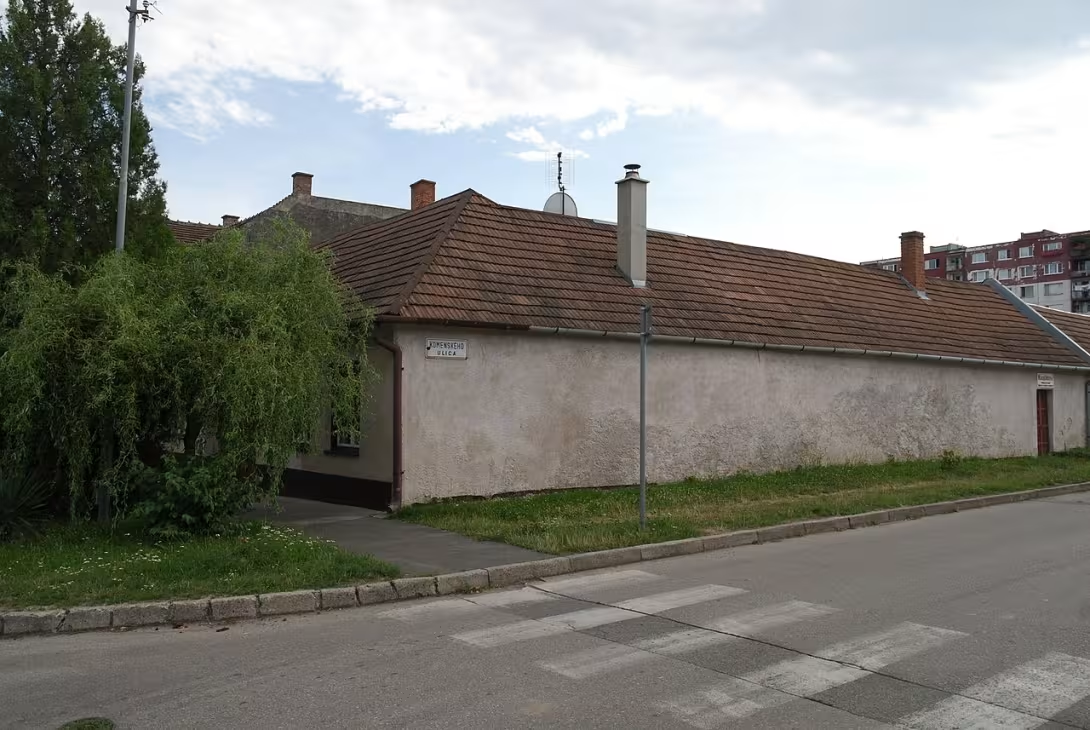

The historical view on the left is a visualisation generated by artificial intelligence and serves as inspiration.
Historical Milestones
- 1961
- Monument protection declared
- 1979
- Cadastral territory of the village Modra is protected
Guide
Show guide text
The text was prepared by artificial intelligence and has not been editorially reviewed. It may contain inaccuracies.
Welcome to Modra, a city that has probably received its name according to the colour of the local clay and which is inherently linked to the tradition of viticulture. Right now, you're standing in front of a building that wears the name House of Vineyard. When you look at it, you may at the first moment see only a modest historical structure, but in reality you are in front of the silent witness of many generations of people who put their life force and love into work in vineyards. Feel the atmosphere of this place, you will feel the peace and stability brought by the architecture created for practical purposes, while at the same time deeply rooted in local culture.
Now let's try to understand what this house means to Modra. Although the exact date of its creation is not exactly documented in historical records and we do not know the names of architects who designed it, the function of the building itself speaks for itself. The vineyard house was not just a normal dwelling. In such cities as Modra, these houses represented the center of economic and social life of families who lived on wine. This is where the grapes were processed, wine was stored and business matters were dealt with. The historical context of this house is therefore closely connected with the bloom of the Bratislava region and its wine-growing fame, which has lasted for centuries. It's a place where day-to-day hard work shone with joy from the harvest.
Now that you're standing outside the building, invite you to admire it more closely. Look at the overall facade and perceive its proportions. Note how the building fits into the surroundings and naturally complements the character of the blue streets. When you look at the facade, try to imagine how many layers of color and time rest on it. Follow the details around the entrances and windows. Although you will not find spectacularly decorated pillars or monumental statues, the beauty of this house lies in its authenticity and functionality. It is an architecture that was meant to serve man and his work. Notice how light is reflected from the walls and how the building reacts to the space around it. It is this moderation that is typical of buildings that should have been mainly durable and practical to withstand the requirements of the wine-growing regime.
You might wonder who lived in this house and what stories happened here. Although history has preserved the names of great lords or well - known builders, the names of simple viticulturers are often left behind. And that is where the fascination of this place lies. Imagine the hundreds of people who came here with their baskets full of grapes during the autumn harvest. Listen in spirit to the call of the families, the laughter of the common wine and the discussion of whether the harvest will be rich this year. This house belonged not to a familiar person, but to the community. It was a place where children learned from their fathers and grandfathers how to take proper care of the vineyard, how to cut vineyards and how to recognize the right moment for harvest. Every corner of this building bears a trace of anonymity, but it is deeply human and true.
Now let's stop at something that may seem like a mystery. In many historical cities, we have precise lists of who has ever laid the foundation stone and who has designed every tile. But this is different. The vineyard house is surrounded by silence regarding its conceptions. The unknown exact century of its origin, we do not know the name of the master who led the construction. You may wonder why that is. In fact, this is in line with the nature of the vineyard houses, which were organically created, supplemented and adapted according to the needs of the owner over time. This ignorance is not a deficiency, but rather an invitation to our own imagination. It is this degree of mystery that gives the building a certain charm. It's like an old book missing a cover page, but its chapters are full of life and experience.
When you look around, you will see that Modra is a city that breathes wine and tradition. The vineyard house is one of the many corners that make up the city's mosaic. It is a symbol of perseverance and respect for the earth. Look again at the building as a whole. You will see in it a reflection of the stability brought by the consciousness of your own roots. It is a place that teaches us that there is no need to be written in history books to leave a mark that lasts centuries. Just do your job with love and care, and the result will be something like this - a house that still stands and reminds us of our history.
We hope this short trip to the world of blue wine has helped you to better perceive the place you are currently standing on. The vineyard house may not be the largest monument in the region, but its value lies in authenticity and simplicity. Now we invite you to move on slowly and explore the other attractions that Modra offers you. Walk around, sense the smell of local gardens, and perhaps in quiet streets you will discover other traces of the past that await your view. Thank you for spending this moment with us before the vineyard house. We wish you a pleasant continuation walk and remember to enjoy all the beauty of this unique city. Goodbye.
Tips for visitors
Wine-growing house - a cultural monument
The best time to visit is from April to October when the weather is warm and sunny.
When you visit unabated you: camera for shooting the best places and light; day natural clothes, feet and dresses.
In the vicinity of the Vinohrad House you will find another cultural monument. The distance from the place is about 30 minutes on foot.
Tips for families with children: The Vinohrad House offers programmes and activities for children as well as special exhibitions and shows.
Frequently asked questions
Can the monument be visited?
This is a residential or farm building, not a museum with opening hours. Please view it from public space and respect the owners' privacy. We have no information about access to the interior.
Where is the monument?
Location: Dolná 45/48, 50, Modra, Bratislavský kraj. The map on this page shows the exact spot.
Why is the monument protected?
It is listed in the Central List of the Monuments Fund of the Slovak Republic as a national cultural monument (ÚZPF no. 107-10574).
For children
Wine-growing house in Modra - hidden memorial building
The viticulture house, which is now located in the center of Modra, was also an important center of viticulture in the past. The wine growers, the people who tried to make the best wine and trade it, lived here.
The wine-growing house is today a museum and cultural centre where you can see old tools, documents and monuments of vineyards. You can watch the exhibitions and you can imagine how it was here.
We live in a time when we are able to approach the past. Come prozkoumat!
Nearby
🏰 Historic sites (320)
- Osobnosti evanjelického gymnázia 0.2 km
- Dositej Obradović 0.2 km
- Múzeum keramiky 0.2 km
- Dositej Obradović 0.2 km
- Ing. Michal Pridala 0.2 km
- Jovan Jovanović Zmaj 0.2 km
- Neznámy nemecký vojak 0.3 km
- Samuel Zoch 0.3 km web
- Július Dérer 0.3 km
- Doc. Ing. Ján Farkaš, CSc. 0.4 km
- Ľudovít Štúr 0.4 km
- Ľudovít Štúr 0.4 km
- Karol Štúr 0.4 km
- Pavel Zoch 0.4 km
- Dr. Viliam Westsik 0.4 km
- Pomník Johna Lennona 0.4 km
- Na pamiatku obetiam komunistického režimu 0.4 km
- CLAUDIANUM 0.4 km
- Židovský cintorín 0.5 km
- Sv. Florián 0.5 km
🍽️ Restaurants and dining (263)
- Pohoda Pub 0.1 km
- Caffelka 0.1 km
- Pjerot 0.2 km
- Na mýte 0.4 km Štefánikova 58
- Mlyn 108 0.4 km web
- M.K.M. 0.4 km
- Pivnica Necco - Modry dom 0.4 km
- Pasha Express 0.4 km +421 919 221 141
- Herňa 0.5 km
- Pizza HAM 0.5 km
- Kamenná - reštaurácia a piváreň 0.5 km +421 905 250 227 web
- Koruna 0.5 km
- ORIM 0.5 km
- Staré časy 0.5 km +421 915 408 350 web
- Sebastian u Hoffera 0.5 km +421 902 233 775 web
- Vináreň u Ludvika 0.5 km
- Musique Club Gallery 0.6 km web
- Bistro Kinečko 0.6 km +421 948 617 053
- Polo Garden 0.6 km
- Cafe Modur 0.7 km +421 918 987 484 web
🏨 Accommodation (67)
- Hotel Majolika 0.2 km +421 905 602 617 web
- Hotel Sebastian u Hoffera 0.5 km +421 908 105 122 web
- Študijné a kongresové stredisko Centra ďalšieho vzdelávania Univerzity Komenského 2.6 km web
- Vila Avana 2.8 km
- Vila Eva 2.8 km
- Hotel pod Lipou Resort 2.8 km +421 905 894 052 web
- Dependance Vilma 2.9 km
- Hotel 3stromy 3.3 km +421 948 018 811 web
- Carmin 3.8 km
- Ubytovňa QHome 3.9 km +421 914 272 272 web
- Ubytovanie KIS 4.7 km +421 918 295 335 web
- Bini 4.7 km Chorvátska 153/70 +421 904 988 128 web
- Palace Art Hotel 5.3 km +421 33 79 89 000 web
- Hotel Rozálka 5.5 km Rozálka 9 +421 903 410 233 web
- Hotel Tilia 5.7 km +421 33 64 12 402 web
- Penzión pod kláštorom 5.7 km +421 905 595 222 web
- Hotel Vinársky Dom 5.8 km +421 33 640 09 33 web
- Hotel Jeleň 5.8 km web
- Penzión Mária 5.9 km web
- Chata UK Modra-Piesok 6.1 km +421 917 257 223 web
🚲 Rentals and sport (18)
- TRAX 0.2 km +421 908 413 053 web
- Športová hala 0.2 km
- Kúpalisko Modra 0.8 km
- Bazén 3.9 km Záhumenice
- Polcstershop 5.0 km Dobšinského 986/44 web
- Pedál 5.7 km +421 910 676 482 web
- Areál Zdravia Rozálka Pezinok 5.7 km web
- Alter Bike 5.7 km
- Prírodné kúpalisko Zochova chata 6.0 km
- Turbike 6.1 km +421 33 641 2345 web
- Mestská plaváreň 6.5 km
- Strelnica EMEL 7.9 km
- Bicykle RG 8.6 km
- Pezinská Baba 8.8 km web
- Motokáry Dlhá 12.5 km +421903735188
- Areál RC Šport Model Klub 12.8 km web
- CCC Cykloservis Cíferský Cífer 13.3 km Jozefa Kubányiho 941/11
- Centrum jazdeckého športu Bernolákovo 13.4 km
🥾 Hiking and nature (321)
- Nádvorie radnice 0.5 km
- Vínny sud 0.6 km
- Modranská bašta - časť mestského opevnenia 0.6 km
- Modranský ovocinársky chodník 0.9 km
- Kalvária 1.0 km
- Víno Sodoma 1.0 km
- Záhrada kaštieľa 1.2 km
- Štúrova lavička 1.7 km
- Ohnavy 2.0 km
- Kamenica 2.1 km
- Srnčí vrch 2.5 km
- Borinky 2.5 km
- Badogy 2.8 km
- Baňa 3.0 km
- Tovarišská studnička 3.0 km
- Peprovec 3.5 km
- Široký 3.5 km
- Zámčisko 3.9 km
- Sad 4.0 km
- Dolinkovský vrch 4.0 km
Thematic route
The route of the Modra wine-growing house
1. Modranský chateau - castle buildings, historical centre of the village Modranský chateau stands in the center of the village and has completeness and beautiful architectural features. 2. Wine House - Museum of Wine and Wine Culture The main destination of the route is the wine-growing house, where you can learn about the history of the wine in Modra and taste different kinds of wine. 3. St. Martin's Church - a baroque church with beautiful statues St Martin's church is a significant monument of the village and has completeness and beautiful architectural features.
The route is smooth and allows visitors to learn about the history and culture of Modra. During your visit you can also visit other places nearby, such as vineyards and forests.
I removed the unnecessary adjectives and phrases, shortened some sentences, and keep the text close while still conveying the main information about the cultural heritage site.
Seasonal recommendations
Pamantine: wine-growing house, Modra, Bratislava region Status:
JARO: What's specific? Red flowers and green nature. The atmosphere is full of life and energy. Come warm clothes and get there before 10:00 to avoid the big crowds.
LÉTO: What's specific? Yellow nature and bitter sun. The atmosphere is warm and relaxed. Come to the width of your clothes and arrive before 12:00 to avoid the big crowds.
SUBSIDISATION: What's specific? Yellow-brown leaves and cold weather. The atmosphere is peaceful and peaceful. Come and get warm clothes and arrive before 14:00 to avoid the big crowds.
ZIMA: What's specific? White snow and cold weather. The atmosphere is peaceful and peaceful. Come warm clothes and get there before 10:00 to avoid the big crowds.
Note bene: All councils are just municipal and not specific to a particular festival or markets.
Visualisations and artistic views


The visualisations are generated by artificial intelligence and serve as inspiration.
Photographs from the area
Real photos taken near the monument


Source and licence are given for each image.
Visitor Tips
No tips yet. Be the first!
Log in and add your tip.
Location on Map


Visitor photos
No photos yet. Be the first to add a photo from your visit!
Log in and add your photo or leave a rating.
You get more points for a visit verified in the app — we can tell from the GPS that you are there.
Reviews and comments