








vinohradnícky dom Vineyard house
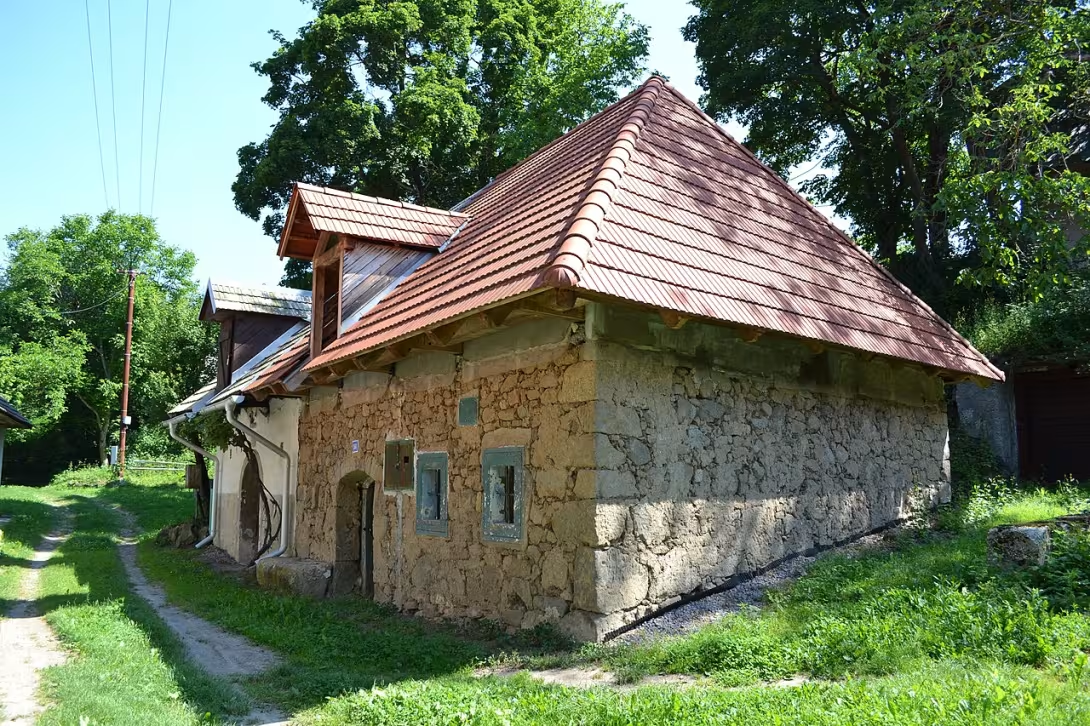
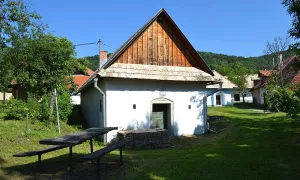
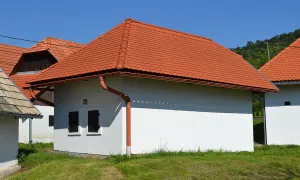
In the village of Sebechleby in the Banská Bystrica region there is a viticulture house, which is classified as a national cultural monument under state protection. This object is dated to the second half of the 19th century and its exact year of creation is 1885. From an architectural point of view, the building is included in the line of folk architecture.
According to the official annotation of the Slovak Monument Office, this area consists of one object with the number of the ÚZPF 3538/1. It is a viticulture house whose construction is brick and stone. The entire area is registered in the system under number 325-3538.
The monument is located on the numbers of the house 960 and 962 in the village Sebechleby. Its exact geographical coordinates are 48.28214, 18.91218. The building is protected as a national cultural monument.
This house viticulturally represents a tangible document of folk construction from the end of the 19th century. Monuments in the village Sebechleby documents architectural solutions from this period. It is advisable to visit it for a knowledge of local history of folk architecture.
Tehdy a dnes
Drag the slider and compare how the monument might have looked when it was built with the view today.

The historical view on the left is a visualisation generated by artificial intelligence and serves as inspiration.
Historical Milestones
- 1885
- Creation of a vineyard house in the village Sebechleby.
- end of the 19th century
- The period that the object documents as a tangible document of folk construction.
Interesting facts
- The vineyard house in Sebechleboch is a national cultural monument from 1885. - Construction belongs to the line of folk architecture and its construction
Guide
Show guide text
The text was prepared by artificial intelligence and has not been editorially reviewed. It may contain inaccuracies.
Welcome to the Self-Created. You are now standing in front of a house that carries the breath of past generations - in front of a vineyard house. Look at him. It is a building that at first glance does not lighten up the greatness or rich ornaments, but precisely in its simplicity and functionality crosses the power of the history of this region. You see here the ridiculous and unhappy structure that has stood here for decades, perhaps centuries, resisting wind, rain, and time. Before you is the physical reference to the life that has taken place far away from palaces and office tables - life in the rite of vegetation cycle, depending on the weather and soil. This house is not just a brick building. He is a witness to one of the oldest and most important economic traditions in Central Slovakia. Sebechles lie in an area where volcanic soils and beneficial microclimate create favourable conditions for the cultivation of grapes since the Middle Ages. The first written memories of viticulture in this part of the Honta are reclaimed in the thirteenth, fourteenth century when the colonists - German hosts - came here and brought with them advanced methods of baptizing and processing the vineyard. The house you are facing is the product of this long continuity. It is not the work of one architect or the result of a single construction campaign. It is organic growth, an answer to the needs of families who lived here from the vineyard. Who lived here? When was the house built? The exact dates and names of architects have been lost in the archives or are still waiting for their researcher. Chronology remains unknown, architects unknown, historical personalities unknown. But it's this anonymity that makes the house special. It's not the memory of a famous family, it's the memory of a collective. Every stone in the foundation, every crack in the plaster, every repaired roof, speaks of unknown hands that worked here. Imagine the family of the vine-grower - father, sons, daughter - as they go out to the vineyards in the morning, returning with baskets full of grapes in the evening, such as pressing, fermentation, wine care. The house was their work, warehouse, sometimes living space for seasonal assistance. He was the heart of the economy. Let's take a closer look. Notice the massivity of the facade. Although specific architectural details - such as the exact type of windows, the shape of the portal, the distribution of interior spaces - are not documented in the available resources, you can rely on what you see with your own eyes. Watch the material. Traditionally, local stone - andesite, riolite, volcanic stones - was used in this area, lying just below the surface. They are dark, thick, cool to the touch. See how they're stored? Often unordered, portrayed yen by coarse mortar, in later times maybe swept by cement. This is a sign of folk architecture: practicality before aesthetics. The ground floor served mainly economic purposes. Here were the horses, here permanent press machines - the first hand-held, later mechanized - and here was the storage of raisin material. Look up to the roof. Often the above floor was wooden, blockhaus construction, which was faster for construction, better for humidity control and easier for repair. If you can get to the original construction today, I'm following the axe. Every board here has its history. The roof? Originally straw, later cipher, today possible sheet metal. Changing the material of the roof is like a book of history availability and techniques. Now move on to the slide. This is the oldest and most secret part of each vineyard house. In the Sebechlebs, as in the whole area, they are often deeper than the house itself. Excavated in hard volcanic stone, sometimes branched into several chambers. Enter the cold at least. The temperature here is constantly fluctuating about ten degrees. Ideal for wine. Note the ceiling - often hipped, brick or stone, carrying, massive. On the ceilings and walls you can see traces of old candles, olive lamps, electric cables that brought light here in the twentieth century. Here the wine was changed from grapes to delicious drinks. Here was waiting, rolling, trying. Each viticulturer had his mysterious recipe, his way to "relive" wine, to save him from the acidification. The glass was a sanctuary. At the same time, the place where the trade deals were concluded, where it was celebrated, where it was grieving for bad years. Nyni pay attention to the surroundings. The house wasn't in isolation. Around him the vineyards stretched on narrow, southeastern slopes, where the sun warms the longest. Imagine a country without today's forests and built-up areas - a mosaic of small plots separated by stone parts, intertwined by roads for vehicles and horses. The vineyard house was a point in this mosaic, a knot. Here he drove raisins, from there he drove wine to the town - Banská Bystrica, to Zvolen, on the plain of the Hron to the Danube. On the way you just arrived, a raisin wagon sometimes moved. Now let's stop at the mystery. Why did this house survive? Where are the others? There were dozens of similar objects in and around Sebechlebs. Some were at peace with families that had no followers. Others gave place to modern family houses, garages, holiday cottages. This one's standing here. Maybe because he was built of the hardest stone. Maybe it's because someone was constantly repairing it, covering the roof, swapping the heels. But maybe it was because in the 20th century, there was a threat, wine still in it, and it was still alive. Unknown origins and unknown owners make it a symbol. A symbol of endurance. The symbol that tradition is not the worship of ashes but the transfer of fire. You can see traces of different epochs on the facade - maybe there is an original stone portal frame from the Renaissance or barroque, maybe there's a stone cross-window, maybe there's an old metal table hanging from the time of the Hungarian monarchy. These layers are here, although we have no written record of them. They're written in mass. Look at the details that you often smooth out. Window sills. Are they stone? Wood? Do they have cut-out ornaments? In Honta, there were often simple geometric motivators in wine houses - sun, star, cross - protective symbols that were supposed to guard wine and the house against bad eye and misfortune. Are they still here? Or were they removed by later transformations? Notice the doors around the slide. They often have massive stone frames that carry the whole mass of the wall above the entrance. Are they sharpened? Do they have a hammer trail? Those are the authentic masters' signatures we don't know. While you're standing here, listen to the silence. Just the wind in the treetops, maybe the sound of a car in the distance. But under this layer there are echoes. Noise pressing. The voices of men arguing about the prize. Singing women in the preparation of raisin jam. Funny steps of children running around the yard. The house is the resonance chamber of these sounds. Although you can't hear them today, your presence will reactivate them. You're a witness here. Your attention gives them reality. This vineyard house in Sebechleb is more than a tourist attraction. It's a textbook. He teaches us how to live in symbiosis with nature. How it was used, what the earth gave. As it was built permanently, without need. How the bad years, drought, frost, wars, collectivization, when the vineyards were felled and houses were assigned to a single agricultural cooperative. The fact that it stands is the victory of the individual effort of someone who let him collapse. Someone who knew the stone had a memory. When you get back, take a minute. Stand up to see the house in the context of the country. Up the vineyards, down the house, on the village, mountains on the horizon. That's the genius loci of the Self-Created. The house is not in the country as a foreign element. She's from her. She's her rock, her wood, her work. If you decide to move on, walk around. Look at the yard. Is there an old stone well? Is there a press room that survived? Is there an old raisin tree by the garden, a descendant of the ancestors? Each of these elements complements the image. Thank you for stopping by. Thank you for giving this house your attention. It's your visit, your gaze, your respectable lovemaking are part of his next history. Remember him. When you drink glass of wine from this area, remember the cold in the cellar, the thick stone under your hands, the wooden ceiling above your head. That's the taste of this place. Stay a little longer. Then let's move on -- the Self-Chances have a lot to say. Have a good time and let the road serve you.
Tips for visitors
The recommended time to visit is spring or autumn thanks to milder weather. The country around the Sebechlebs is suitable for walks at this time. When using public transport check the current connections in the travel planner. It is recommended to take comfortable shoes, water and sun or rain protection, because the condition of the object is unknown and the terrain may be uneven. Photography is recommended in the morning or evening when side light highlights the texture of the stone and details of the facade. Suitable angles are from the front of the house and from its sides. There are no specific places in the surrounding area within 30 minutes of the ride, so check with the locals about other monuments in the Banská Bystrica region.
Frequently asked questions
Can the monument be visited?
This is a residential or farm building, not a museum with opening hours. Please view it from public space and respect the owners' privacy. We have no information about access to the interior.
Where is the monument?
Location: č. 960, 962, Sebechleby, Banskobystrický kraj. The map on this page shows the exact spot.
Why is the monument protected?
It is listed in the Central List of the Monuments Fund of the Slovak Republic as a national cultural monument (ÚZPF no. 325-3538).
For children
Imagine rising to 1885, just 141 years ago. No cars, no electricity, just a hoof of horses on macadamia and smelly smoke from chimneys. It was then that a house was built in Sebechlebs, which we call today the Vineyard House. It was like a fortress for wine - strong walls, deep cellars and a space where the terrible became a golden drink.
Nearby
🏰 Historic sites (89)
- Pamiatková rezervácia ľudovej architektúry Stará Hora 0.0 km web
- Kalvária 2.6 km
- Sedembolestná Panna Mária 3.0 km
- Svätý Ján Nepomucký 3.0 km
- Trojičný stĺp 3.1 km
- Osloboditeľom 3.1 km
- Svätý Vendelín 3.5 km
- Fafokan 4.8 km +421 915 777 673 web
- Kristus nesúci kríž 5.4 km
- Nemčianske múzeum v Turčanovom mlyne 5.5 km
- Dedinské múzeum 5.5 km
- Svätý Ján Nepomucký 5.6 km
- Pamätník represie, 19. 2. 1944 5.6 km
- Tufové pivnice 5.7 km
- Svätý Florián 5.8 km
- Svätý Vendelín 5.8 km
- Pamätník 5.8 km
- Mariánsky stĺp 5.8 km
- Golgota 6.0 km
- Hláska na Kramárskom vrchu 6.2 km
🍽️ Restaurants and dining (54)
- Pohostinstvo Kohút 1.9 km
- Pizzeria Vito 3.0 km web
- Hostinec Strehár 3.1 km
- Hostinec Štvorka 3.1 km
- Hostinec Strehár 5.8 km
- Furmanská - Pizza Hont 6.1 km
- Motorest Tranzit 7.2 km +421 911 738 416 web
- Corgoň 7.7 km
- Lom Beach Bar 7.9 km
- Motorest Devičie 8.8 km web
- Kaviareň Dream3 9.1 km
- Pajta 9.4 km
- Bažina 9.9 km
- Hostinec 10.0 km
- Počúvalská krčma 11.0 km
- Neptún Lipovina 11.4 km
- Hostinec 11.7 km Hontianska 217/65
- Kebab 11.7 km
- Hostinec na námestí 12.4 km
- Pizza & bar U macíka 12.4 km
🏨 Accommodation (42)
- Penzión Chateau Hunting 5.6 km web
- Malý Domček 8.7 km +421 908 649 404
- Biely Domček 8.8 km +421 908 649 404
- Chata Anka 9.3 km +421 45 55 81 620 web
- Pivnica pod Bralom 10.0 km
- Stodola Počúvadlo 10.9 km +421 908 727 577
- Penzión - ubytovanie 11.0 km
- Chalupa Počúvadlo 11.1 km +421 915 223 606
- Krupinkovo 11.4 km +421 905 063 296 web
- Heliolit 12.6 km Ľ. Štúra 210/7 web
- Prameň 12.6 km K. Braxatorisa 8/3 web
- Penzión Bystrica 12.6 km Okružná 157/29
- Pension Eko Leo 12.7 km
- Penzión Žemberovce 12.7 km +421 948 127 283 web
- Penzion Gabika 12.7 km
- Poľovnícka chata Rázdiel 12.8 km +421918 334 033 web
- Kúpeľný hotel Minerál 12.8 km Okružná 124/32 +421 45 550 6001 web
- Hviezda 12.8 km web
- Ubytovanie v chatke 12.8 km Mjr. Daniela Gondu +421 948 127 283 web
- Caravan kemp 12.8 km Mjr. Daniela Gondu 16/36 +421 948 127 283 web
🚲 Rentals and sport (6)
- OFK Sebechleby 2.6 km web
- OFK Štart Prenčov 9.0 km
- bicykle Mama šport 14.1 km
- Požičovňa vodných bicyklov 14.3 km
- Bazén Ďuricov majer 15.0 km
- Tepličky 15.1 km
🥾 Hiking and nature (316)
- Viničný vrch 1.4 km
- Pliešky 1.6 km
- Viničky 1.7 km
- Homoľa 2.0 km
- Vitajte na Starej Hore 2.2 km
- Šibač 2.8 km
- Háj 3.1 km
- Prostredný vrch 3.1 km
- Kľúč 3.5 km
- Opátov vrch 3.5 km
- Sokol 3.6 km
- Sirákovec 3.7 km
- Šipická cesta 4.0 km
- Turečka 4.2 km
- Novinská 4.4 km
- Kostolná 4.4 km
- Ostrý vrch 4.4 km
- Mrázovka 4.5 km
- Tretí vrch 4.5 km
- Veľký Gregor 4.6 km
Thematic route
1. Wine-growing house, wine-growing exhibition - The main building of the museum represents the history of regional viticulture; the exhibition shows traditional tools, varieties and grape processing.
2. Wine-growing house, premises with press and cellar - The original technical area with functional press and cool slide shows the process of pressing and storing wine.
3. Wine-growing house, courtyard with vineyards and observation tower - The area around the building includes demonstration vineyards and a tower overlooking the mountains Štiavnica and Calvary.
4. Wine-growing house, didactic hall and tasting room - The interactive part explains the wine-growing calendar and offers tasting of local varieties.
Seasonal recommendations
Spring: In spring there is a vineyard house in Sebechlebs surrounded by flowers and green grass. Sunlights illuminate the details of the house. We recommend arriving early in the morning when temperatures are pleasant and there are fewer people. Wear lightweight clothes and take a shirt for the colder morning.
Summer: In summer, sunny days are ideal for walking around vineyards. Summer is the most visited season, so we recommend coming early in the morning or evening when temperatures are lower and there are fewer people. You wear short clothes, sunglasses and don't forget the drinking mode.
Fall: In the autumn, the surroundings of the vineyard house in Sebechlebs turn into gold and red colors. Sunny days are still suitable for walks, but mornings and evenings require protection from wind. It is best to come to the village in the middle of the day when temperatures are pleasant and there are fewer people. We recommend layered clothing.
Winter: In winter the vineyard house in Sebechlebs is covered with snow. Sunny days are suitable for walks in a quiet atmosphere without crowds. We recommend coming to the village in the middle of the day, when temperatures are highest and the weather is more stable. Wear warm clothes, gloves, shoes in the snow and take a warm drink.
Visualisations and artistic views


The visualisations are generated by artificial intelligence and serve as inspiration.
Visitor Tips
No tips yet. Be the first!
Log in and add your tip.
Location on Map
More monuments – Sebechleby
Show all in the town

Visitor photos
No photos yet. Be the first to add a photo from your visit!
Log in and add your photo or leave a rating.
You get more points for a visit verified in the app — we can tell from the GPS that you are there.
Reviews and comments