








dvojdom Vernacular house
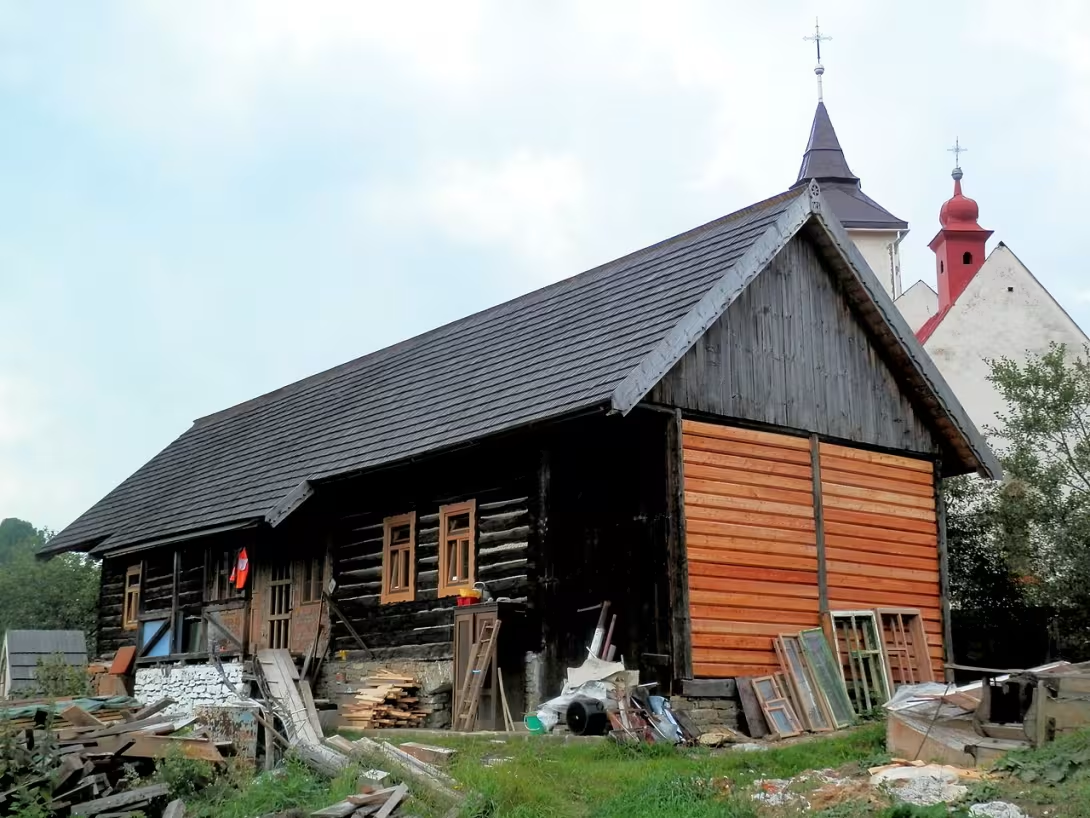
This folk house is located in the village Ružomberok in Žilina region and is a respected national cultural monument of Slovakia. According to data from the Register of Monument Office of the Slovak Republic, this building was built in the second half of the 19th century and represents an example of folk architecture.
The site of the monument is located from one main building numbered 2865/1 in the register of ÚZPF. This folk house is constructed of cuttings and represents traditional Slovak construction from the end of the 19th century.
According to available data, there is no accurate information on building features such as disposition, flooring or material used. These details are not included in the registration record.
The folk house is located at Vlkolinec 9042, 9041/39, 39A, Ružomberok. The specific data on the cadastral territory and the date of the declaration as a monument are not included in the available record.
This folk house is part of the Vlkolinec area, which is proud of the examples of traditional Slovak construction. Visitors can know and appreciate the rich cultural heritage of Slovakia.
This object represents an important part of the history and cultural record of the village Ružomberok. It attracts visitors from all over the world who are curious about the tradition and architecture of Slovakia.
Tehdy a dnes
Drag the slider and compare how the monument might have looked when it was built with the view today.

The historical view on the left is a visualisation generated by artificial intelligence and serves as inspiration.
Historical Milestones
- the end of the 19th century
- The folk house was built and represents traditional Slovak construction.
- 20th century
- The building was recognized as a national cultural monument of Slovakia.
Interesting facts
- This folk house is a national cultural monument of Slovakia. - The building was built in the second half of the 19th century and represents an example of folk architecture. - The folk house is constructed from cuttings and represents traditional Slovak construction from the end of the 19th century. - This folk house is part of the Vlkolinec area, which is proud of the examples of traditional Slovak construction. - It represents an important part of the history and cultural record of the village Ružomberok.
Guide
Show guide text
The text was prepared by artificial intelligence and has not been editorially reviewed. It may contain inaccuracies.
You can see in the heart of Ružomberok, a city that has undergone a major transformation in recent decades and is now one of the most dynamic and modern cities in Slovakia. You are standing in front of an object that bears the designation of double, i.e. folk house. At first glance you may be surprised that this property is not a typical historical monument object with gothic windows or renaissance portals, which you will find in other parts of the city. On the contrary, you are faced with a testimony to traditional folk architecture, which was in the past a common part of the urban and rural environment. These buildings, often called neighbouring or connected houses, arose at a time when space was valuable and families tried to use the available area as efficiently as possible. The two is not only a two-way structure, but rather a symbol of practicality, generosity and a community that has led neighbors to share not only the wall but also life.
When you look at the facade, notice its simplicity and functionality. The folk architecture in the region of Orava and Okruhnia, where Ružomberok geographically and culturally belongs, has always been closely linked to available materials and climatic conditions. Although the exact data of this particular object is not provided in the available documentation, we can assume that it is a building from the time when the urban housing estate broke up and needed to accommodate the growing population. In these times, it was not unusual for two families to choose to build houses next to each other, often with one common wall, or even under one roof covering both parts. This construction was not only economic but also social. Neighbors were always close, facilitating mutual assistance in hard farming or craft work, but at the same time creating a measure of privacy that each household needed.
Carefully note the details that may seem subtle today, but in the past they have had a profound meaning. The doors and windows of folk houses were often smaller than those known from modern architecture. This had practical reasons: smaller openings better protected the interior from cold and wind, which in the mountain environment was crucial for maintaining warmth in the home. The facade can carry traces of original plasters or spreads that have changed over the years according to available pigments and fashion trends. Although the exact color of the original facade is not known, it is likely that it was in subdued, natural tones that were harmoniously involved in the environment. The roof, which is a typical element of Orava architecture, was probably covered with shingles, material that was widely available in the region and weather resistant. The shingle roof is not only an aesthetic element, but also a function that protected the wooden structure of the house from rain and snow.
The historical context of this place is closely related to the development of Ružomberok as a artisan and commercial centre. Over the centuries, the city grew and so did the need for housing. Folk houses, such as the one you are now facing, formed the basic twitch of urban life. They were not only dwellings for poorer classes, but often also for craftsmen and merchants who set up workshops or warehouses in basements or adjacent areas. This mixture of housing and work was common and created a vibrant, vibrant atmosphere of the streets. Although the specific names of the historical personalities associated with this particular double home are not mentioned in the documents, we can imagine that there were generations of families who contributed to the economic and cultural development of the city. Their stories, although perhaps not written in official chronicles, are preserved in architecture, wall structure, and the atmosphere of the site.
An interesting feature of this type of construction is their social dynamics. The two houses created a unique social environment where the boundaries between the neighbours were permeable. Sharing the wall meant that sounds, odors, and even conflicts could easily be transmitted. This required a high level of tolerance and the ability to negotiate. In many cases, strong ties have been established between neighbours that go beyond just neighbourhood aid. On the other hand, this proximity could also lead to tensions, which is why in some cases the buildings were later divided or awakened. Today, when you look at this object, you can imagine what days must have been like in such an environment. In the morning, as the door opened, the smell of bread and coffee spread, stirring with the sound of the covenant and laughter. In the afternoon, when the sun lit the facade, the street became a meeting place where news was exchanged and problems were solved.
When searching this place, it is important to see not only the construction itself but also its context. Ružomberok is a city that has preserved its historical identity, but at the same time opens up to modern trends. The twins testify to how people adapted to their needs and environment. It is a reminder that architecture is not only about aesthetics, but also about function, comfort and social relations. When you look at details such as window frames, door wings, or roof coverings, you see signs of the work of the masters who created these elements. Their craftsmanship and knowledge of materials are today a valuable heritage that we should protect and honor.
The basic mystery or interest of this type of construction is their permanence in the modern world. Many folk houses have been destroyed in the past by fire, water, or time. The survival of the two is a testimony to its strength and to its regular maintenance. We can ask what stories happened here, what fates crossed here. Every wall, every window has a history waiting to be exposed. Although we do not have detailed records of specific residents, we can imagine that there were people who were part of the city's life who contributed to its development and who left their mark in his memory.
Finally, I invite you to enjoy this object not only as a historical monument, but also as a place where you touch the past. Walk around, look at the details you may have missed at first sight. Feel the atmosphere that rules here. The two are not only the building but also the symbol of community, practicality and durability. Ružomberok still has a lot of secrets and beauty waiting to be discovered. May the
Tips for visitors
The best time to visit is spring or autumn, when light is soft and you avoid large groups of visitors. The location will be reached by car or city transport from Ružomberok; check the current connections in the online timetables. Take with you comfortable shoes, water and camera to capture folk architecture. The visit is also suitable for families with children who learn about traditional housing. Photo taken from the exterior during the golden hours allows you to beautifully capture the architecture in natural light.
Frequently asked questions
Can the monument be visited?
This is a residential or farm building, not a museum with opening hours. Please view it from public space and respect the owners' privacy. We have no information about access to the interior.
Where is the monument?
Location: Vlkolínec 9042, 9041/39, 39A, Vlkolínec, Ružomberok, Žilinský kraj. The map on this page shows the exact spot.
Why is the monument protected?
It is listed in the Central List of the Monuments Fund of the Slovak Republic as a national cultural monument (ÚZPF no. 318-2865). It is part of a UNESCO World Heritage Site.
For children
Close your eyes and imagine pressing a secret button on a time machine. Boom! It will take you exactly 126 years back to Ružomberok, where it stands at the Double House.
Nearby
🏰 Historic sites (184)
- Dom Unesco 0.1 km Vlkolínec 9081/30B +421 918 596 432 web
- Rad SNP 1. triedy 0.1 km
- Galéria ľudového umenia 0.1 km web
- Jozef Májek 1936 0.1 km
- Pavol Horský 1924-1995 0.1 km
- sv. Peter 0.1 km
- Sýpka 0.2 km
- Roľnícky dom 0.2 km Vlkolínec 9016/7
- Sidorovo 0.8 km
- Šlávka 2004 1.5 km
- Pavel Potočka 2.3 km
- poklad z doby Bronzovej 2.8 km
- SNP 2.9 km
- SNP 2.9 km
- SNP 3.0 km
- Hrob neznámeho vojaka SNP 3.0 km
- na Skalách 3.0 km
- Obeť cyklo nehody 3.0 km
- SNP pamätník 3.1 km
- Hrdinom SNP 3.4 km
🍽️ Restaurants and dining (196)
- Reštavrácia Vlkolínec 0.0 km web
- U Ježibabky 0.0 km Vlkolínec 43
- Bufet na Vlkolínci 0.1 km
- Bufet u vlkolínskeho gazdu 0.1 km
- Penzión pod Vlkolíncom 1.3 km Do Uhliska 7550/3
- Krčma 1.4 km
- Krčma 1.4 km
- Slniečko 1.7 km
- Dária 1.8 km +421 903725316
- Apreski 1.9 km
- Snow 1.9 km
- Pod Sidorovom 2.1 km
- Majekova chata 2.1 km
- Koliba pod Vlkolíncom 2.2 km Korytnická 7387/47 web
- Stanica Zápalkáreň 2.8 km
- BODka 3.2 km
- Dojazd Pub 3.3 km
- Piváreň Martin 3.3 km
- Lavína 3.4 km
- U nás na Liptove 3.4 km
🏨 Accommodation (154)
- Villa u Medveda 1.3 km
- Skalka 1.3 km
- Trio 1.4 km
- Hotel Malina 1.7 km +421 444319999 web
- Vila Michaela 1.8 km web
- Májekova chata 2.1 km +421 910908857 web
- Apartmany Sidorovo 2.1 km web
- Mederlyho chata 2.2 km web
- Penzion Gejdák 2.3 km Cesta na Vlkolínec 907/17 web
- Halinka 3.4 km Hrabovská dolina
- Halina 3.4 km Hrabovská dolina
- Fatrapark 1 3.4 km web
- Hotel Hrabovo 3.4 km +421 44 432 3178 web
- Fatrapark 2 3.4 km Hrabovská dolina 5386/22 +421 44 430 00 96 web
- CHATA MÁRIA Hrabovo 3.5 km +421 905 796 725 web
- Chata Sunday 3.5 km web
- Chata Relax 3.5 km +421 908 162 712 web
- Chata Malina 3.5 km +421 918 750 589 web
- Chata Zebra 3.5 km +421904388883 web
- Liptovo (horské chaty) 3.5 km web
🚲 Rentals and sport (45)
- Ski-bike Melek 3.2 km
- eBIKEpoint 3.3 km
- Lezecká stena Ružomberok 3.3 km web
- LILLY sport 3.3 km
- Športová hala 4.0 km Plavisko 1951/47
- SPORT shop 4.6 km
- Poľovníctvo pod Chočom 4.7 km
- Fitness California 4.8 km +421 44 432 26 04 web
- Adamsport 4.8 km
- Mestská plaváreň 4.9 km
- TOP Sport 4.9 km
- Koniareň 4.9 km Zarevúca 7/7
- Sportisimo 5.0 km
- Javorka 5.0 km
- ITOCA 5.0 km
- Intersport 5.0 km web
- Terrabike 5.0 km +421 908 763 538 web
- Bycikle a sport Melek 5.1 km
- Sokolovňa 5.2 km
- Šport bazár 5.2 km
🥾 Hiking and nature (1176)
- Mlynské koleso 0.0 km
- 9.chránený výhľad Unesco - Vlkolínec 0.1 km
- 3.chránený výhľad Unesco - Vlkolínec 0.2 km
- Farma Vlkolínec 0.2 km
- Pamiatková rezervácia ľud. architektúry 0.2 km
- 4.chránený výhľad Unesco - Vlkolínec 0.3 km
- Dielec 0.5 km
- v dolinke Uhlisko 0.5 km
- Zásac 0.5 km
- na Vlkolínec 0.5 km
- Studničky na Kúte 0.5 km
- Stráňa 0.5 km
- 1.chránený výhľad Unesco - Vlkolínec 0.6 km
- Hôrka 0.6 km
- pod Záhradiskami 0.6 km
- 2.chránený výhľad Unesco - Vlkolínec 0.7 km
- Laštek 0.7 km
- 8.chránený výhľad Unesco - Vlkolínec 0.7 km
- Sidorovo 0.7 km
- Laštek 0.7 km
Thematic route
Thematic cruise route from Ružomberok
1. Double House (Folk House) Type: Historical building The double house is located in the heart of Ružomberok and represents an example of traditional architecture from the 19th century. It serves as a place for cultural events and exhibitions.
2. State Opera and Ballet Ružomberok Type: Cultural centre This theatre is located near the House of Folk and guests concerts and performances. His architecture is fascinating.
3. Student House Ružomberok Type: Cultural centre This historic object was originally a student residence and today serves as a place for cultural and educational events.
4. Old square in Ružomberok Type: Place with historical purpose The old square is the center of the city, where there are various historical buildings, including St. Nicholas church, an example of Baroque architecture.
5. Ruzomberok stadium Type: Sports arena The stadium is home to the MFK Ružomberok football team and offers the opportunity to watch matches or look at the interior.
This route offers a combination of historical and cultural experiences in the heart of Ružomberok.
Seasonal recommendations
In spring, the surroundings of the two - house awaken into life. The fresh colors of the first grass and flowering beds give the folk house a feeling of restoration. We recommend visiting in the morning when the air is cleanest. Spring weather in Žilina region can be unstable, so it is recommended to wear layers.
Summer season brings bright lighting and rich colors of nature. It is ideal to visit immediately when opening to avoid larger crowds. Remember light clothes and sun protection.
Autumn wraps Ružomberok in gold and brown tones. The number of tourists in this period is decreasing, allowing for a quieter tour. A warmer sweater or waterproof jacket is recommended.
In winter it is magical, especially when its roof is covered with snow. The atmosphere is quiet and nostalgic. Due to low temperatures, warm winter clothes are essential.
Visualisations and artistic views


The visualisations are generated by artificial intelligence and serve as inspiration.
Photographs from the area
Real photos taken near the monument


Source and licence are given for each image.
Visitor Tips
No tips yet. Be the first!
Log in and add your tip.
Location on Map
More monuments – Ružomberok
Show all in the town



Visitor photos
No photos yet. Be the first to add a photo from your visit!
Log in and add your photo or leave a rating.
You get more points for a visit verified in the app — we can tell from the GPS that you are there.
Reviews and comments