








ironworks cast iron monument Monument
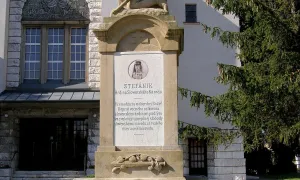
The castin monument of ironworks workers, located in the village Brezno in Banská Bystrica region, is a national cultural monument of Slovakia. This monument was exhibited in 1854 and represents historism, indicating its architectural characteristics from the second half of the nineteenth century.
The site of the monument is located from one object: a monument made of cast iron. The monument is registered by the Slovak Monument Office under the number ÚZPF 323-3205.
According to available information, the monument does not contain details of its construction characteristics such as layout, flooring or floor plan. The material from which it was made is cast iron.
The monument is located at Padlečkovo and Bujakovo in Brezno. The specific data on the cadastral territory or the date of the conservation declaration are not provided, nor are the information on the protection zones. The status quo and the use of the monument have not been recorded.
The cast iron monument of iron works is a monument in the village Brezno, which can become an opportunity for the tourist to know the history and heritage of the region. Its location in the Banská Bystrica region is located in an area with a rich history of průmysku and culture.
Visit of this monument offers a view of the past of Slovakia and its working traditions, making it an important destination for every interested person for historical monuments.
Historical Milestones
- 1854
- Exposure to cast iron monument of iron works workers in Brezno
- round 1750
- Beginning of industrial development in Banská Bystrica region, including hardware
Interesting facts
- Cast iron works monument is a national cultural monument of Slovakia. - The monument was exhibited in 1854 and represents historism. The monument is registered by the Slovak Monument Office under the number ÚZPF 323-3205. - The monument is located at Padlíčkovo and Bujakovo in Brezno, in an area with a rich history of the industry and culture.
Guide
Show guide text
The text was prepared by artificial intelligence and has not been editorially reviewed. It may contain inaccuracies.
Welcome to Brezno, a city that is deeply connected to the nature of the Central Slovak mountains and the hard work of the people who lived and formed here. Right now you are facing one of the silent witnesses to this industrial past. In front of you, there's a cast iron monument of the iron works. The first impression this object gives is a sense of stability, strength and a certain rigid dignity. It is a place that will stop us in our speedy rhythm today and make us think about what the work at the iron works meant for the thousands of people who have passed the streets of this city before us.
When we look at the origin and historical context of this monument, we must return to the very essence of Brezno. For centuries this city and the entire Banská Bystrica region have been centers of deep processing of ores and metallurgical industry. Ironworks were not mere işletia, they were the heart of the economy, the social centre and the main employer. Work in them was challenging, dangerous, and required great discipline and physical strength. This monument was built just to pay tribute to these people. Although the exact chronology of its origin is not detailed in historical records, his very existence speaks of the need to honor collective memory. This is not about celebrating one particular ruler or a well-known general, but about recognising the work of the ordinary man, the worker, who, in turn and effortfully, built the prosperity of the region.
Now please concentrate and pay attention to the very form and material from which the monument is made. Notice it's a cast iron. The choice of this material is not random. The cast iron is the product of the iron mill itself, it is a material that was handled daily by workers, who glued, treated into molds and shaped in the heat of blast furnaces. By being made of cast iron, the monument becomes symbolically part of the world that celebrates. Look at the surface of the material, perceive its cold and hardness. In time, the caste acquires its specific patina, which tells of past years, of the rain, snow, and sun that hit the monument. Look at the overall composition of the object and perceive its mass. This monument stands not only as a decoration but as an anchor that connects us with the depth of the earth and the glow of the metallurgical fires.
Who were these people to whom this monument is dedicated? Since they do not feature specific names of historical personalities in the documents, we must imagine them as a collective. Imagine generations of men and women who stood up before dawn to enter the noisy and hot environments of iron factories. It was the people who controlled the secrets of fire and metal. Their story is not written in books about great victories, but in every piece of iron that left the Breznia workshops. Working in ironworks was often a family tradition where the father taught his son how to recognize the correct temperature of the melt according to its color or how to properly guide the metal peeling process. This monument is the epitome of their common destiny, their solidarity and pride in crafts, which defined the identity of the entire city.
Perhaps you will now wonder who designed this monument or when exactly it was released to the public. And here we are hitting one of the fascinating pages of history that is becoming a mystery. Architects and the exact date of creation remained unknown in time. Nowadays, we're used to the fact that there's a detailed record of every stone in town, but this monument is out of line with the rule. However, this ignorance gives him a certain mystical dimension. It's like a monument saying that authorship is not important, because meaning is important. It is an anonymous greeting from the past that does not need a signature, because its report is clear and universal. He is a silent Witness who teaches us humility before erasing time from paper, but left in metal form.
Stop for a moment and see the atmosphere around you. Listen to the sounds of the present Brezno and try to break them in your mind with the noise of hammers, the noise of fire, and the calling of the workers, which was tens ago, maybe hundreds of years ago. This cast iron object is the bridge between the two worlds. It is a place where industrial history meets the present peaceful promenade.
I hope this short trip to the world of Breznian metallurgical industry has helped you to better perceive the value of this place. The cast iron monument of iron works is not just a piece of metal, but a symbol of human endurance and a contribution to building our society. Now I invite you to continue exploring the beauty of Brezno and its surroundings. Discover other hidden stories that are hidden in the streets of this city, and see the spirit of history that is present here at every turn. Thank you for your attention and I wish you a pleasant next trip to our beautiful countries. We'll say goodbye, but Brezno will always be happy to welcome you back.
Tips for visitors
The best time to visit the cast iron monument of iron works workers in Brezno is in the autumn months, when the weather is most welcoming and there are not so many visitors. Public transport to Brezna is available, but specific connections should be searched in the current search engine.
When preparing for your visit we recommend taking shoes suitable for walking, better clothing by weather and if you are interested in taking photos, also camera or mobile phone. Given the historical nature of the monument, it may also be good to have an information brochure or application with details about its history.
Photography is best in the morning or evening when light is soft. The surrounding area offers other interesting perspectives.
In the immediate vicinity it is recommended to visit the Banská Bystrica Museum or to visit the historical centre of Brezna, which is full of architecturally significant buildings. Families with children may find it interesting to visit the approaching zoopark or to go through the recreation park, which offers various activities.
Frequently asked questions
Can the monument be visited?
This is a structure in a public space that can usually be seen from outside free of charge. We have not verified that this particular one is freely accessible. According to the heritage register the structure is in poor condition – do not enter it and take care nearby.
Where is the monument?
Location: Padlíčkovo, Bujakovo, Brezno, Banskobystrický kraj. The map on this page shows the exact spot.
Why is the monument protected?
It is listed in the Central List of the Monuments Fund of the Slovak Republic as a national cultural monument (ÚZPF no. 323-3205).
For children
Let us become temporary people from the previous century and imagine that we are living in 1854! That's about 172 years ago when an amazing monument appeared in Brezne. This monument, however, was more than a stone statue - a reward for the work and heart that ironwork workers put into their work by incesting.
Thematic route
1. Ironworks' Monument Type: Historical monument Interesting: Liatin monument reminds of local industrial history.
2. The immediate area of the monument Type: Public space
3. Detailed design of cast iron elements Type: Artistic detail Interesting: The monument has detailed processed cast iron elements.
Seasonal recommendations
Spring: In spring, natural light falls on the statues of cast iron monument of iron works in Brezno. The greenery is blooming around. The monument is suitable to visit early in the morning when there are fewer visitors. It is recommended to dress according to the temperature and to count on cold evenings.
Summer: During the summer season visitors can see a monument in days with lower intensity. A good time to visit is morning or evening to avoid sunlight and crowds. Light clothing and UV sunscreen are recommended.
Fall: Leaves fall in the autumn, and the sun sets early. The monument is illuminated by sun rays combined with colorful vegetation. Visit it in the middle of the day to avoid morning and evening cold. Dress warmer and wear clothes with moisture protection.
Winter: In winter Brezno is covered with snow, which affects the appearance of the monument from January to March. Opening times of monuments may be shorter in winter conditions. Warm clothes with wind and snow protection are recommended. Visit the memorial in the first part of the day when it is the most light.
Visitor Tips
No tips yet. Be the first!
Log in and add your tip.


Visitor photos
No photos yet. Be the first to add a photo from your visit!
Log in and add your photo or leave a rating.
You get more points for a visit verified in the app — we can tell from the GPS that you are there.
Reviews and comments