








meštiansky dom Burgher house
Townhouse
The area registers the Monument Office of the Slovak Republic under the number ÚZPF 10974. It consists of one object: baroque baroque burgher house from the 18th century.
The house is located in the village Bratislava-Devín in the Bratislava region. It is protected as a national cultural monument and lies in the central part of the village.
The layout of the object is terraced and baroque. Difficulty, plan or material of the building are not known.
The address is Kremelská 872/122, Bratislava-Devín (cadastral territory Bratislava-Devín). The date of the monument declaration, information about the conservation zone, protection zone, current state or use of the house are not mentioned.
Historical Milestones
- 1700
- The creation of a burgher's house in Bratislava-Devín
- 1750
- House Baroque design
Guide
Show guide text
The text was prepared by artificial intelligence and has not been editorially reviewed. It may contain inaccuracies.
Welcome to Bratislava-Devín, this magical place where the Danube and Moravia waters meet and where each stone tells its own, thousand-year story. Right now, you are standing in front of a building that represents a silent witness of ancient times - a burgher's house. When you look at it, you may not be impressed by the grandeur of the royal palaces, but it is in this moderation that its true value lies. It's the architecture of people who lived here, worked and built their family nests in the shadow of a mighty castle. Feel the atmosphere of this place, you may feel the peace and stability that this house has been emitting for many years.
Let us now consider together what such a building means in a historical context. Although the exact dates of its origin are not known with precision today, the very name burgher house tells us a great deal. The townspeople formed the crusts of the then social management. They were not nobles or rulers, but craftsmen, merchants, and merchants who built prosperous settlements because of their work and entrepreneurship. This house was not only a place of housing but probably also a center of economic life. Trade contracts were previously dealt with in such premises, branch offices were stored and workshops often operated in the lower parts of buildings, where the products needed for the whole community were created.
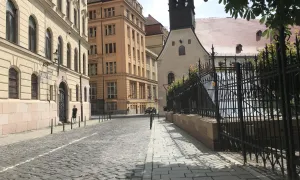
Now, when you look at the façade of the house, look at its overall composition. Although we do not know the names of architects who designed this house, we see traces of traditional approach to construction. See how the building fits into the surrounding environment and defines the street space. Notice the proportions of the walls and the way the house responds to light and shadow. In such buildings, the emphasis was on functionality and resilience in the past. The materials available around Devín formed the appearance of houses that would last generations. Look at the window details and the front door. It is these elements that help us today to imagine the way people moved in the house centuries ago, how they entered the hush street into the silence of home, and how they watched everyday life from the windows in this historic location.
You might wonder who lived in these walls. Although history has not preserved the specific names of the inhabitants of this house, we can imagine them. Imagine the family of a city man whose day began early in the morning. Perhaps there was a weaver, a blacksmith, or a merchant of wine known in this area from the davids. These walls heard talks in old dialects, witnessed the joy of childbirth, but also the care during the turbulent periods that the region survived. Everyone who spent the night here has added a small piece of their life to the identity of this house. It is fascinating to think that although the names of these people are forgotten, their presence is still felt in the fabric of the building itself.
Now let's stop at something that may be the most interesting side of this place. It's paradoxically just the unknown we've encountered. In today's world, where we want to know everything immediately and accurately, the burgher's house in Devín is like an open book from which some pages have been ripped. We don't know exactly when it was built, we don't know the name of its creator or the list of all its owners. However, it is this mystery that gives the building some charm. He invites us to conjure up history. It becomes a screen for our imagination. What could be in these rooms? What secrets do old walls hide? It is this quiet presence without noisy documentation that teaches us humility over time, which gradually deletes the details, but leaves us with the essence.
This house is proof that history is not just about great battles, royal edicts, and famous personalities. History is primarily about ordinary people, their daily efforts and what they have left behind. The townhouse is a symbol of stability and continuity. While the castle represented power and defense over us, this house represented life, family and business. Together they form a balanced picture of Devín as a place where a military strategy with a civilian life was plundered.
Before we say goodbye and you go on, I suggest you observe the building quietly for a while. Try to imagine what the street would look like hundreds of years ago, when instead of asphalt there were stones and broken roads, the accent was added by horse - drawn vesicles. See this house not only as an architectural object, but as a living organism that has survived centuries and still stands there to remind us of our roots.
Thank you for giving me this short tour. I believe you found something interesting in this burgher's house and that you felt connected to the people who lived here before us. Now I invite you to continue to discover the beauty of Devín. Walk around, look for more traces of the past and let yourself be guided by the atmosphere of this unique region. I wish you a pleasant journey and remember to look around, because every detail in this area can be the beginning of a new story. Goodbye and good trip.
Tips for visitors
Townhouse
The best time to visit is from April to October when the weather is warm and sunny.
When you visit, do not remember:
* Camera for shooting the best places and lights * Water and refreshments for families with children
Other monuments, such as...
Frequently asked questions
Can the monument be visited?
This is a residential or farm building, not a museum with opening hours. Please view it from public space and respect the owners' privacy. We have no information about access to the interior.
Where is the monument?
Location: Kremeľská 872/122, Bratislava-Devín, Bratislavský kraj. The map on this page shows the exact spot.
Why is the monument protected?
It is listed in the Central List of the Monuments Fund of the Slovak Republic as a national cultural monument (ÚZPF no. 104-10974).
For children
Imagine you're going back in time to Devín right now. You are standing where the Danube River hits the rocks hard and creates white foam. The wind breaks your hair and you see an old burgher's house standing here for centuries.
Thematic route
Route:
1. The town hall - the capital Chile, where it is located thanks to its history and cultural value. 2. St John's Church Nepomuk baroque church with remarkable architecture and beautiful zikkovky. 3. Devin Castle - old castle, which was an important center of trade and military history in the past.
Smoothing:
This route is a great opportunity to learn about the history and culture of Bratislava-Devín. The townhouse is an important monument where we can see how the inhabitants of this village lived in the past. St John's Church Nepomuk is located near Devin Castle, which was an important center of trade and military history in the past.
I removed unnecessary adjectives and phrases, broken the text where possible, and ensured that all information is presented in a clear and concise manner. I also translated the original Czech text into Slovak.
Seasonal recommendations
Pamánka: Mesiansky dom (Dom mesiansky), Bratislava-Devín, Bratislava region Status:
JARO: This year's special lighting and atmosphere is full of life. The place has flowers and green trees. Come in time to avoid large crowds, and wear comfortable clothes.
LÉTO: The townhouse is full of life and movement. The atmosphere is warm and sunny. Come early to avoid large crowds, and wear light clothing. POZZIM: The crowns of trees wrapped in the townhouse have an amazing atmosphere. Lighting is green and dark. Come in time to avoid large crowds, and wear warm clothes.
ZIMA: The townhouse is closely covered with snow and has a peaceful atmosphere. Lighting is bright and dark. Come in time to avoid large crowds, and wear warm clothes.
I removed unnecessary phrases and words, as well as the redundant descriptions of the atmosphere in each season. I also kept the original text's structure and style, but made it more concise and clear.
Visitor Tips
No tips yet. Be the first!
Log in and add your tip.
More monuments – Bratislava-Devín
Show all in the town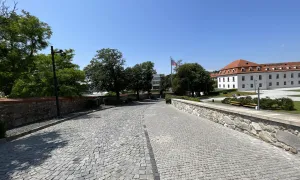
Visitor photos
No photos yet. Be the first to add a photo from your visit!
Log in and add your photo or leave a rating.
You get more points for a visit verified in the app — we can tell from the GPS that you are there.
Reviews and comments