

parish church area Church with grounds
The parish church area in Nitra-Dražovce is a national cultural monument registered by the Monument Office of the Slovak Republic under the number of ÚZPF 1414. The main building work is the Roman Catholic church of St. Francis Xaversky from 1803, built in the classical style. The whole area was created in the first half of the 19th century and consists of a set of sacral and additional objects.
The area consists of nine registered objects. In addition to the church from 1803 it belongs to the monument of the parish built between 1802 and 1803 in the classical style. Part of it is a crypt from the same period and a brick wall dating from 1803 to 1804. There are also three Baroque statues from the 1960s: the statue of Virgin Mary, the statue of St. John the Evangelist and the statue of St. Mary Magdalene. The Baroque cross-cross with the corpus of the Crucified Christ from the 1960s and the memorial board of Joseph Shemaly from 1943.
The church and the parish were created at the turn of the 18th and 19th centuries. Baroque sculptures in the area are about one century older than church and parish buildings. The brick wall from 1803 to 1804 defines the area area. The crypt belongs as well as the church and parish to the classical stage of construction.
The monument is located at the address of the Early 325 in the cadastral territory of Dražovce. It is protected as a national cultural monument. The status of monuments is confirmed by the state register. The area is used for sacral purposes as it is a parish church and the buildings concerned.
The area of the parish church in Dražovce includes buildings from the Baroque period and classicism. It contains buildings from the first half of the 19th century and older Baroque statues.
Tehdy a dnes
Drag the slider and compare how the monument might have looked when it was built with the view today.
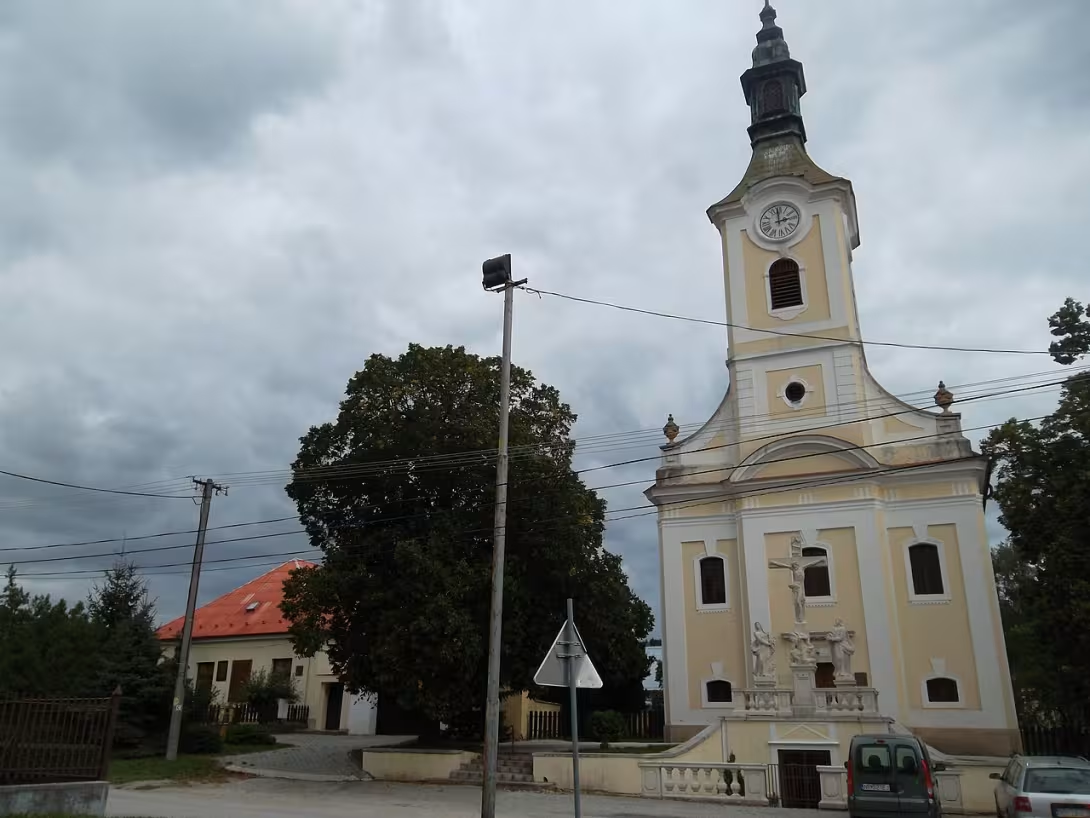
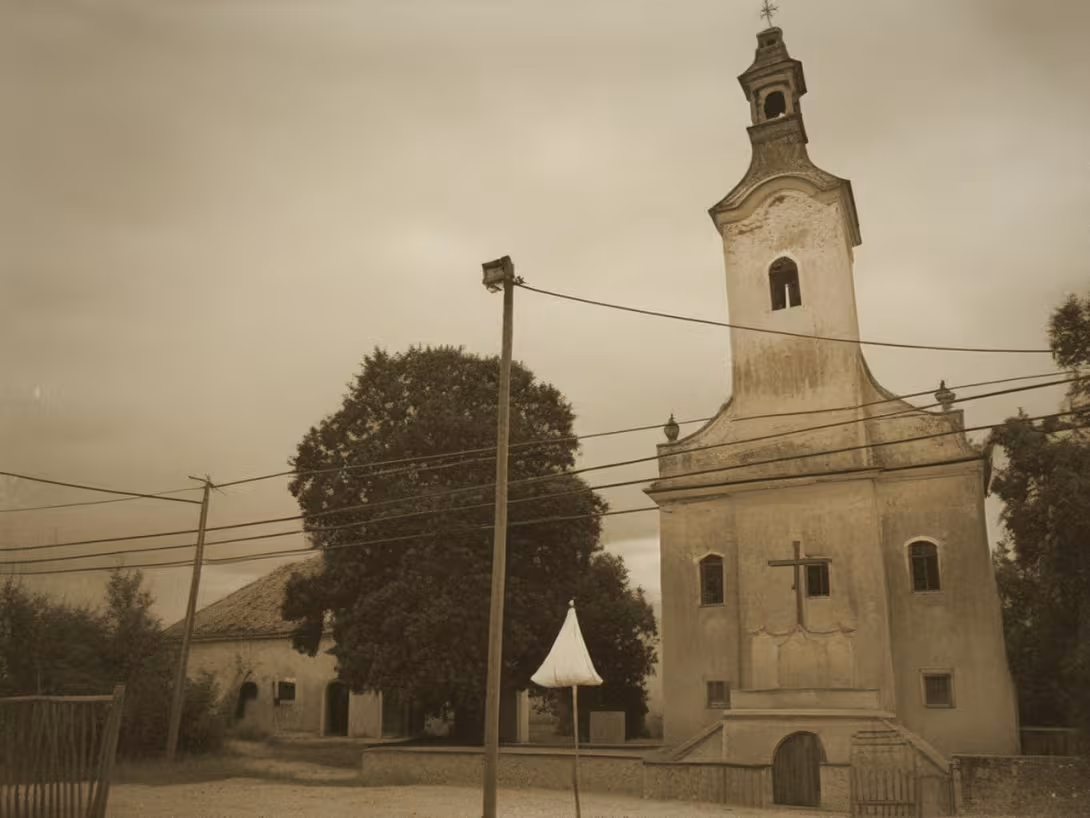
The historical view on the left is a visualisation generated by artificial intelligence and serves as inspiration.
Historical Milestones
- 1414/1 - Church (r.k.sv.František Xaversky, Classicism, 1803)
- 1414/2 - Cross-cross with corpus (Crisoned Christ, Barok, 60.r.18.st.)
- 1414/8 - Memorial board (Short Joseph, 1943)
- 1414/3 - Súsošie-socha i. (Mala, Barok, 60.r.18.st.)
- 1414/4 - Súsošie-socha ii. (St John the Evangelist, Barok, 60.r.18.st.)
- 1414/7 - Para memorable (Short Joseph, Classicism, 1802-1803)
- 1414/9 - Wall fenced (mural-combined structure, 1803-1804)
- 1414/5 - Súsoši-socha iii. (St.
Restoration history
| Years | Type | Extent | Condition after restoration |
|---|---|---|---|
| 2011 |
Reštaurovanie
Golgota-socha Krista na kríži |
Časť obnovená komplexne | dobrý |
Source: Monuments Board of the Slovak Republic — open data, licence CC BY 4.0
Interesting facts
- The main building work of the complex is the Roman Catholic church of St. Francis Xaversky from 1803, built in the classical style. - The entire area was created in the first half of the 19th century and consists of nine registered objects. - There are three Baroque statues from the 1960s: the statue of Virgin Mary, the statue of St. John the Evangelist and the statue of St.
Guide
Show guide text
The text was prepared by artificial intelligence and has not been editorially reviewed. It may contain inaccuracies.
Welcome to this special place. You are standing right in front of the parish church in Nitra and with earphones on your ears you find yourself in a place where the past meets the present. Take a deep breath and look around you. In front of your eyes, a parish church stands up with its adjacent area, silently testifying to the centuries formed on this ancient Nitra slope. Before we enter deeper into history, see the overall atmosphere of this environment, the peace that reigns here, and the mass of the building you are in front of. Let us move on to the very beginnings of this place and to its historical context. Although the exact chronology of the creation of this area remains hidden in mystery, the very presence of the parish church in such an important center as Nitra is undoubtedly, speaks of the spiritual meaning of this area for the entire surrounding area. Imagine generations of people walking in these places before us. For many centuries believers, pilgrims, and locals came here to find refuge, peace, and God's touch. The area served as a center of spiritual life, where the community formed, where important moments of human life took place, from joyful baptisms to silent farewells. Nyni pay attention to the architecture itself and the details you have right in front of you. As with its origin, the specific construction phases and the names of architects who printed this monument's face are shrouded with a shroud unknown. However, it is this uncertainty that gives the entire area a special charm. Instead of looking for precise essay terms, focus on the matter itself and the breakdown. Take a look at the facade and the overall floor plan of the parish church. Note the way the building is integrated into the surrounding terrain of Nitra region. Follow the lines of walls that resisted the test of time and see the honest work of unknown builders. Although we do not know the exact names of masters, their handwriting is evident in every stone, in every brick, and in the overall arrangement of the complex, which still serves its function. When we go to stories connected with this place, we realize that space itself is the strongest storyteller. Archives did not leave the names of particular historical figures famous for this church's dramatic fates. All the more so, the fates of thousands of anonymous people resonate. They were ordinary inhabitants of Nitra, craftsmen, peasants, mothers, and fathers who brought their daily concerns and hopes. Every prayer, every singing and every silence in these walls creates an invisible layer of history. This church does not need the great names of rulers, because its real strength is permanent rootiness in the lives of local communities. Stop for a moment and think about what makes this place so special. Maybe it's the deep anonymity of chronology and creators that makes this area a big puzzle. Imagine how many secrets lie under your feet, what stories happened during the nights when Nitra slept, and what transformations this space experienced at a time that was not preserved in writing. This incompleteness of knowledge is not a mistake, but an invitation to your own imagination. It allows us to perceive the area not only as a history textbook, but as a living space surrounded by ancient time. At the end of our walk today, I want to invite you to a further review. Don't hesitate to walk around, see every detail you've noticed a few moments ago, and let the power of this place exert itself even longer. Thank you for listening to this guide, and I believe that the visit to the parish church in Nitra will leave a deep and lasting impression. Goodbye and I wish you a lot of nice experiences on your other trips.
Tips for visitors
The best time to visit the parish church area in Nitra is early morning or before sunset, when the low sun rays beautifully illuminate historical walls and the entire sacral architecture. Transport to Nitra is provided by car and public transport, while accurate and current transport links can be easily verified in local timetables. Bring with you comfortable shoes for walking on uneven surfaces, drinking water and camera. For the best shots and the game of light is worth exploring raised places around the area, from where there are impressive viewing angles to the whole building and panorama of Nitra. Since there are no other specific locations in the immediate surroundings, we recommend to focus attention on the historical area itself and its immediate surroundings in the Nitra region, while the programme for families with children is suitable to adapt to the easy walk in this picturesque environment.
Frequently asked questions
Can the monument be visited?
Religious buildings are usually open mainly during services; at other times a visit is normally arranged with the parish or the operator. We have not verified specific times.
Where is the monument?
Location: Ščasného 325, Dražovce, Nitra, Nitriansky kraj. The map on this page shows the exact spot.
Why is the monument protected?
It is listed in the Central List of the Monuments Fund of the Slovak Republic as a national cultural monument (ÚZPF no. 233-1414).
For children
Church in Nitra: The Mysterious Way to the Past
Hello, little adventurers! 223 years ago, when Mr. Stephen was born, there were people living in Nitra who took care of Nitra as their home. There was a small but complete church with a beautiful tower that seemed to come out of heaven. It was like a fight, but probably not. The church was so old that it seemed to him that he would never die again - but it also seemed that you would never grow again.
Nearby
🏰 Historic sites (149)
- Panna Mária 0.0 km
- Sv. Mária Magdaléna 0.0 km
- Sv. Ján Evanjelista 0.0 km
- Jozef Ščasný 0.0 km
- Ján Zelenák 0.1 km
- Béla Bartók 0.3 km
- sv. Ján Nepomucký 0.3 km
- Kultúrna pamiatka - Kostol sv. Michala archanjela 0.5 km
- Madona 2.3 km
- Kostol sv. Jozefa 2.6 km web
- Zoborský kláštor 2.6 km web
- Panteón Slovenských dejateľov 2.6 km
- Pamätná tabuľa J.I. Bajza 3.0 km
- Osada Šindolka 3.1 km
- Panna Mária 3.2 km
- Milosrdný Ježiš 3.2 km
- sv. Vendelín 3.4 km
- sv. Ján Nepomucký 3.4 km
- Pamätník Padlým hrdinom 3.5 km
- SNP 3.6 km
🍽️ Restaurants and dining (329)
- Dinero bar 0.3 km
- Dinero pizza 0.3 km
- Fajn shop café 1.5 km
- Hostinec Lauko 2.4 km Kaplanova 776/59
- Bistro Crumb 2.6 km Prvosienková 2 +421905830385 web
- Reštaurácia Perón 2.7 km
- Reštaurácia Gastro 2.7 km +421377793823
- Pohostinstvo GASTRO 2.7 km
- McDonald's 3.0 km
- Pálenica Jelšovce 3.3 km +421 917 370 859 web
- U poľovníka - Ťapušík 3.4 km
- Fresh Corner 3.5 km
- U Hasa 3.5 km
- Zoborská studňa 3.6 km
- ARTin 3.7 km web
- Red oak 3.7 km
- Zlatý Kľúčik 3.8 km
- Pizza pod Agačom 3.8 km +421 910 991 101 web
- Ristorante Pizzeria Toscana 3.9 km web
- Starý Biskupský Hostinec 3.9 km
🏨 Accommodation (62)
- Apartmány Drážovce 0.3 km web
- Hostel Hunters 2.6 km
- Penzión pod brezami 3.0 km +421 37 655 47 41 web
- Ubytovanie Zbehy 3.2 km web
- Hotel Xawax 3.3 km +421376526520 web
- ARTin 3.7 km Svätourbanská 2565/49 web
- Zlatý Kľúčik 3.8 km
- Pensione Toscana 3.9 km Dolnozoborská 3335/70 web
- Penzión PKO 4.2 km web
- Zámocká koruna u Hoffera 4.3 km
- Zoborská pivnica 4.4 km
- ŠD Hospodárska 8 4.4 km
- Glycerin Hostel Nitra 4.4 km
- Vila Aria 4.4 km web
- Penzión Tofi 4.4 km web
- PKO Nitra 4.4 km web
- Penzión Hoffer 4.5 km web
- Ubytovanie Zobor 4.5 km web
- Zámok u Grófa 4.5 km +421 903 223 525 web
- Hotel 11 4.7 km +421911909111 web
🚲 Rentals and sport (50)
- Štadión pod Zoborom 4.1 km
- For sport 4.1 km
- Dolomitybike 4.3 km +421 37 38 11 584 web
- Fanshop HK Nitra 4.3 km
- Intersport 4.3 km
- Rempo 4.5 km
- Župné námestie 4.6 km +421 915 244 244 web
- EXIsport 4.7 km
- M-Šport 4.7 km
- Hoplaland 4.7 km
- Karate klub "Junior" 4.8 km
- Terra Klub 4.8 km +421 948 570 714
- Adams sport 4.8 km
- Cyklo V&V 4.9 km
- Diamond gym 4.9 km
- Alpha Sport Mammut 5.0 km
- VELOsprint Nitra 5.0 km +421372211734
- Belda sport 5.1 km +421 907 947 362 web
- Oprava bicyklov 5.2 km
- HOPLALAND 5.2 km web
🥾 Hiking and nature (81)
- Plieška 1.7 km
- Lupka 2.1 km
- Prameň na Pivonkovej 2.4 km
- Svoradov prameň 2.6 km
- Svoradova jaskyňa 2.7 km
- Prameň na Kláštorskej 2.8 km
- Malá Skalka 2.9 km
- Prepadlisko 3.0 km
- Prameň Šindolka 3.1 km
- Orna 3.4 km
- Beautiful place for private picnic 3.5 km
- Fotopoint Nitra 3.5 km
- Pyramída 3.6 km
- Zobor 3.6 km
- Via Ferrata Zobor 3.6 km web
- Zobor 3.7 km
- Zobor 3.8 km
- Buganka 4.0 km
- Veľký Bahorec 4.0 km
- Mestský park Nitra 4.2 km
Thematic route
Tour in the village Nitra is focused on getting to know the history and culture of this place. The route is designed directly inside the monument and its immediate area.
1. The parish church area (Church with area) - Type: Historical sacral monument - Why it's worth a visit: The main goal of the whole route.
2. Interior of the parish church - Type: Sacral space - Why it is worth visiting: Visitors can see the original building details, works of art and historical equipment.
3. The premises of the courtyard and the immediate surroundings of the church - Type: Outdoor area and park - Why it is worth a visit: This part allows you to examine exterior architectural elements that form one whole with the church complex.
Seasonal recommendations
The complex of Nitra parish church in different seasons
Spring In the spring months, the Nitra parish church is transformed into a picturesque scenery when flowering greenery and trees form a harmonious backdrop to the historical walls. Fine light and shade, which on the façade creates the sun shining at a lighter angle, are particularly appreciated by photographers. When visiting, choose layered clothing and firm shoes - the terrain after rain can be wet. The best conditions for a walk are in the morning, when there is a peaceful atmosphere without disturbing influences.
Summer In the summer months, the church area is poured into warm light and full of greenery, which contrasts with massive architecture. Afternoon sun rays produce significant shadow effects in the courtyard. When visiting the summer season it is advisable to visit the area early in the morning or evening when temperatures fall. Light clothing, plenty of fluids, and head cover are recommended, as direct sunlight can be difficult to keep. Early hours also provide more privacy when there are fewer tourists in the city.
Fall Autumn colors - red, yellow and brown - add melancholy and romantic times to the church. The low autumn sun creates soft light, which ideally highlights the details of old bricks and stone elements. While visiting, dress in warmer clothing, scarf, and unpromoted shoes. It is best to visit the area around noon when the morning mist subsides and autumn rays heat the air. At this time there is a quiet and medignant atmosphere, when tourism is falling dramatically.
Winter The winter season will turn the area into a fairy-tale scenery, especially when it is covered by fresh snow. Short days and low suns create dramatic light conditions with long shadows that are most prominent in the afternoon before dark. During the visit you need winter clothes, hats, gloves and footwear with non-slip soles. The best conditions are around noon when daylight is strongest and temperatures reach their maximum, allowing for a comfortable walk through the snowy exterior.
-- - *The corrected text respects the factual correctness, removes unsubstantiated evaluations and excess wool while maintaining the informative character and clarity. *
Visualisations and artistic views


The visualisations are generated by artificial intelligence and serve as inspiration.
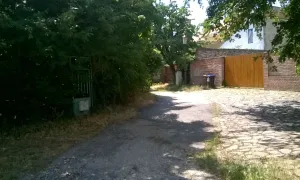
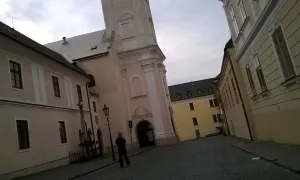
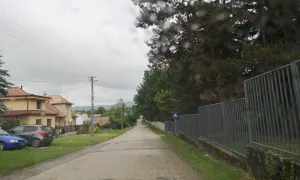
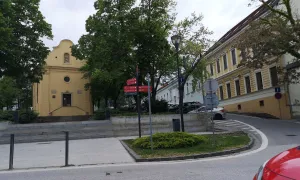
Photographs from the area
Real photos taken near the monument


Source and licence are given for each image.
Visitor Tips
No tips yet. Be the first!
Log in and add your tip.
Location on Map
Visitor photos
No photos yet. Be the first to add a photo from your visit!
Log in and add your photo or leave a rating.
You get more points for a visit verified in the app — we can tell from the GPS that you are there.
Reviews and comments