








partisan bunker Partisan bunker
This monument is partisan bunker in the village Stará Turá in Trenčín region. The object comes from 1944.
The site records the Monument Office of the Slovak Republic under number ÚZPF 2431. It consists of the object 2431/1 which is a bunker from the SNP period.
The building is declared a national cultural monument. The bunker is an example of military architecture from World War II. The location is suitable for people who are interested in material tracks from the period of the SNP.
Tehdy a dnes
Drag the slider and compare how the monument might have looked when it was built with the view today.
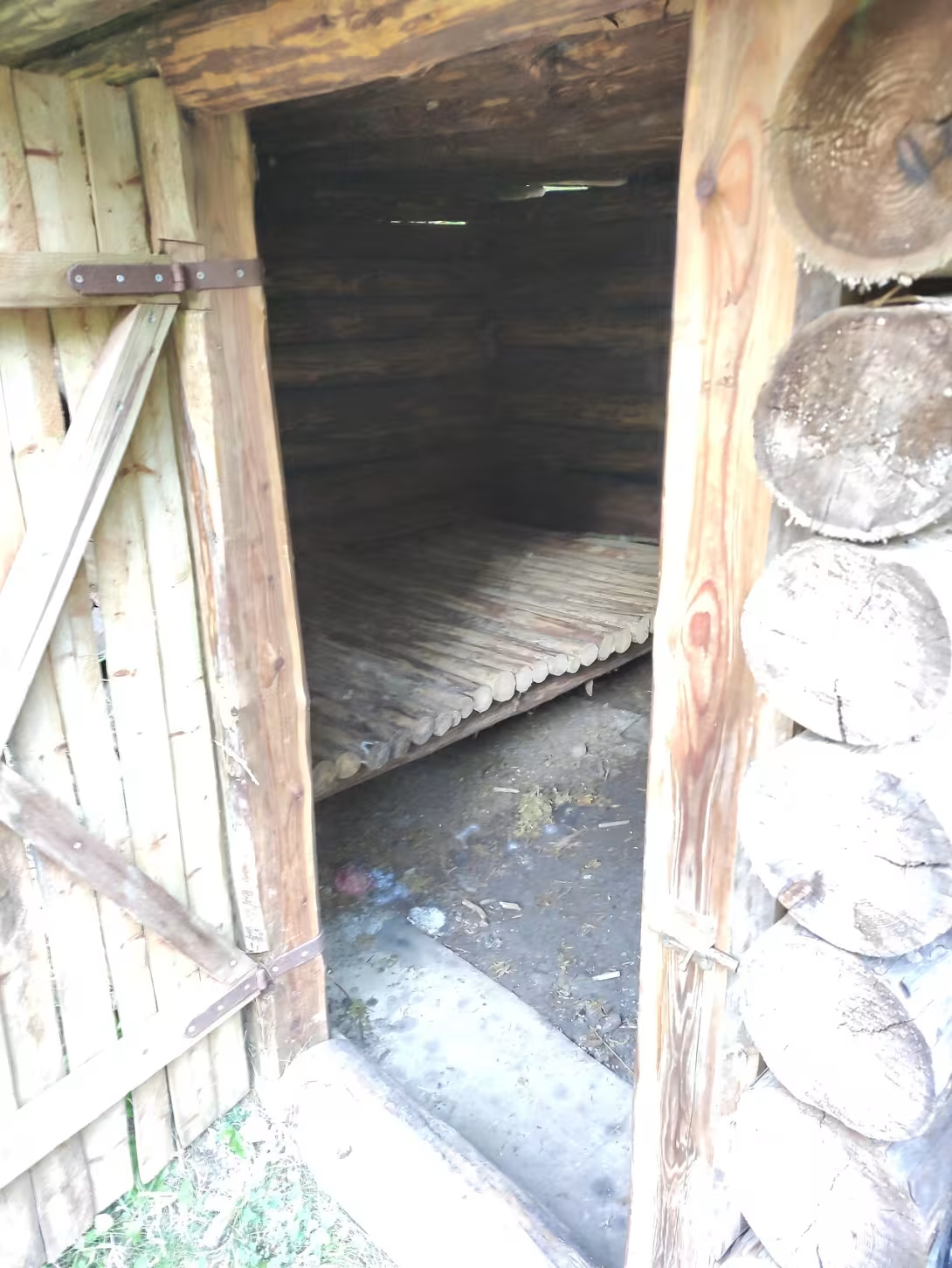
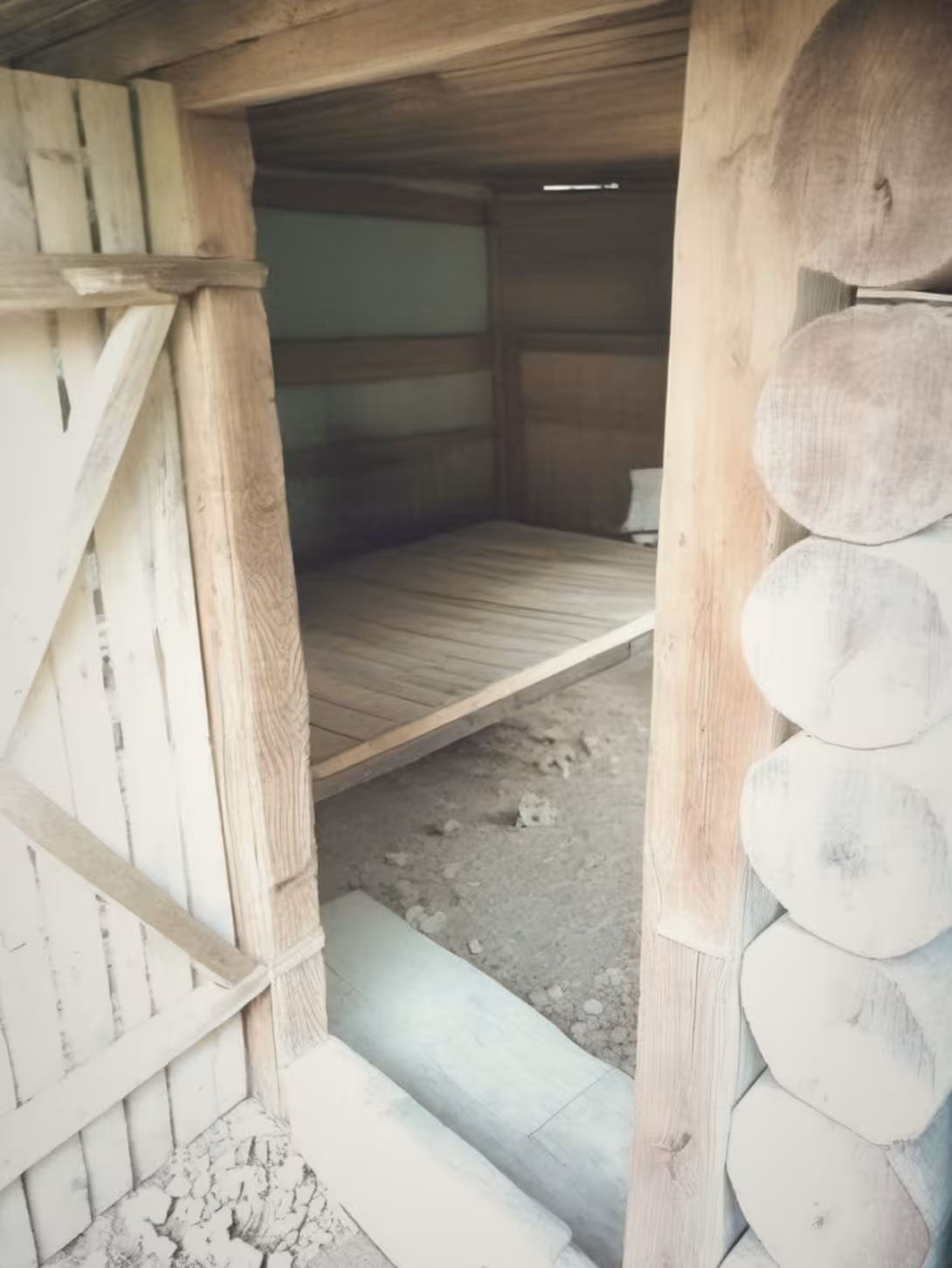
The historical view on the left is a visualisation generated by artificial intelligence and serves as inspiration.
Historical Milestones
- 1939
- The beginning of World War II and formation of resistance groups in Slovakia.
- 1944
- Construction of partisan bunker in the village Stará Turá during the Slovak National Uprising.
- 1945
- Termination of military operations and termination of active use of bunker.
- 2000
- Entry of a bunker in the list of national cultural monuments under the number of the ÚZPF 2431.
Interesting facts
- The bunker comes from 1944 and is an example of military architecture from World War II. - The building is declared a national cultural monument. - The area is registered by the Monument Office of the Slovak Republic under the number ÚZPF 2431. The bunker comes from the SNP period.
Guide
Show guide text
The text was prepared by artificial intelligence and has not been editorially reviewed. It may contain inaccuracies.
Welcome to the village Stará Turá in Trenčín region. Right now you are facing a place that carries a quiet but strong memory from the turbulent period of our history. There is a guerrilla bunker in front of you, a memorial that may seem unobtrusive today, but actually represents a deep symbol of courage and the struggle for freedom. Look at it and see the atmosphere of this place, where nature meets with the history of concrete. It is a place of silence that forces us to stop and think about what sacrifices people had to make in order to live in a peaceful world today.
Although the exact chronology of the creation of this particular object is not detailed in the available records, the very existence of guerrilla bunkers in our country transmits us directly to the time of World War II and SNP. During this period, secret shelters and observatories were created in and around the forest, which served as strategic points for the guerrilla troops. These structures were not created with respect to aesthetics, but with a strict focus on functionality and survival. Their main objective was to provide protection against the enemy, to enable safe communication and to serve as a basis for the coordination of attacks and sabotage. When you realize the danger people were in, this memorial will take on a whole new dimension.
now pay attention to the building itself. As you take a closer look at it, note its compact character. The cells have been designed to blend as much as possible with terrain and to be as visible as possible from a distance. Observe the thick walls and the way the object is anchored in the ground. It was this massiveness that was supposed to guarantee resistance to blades and bombardments. Although we do not know exactly who the architects of this work were, it is clear that they were people who knew exactly how to work with available materials in conditions of war. Look at the surface of the building and see how time and nature gradually take back the space that has ever served as a military strategic point. You can see the result of a combination of military need and improvisation that characterized the guerrilla struggle.
The key stories associated with this place remained somewhat foggy over time, as many of them were transmitted only orally or were secret for security reasons. However, the unknown names of the particular personalities that worked here do not mean that they were inconsequential. On the contrary, this bunker is a memorial to all these unknown warriors who risked their lives in the shadows of the forests of Stara Turá. Imagine those nights spent in the dark, the tension from all the chastity of leaves and the feeling of solidarity between people who were united only by the desire for freedom. Every detail of this structure testifies to the discipline and dedication of those who dared to oppose the superior enemy.
It is in this unknownness that there is a mystery that may be interesting to the visitor. Who exactly built this bunker, and what secret news did they race through this place? Were there hidden weapons, or did he serve as an observatory overlooking strategic roads around the Trenčín region? The lack of detailed historical records of specific architects or personalities makes this place a place for our own imagination. It's like an open book missing some pages, but the overall story is still clear and touching. This bunker is not just a pile of concrete but an incarcerated witness to silent resistance.
Let's go and finish this short tour slowly. We hope you have felt the seriousness and importance of this place. Partisan bunker in Stará Turá reminds us that freedom is not a matter of course, but a result of the perseverance and courage of many generations. We invite you to go around the memorial in peace now, to perceive the silence of the surrounding nature, and perhaps to thank in a spirit all those who fought here tens of years ago. As you continue your journey to the region, look for further traces of history that teach us humility and consideration. Thank you for your attention and we wish you a pleasant next day to discover the beauty and history of the Trenčín region.
Tips for visitors
Spring and autumn months are suitable for visiting.
We recommend shoes with fixed soles to the ground. Since it is a military object, be careful when moving around and take plenty of drinking water.
Use the so-called golden hour before sunbathing. Concrete walls of the bunker in this light gain depth and dramatic appearance.
For families with children, visiting is an opportunity for practical lessons from history. It is advisable to prepare children in advance for a type of military architecture and to look together for traces of past on the concrete surface.
Frequently asked questions
Can the monument be visited?
We have not verified whether this monument is accessible. Please ask the owner or operator, or the local municipal office.
Where is the monument?
Location: Stará Turá, Trenčiansky kraj. The map on this page shows the exact spot.
Why is the monument protected?
It is listed in the Central List of the Monuments Fund of the Slovak Republic as a national cultural monument (ÚZPF no. 224-2431).
For children
A mysterious bunker hidden under Tura
Nearby
🏰 Historic sites (88)
- Dibrovův pomník 1.0 km
- Pamätník česko-moravsko-slovenskej vzájomnosti 2.2 km
- Ľudovít Holuby 3.2 km
- Obetiam SNP 3.5 km
- Dom rodiny Stachových 3.5 km
- Dom rodiny Jansových 3.5 km
- Dom Jána Mikulca 3.5 km
- Pamätník obetí fašizmu 4.2 km
- Tábor partizánov 5.2 km
- Milan Uher a Anton Jakubík 6.3 km
- Pamiatka umučených martýrov 1944-1945 6.6 km
- Ján Marták 6.6 km
- Jubilejní památník knížete Jana II. z Lichtenštejna 7.0 km
- Socha sv. Jana Křtitele 7.2 km
- Pomník obětem 2. světové války 7.4 km
- SNP 7.4 km
- 2013 7.5 km
- zámek Strání 7.7 km
- Múzeum sestier Royových 8.0 km +421 908 656 738 web
- Jozef Roháček 8.5 km
🍽️ Restaurants and dining (88)
- Penzion U Černého potoka 3.1 km +420 518 321 051 web
- Holubyho chata 3.2 km +421323700338 web
- Chata na Kýčeri 3.7 km +421 908 284 206
- Obecní hospoda 3.8 km
- Na konci Sveta 4.0 km +421 915 893 821
- Tobb restaurant 5.2 km +421346516787 web
- Hostinec u Klačkov 5.3 km +421903113846 web
- Lubinská záhrada 6.5 km web
- Záhrada Podjavorina 6.5 km web
- Country and Western Saloon Cetuna 6.5 km +421 32 779 3690 web
- Restaurace kavérna Květná 7.2 km nám. Em. Zahna 1105 web
- Na Huti 7.2 km web
- Na Natoni 7.4 km
- Jokl 7.6 km
- Bistro Vintrovka 7.7 km +420 603 299 699 web
- Zámeček 7.7 km
- Pohostinstvo pod lipami 7.9 km
- Wrestling Bar 7.9 km
- Javorinka 8.0 km
- Šport pub 8.0 km
🏨 Accommodation (32)
- Rekreační středisko Vápenky 3.2 km
- Hotel Háj 3.7 km +420 533 533 660 web
- Chata Kristýna 5.0 km
- Ubytovanie Pod Javorinou 5.1 km +421903231125;+421903464727 web
- Hostinec u Klačkov 5.3 km +421903113846 web
- Tábor Podvišňové 6.8 km +421 32 771 7777 web
- Školiace a rekreačné stredisko Tábor Podvišňové 6.8 km +421327717777
- CHata Filipov 75 7.3 km
- Penzion Roh 7.5 km
- Zámeček 7.7 km
- Rekreačné zariadenie Hrubá Strana 8.0 km +421 32 77 932 35;+421 907 776 580
- Penzión Šport 8.0 km +421 911 516 333 web
- Penzión na Mlyne 8.2 km +421327762975 web
- Hotel Lipa 8.8 km
- Penzion Boďa 9.0 km
- Selanka Hill 9.2 km +421 904 647 152 web
- Rekreačné zariadenie Javorinka 11.2 km +421 911 74 74 71 web
- Dům u Stolárny 11.5 km
- Spoločenský dom 11.9 km
- Penzion Víno Hruška 12.8 km +420 775 239 684 web
🚲 Rentals and sport (13)
- Ski areál Nová Lhota 2.8 km web
- Ski areál Štrbáň 6.5 km
- Ski areál Filipov 7.3 km web
- Krytá plaváreň 8.0 km
- Adrobike 8.9 km
- U Dana 8.9 km
- Sportovní hřiště Horní Němčí 9.0 km
- Sportovní hala 9.9 km
- Krytá plaváreň 11.0 km
- Letné kúpalisko Myjava 11.1 km
- LHSPORT 13.9 km Komenského 702 +420 603 980 183 web
- TJ Sokol Suchá Loz 14.1 km web
- Sportovní Hala 15.0 km Podohradí 888
🥾 Hiking and nature (146)
- Studánka 0.6 km
- Durda 0.9 km
- Nejvyšší bod Jihomoravského kraje 0.9 km
- Kašpariskův vrch 1.0 km
- Čapec 1.5 km
- Na Čapci 1.5 km
- Veľká Javorina, hrebeň 2.2 km
- Prameň rieky Myjava 2.4 km
- Šibenický vrch 2.5 km
- Vrch Slobodných 2.7 km
- Velká Javořina 2.8 km
- Kubíkův vrch 2.9 km
- Prostredný vrch 3.8 km
- Grúň 4.2 km
- Jelenec 4.8 km
- Jelenec 4.8 km web
- studánka U Liščí boudy 5.0 km
- Brezina 5.2 km
- Partizánske bunkre Zemľanky 5.2 km
- Lipovec 5.5 km
Thematic route
Thematic cruise route: Memorial of guerrilla resistance in Stará Turca
1. Memorial of the Partisan bunker (Stará Turá) This object served as a hidden base for partisans during World War II. Expositions in the area document the lives of partisans and their fight against the Nazi regime.
2. St. Nicholas Church (Old Tura) The church of St. Nicholas from the 18th century represents Baroque architecture. The building and adjacent suburbs testify to the history of the village.
3. 19th century buildings (Old Tura) In the center of the village there are houses, which form the historical core of the village. Their preserved form documents the development of the village.
4. Partizánska street and memorial on the square (Stará Turá) Near the bunker there is a street named in honor of partisans. On the square is located a monument reminiscent of the battle past of the village. Old houses stand around the square.
Recommended route: The trip begins in the Memorial of the guerrilla bunker. The road leads through the historical core of the village to the Church of St. Nicholas and old houses. The route ends on the square, where the partisan street and memorial are located.
Additional information: There are no other historical monuments around the village. Distances are small, the route is suitable for walking.
Seasonal recommendations
Spring In spring, the guerrilla bunker in Stark Tura will wake up from winter sleep. The surroundings are surrounded by greening forests whose leaves form fine shadows on stone walls. The sun rays are reflected from wet soil. The atmosphere is fading when memories of the past develop in nature. Birds fly above the ceiling of the bunker. For a visit it is advisable to wear light but protective clothing, because spring days are unstable - in the morning it may be cold, while in the semi-sleep the sun is warmer. It is recommended to visit the bunker in the morning or in the afternoon, when nature is quieter and light softer, which makes it possible to better perceive the details of the building.
Summer In the summer months the bunker surrounds the flowering nature and warm sunlight. The forests around Stark Tura resemble the green sea. The atmosphere is full of warmth and peace, although night temperatures can be pleasantly cool. Birdsongs and the noise of leaves complement human voices only in the busiest hours. For a visit it is advisable to wear lightweight clothes protecting from sunlight and water. It is best to arrive before or after 10:00, when temperatures are favorable and there is peace in nature.
Fall In the autumn, the woods are extended and the woods become yellow, brown, and red. The earth covers scattered leaves. Sunbeams penetrate the forest and create a game of light on the walls. The air is colder, and the sun often covers clouds. For a visit it is advisable to wear warmer clothes because autumn days are short and cold. It is recommended to visit the bunker in the morning hours when the light is softer, or in the full-time period when the sun creates significant shadows.
Winter In winter the bunker is surrounded by snow. The sun's rays reflect from the snow and form shadows on the stone walls. The air is cold and dry, the night temperatures can be very low. For a visit it is advisable to wear warm, layered clothes and shoes with good adhesion to the snow. It is best to come in the morning when the light is softest, or in a quieter time, when the sun creates distinctive shadow images in the snow.
Visualisations and artistic views


The visualisations are generated by artificial intelligence and serve as inspiration.
Visitor Tips
No tips yet. Be the first!
Log in and add your tip.
Location on Map
More monuments – Stará Turá
Show all in the town

Visitor photos
No photos yet. Be the first to add a photo from your visit!
Log in and add your photo or leave a rating.
You get more points for a visit verified in the app — we can tell from the GPS that you are there.
Reviews and comments