








roľnícka usadlosť Farmer's farmstead
In the village Osturňa in Prešov region there is a peasant court, which is declared a national cultural monument. It is an object of folk architecture whose style and period of creation dates back to the first half of the 20th century.
The whole area of the monument consists of a set of four separate objects, which are registered by the Slovak Monument Office. The first one is a folk house, which is made in a log structure. Another object is a barn with a stable, which combines log and frame construction. The set is complemented by two economic buildings, both of which are built using log structure. All these buildings are defined within the register as part of folk construction from the first half of the 20th century.
In terms of construction characteristics, all objects in the area are rested on traditional materials processing techniques. The log structure dominates the entire courtyard, while the frame structure is specific only to the barn building with a stable. These technical parameters are typical for the period of establishment of the settlement.
The courtyard is located at number 143 in Osturňa. The Monument Office of the Slovak Republic maintains this building in the register under the number ÚZPF 413-4205. The year 2000 is listed in the available data on the site in connection with its origin or registration. The exact location of the object is determined by coordinates 49.33514, 20.23636.
This object is located in the cadastral area of the village Osturňa and represents a documented example of the organisation of a farmer's estate from the first half of the last century. For a curious visitor, the monument is interesting for its structure and composition of farm buildings. It is recommended to visit the traditional architecture in Prešov region.
Tehdy a dnes
Drag the slider and compare how the monument might have looked when it was built with the view today.
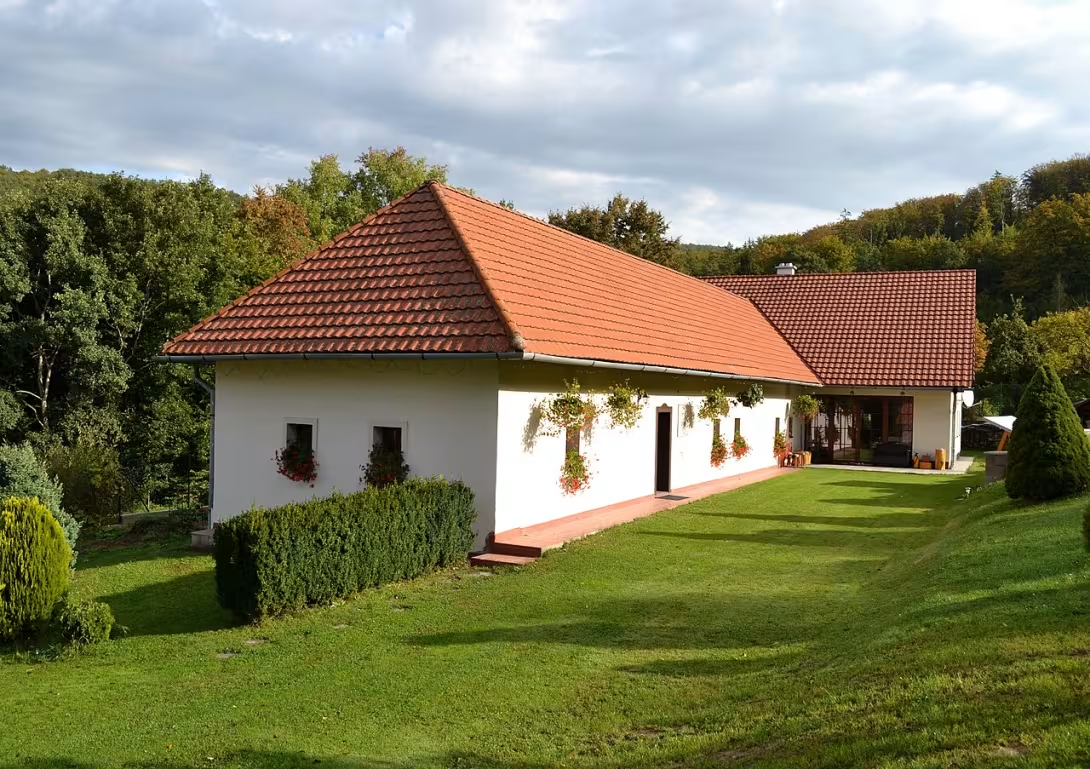

The historical view on the left is a visualisation generated by artificial intelligence and serves as inspiration.
Guide
Show guide text
The text was prepared by artificial intelligence and has not been editorially reviewed. It may contain inaccuracies.
Welcome to Osturn, this quiet corner of the Prešov region, where time seems to stop and where nature with history creates a harmonious whole. You are standing before a peasant settlement, a place that carries in traces of generations of people who have been deeply immersed in this land. Now that you look in front of you like that, you may see at the first moment only a set of old buildings, but you're actually looking at a witness to an ancient way of life. See this atmosphere of peace and humility that this place exudes. It is a space where every part of the court had its precise meaning and where every day was dictated by the rhythm of nature and the needs of the economy.
Let us now slowly plunge into the context in which this settlement arose. Although the exact dates of construction are not detailed in the records, peasant courtyards in this area have been built with the aim of maximum functionality and survival in difficult conditions. The settlement was not only the home of one family, but represented a separate economic unit, also a small production centre. By the time it was created, there were no supermarkets or modern machines. Everything the family needed to live had to be produced right here, in this yard and in the surrounding fields. Working from morning to duality, from sunrise to sunset, was a natural part of the existence of everyone who lived here. Thus, this court was the heart of family life, a place of hard work, but also a place of belonging and mutual assistance.
Nyni pay attention to the architecture itself and to what you see right in front of you. Look at the total layout of buildings. Notice how the premises are organized. The farming estate is not a random collection of buildings, but a sophisticated system. In such settlements, housing, storage of crops and animal breeding used to be strictly separated, but also strategically located, so as to minimise walks in difficulty or during violent winter demolitions. Look through the whole area of the yard. Observe the proportions of buildings and how they fit into the country. The architects of these buildings were not known names from textbooks, they were local masters whose knowledge was passed on from father to son. Their goal was not aesthetic pomp, but resistance and practicality. Everything you see has been designed to withstand tests of time and nature.
Looking around like this, try to imagine the people who spent their days here. Although we do not know the specific names of the personalities that lived in these walls, their presence is still there. Imagine the morning calls, the sound of animals, the smell of hay, and the dust on the road. Here lived people for whom the earth was the highest value. Their lives were not easy, they were full of uncertainty as to whether the harvest would be sufficient or whether the winter would be too harsh. Yet, it was this uncertainty that built enormous resilience and deep respect for nature. Every corner of this court remembers their sweat and effort. You may now imagine a family father who controlled the supply in the chamber or a mother who was running the household economy and caring for the children. However, these anonymous lives are the most important ones because they have shaped the culture and identity of this region.
Let us now stop at something that may not be visible at first sight, but is fascinating. The mystery of any such settlement is its ability to survive. Why is this very settlement preserved while many others have disappeared? Is this the result of coincidence or hidden respect for traditions? When you look at the construction details and the way the buildings are planted in the field, you will see the genius of simplicity. It is fascinating to think about how many layers of stories are hidden in these walls. How many secrets, joys, and sorrows have happened here? Perhaps there was quiet talk of plans for the future, perhaps family disputes, or birthday celebrations. This court is like an open book in which some parties are ripped out or faded, which makes us write the rest of the story ourselves by means of our fantasy and empathy.
Now feel the silence that surrounds this place. In today's rapid rhythm of the world, full of digital technologies and constant depth noise, a visit to such a place is like a return to the foundations. The farming estate in Osturn reminds us that man is part of a larger whole and that his existence is inherently linked to the soil from which he draws life. It is a place that teaches us humility. Look again at the general view in front of you. Will you see the beauty in that? Beauty that does not come out of luxury, but from truth and authenticity.
Before I say good-bye and leave you in this silence, I'd like to invite you to another study. Don't go too fast. Stop by every building, see the texture of the surfaces, listen to the noise of wind in the surrounding trees, and try to imagine what this yard would look like hundreds of years ago when it was full of life and activity. Let your senses and intuition guide you. Perhaps this place will awaken your memories of your own roots or lead you to reflect on what we really consider important in life.
The osturna and its monuments are jewels that deserve our attention and respect. By taking the time to visit this peasant settlement, you are helping to keep memory of the people who lived here so that they do not disappear completely in their forgetfulness. Thank you for your attention and for choosing to share with me this silent witness of the past. I wish you a peaceful and inspiring rest of your journey along this beautiful region. May this experience accompany you long after you leave. Now you can put your headphones away and feel the spirit of this place in full silence. Please, please, and let this settlement address you as it has addressed many in front of you. Goodbye.
Tips for visitors
A good time to visit is primaver or late summer. Then all the buildings are open and plants grow in the gardens.
The settlement can be reached by car or public transport.
Visitors should take comfortable shoes and water. For families with children there are marked trails and areas to move.
Building images can be taken during morning hours or before sunset, when the lighting is more balanced.
There are other historical objects and natural monuments within 30 minutes of driving.
Frequently asked questions
Can the monument be visited?
This is a residential or farm building, not a museum with opening hours. Please view it from public space and respect the owners' privacy. We have no information about access to the interior.
Where is the monument?
Location: č. 143, Osturňa, Prešovský kraj. The map on this page shows the exact spot.
Why is the monument protected?
It is listed in the Central List of the Monuments Fund of the Slovak Republic as a national cultural monument (ÚZPF no. 413-4205).
For children
Monument: peasant settlement
Imagine having a secret key in your hand from time to time. Turn it to the right and boom! You'll be transferred about 50 years ago, right until the time of the farmer's settlement in Osturni.
What did it look like? Imagine wood houses that smell of meadow and old stories. Here lived people who had hands used to work hard. Every day was like a mission in the best strategy game.
Nearby
🏰 Historic sites (35)
- 700 r. obce 0.2 km
- Padlým rodákom v 1. sv vojne 0.2 km
- Szałasy 6.3 km
- Zagroda Sołtysów w Jurgowie 7.2 km web
- Ždiarsky dom 7.5 km web
- Penzión Tatra 7.7 km
- Pomnik strażaków 9.2 km
- dom Michal Dočolomanský 9.4 km
- Zagroda Korkoszów w Czarnej Górze 9.5 km Zagóra 86 web
- Lovecký zámoček Hohenlohe 9.6 km +421 905 243 618 web
- Miejsce dawnego dworu obronnego 10.6 km
- Izba Regionalna 10.8 km Księdza Józefa Kosibowicza 13 +48 694477544
- Kościół pw. Świętej Elżbiety Węgierskiej (dawny) 10.8 km
- Druhnie Oldze Małkowskiej 11.1 km
- Wozownia 11.3 km
- Zamek Dunajec 11.4 km web
- Zamek Dunajec 11.4 km
- Pawilon wejściowy w Sromowcach Wyżnych - Kątach 12.4 km
- Zamek Czorsztyn 12.4 km
- Zamek Czorsztyn 12.4 km web
🍽️ Restaurants and dining (148)
- Mocova Koliba Pohostinstvo Pavlik Ján 0.4 km +421 911 835 392 web
- Pohostinstvo u Emila 4.1 km
- Pizzeria Francesco 5.9 km Świętej Anny 122
- Harwań 6.2 km Podokólne 1
- Szałas nr. 3 6.2 km
- Reštaurácia Medvedí brloh Strachan 6.5 km +421919171519 web
- Penzion Strachan 6.5 km
- Penzión Ždiaranka 6.6 km +421910999571 web
- Penzión Kamzík 6.7 km
- Bistro Strednica 6.9 km
- Restauracja "Nowak" 7.0 km web
- Hotel Sova Ždiar 7.1 km +421 905 926 601 web
- Pizzeria Margo 7.1 km Jurgów 194 +48 667 484 991 web
- Pizzeria Rustika 7.1 km
- Bufet Livia 7.2 km
- Ždiaran 7.5 km web
- Ždiarsky dom 7.5 km
- Reštaurácia Goral 7.5 km
- Panorama 7.9 km web
- Hniezdo 8.0 km
🏨 Accommodation (354)
- Luxury Chalet Katarinka 2.3 km +421 904 512 113 web
- Pokoje u Danki 2.9 km +48885586899
- Ubytovanie U Emila 4.1 km
- Chata Goral 5.2 km web
- No Name Luxury Hotel & Spa 5.4 km Leśna 46 +48 797 502 141 web
- Zbójnik Na Klinie 6.4 km Potok Bryjów 45 +48 182077854
- Noclegi "U Gieni" 6.4 km Potok Bryjów 39A +48 18 207 78 63 web
- Domki pod Sosnami 6.5 km Jutrzenki 21
- Harnaś 6.5 km Świętej Anny
- Mountain Resort Apartments 6.5 km +421 911 109 202 web
- penzión Vasko 6.5 km
- Penzion Safran 6.5 km
- Mountain Resort Chalets 6.5 km +421 911 109 202 web
- Penzión Ždiaranka 6.6 km +421910999571 web
- Mountain Resort River 6.6 km +421 911 109 202 web
- Penzion Perla 6.6 km
- Drevenica Anka 6.6 km
- Penzión u Pavla 6.6 km +421 907 583 815 web
- Penzión Slovakia 6.6 km web
- Penzion Patrik 6.7 km
🚲 Rentals and sport (38)
- Centrum Rekreacji i Wypoczynku "HAWRAŃ" Sp. z o.o. 6.1 km Podokólne 1 +48 696 232 312 web
- wypożyczalnia i szkoła narciarska Ski-Plus 6.2 km Podokólne 1
- E-bike Strachan 6.9 km web
- FUN SPORT 10.2 km Sportowa 14
- corny staw 10.4 km
- Letnie mocydełko 10.4 km
- cepersko płań 10.4 km
- jaskinia nad Porońcem 10.4 km
- przystań statków "Dunajec" i "Halny" 11.4 km
- Przystań źeglarska 11.4 km
- przystań gondoli "Czorsztynianka" 11.4 km
- Studnia zimnej wody 11.5 km
- Niecka ze śniegiem 11.5 km
- Dzika rzeka 11.5 km
- Grota sztucznej fali 11.5 km
- Wodny plac zabaw 11.6 km
- Dmuchańce 11.6 km
- Slide 11.6 km
- Wypożyczalnia Nart U Maćka 12.1 km Pod Grapą 22a web
- Prístav Pltí 12.2 km web
🥾 Hiking and nature (387)
- Petrolovka 1.0 km
- Línia zákopov z 2. svetovej vojny 1.1 km
- Línia zákopov z 2. svetovej vojny 1.3 km
- Rezerwat Niebieska Dolina 1.8 km
- Línia zákopov z 2. svetovej vojny 1.9 km
- Línia zákopov z 2. svetovej vojny 2.0 km
- Malorovka 2.0 km
- Rohová 2.1 km
- Línia zákopov z 2. svetovej vojny 2.2 km
- Vŕšok 2.2 km
- Pieskowy Wierch 2.2 km
- Kubuś 2.3 km
- Línia zákopov z 2. svetovej vojny 2.4 km
- Holowiec 2.6 km
- Línia zákopov z 2. svetovej vojny 2.6 km
- Klęzbarg 2.9 km
- Przełęcz nad Łapszanką 2.9 km
- Zlomiská 3.1 km
- Línia zákopov z 2. svetovej vojny 3.2 km
- Bystrý vrch 3.4 km
Thematic route
1. Entrance to the farmhouse (Entrance point): Start of the tour, where visitors will familiarize themselves with the history and importance of the building in the village Osturna. 2. Residential house (Architektonic monument): A tour of traditional housing and internal distribution of the rooms of the farmhouse. 3. Courtyard (Outdoor area): Central area settlements with a demonstration of everyday life and work in the former farmyard. 4. Farm buildings (Technical premises): A tour of stables and warehouses used for agricultural purposes. 5. Interior exposition (Exhibition): Presentation of traditional tools and household articles.
Seasonal recommendations
In spring, the landscape around Osturnia is green. Morning dew adds shine to wooden buildings. Permeable footwear is recommended as roads can be muddy after the meltdown. A good time to visit is morning.
Summer lighting highlights the details of traditional architecture. In the main season there are most visitors, so we recommend coming early in the morning. Remember light, breathable clothing and sun protection.
Autumn in Prešov region is characterized by yellow leaves and morning fog. Softer light creates conditions for photography. Due to fluctuating temperatures, layered clothing is suitable.
In the winter months, the peasant settlement is covered with snow, highlighting the contrast between white landscape and dark wood. Warm layers and winter shoes are essential.
Visualisations and artistic views


The visualisations are generated by artificial intelligence and serve as inspiration.
Photographs from the area
Real photos taken near the monument


Source and licence are given for each image.
Visitor Tips
No tips yet. Be the first!
Log in and add your tip.
Location on Map
More monuments – Osturňa
Show all in the town



Visitor photos
No photos yet. Be the first to add a photo from your visit!
Log in and add your photo or leave a rating.
You get more points for a visit verified in the app — we can tell from the GPS that you are there.
Reviews and comments