








vineyard house Vineyard house
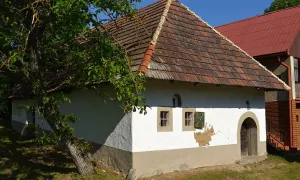
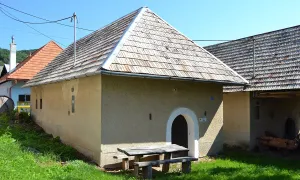
In the village of Sebechleby in Banská Bystrica region there is a vineyard house, which comes from the first half of the 18th century and dates back to 1721. Architecturally belongs to folk architecture.
The landmark office of the Slovak Republic records this area under the number ÚZPF 3575, where there is one building - vineyard house with the number 3575/1. The building has brick construction of stones. There is no additional information available on floor plan, floor plan and space.
The wine-growing house is located on the coordinates 48.28313, 18.91363 and is protected as a national cultural monument. This object represents a preserved element of folk construction in Sebechleby.
Tehdy a dnes
Drag the slider and compare how the monument might have looked when it was built with the view today.
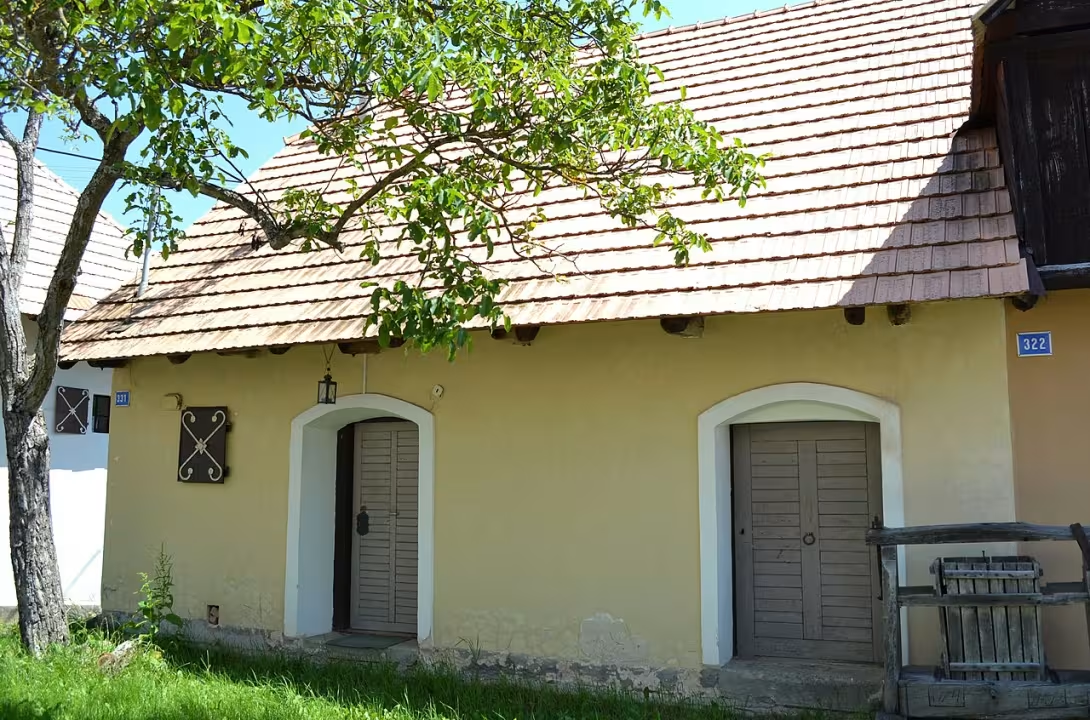

The historical view on the left is a visualisation generated by artificial intelligence and serves as inspiration.
Interesting facts
- The wine-growing house is located in the village of Sebechleby in the Banská Bystrica region. - The house dates back to the first half of the 18th century and dates back to 1721. - Architecturally belongs to folk architecture. - It is protected as a national cultural monument. - The landmark office of the Slovak Republic records this area under the number of ÚZPF 3575, where there is one building - vineyard house with number 3575/1.
Guide
Show guide text
The text was prepared by artificial intelligence and has not been editorially reviewed. It may contain inaccuracies.
You know, in Sebechleb. You just stopped by one of those silent witnesses of history who don't tell us everything we want to know right now, but they leave us with questions that make us stop and really see what we have in front of us. You're standing by the vineyard house. Before going into search for answers that may not exist in archives, try to enjoy the atmosphere of this place for a while. Put all your thoughts on the goal of your tour for a moment and just move around the country of Sechelbrian. Feel the silence that says something here, and you will feel the weight of the time that has stopped here.
If you look at this building, you might think it looks quite normal, but it is in that simplicity that its true meaning lies. The house is not just a building of stone and materials. It is a symbol of man's relationship with the soil, to the cycle changes of nature and to the tradition that shaped life in the region. Although we do not know the exact century when this house was built, we do not know what name its first owners wore, its nature remains unchanged. The title clearly tells us its purpose. It was a house that served viticulturers, people whose lives were inextricably linked to the cultivation of plants and the care of crops that brought joy and livelihood. In this context, this house becomes part of the wider history of agriculture and culture, which is so important for the Banská Bystrica region.
Now I'm going to propose something special. Instead of reading the dry facts about mints or dimensions, try to view this construction as a living organism. Look at the facade. Notice how light hits the surface. Watch the small inequalities, textures and details that make up the face of this building. See how this building engages in the surroundings, as its silhouette grandsons into the land of Sebechlebie. Look at the places where the walls meet the ground. In these passages you may see traces of time that are not written in any book, but are carved directly into the material. See every wall, every angle that defines space. Even if we do not know the architect who conceived this proposal, his hands and his vision are in every detail you see now. This building is not just the result of a technical plan, it is the result of an effort to create a place that will be functional, lasting and harmonious with nature.
When we talk about people who lived or worked here, we run into one of the greatest puzzles of history. Unknown names, we don't know their fates, we don't know if they were happy, if they were afraid of the future, if they met in this house after evenings to rest after a difficult day in the vineyards. But you still feel their presence here. Every house that survived centuries was built and maintained by the hands of specific people. These hands were working, those eyes were watching the sunrise, and those voices probably resonated in the rhythm of the season. Even if their names are wasted on time, their legacy is here, in every stone block and in every trail they left behind. This house is a monument to anonymous people who formed the foundation of our society, but whose history has not become the subject of great chronicles.
And that's where the most extraordinary and the greatest mystery of this place lies. We often look for history in large castles, monumental temples, or castles where the names of kings and generals are written in golden writing. But real life was happening right here in these smaller, quieter places. The mystery of the vineyard house is not what we know about it, but what we do not know. Why were there no records of its exact origins? What happened to the people who once found refuge here? This uncertainty makes us more than just tourists. It forces us to be araştırmi us who try to perceive history not only through direct information, but through intuition and emotion. This house is living proof that not every important event must have its written confirmation to be real.
You stand before a place that is part of the wider tissue of our culture. The sebechles and their surroundings are filled with such little treasures waiting to be seen. The vineyard house does not ask your name, it only invites you to become part of its silence. It is a challenge to observe, to understand that history is not just about data, but about feelings and durability.
As you continue your journey, try taking this feeling with you. Let your head wait for the echoes of these unknown lives and let yourself be inspired by how a person can connect with the country through buildings that will survive his own century. Sebechlebs still have many stories waiting to be discovered, and perhaps you too are one of those who can see something in them more than just ordinary buildings during your next walk.
Thank you for stopping by and paying attention to this silent witness of the past. We will lend you a little more goodbye and invite you to continue to discover the beauty and secrets of our country. We wish you a pleasant journey and let every other place you visit open up new horizons. We'll say goodbye, but history stays here, ready for your next glance.
Tips for visitors
The best time to visit the wine-growing house in Sebechleboch is in the autumn months when the country resents the yellow leaves. This time of year also offers good conditions for photography.
When visiting the vineyard house we recommend to bring protective clothing, because conditions can be unpredictable. Don't forget water and snacks either.
Photography is best morning or evening hours when light is soft. The best places are from the house window or the garden.
Near the vineyard house is a picturesque castle, which is about 30 minutes walk away. It is a suitable place for a temporary visit and fun family with children.
Frequently asked questions
Can the monument be visited?
This is a residential or farm building, not a museum with opening hours. Please view it from public space and respect the owners' privacy. We have no information about access to the interior.
Where is the monument?
Location: Sebechleby, Banskobystrický kraj. The map on this page shows the exact spot.
Why is the monument protected?
It is listed in the Central List of the Monuments Fund of the Slovak Republic as a national cultural monument (ÚZPF no. 325-3575).
For children
Imagine having the key to the real time machine in your hands. It's not a metal machine full of illuminating buttons and wires, but an old stone house. If you marry him, you immediately walk into a time when the world looked completely different. The year is 1721. Exactly 305 years ago, the House of Viticulture was established in Sebechleby. At the time, no one had electricity, Internet or video games. The world was quieter, slower, and full of unexpected surprises that you may not even know today.
Nearby
🏰 Historic sites (91)
- Pamiatková rezervácia ľudovej architektúry Stará Hora 0.1 km web
- Kalvária 2.6 km
- Sedembolestná Panna Mária 3.0 km
- Svätý Ján Nepomucký 3.0 km
- Trojičný stĺp 3.0 km
- Osloboditeľom 3.0 km
- Svätý Vendelín 3.5 km
- Fafokan 4.8 km +421 915 777 673 web
- Kristus nesúci kríž 5.2 km
- Nemčianske múzeum v Turčanovom mlyne 5.3 km
- Dedinské múzeum 5.3 km
- Pamätník represie, 19. 2. 1944 5.5 km
- Svätý Ján Nepomucký 5.5 km
- Svätý Florián 5.6 km
- Svätý Vendelín 5.7 km
- Pamätník 5.7 km
- Mariánsky stĺp 5.7 km
- Tufové pivnice 5.7 km
- Golgota 5.9 km
- Hláska na Kramárskom vrchu 6.3 km
🍽️ Restaurants and dining (53)
- Pohostinstvo Kohút 2.0 km
- Pizzeria Vito 3.0 km web
- Hostinec Strehár 3.0 km
- Hostinec Štvorka 3.0 km
- Hostinec Strehár 5.7 km
- Furmanská - Pizza Hont 6.0 km
- Motorest Tranzit 7.0 km +421 911 738 416 web
- Corgoň 7.6 km
- Lom Beach Bar 7.7 km
- Motorest Devičie 8.7 km web
- Kaviareň Dream3 8.9 km
- Pajta 9.4 km
- Hostinec 10.1 km
- Bažina 10.1 km
- Počúvalská krčma 10.9 km
- Neptún Lipovina 11.6 km
- Hostinec 11.8 km Hontianska 217/65
- Kebab 11.9 km
- Hostinec na námestí 12.5 km
- Pizza & bar U macíka 12.5 km
🏨 Accommodation (41)
- Penzión Chateau Hunting 5.5 km web
- Malý Domček 8.6 km +421 908 649 404
- Biely Domček 8.7 km +421 908 649 404
- Chata Anka 9.1 km +421 45 55 81 620 web
- Pivnica pod Bralom 10.1 km
- Stodola Počúvadlo 10.9 km +421 908 727 577
- Penzión - ubytovanie 11.0 km
- Chalupa Počúvadlo 11.0 km +421 915 223 606
- Krupinkovo 11.2 km +421 905 063 296 web
- Poľovnícka chata Rázdiel 12.6 km +421918 334 033 web
- Heliolit 12.7 km Ľ. Štúra 210/7 web
- Prameň 12.7 km K. Braxatorisa 8/3 web
- Penzión Bystrica 12.8 km Okružná 157/29
- Pension Eko Leo 12.8 km
- Penzión Žemberovce 12.8 km +421 948 127 283 web
- Penzion Gabika 12.9 km
- Kúpeľný hotel Minerál 12.9 km Okružná 124/32 +421 45 550 6001 web
- Hviezda 12.9 km web
- Ubytovanie v chatke 12.9 km Mjr. Daniela Gondu +421 948 127 283 web
- Caravan kemp 13.0 km Mjr. Daniela Gondu 16/36 +421 948 127 283 web
🚲 Rentals and sport (6)
- OFK Sebechleby 2.6 km web
- OFK Štart Prenčov 8.9 km
- bicykle Mama šport 13.9 km
- Požičovňa vodných bicyklov 14.3 km
- Tepličky 14.9 km
- Bazén Ďuricov majer 15.0 km
🥾 Hiking and nature (318)
- Viničný vrch 1.2 km
- Pliešky 1.7 km
- Viničky 1.7 km
- Homoľa 1.9 km
- Vitajte na Starej Hore 2.2 km
- Šibač 2.7 km
- Prostredný vrch 3.0 km
- Háj 3.2 km
- Kľúč 3.4 km
- Opátov vrch 3.4 km
- Sokol 3.6 km
- Sirákovec 3.9 km
- Šipická cesta 4.0 km
- Turečka 4.2 km
- Novinská 4.3 km
- Kostolná 4.3 km
- Ostrý vrch 4.4 km
- Mrázovka 4.4 km
- Kukučka 4.5 km
- Veľký Gregor 4.6 km
Thematic route
Thematic cruise route from the village Sebechleby
1. Wine-growing house (House of Vineyard) Type: Historical object This monument is part of the heritage of the village of Sebechleby and provides a view of the life and work of viticulturers in the past. An ideal local start for anyone who wants to know the history of the winery in the Banská Bystrica region.
2. St. John Kritel's Church Type: Religious Object This church is one of the monuments of the village and its architecture reflects the historical influences of the region. You can visit him after a short walk in order to learn about the spiritual life of the locals.
3. Municipal Park Type: Green zone The park in Sebechleb offers a peaceful and natural atmosphere ideal for rest after discovering historical monuments. It's a place to relax, walk or have a picnic with your family.
4. Urban area Type: Cultural zone The local area offers the opportunity to know modern aspects of the village, including local events and cultural programmes. It is an opportunity to smooth out current initiatives and social projects in Sebechleb.
5. Local market Type: Cultural zone Visit the local market where you can discover past products and food. It is a place to interact with residents and to know their daily habits and traditions.
This route offers a view of the historical, cultural and natural aspects of Sebechleby.
Seasonal recommendations
Spring: In spring sunny papers illuminate the architectural details of the vineyard house in Sebechleboch. The surrounding area consists of flowering vineyards. A morning visit is recommended before the arrival of more tourists. For variable weather, it is advisable to cover with layers.
Summer: In summer, the vineyard house in Sebechleboch is a place to rest in the shade. It is recommended to visit early in the morning or evening when there are less people around. Due to the high temperatures we recommend to wear light, bright clothes and sunglasses.
Fall: In the autumn, the leaves around the vineyards in Sebechleboch turn into autumn colors. Sunny days and cooler air are suitable for photography the object. A morning visit is recommended before tourists arrive. For variable weather, it is advisable to cover with layers.
Winter: In winter, the surroundings of the vineyard house are covered with snow. Sunny days allow you to stay in the fresh air. A morning visit is recommended before tourists arrive. Due to the low temperature it is necessary to wear warm clothes, gloves and sunglasses.
Visualisations and artistic views


The visualisations are generated by artificial intelligence and serve as inspiration.
Visitor Tips
No tips yet. Be the first!
Log in and add your tip.
Location on Map
More monuments – Sebechleby
Show all in the town
Visitor photos
No photos yet. Be the first to add a photo from your visit!
Log in and add your photo or leave a rating.
You get more points for a visit verified in the app — we can tell from the GPS that you are there.
Reviews and comments