








vinohradnícky dom Vineyard house
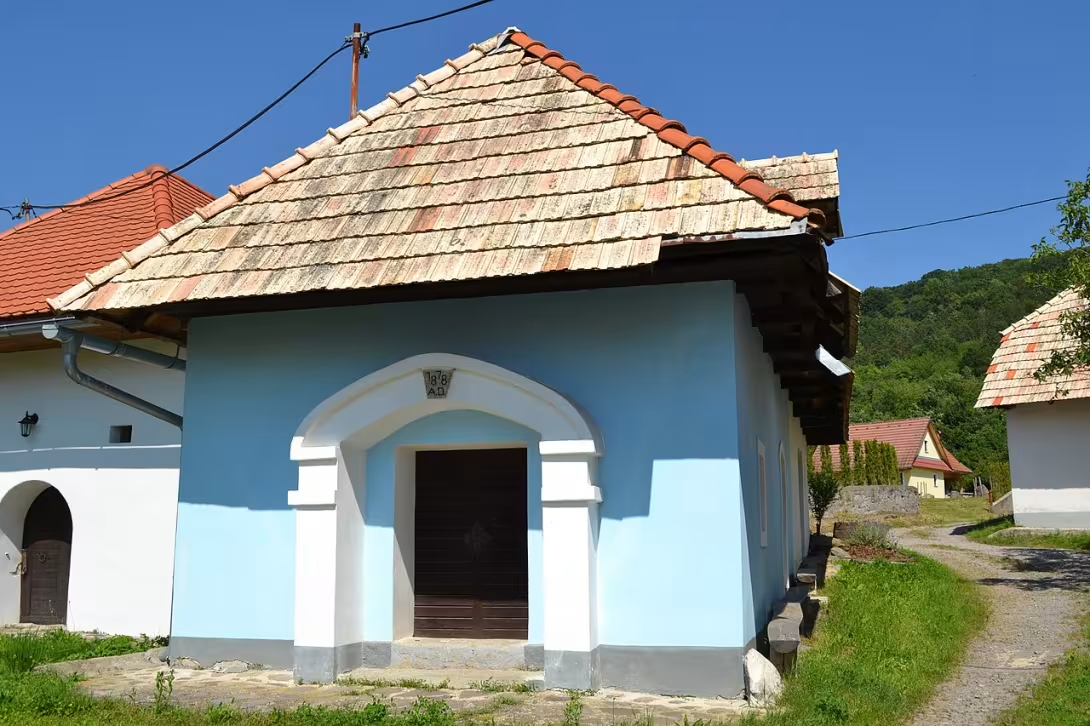
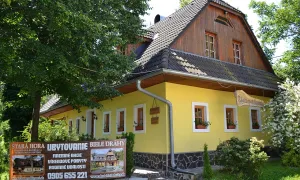
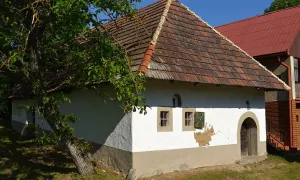
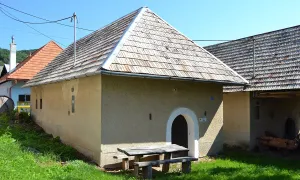
This vineyard house is located in the village Sebechleby in Banská Bystrica region. It is a national cultural monument registered in the national register under numbers 325-3577 and 3577/1. The building was created in 1878 and belongs to the area of folk construction of the second half of the 19th century.
The building has brick stone structure. Further details on the plan, availability and flooring of the register shall not be provided.
The monument stands at Sebechleby 330 and its geographical location is defined by GPS coordinates 48.28305, 18.91351. The official data of the Slovak Monument Office do not contain details of the current way of using this object.
Tehdy a dnes
Drag the slider and compare how the monument might have looked when it was built with the view today.

The historical view on the left is a visualisation generated by artificial intelligence and serves as inspiration.
Historical Milestones
- 1878
- The creation of a vineyard house in the village Sebechleby.
- round 1878
- Construction of brick stone construction in the second half of the 19th century.
- the end of the 20th century
- Registration of the object as a national cultural monument in the register.
Interesting facts
- This vineyard house in Sebechleboch is a national cultural monument registered in the national register under numbers 325-3577 and 3577/1. - The building was created in 1878 and belongs to the area of folk construction of the second half of the 19th century. - The building has brick stone structure.
Guide
Show guide text
The text was prepared by artificial intelligence and has not been editorially reviewed. It may contain inaccuracies.
Welcome to the picturesque village of Sebechleby in Banská Bystrica region. You are standing in front of a unique vineyard house that breathes the history and tradition of this region. When you look around you, the first impression will reach you with an authentic atmosphere and the peace that emanates from this place. A piece of honest human work, feedback with nature and years of proven customs of our ancestors, has been opening up to you for generations to cultivate land and produce tasty grapes. Let's move on to how this vineyard house actually originated and what its historical context is. Although the exact chronology of its origin remains shrouded in mystery because the particular year of construction is not documented in writing, the very presence of this object testifies to the deep roots of the viticulture in Sebechleboch. From ancient times, local residents have dedicated their lives to vineyards, and this house has served as an important basis for working in a vineyard, storing crops, and a year - round life associated with vine growing. There is no well - known architect or great historical personality behind him from history books, but the stronger his story is. It is the work of anonymous masters, local viticulturers who built with reason, practically and with respect to the surrounding country. Now pay attention to the architecture itself and the details. Look closer to what you have right in front of you. Note the overall shape and construction solution of the vineyard house, which is perfectly adapted to the needs of its time and purpose. When you look at the facade and the surrounding walls, you will see how the construction responds to the sloping terrain and the requirements for grape processing. Although we do not know the exact building styles we could strictly name here, the useful beauty of traditional construction is visible. Each stone, rafter, or detail bears a trace of the time when it was built of what local nature gave, and exactly so that the house lasts to serve for many years. See the honesty of the craft that left an indelible mark. When we think about key stories connected with this place, we are not aware of the names of kings or nobles, but of ordinary people. The vineyards of Sebechleb and these houses witnessed the joy of a successful harvest, but also the difficult times when frosts or diseases destroyed the whole year's work. The vineyard house witnessed family meetings, singing at work, and traditions inherited from father to son. It is a silent witness to the unbreakableness of local people who believed in the strength of their labor and fertile soil. You may now wonder if there is any particular mystery or unusual interest associated with this house. Although no dramatic historical twists or rumors indicate the basis, the most interesting is its preservation and authenticity. In today's busy world, it acts as a quiet oasis where time stopped. The secret of this house lies not in the treasures hidden in the basement, but in the fact that it can still tell a story about a way of life that is slowly going back. Finally, I would like to invite you to further explore not only this house, but also the whole neighborhood of the Sebechlebs. Take advantage of the time for a walk, see the atmosphere of this region and let yourself be carried away by the peace that exists here. Thank you for listening, I wish you a wonderful visit and goodbye experience.
Tips for visitors
The best time to visit the vineyard house in Sebechleboch is the warm spring, summer and especially autumn months. Autumn is associated with the traditional atmosphere of vintage and colored wine-growing surroundings, when the whole site has an unrepeatable charm.
To visit you take comfortable walking shoes suitable for moving on paved and unpaved roads between vineyards and a layer of warmer clothes, especially if you plan to look into the cellars, where it is cooler throughout the year. For families with children, the location is ideal for a quiet walk in the fresh air in a safe rural environment.
Photos are recommended to take pictures during the golden watch in the evening, when soft light highlights the texture of traditional construction, wooden and stone elements of the vineyard house and the lines surrounding the vineyards. Nice pictures also come from slopes above the houses overlooking the surrounding landscape.
Frequently asked questions
Can the monument be visited?
This is a residential or farm building, not a museum with opening hours. Please view it from public space and respect the owners' privacy. We have no information about access to the interior.
Where is the monument?
Location: č. 330, Sebechleby, Banskobystrický kraj. The map on this page shows the exact spot.
Why is the monument protected?
It is listed in the Central List of the Monuments Fund of the Slovak Republic as a national cultural monument (ÚZPF no. 325-3577).
For children
Close your eyes and imagine pressing a secret button on a time machine. Boom! You'll fly right back in 148 years. It's 1878. There are no cars, no phones, no computers around you. Just the silence, the singing of birds and the sweet smell of ripe fruit. You just landed in the village of Sebechleby and there's something special standing before you. It's not a castle or a palace, it's a vineyard house.
Nearby
🏰 Historic sites (90)
- Pamiatková rezervácia ľudovej architektúry Stará Hora 0.1 km web
- Kalvária 2.6 km
- Sedembolestná Panna Mária 3.0 km
- Svätý Ján Nepomucký 3.0 km
- Trojičný stĺp 3.0 km
- Osloboditeľom 3.0 km
- Svätý Vendelín 3.5 km
- Fafokan 4.8 km +421 915 777 673 web
- Kristus nesúci kríž 5.2 km
- Nemčianske múzeum v Turčanovom mlyne 5.3 km
- Dedinské múzeum 5.4 km
- Pamätník represie, 19. 2. 1944 5.5 km
- Svätý Ján Nepomucký 5.5 km
- Svätý Florián 5.7 km
- Svätý Vendelín 5.7 km
- Pamätník 5.7 km
- Mariánsky stĺp 5.7 km
- Tufové pivnice 5.7 km
- Golgota 5.9 km
- Hláska na Kramárskom vrchu 6.3 km
🍽️ Restaurants and dining (53)
- Pohostinstvo Kohút 2.0 km
- Pizzeria Vito 3.0 km web
- Hostinec Strehár 3.0 km
- Hostinec Štvorka 3.0 km
- Hostinec Strehár 5.7 km
- Furmanská - Pizza Hont 6.0 km
- Motorest Tranzit 7.0 km +421 911 738 416 web
- Corgoň 7.6 km
- Lom Beach Bar 7.8 km
- Motorest Devičie 8.7 km web
- Kaviareň Dream3 8.9 km
- Pajta 9.4 km
- Hostinec 10.1 km
- Bažina 10.1 km
- Počúvalská krčma 10.9 km
- Neptún Lipovina 11.6 km
- Hostinec 11.8 km Hontianska 217/65
- Kebab 11.9 km
- Hostinec na námestí 12.5 km
- Pizza & bar U macíka 12.5 km
🏨 Accommodation (41)
- Penzión Chateau Hunting 5.5 km web
- Malý Domček 8.6 km +421 908 649 404
- Biely Domček 8.7 km +421 908 649 404
- Chata Anka 9.1 km +421 45 55 81 620 web
- Pivnica pod Bralom 10.1 km
- Stodola Počúvadlo 10.9 km +421 908 727 577
- Penzión - ubytovanie 11.0 km
- Chalupa Počúvadlo 11.0 km +421 915 223 606
- Krupinkovo 11.2 km +421 905 063 296 web
- Poľovnícka chata Rázdiel 12.6 km +421918 334 033 web
- Heliolit 12.7 km Ľ. Štúra 210/7 web
- Prameň 12.7 km K. Braxatorisa 8/3 web
- Penzión Bystrica 12.8 km Okružná 157/29
- Pension Eko Leo 12.8 km
- Penzión Žemberovce 12.8 km +421 948 127 283 web
- Penzion Gabika 12.8 km
- Kúpeľný hotel Minerál 12.9 km Okružná 124/32 +421 45 550 6001 web
- Hviezda 12.9 km web
- Ubytovanie v chatke 12.9 km Mjr. Daniela Gondu +421 948 127 283 web
- Caravan kemp 13.0 km Mjr. Daniela Gondu 16/36 +421 948 127 283 web
🚲 Rentals and sport (6)
- OFK Sebechleby 2.6 km web
- OFK Štart Prenčov 8.9 km
- bicykle Mama šport 13.9 km
- Požičovňa vodných bicyklov 14.3 km
- Tepličky 14.9 km
- Bazén Ďuricov majer 15.0 km
🥾 Hiking and nature (318)
- Viničný vrch 1.3 km
- Pliešky 1.6 km
- Viničky 1.7 km
- Homoľa 1.9 km
- Vitajte na Starej Hore 2.2 km
- Šibač 2.7 km
- Prostredný vrch 3.0 km
- Háj 3.2 km
- Kľúč 3.4 km
- Opátov vrch 3.4 km
- Sokol 3.6 km
- Sirákovec 3.9 km
- Šipická cesta 4.0 km
- Turečka 4.2 km
- Novinská 4.3 km
- Kostolná 4.3 km
- Ostrý vrch 4.4 km
- Mrázovka 4.4 km
- Kukučka 4.5 km
- Veľký Gregor 4.6 km
Thematic route
Wine-growing house in the village Self-created approaches traditional architecture and history of viticulture in the region.
1. Wine-growing house - architectural monument, museum The construction documents the way of life and work of local wine-growers. The interior contains the original device.
2. Area of cellars - technical monument, historical underground The complex of excavated cellars near the house served for traditional wine storage.
3. Exhibition of Viticulture - exhibition, cultural monument Part of the area is an exhibition devoted to the history of grape growing, which includes a collection of historical tools and information about traditions.
Seasonal recommendations
The spring brings nature awakening when the surrounding wine-growing region and the old vineyards in Sebechleboch come alive with fresh green color and flowered meadows. Spring sun rays fall at a low angle on the stone walls of the vineyard house and create the ideal light for photography traditional architecture. The atmosphere is very calm and quiet in this period. From a practical point of view, more solid tourist shoes will come together, as after spring rain, the field roads and slopes can be soaked and muddy. Put on layered clothing, since the afternoon sun warms pleasantly, but in windy moments or shadows it is still cold. The ideal time to visit is morning until the country is completely heated.
Summer offers lush vegetation, where the surrounding slopes are densely overgrown with a vine full of rich green leaves that provide a pleasant shade. Lighting is sharp during the summer days, with the most beautiful light running late in the evening, just before sunset, when the rays heat the ochre and brown shades of wood and stone. In the main summer season, a little more tourists are heading here, so it is wise to come early in the morning to enjoy a peaceful atmosphere without crowds. Light airwear is suitable, but do not forget to cover your head, a sufficient supply of drinking water and sunscreen, as direct sun exposure is not completely avoided.
Autumn is the most characteristic period of the year for visiting the vineyard house in Sebechleboch, because wine tradition is fully manifested here. Nature revels in colorful shades of yellow, orange, and red colors and autumn mist in the morning hours gives a distinctive, almost mystical charm. Soft, scattered light of the setting sun creates great conditions for visually capturing cellars and settlements. During autumn weekends and harvests, more visitors arrive, so it is worth leaving first thing in the morning for a quieter tour. In clothes bet on warmer winds and long trousers because the cold wind from the mountains can be unpleasant, especially when you stay until evening.
Winter will envelop this historical monument into deep tranquillity and often also in white snow duvet that dampens the sounds of the entire surrounding area. The low sun creates short days, while the white reflections of snow brighten the otherwise dark corners and narrow streets between the cellars. The atmosphere is chambery, almost deserted, which is appreciated by lovers of solitude and authentic scenery. For a winter visit, thoroughly prepare yourself with warm winter clothes, including a cap, gloves and high-quality footwear with non-slip soles, as the trails can be icy. Plan to arrive at noon when temperatures are highest and daylight takes only a limited time, as warming and operating hours of sights are shortened during this period.
Visualisations and artistic views


The visualisations are generated by artificial intelligence and serve as inspiration.
Visitor Tips
No tips yet. Be the first!
Log in and add your tip.
Location on Map
More monuments – Sebechleby
Show all in the town
Visitor photos
No photos yet. Be the first to add a photo from your visit!
Log in and add your photo or leave a rating.
You get more points for a visit verified in the app — we can tell from the GPS that you are there.
Reviews and comments