








Banícka kaplnka Chapel and treasury
Mining chapel is a national cultural monument located in the village Kremnica, Banská Bystrica region. The area consists of two objects: cash box and chapel access.
This area records the Monument Office of the Slovak Republic under number ÚZPF 11370. The cashier is stone, baroque late, from 1800. The chapel is also baroquely late, from the second half of the 18th century.
The mining chapel is located at Banská cesta in Kremnica. Monument protection was declared in 1800. The current state of the monument is preserved, used as a tourist attraction.
This area has significant architectural value and history. Visiting the Mining Chapel is a challenge to search the history and culture of our country.
Tehdy a dnes
Drag the slider and compare how the monument might have looked when it was built with the view today.
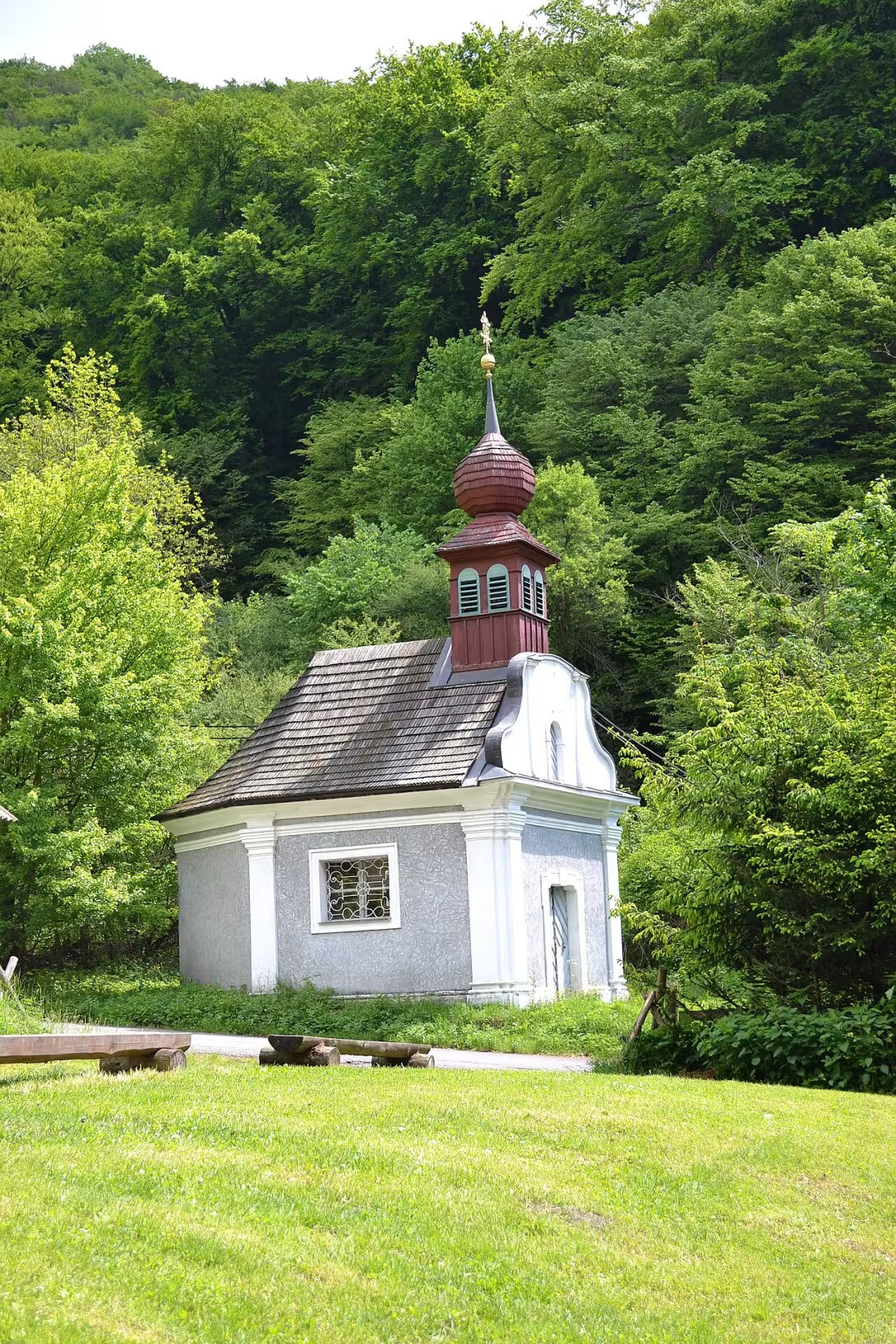

The historical view on the left is a visualisation generated by artificial intelligence and serves as inspiration.
Historical Milestones
- 1800
- The cashier and chapel were created
- 1800
- Monument protection declared
Guide
Show guide text
The text was prepared by artificial intelligence and has not been editorially reviewed. It may contain inaccuracies.
Welcome to Kremnica, a city that has lived for centuries with wealth hidden deep in the earth. Right now, you are standing in front of the Mining Chapel, a place that combines two completely different, but in a mining world inseparable, spheres of spiritual support and material reward. When you look at this building, you may see only a modest building at the first moment, but in fact you are in front of the embodied symbol of hope and anxiety that accompanied anyone who has fallen into the darkness of the shafts. Feel the atmosphere of this place, where the silence of the present meets the echoes of the noisy mining work of the past.
To understand why this chapel is so important, we must invade Kremnica history. This city was not just a mere seat, but a strategic centre of gold mining that provoked the interest of kings and merchants from all over Europe. However, mining in these times was not just a craft, it was a constant risk of life. Every entrance to the shaft could have been the last one. Burst, flooding, or invisible gases made the mining work a struggle for survival. It was this need for protection and thanks that formed similar sacral spaces. The mining chapel served as a place where the miners prayed for safety before rolling down and, after a successful return from the change, expressed their thanks for the life saved. Although the exact date of its creation is not known today, its presence here testifies to the deep boiling of people who have worked under the most difficult conditions.
Now, please focus on the very architecture you have before you. Look at the overall appearance of the building and perceive its proportions. Note how this building is naturally written into the urban environment. When you discuss it, do not seek the magnificence of the cathedral in it, but seek humility in it. It is this simplicity that is crucial. Note the lines of facade and the way the building communicates with the surroundings. It is an architecture that does not aim to stun its size, but to provide refuge and peace. Note the details that time and weather have put into the material, and imagine how many thousand hands have touched these walls at the moment of the greatest stress or joy.
However, the key element of this place is the connection of the chapel with the cashier. You might wonder why these two functions are so close to each other. The cashier was the place where the gold was mined and where the miners received their wages. Imagine the contrast. On the one hand, you have a quiet space of prayer, where one sought peace and spiritual guidance, and just a few steps away, there was a material settlement where the financial future of families was decided. For a miner it was probably the most important point of his day. The way from the storeroom to the chapel was the way from material success to spiritual gratitude. Here the highest human ambitions and deepest fears met.
Although in historical records unknown specific names of architects who designed this construction, or names of specific personalities that would be associated with it, this place tells a story about the collective. The story of thousands of anonymous miners whose names were not lost in gold, but were engraved in Kremnica's identity. Each of them had a personal relationship with this place. For someone it was the last stop before entering deep, for another place where in silence wept for a lost friend, and for the third place celebrations when he was served to break the rich lived gold.
A measure of secrecy is involved in this place. It is the unknownness of precise chronology and authorship that gives the Miner Chapel a special charm. It is as if the building chose to keep its secrets, just as the secrets kept deep shafts under our feet. It is fascinating to think that although we know what this building represented, we do not know exactly when the first stone was laid. This ignorance makes us more aware of the atmosphere and less rely on dry facts. Look again at the building and try to feel the invisible bridge between the world of the living on the surface and the world of darkness at the depth that this chapel connected.
Nays are slowly separated by this silent witness of mining glory. The mining chapel and cash register are a reminder that life in Kremnica was not only about wealth and power, but above all about hard work, public faith and mutual solidarity of people who shared the same fate. I suggest you keep quiet for a while and let your thoughts run to those who stood before you hundreds of years ago.
However, Kremnica has many other hidden pearls and historical layers waiting to be discovered. I will invite you to continue your journey through the city, to explore its narrow streets, and to let curiosity lead you to other memories that tell about the golden age of this city. Thank you for your joint walk through this short trip to the past and I wish you a pleasant next day in our beautiful city.
Tips for visitors
The time to visit is morning or late afternoon. Then light is soft and minimizes hard shadows.
The chapel can be reached by foot from the historic city center.
Visit the chapel with shoes suitable for walking and water. The surrounding area is accessible for families with children.
Photos can be taken from the sidewalk in front of the chapel. There is Calvária within 30 minutes.
Frequently asked questions
Can the monument be visited?
Religious buildings are usually open mainly during services; at other times a visit is normally arranged with the parish or the operator. We have not verified specific times. According to the heritage register restoration is under way, so access may be restricted.
Where is the monument?
Location: Banská cesta, Kremnica, Banskobystrický kraj. The map on this page shows the exact spot.
Why is the monument protected?
It is listed in the Central List of the Monuments Fund of the Slovak Republic as a national cultural monument (ÚZPF no. 32D-11370).
For children
Close your eyes. Imagine pressing a secret button on a time machine. Boom! You'll be transported exactly 226 years back. The year is 1800. Where are you? In Kremnica!
Thematic route
1. Mine Chapel (Sacral object) - Visit to the main part of the chapel. 2. Cashier (Historical area) - A little space attached to the chapel. 3. The immediate area of the chapel (Near vicinity) - Walking around the building.
Seasonal recommendations
Seasonal recommendations for a visit to the historical monument.
Monument: Mining Chapel (Capel and cash box), Kremnica, Banská Bystrica region Status:
JAR: During this period of remembrance illuminates the sunlight. Practical advice: visit the memorial in the morning to avoid crowds, and dress the corresponding temperature of about 20 °C.
LETO: The summer season is characterised by high temperatures and sunny weather. The monument surrounds greenery and flowering plants. Practical advice: visit the memorial as soon as possible to avoid crowds, and wear the corresponding temperature of about 30 °C.
JESUS: During this period of remembrance illuminates the sunlight. Practical advice: Visit the monument when the daily temperatures are about 15 °C, and wear the corresponding temperature of about 10 °C.
ZIMA: Winter times are characterised by low temperatures and cloud cover. The monument surrounds the snow. Practical advice: visit the memorial as soon as possible to avoid crowds, and wear the corresponding temperature of about 5 °C.
Visualisations and artistic views

The visualisations are generated by artificial intelligence and serve as inspiration.
Visitor Tips
No tips yet. Be the first!
Log in and add your tip.
More monuments – Kremnica
Show all in the town

Visitor photos
No photos yet. Be the first to add a photo from your visit!
Log in and add your photo or leave a rating.
You get more points for a visit verified in the app — we can tell from the GPS that you are there.
Reviews and comments