








city walls Town fortifications
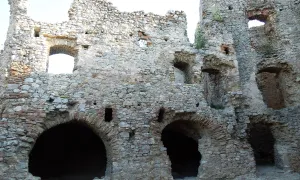
The city walls in the village Podolínec in Prešov region are a town fortification from the 13th century. The monument from 1300 shows signs of Gothic.
The site records the Monument Office of the Slovak Republic under number ÚZPF 922. It consists of one bastion, which comes from the 13th century and is built in Gothic style.
The building is located in the village Podolínec and is declared a national cultural monument. It allows visitors to see the preserved part of the medieval fortification.
Tehdy a dnes
Drag the slider and compare how the monument might have looked when it was built with the view today.
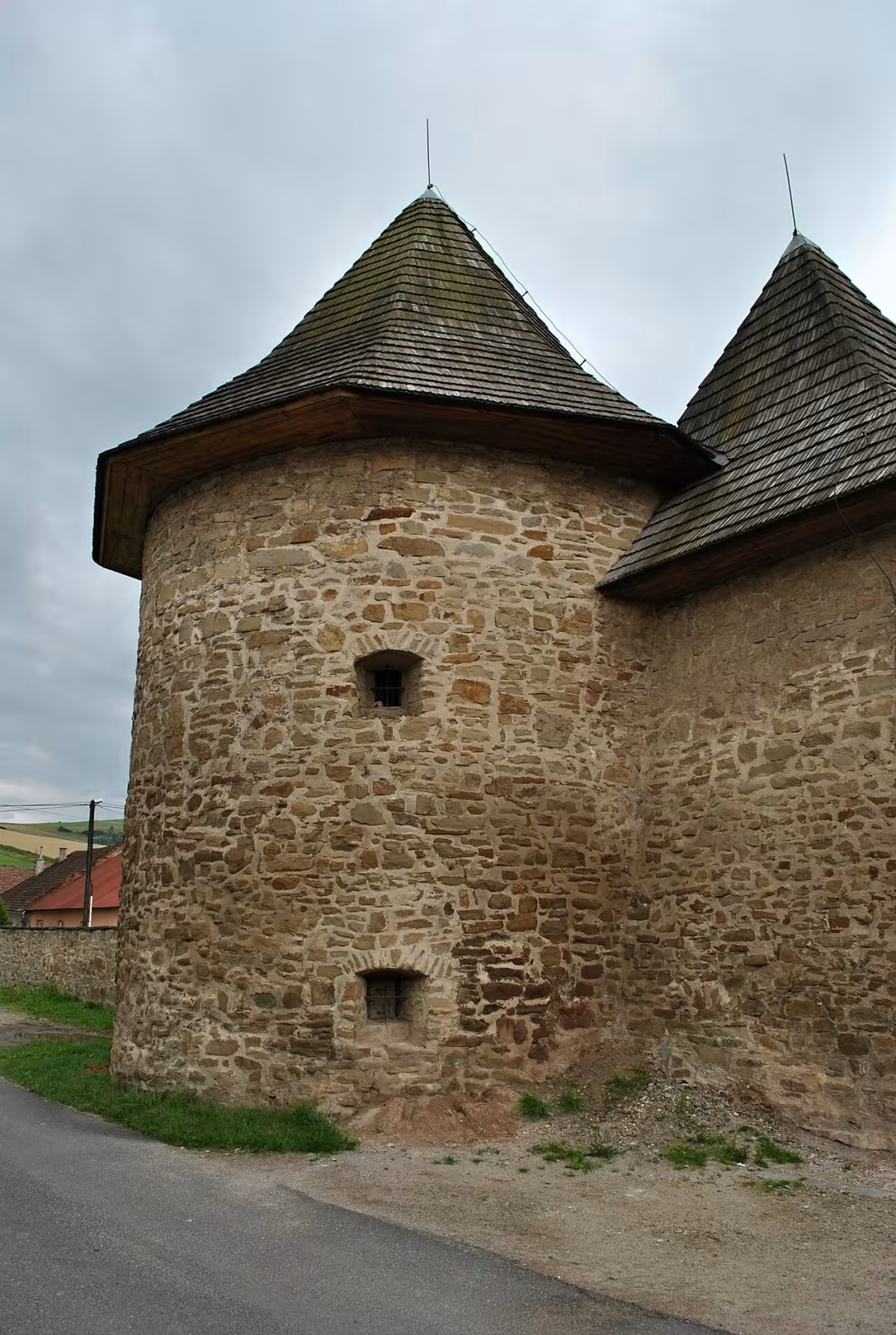
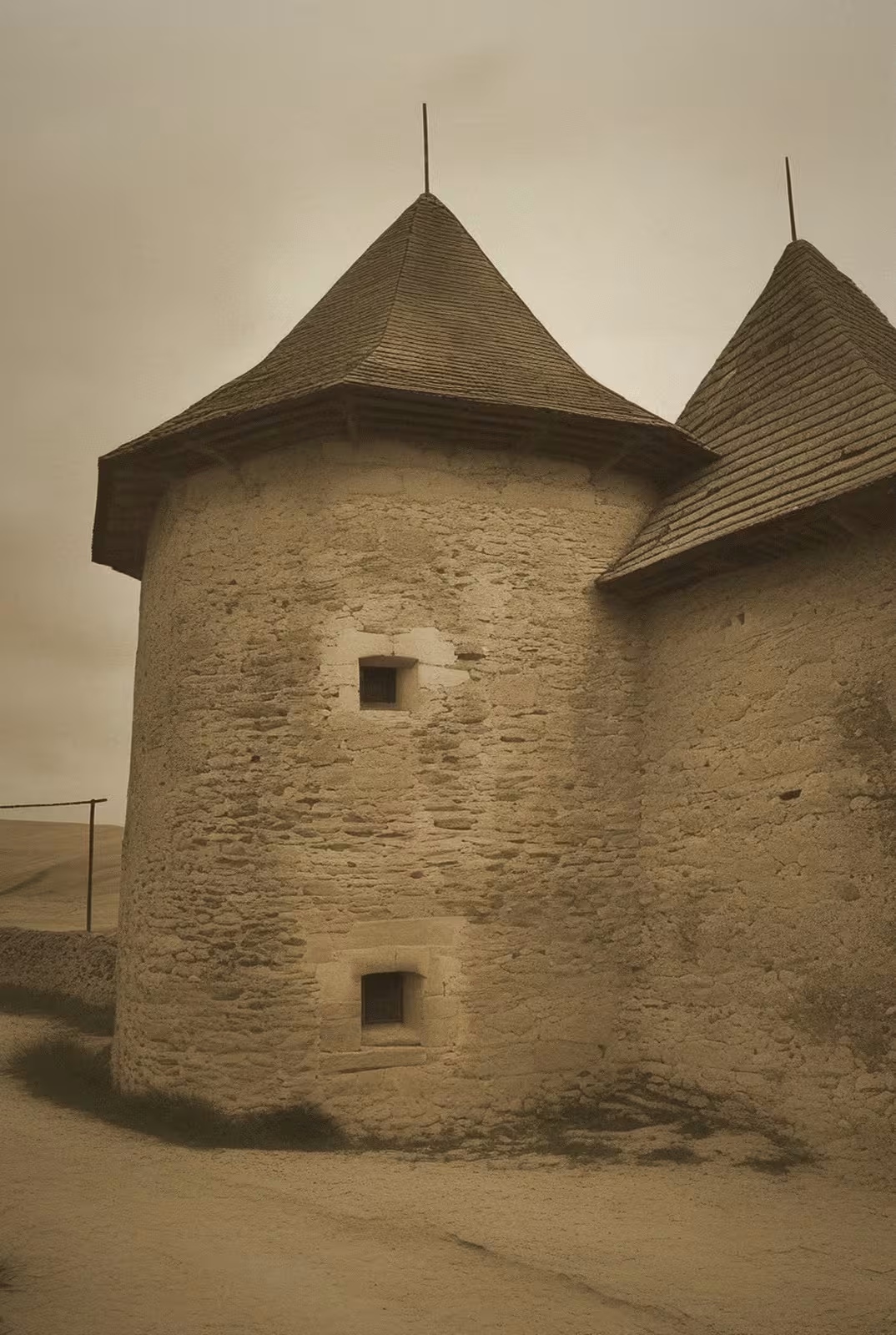
The historical view on the left is a visualisation generated by artificial intelligence and serves as inspiration.
Historical Milestones
- 1300
- Construction of the city fortification in Gothic style.
- 1300
- Construction of the bastion as part of the city fortification.
- 2024
- Entry in the Central List of Monument Fund under number 922.
Interesting facts
- The town walls in Podolínec come from the 13th century and are one of the oldest preserved fortifications in Slovakia.
- The monument is from 1300 and is characteristic of Gothic style.
- Only one Gothic bastion from the 13th century was preserved from the fortification.
- The whole area is registered as a national cultural monument.
Guide
Show guide text
The text was prepared by artificial intelligence and has not been editorially reviewed. It may contain inaccuracies.
Welcome to the historical centre of Podolínec. Right now you are facing a witness of ancient times who in the past defined the boundaries between safe urban life and the unknown world of the outside environment. In front of you are city walls, which are an essential part of the identity of this town in Prešov region. When you look at them, see them not only as remnants of the old construction site, but as a symbolistic border to protect the inhabitants, their property and business routes from the threats that came from the mountains and forests in ancient centuries. Although the exact chronology of the origin of these fortifications is today not exactly documented and the names of architects who designed them remained in the forgotten history, the city walls in Podolince are a classic example of medieval urbanism. At that time the fortification was not only a question of military strategy, but above all a question of prestige and rights. The city, which had the right to build walls, was recognised as an important centre in the hierarchy of the then system. These walls were built to create a closed, protected area in which trade and craft could develop. Due to its strategic position, Podolínec was an important node and it was therefore necessary for the city to be sufficiently secure against possible attacks. If you now take a closer look at what you have in front of you, note the overall disposition of this fortification. Focus on the massiveness of the structure and the way the walls are entered into the field. Feel the texture of the surface and the atmosphere of the place where guards and merchants ever met. Although the time has left its mark on these walls and many details have faded, you can still feel the strength that these walls have reclaimed in their full functionality. Follow the lines that define the ratio between the inner urban cadre and the surrounding area. It was this physical barrier that determined who could enter the city and when the gates were closed to make the city an impregnable fortress. If we look for specific personalities associated with this place, history does not offer us today specific names of builders or specific warlords who would manage these walls at a particular moment. However, it is in this anonymity that creates a kind of romance. These walls do not belong to one person, but are the result of the collective efforts of the entire city. They are the product of thousands of hands that carried stones, mix mortar, and build security for their children and grandchildren. Every stone in these walls tells a story about ordinary people, craftsmen and merchants who lived here, worked and built their prosperity under the protection of these walls. Perhaps now you will wonder what secrets these walls are still guarding. It is in the unknown of accurate data and architects that the greatest mystery lies. When exactly were the walls completed? What precise techniques were used in their construction to withstand attacks and nature? Every crack and every faded detail is like a piece of puzzle waiting for its solution. When you look at the walls, try to imagine what Podolínec looked like at a time when these walls were fully shared, when they were equipped with watchtowers, and when their mountains covered the view of the entire country, which allowed the arrival of guests or enemies in time. Let us slowly move to the end of this part of our tour. The city walls are a silent witness to the history that shaped the region. They are a reminder of a time when security was not a self-evident thing, but a result of harsh looming and strategic planning. Now that you have felt the spirit of this place, we invite you to move on and continue to discover the other beauties and sights Podolínec offers. Let yourself be guided by curiosity and try to find in every next step a link between the present and the long history that you have just felt before these walls. Thank you for your attention and we wish you a pleasant next trip along the historic streets of Podolinca. Let this trip be remembered as a meeting with a fascinating past.
Tips for visitors
Visit the walls in spring or autumn. Soft light and the color of the landscape around Podolínec will then highlight the nature of the fortification. For photography are ideal morning or evening when the sun creates shadow effects on stone walls. Since it is an object in the wild, we recommend comfortable shoes and plenty of water. There are no other monuments in the area, so focus on the details of fortification and nature. The location is also suitable for families with children on a short trip, during which children can see the texture of historical walls.
Frequently asked questions
Can the monument be visited?
This is a structure in a public space that can usually be seen from outside free of charge. We have not verified that this particular one is freely accessible.
Where is the monument?
Location: Podolínec, Prešovský kraj. The map on this page shows the exact spot.
Why is the monument protected?
It is listed in the Central List of the Monuments Fund of the Slovak Republic as a national cultural monument (ÚZPF no. 41A-922).
For children
Close your eyes for a second and imagine you're moving on with time. Can you feel the cold wind? Do you smell the smoke from the fireplaces and hear the metal tinting of the armor? You just landed in Podolinca, but not the one you know from today's map. It's 1300. The massive walls to protect the city from all evil are growing up before your eyes. Exactly 726 years ago, a system that was supposed to be bulletproof began to be built here.
Nearby
🏰 Historic sites (40)
- Internácia 553 rehoľníkov 0.1 km
- Gyula Krúdy 0.1 km
- Väznení rehoľníci 0.1 km
- 350. výročie založenia školy 0.1 km
- Stanisław Papczyński 0.1 km
- Radnica 0.3 km Námestie Mariánske 3/3 web
- Görgeyovský kaštieľ 2.8 km
- Panské sídlo Holumnica 3.0 km
- Hrobka rodiny Görgey 3.1 km
- Kaštieľ Görgeiovcov 3.2 km Tatranská 283/26
- Kaštieľ Görgeiovcov 3.4 km Hlavná 106/88 web
- Medzinárodné sochárske sympózium 4.8 km
- Kúria 5.7 km
- Svojim hrdinom v r. 1914-18 6.8 km
- Jozef Dragoš Alžbetinčan 6.8 km
- Padlých partizánov 7.0 km
- Trojičný stĺp 8.3 km web
- Galéria Hniezdne 8.4 km
- Pamätník SNP 9.5 km
- Múzeum Jozefa Maximiliána Petzvala 9.7 km
🍽️ Restaurants and dining (75)
- Mlyn 4.0 km
- Diana Club 5.3 km
- Jedáleň 5.3 km
- Biely dom 5.3 km
- Lobby Bar 5.4 km
- Magura 5.4 km
- Biely Dom 5.4 km
- Grosek 5.4 km
- U Havránka 5.5 km
- Kamenný dvor 5.5 km
- Kamenný dvor 5.5 km +421 917 937 881 web
- Á La Santé 5.6 km
- U Kollára 6.0 km
- Koliba Studienka 6.1 km
- San André II 6.7 km
- Kamenný dvor 6.8 km
- Pohostinstvo 7.1 km
- Klub Hanzi 8.2 km
- Pod smrekom 8.6 km
- Nestville Chocolate 8.9 km +421 905 838 317 web
🏨 Accommodation (42)
- Villa Thermia 5.3 km
- Grand Hotel Strand 5.4 km
- Chata Sebastian 5.4 km Vyšné Ružbachy 1014 web
- Grosek 5.4 km +421524398347
- Privat BENE 5.5 km +421911876170
- Travertín 5.5 km +421 524 266 111 web
- U Johna 5.5 km
- Lítia 5.6 km web
- Mystery 5.7 km
- Privát Panoráma 6.2 km
- San André I. 6.3 km
- San André II. 6.7 km
- Poľana 7.7 km
- Čierna hora 8.0 km
- Penzión pod Magurou 8.0 km
- U Borsuka 8.4 km web
- G Penzión 9.8 km web
- V Penzion 9.8 km
- Motorest Goral 10.1 km
- Peklo 11.3 km
🚲 Rentals and sport (12)
- detský bazén 5.3 km
- Aquabela 9.6 km Letná 239/10
- Bicykle Kostka 9.7 km
- Fitko 9.8 km
- Bike Rental&Guiding 10.0 km Zimná +421 903 775 989 web
- PEM aréna 11.4 km Tehelná 10 +421940649641 web
- Mestská športová hala 11.4 km Tehelná 462/1
- Plaváreň 11.4 km
- Športové a relaxačné centrum 11.5 km
- Wallhalla 11.7 km web
- Sportisimo 12.0 km
- TheGrind.sk 12.2 km Námestie sv. Mikuláša
🥾 Hiking and nature (200)
- Slnečný vrch 1.1 km
- Osí vrch 1.4 km
- Kyprý vrch 2.1 km
- Heje 2.4 km
- Anna 2.5 km
- Šibeník 2.6 km
- Hlinený vrch 2.9 km
- Mamrich 3.1 km
- Vysoký vrch 3.3 km
- Cigánsky vrch 3.5 km
- Skautský altánok 3.9 km
- Pramienok 4.0 km
- Jaskyňa pod Skalkou 4.1 km
- Skalný pilier 4.1 km
- Jaskyňa v Čube 4.1 km
- Srnčí prameň 4.2 km
- Čuba 4.3 km
- Hlinné 4.4 km
- Končistý vrch 4.5 km
- Dominiková vyhliadka 4.5 km
Thematic route
Thematic excursion route around the village Podolínec
1. Podolinec - City fortification Podolínec is one of the few well-preserved villages in Prešov region with well-preserved city fortifications from the 16th century. Castles surround the historical core of the village. There is also the church of St. Stephen.
2. Podolínec - Church of St. Stephen This 18th century baroque church is a sacral building in the village. It has rich decorations and historical interiors. The church is available for visitors.
3. Podolínec - Old Town Square The square is the center of the village. In addition to historical buildings, it contains several medieval houses. Visitors can observe architecture and relax here.
4. Podolínec - Municipal School (Today's Culture House) The former 19th - century school building is now a cultural house. The building has historical elements. Cultural House organizes local cultural events.
Route terminals: After visiting the city fortification and church, it is recommended to return to the center of the village to the square and to the cultural house. The whole route is available on foot.
Seasonal recommendations
Spring visits to the walls in Podolínec
In March and April walls in Podolínec greenery. The sun's rays fall into the rocky ridges and form a sine that shrinks or spreads according to the sun's angle. Greenery on the edges of fields and forests contrasts with stone fortification. The air smells like wet ground and early spring flowers. Castles are suitable to visit in the morning. It is recommended to wear a long sleeved sweater, as temperatures may drop sharply in the evening. During this period there are fewer visitors, which allows for a quiet walk and observation of the details of the fortification.
Summer visits to Podolínc
In July and August, the walls in Podolínec are surrounded by thick greenery. The sun's rays create strong seams and heat builds up in the area. Tourists in the shade of the walls look for cold. Visit the walls in the morning or afternoon when it is less hot. Light clothing, hat or scarf to protect against the sun is recommended. In summer there are more visitors, so it is appropriate to plan the visit outside the main peak of the season.
Winter visits to the walls in Podolínec
In September and October the walls of Podolínec will surround the yellow, red and brown colors. The sun's rays form golden seams, and the temperature gradually decreases. Lights change color and air smells like burnt leaves and wet ground. Castles are suitable to visit in the morning or afternoon. It is recommended to wear a sweater, as temperatures may drop sharply. During this period there are no crowds, which allows for a peaceful walk and observation of the details of the fortification.
Winter visits to the walls in Podolínec
In December and January, the walls of Podolínec are covered with snow. The sun's rays form sine and heat accumulates only briefly. Lights and fields are under white cover, air smells cold. Visit the walls in the morning when the sun rises only for a short time. Warm clothes such as tracksuits, sweaters and hats are recommended. During this period there are no crowds, which allows for a peaceful walk and observation of the details of the fortification.
Visualisations and artistic views


The visualisations are generated by artificial intelligence and serve as inspiration.
Photographs from the area
Real photos taken near the monument


Source and licence are given for each image.
Visitor Tips
No tips yet. Be the first!
Log in and add your tip.
Location on Map


Visitor photos
No photos yet. Be the first to add a photo from your visit!
Log in and add your photo or leave a rating.
You get more points for a visit verified in the app — we can tell from the GPS that you are there.
Reviews and comments