

evangelical church Church
Evangelical church in the village of Rejdová in the Košice region is a sacral monument registered by the Monument Office of the Slovak Republic under number ÚZPF 544. Its construction development dates back to the first half of the 17th century and includes Baroque interior and later classicistic adjustments.
There are no precise written references to the date of his position as the first evangelical temple in Rejdová. Historical research, however, confirms that at the beginning of the 17th century there was a wooden evangelical church with a tower and two bells. The bishop's cards of 1653 indicate that there were three altars, silver, and partially gilded chalices, and priestly garments in the temple. This first church burned down in 1681 and was replaced by a Renaissance prayer room built in 1682, which also burned down in 1700. In 1700 a new wooden church was built in the village on twelve angles as a copy of the articular church in Kežmarok. In 1703 he looted the chicken army and fell victim to fire in 1726. The present church was built in 1727 on the foundations of the original church and preserved Gothic chapel, which now serves as a sacristy.
The building represents a hall space with a polygonal altar cap, built with a sacristy, hallway and a tower. The interior of the ship is encircled by cross ridge vaults and rolling vaults with lunets. On all four sides of the space is drawn a wooden Protestant empora with painted parapets and spinning posts, which dates from 1682 and was adapted in 1752 and 1759. Choras served special groups of the population. Parobský chorus is on the south side, male on the north and behind the altar is a craftsmanship, originally a mining choir from 1752. The facades of the ship and the presbytery are smooth, divided by segmentally ending windows and single-stage support pillars with counter roofs. The tower with bevelled edges has a baroque-classicist finish, it is finished with a mine mounted on the cross-teck roof ledge and its facade breaks down the lizene frame.
In the 17th century, the church was surrounded by a defence wall from which only the southern part was preserved. During the great fire of the entire village on April 16, 1768, the inhabitants saved the interior equipment of the temple, while the village burned in less than two hours and the bells collapsed and melted from the burning tower. A year later, the church was repaired, a new tower was built and three new bells were ordered from Samuel Preeys in Banská Bystrica. In 1794 the damaged tower was demolished and replaced by a new 36-meter tower to which they transferred the original two-meter forged cross from the old tower. In 1854 the largest bell weighing 1 600 kg was cast in Banská Bystrica, which was added by the middle bell of the Americans from 1921 and a small bell from 1940. On the tower are located forged one-hand clock purchased in Jelšava in 1792 from Andris Hlaváč.
The interior furnishing of the church consists of a baroque altar of the Ascension of Christ the Lord, a pulpit and baptismal building built in 1761 in the domestic gemer sculpture and carving workshop. They are wooden, hand-carved and decorated with gold, silver and blue, green and red polychromia. The center of the altar fills the relief of the Ascension of the Lord. On the sides are spiral pillars and sculptures of the apostles Peter and Paul, in the extension of the relief of the Most Holy Trinity and at the bottom of the painting of the Last Supper, which is a free copy of the work of Leonardo da Vinci and has elements of the iconography of Orthodox temples. The pulpit has a polygonal parapet with the sculptures of four evangelizers and Jesus Christ Salvatore Mundi, supplemented with the image of the Good Shepherd painted on the skin and finished with the sculpture of St. From the baptistery of the mid - 18th century, the cover with John the Baptist's sculpture was preserved. The mechanical organ with 7 registers was purchased in Budapest and installed in 1909, replacing the older organ from 1785. In the church there are historical doors including iron doors on the tower with a plate made of Štajersk from 1797 and side Luther doors from 1799 which decorate 95 forged nails symbolizing reformation thesis.
Evangelical church in Rejdová is accessible to visitors.
Tehdy a dnes
Drag the slider and compare how the monument might have looked when it was built with the view today.
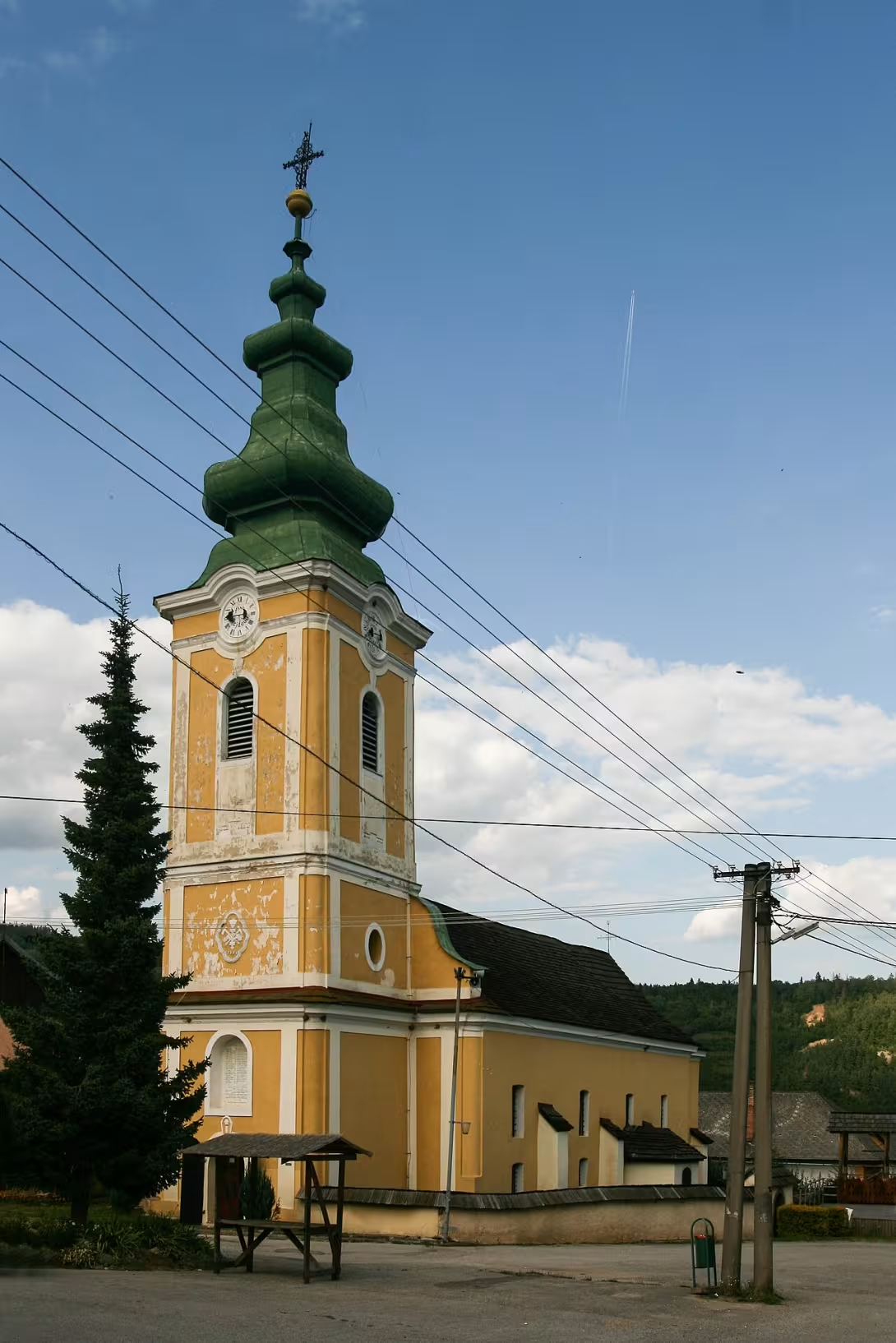
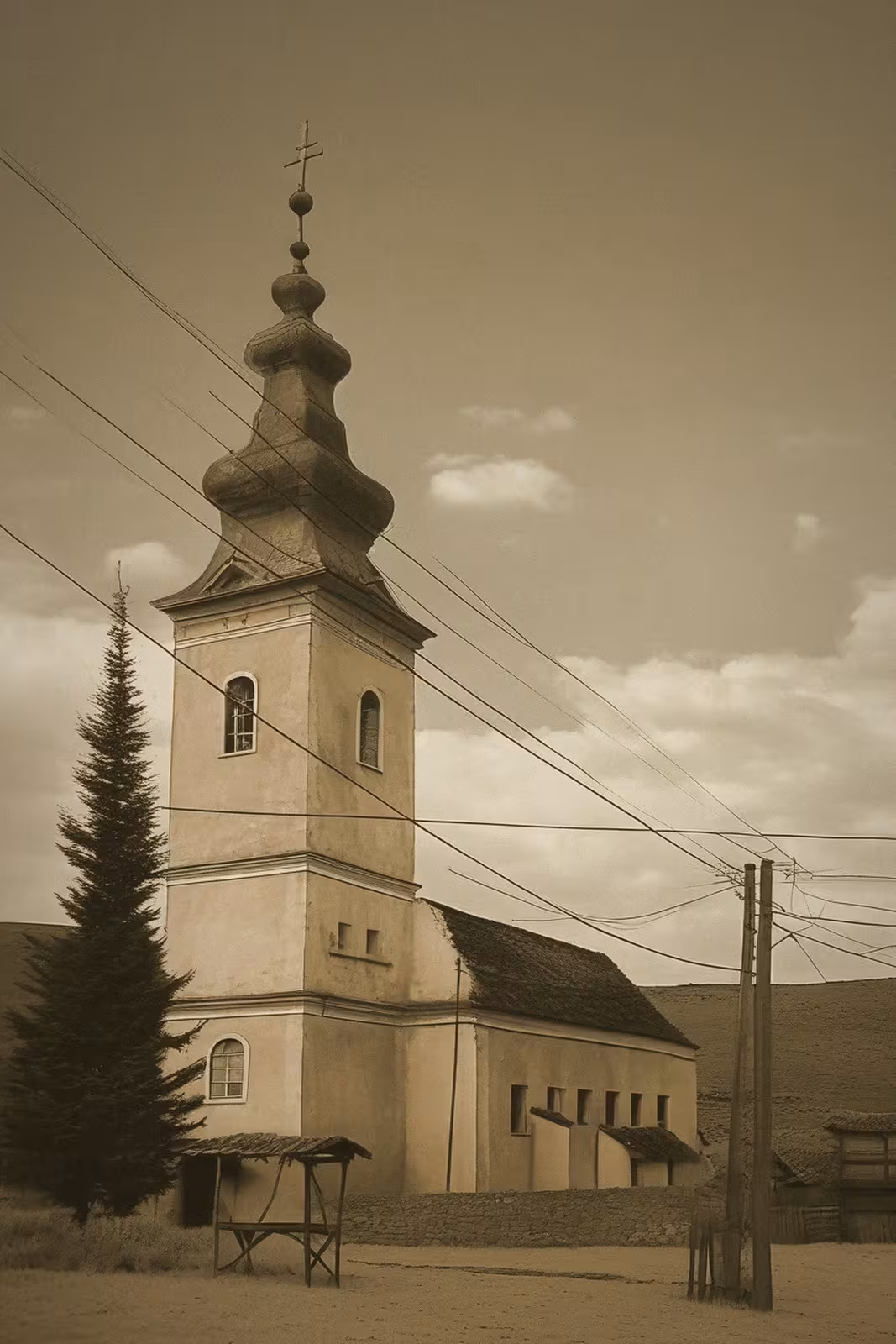
The historical view on the left is a visualisation generated by artificial intelligence and serves as inspiration.
Historical Milestones
- The beginning of the 17th century: originally built Renaissance prayer.
- 1681: the object burned down.
- 1682: renovation and extension of the building, the baroque protestant empora was created.
- 1794: the completion of the tower and the classicistic prefacade building.
Interesting facts
- The construction development of the Evangelical church in Rejdová dates back to the first half of the 17th century and includes Baroque interior and later classicistic adjustments. - The present church was built in 1727 on the foundations of the original church and preserved Gothic chapel, which today serves as a sacristy. - The wooden Protestant empora with painted silhouette and spiral pillars dates back to 1682 and was adapted in 1752 and 1759. - During the great fire of the village on April 16, 1768 inhabitants successfully saved the interior equipment of the temple, while bells from
Guide
Show guide text
The text was prepared by artificial intelligence and has not been editorially reviewed. It may contain inaccuracies.
Welcome to Rejdová, this peaceful part of Košice region. Right now you are facing an evangelical church that is a silent and dignified witness to the history of this village. Stop for a moment, take a breath of air and feel the atmosphere of this place. Before you lies a building that is not just a religious object, but a real architectural notebook in which centuries of change, perseverance and deep faith of the local people are recorded. When you look at this building, you may see a simple temple at the first moment, but beneath its surface there is a fascinating story of time layering. When we immerse ourselves in the history of this place, we find that the history of the Evangelical Church in Rejdová dates back deep into the past. Although the exact dates of some stages remained forgotten, we know that the construction development of this monument began in the first half of the seventeenth century. Imagine what events have gone through all these years. At that time, church building was often associated with the great efforts of the community, the search for spiritual refuge, and the desire for a city where people could join in prayer. That period laid the foundation on which everything else grew. However, the building you see in front of you is not in its original form from the seventeenth century. She gained her present appearance in a thousand five hundred twenty seven. It is fascinating to realize that this church was not built in a whole new place, but it was raised directly on the foundations of the original temple. This is a common but symbolically very strong procedure in architecture. The new layers are built on the old ones, thus maintaining a continuous and direct connection with the ancestors. It is like a dialogue between generations, where those who came later honored the work of those who came first and complemented it according to their needs and perception of beauty. Now I would like to ask you to see the detail, which is one of the most valuable elements of the whole complex. The Gothic chapel was preserved within the building. Gothic, with its specific spiritual depth and vertical direction, has endured here in a form that today performs a very practical function. This chapel is now a sacristy. Sakristia is a place where the clergyman prepares for the celebration, where liturgical objects are stored, and where there is silence before entering the main part of the temple. It is poetic that this very place is also the oldest preserved fragment of the entire church. It's like a small island of the Middle Ages that has been preserved in the midst of later changes and changes. If you now move to the inside or if you are planning to enter the temple premises, prepare to meet two significant episodes of artistic expression. The interior of the church brings a baroque atmosphere. Baroque is a style of emotion, dynamics and development, creating an interesting contrast to the moderate form of exterior. Baroque elements in the interior were intended to create a sense of awe and depth. However, classicistic adjustments were later added to this Baroque foundation. Classicism brought back balance, simplicity and cleanliness of lines, creating a harmonious blend that reflects the taste and needs of different generations of believers. When you're inside, try to see where Baroque diversity ends and where classicistic moderation begins. It's the way from emotion to reason, from decorating to purity. Although we do not know the names of the particular architects who designed this church or the names of the prominent personalities who worked in it, their presence is felt in every element and detail. The anonymity of these creators gives the place some charm and humility. This church is not the monument of one great man or one famous master, but the result of a joint effort of the whole village. It is a story of how the community cared for its shrines, how it repaired them, how it expanded them at the time of need, and supplemented them according to how the times and needs of the people in Rejdová changed. What is perhaps the most interesting thing about this place, and what should you keep in mind? Just this layeredness. Imagine it as an onion scale of history, where each layer speaks a different language. The bottom layer is the foundation of the first half of the seventeenth century, to which the Gothic element of the chapel is added, then the year comes a thousand five hundred twenty seven with a new building, then Baroque decoration inside and finally a classicistic touch. Each of these eras brought something of its own, every time he added his mark. When you look at the church, do not try to see just one static building, but try to imagine how the building gradually changed, how it breathed, and how it grew along with those who sought comfort in it. Notice how the church fits into the country around it. In Rejdová, where nature and history go hand in hand, this temple acts as a natural center. It's a place that invites you to stop. In today's busy world, such an object is a reminder that some things last centuries and that patience and endurance have a value. Now that you know the basic lines of this historic building and you know what's behind its walls, I'll let you examine it in your own rhythm. Look at the facade, see the silence that surrounds this place, and think about how many generations ahead of us there were, how many prayers there were, and how many stories of life have been made. Let yourself be guided by your intuition and perceive the details that will interest you personally. We wish you to find not only historical knowledge but also a moment of deep relaxation and inspiration in Rejdová. Thank you for walking with us this short journey through history and for taking the time to visit this quiet place. May you like the beautiful region of Košice and we wish you a pleasant continuation in your journey to new experiences. We'll say goodbye to you, but this church stays here to welcome you back whenever you need peace and connection with the past.
Tips for visitors
The best time to visit the Evangelical Church in the village of Rejdová is during the sunny morning, when the side light picturesquely illuminates the historical facade and surrounding mountain landscape Gemera. When planning a trip to this picturesque village in Košice region, it is recommended to follow the current weather forecast, because the mountain character of the region brings rapid changes.
Prepare yourself with comfortable shoes suitable for walking around the village and remember to add enough drinking water and a small snack to your backpack, as shops may not always be available in the immediate vicinity of your memory. For lovers of hiking in nature, a warmer layer of clothing is suitable, as the weather under the foothills of the Stolické vrchy mountains is variable.
For photographers, the church exterior and its close proximity offer great compositional options especially in the early morning or during the golden watch before sunset. You can capture the traditional architecture of the sacral building in combination with distinctive village buildings, with the best shots coming directly from adjacent meadows and streets.
Since there are no specific tips for trips in the area within thirty minutes, we recommend focusing on the discovery of the distinctive village Rejdová, its traditional folk culture and surrounding quiet forests. Walking through this gemer locality brings a peaceful atmosphere, which will be appreciated by individuals and families with children seeking relaxation in nature.
Frequently asked questions
Can the monument be visited?
Religious buildings are usually open mainly during services; at other times a visit is normally arranged with the parish or the operator. We have not verified specific times.
Where is the monument?
Location: č. 316, Rejdová, Košický kraj. The map on this page shows the exact spot.
Why is the monument protected?
It is listed in the Central List of the Monuments Fund of the Slovak Republic as a national cultural monument (ÚZPF no. 428-544).
For children
Imagine time by machine. We'll be transferred to about three hundred and twenty years ago. The year is a thousand seven hundred, and there are dense forests full of wild animals everywhere. That's when the mysterious story of the place we're going to go today began to be written. No cars, no tablets, just bursting fire in the fireplace and wild nature. In this wilderness there has been a construction that stands to this day and hides ancient secrets.
Nearby
🏰 Historic sites (45)
- Múzeum tradičnej ľudovej kultúry 0.0 km web
- Pamätník SNP 0.6 km
- Kúria - pohostinstvo 2.5 km
- Oslobodenie obce 25.1.1945 4.7 km
- Prekladacia stanica 6.5 km
- Múzeum Mobilov Dobšiná 6.7 km +421 902 110 097 web
- Obetiam 2. svetovej vojny 6.9 km
- Pamätná tabula založenia sídliska Rozkvet 7.3 km
- Pamätník SNP 7.4 km
- SNP 8.0 km
- SNP 8.0 km
- Pamätný dom P. J. Šafárika 8.2 km +421 587951243
- Hrob padlých hrdinov SNP 8.4 km
- Pavol Dobšinský 8.4 km
- Pamätná izba Pavla Dobšinského 8.6 km web
- Pavol Dobšinský 8.6 km
- Mathias Rex 9.1 km
- Grófska ľadovňa 9.4 km web
- Kaštieľ Andrášiovcov 9.6 km SNP 234/16 web
- Múzeum Vlachovo 9.6 km +421 58 381 04 50 web
🍽️ Restaurants and dining (52)
- Pizzeria 6.5 km
- Denný bar pod Čuntavou 6.5 km
- Hostinec Bujak 6.5 km
- Lila Bar 6.7 km SNP 505/6
- Calisto 6.8 km
- Pizzeria u Eda 6.8 km
- La Dolce Vita 6.9 km +421 948 395 399 web
- Banik - Reduta 7.0 km
- Marvin 7.2 km SNP 613/243
- Tri ruže 7.4 km SNP 1170/277
- Šoltés 7.4 km SNP 630/279
- Sultán 7.8 km
- Maja 8.1 km
- Pod Tresníkom 8.5 km
- Koliba pod Kráľovou hoľou 8.9 km +421 915 972 708 web
- Meander 9.0 km +421903991138 web
- Depo Café 9.1 km +421 907 691 680 web
- Ranč pod Ostrou skalou 9.3 km +421 911 298 208 web
- Bistro & Ubytovanie 9.4 km +421 902 953 388 web
- Ľadová 9.4 km
🏨 Accommodation (60)
- Turistická ubytovňa Rejdová 0.0 km +421 58 788 3240
- Turistická ubytovňa požiarna zbrojnica 0.1 km +421 58 788 3240
- Penzión u Tomku 0.4 km +421 58 734 7314
- Slánska 4.7 km
- Rekreačné stredisko Július 5.1 km +421 903 324 947 web
- Penzión Dobšinka 6.0 km Rybárska 12/7 web
- Penzión Dobšinka 6.0 km Rybárska 17/15 web
- Rita 6.2 km web
- Chata Mláka 6.3 km web
- chata Gápel 7.8 km
- Ondrejka 7.8 km
- Janka 8.0 km web
- Motel pod Stromíšom 9.4 km +421 907 975 949 web
- Telgárt 9.6 km web
- Vila Andrássy 9.7 km +421 911 122 199 web
- Zubrovica 9.7 km
- Domček u Ferka 9.8 km +421908382828 web
- Hostinec Stará krčma 9.9 km web
- Apartments Club Telgárt 9.9 km Telgárt 202
- Chalupa Kováč 9.9 km
🚲 Rentals and sport (9)
- Július 4.5 km +421 903 324 947 web
- E-biky Telgárt 8.9 km +421 907 499 743 web
- Požičovňa športových potrieb a informačná kancelária 10.0 km +421 905 356 540 web
- Rideon 12.6 km +421 910 207 282 web
- E-biky pod Kráľovou hoľou 12.7 km +421 911 994 594 web
- Ebiky Šumiac 12.7 km +421 905 463 134 web
- MTM elektrobicykle 12.7 km +421 940 003 070 web
- Vodný svet 13.3 km web
- Hotel Hrádok 14.4 km web
🥾 Hiking and nature (189)
- Vŕšok 1.1 km
- Nadrozmerná hojdačka 1.1 km
- Halen 1.5 km
- Krížna jedľa 2.1 km
- Kilhov 2.3 km
- Strieborná 2.4 km
- Malý Radzim 3.5 km
- Skálie 3.7 km
- Brdárske čerešnové sady 4.1 km
- Šibenica 4.2 km
- Fridvald 4.2 km
- Príslop 4.3 km
- Veľký Radzim 4.3 km
- Brdárske čerešnové sady 4.3 km
- Grúň 4.5 km
- Brdárske čerešnové sady 4.5 km
- Biela skala 4.8 km
- Pavlova hora 5.0 km
- Mlynná 5.0 km
- Buchvald 5.1 km
Thematic route
Draft thematic cruise route:
1. Evangelical Church - Type: Historical and cultural monument - Why it is worth visiting: Sacral building in the village Rejdová is the aim of the trip and the center of local spiritual and cultural heritage.
Seasonal recommendations
Spring brings to the village Rejdová gradual melting of snow around the Evangelical church. Walking to this monument requires waterproof shoes suitable for muddled field roads and layered clothing with windproof jacket. The ideal time to visit is morning, when the surrounding nature is still not disturbed by the hiking season.
Summer months surround the Evangelical Church in Rejdová with lush vegetation and treetops that provide shade around the area. During sunny days, the afternoon heat storms can quickly turn into a strong cloud over the temple. A good time to admire the exterior of the building and photo shoot is early in the morning when peace reigns, or the evening when the setting sun creates a game of shadows in detail.
Autumn transforms the surrounding landscape of Gemer into shades of yellow, orange and brown, creating a colorful backdrop for the Evangelical church in Rejdová. The sun drops below the horizon and the light is soft and scattered. During arid autumn days and cooler wind blows, warmer clothing, a hat and strong, non-slip shoes are gathered, as falling leaves on the ground can be slippery after rain. A good time to visit is around noon, when daylight for a short time illuminates the details of the exterior before it gets dark.
Winter changes Rejdová and Evangelical church operates in a freezing environment under a layer of snow. The surrounding nature sleeps and the low winter sun creates shadows on the slopes. Winter clothing, warm gloves, cap, and snow - and cold - resistant winter shoes are essential. A good time to observe this monument is at a clear noon, when sun rays reflecting from snow illuminate the facade of the church.
Visualisations and artistic views


The visualisations are generated by artificial intelligence and serve as inspiration.
Photographs from the area
Real photos taken near the monument

Source and licence are given for each image.
Visitor Tips
No tips yet. Be the first!
Log in and add your tip.
Location on Map
More monuments – Rejdová
Show all in the town

Visitor photos
No photos yet. Be the first to add a photo from your visit!
Log in and add your photo or leave a rating.
You get more points for a visit verified in the app — we can tell from the GPS that you are there.
Reviews and comments