

former catholic parish Parish house
The former Catholic parish in Murán is a Baroque sacral building in the Banská Bystrica region. Its origin dates back to the first half of the 18th century, more precisely to 1801, when it was built in late baroque style. The area is registered in the Central List of Monuments under number ÚZPF 328-529 and since 1963 it has been declared a national cultural monument.
The complex consists of a single building - the parish itself, which served as the seat of the parish priest and the administrative center of the Catholic parish. The building is typical for late baroque architecture, but concrete architectural details are not exactly documented in available sources. Its layout and material composition are not mentioned in the register, but probably it was a one-storey or two-storey building with a classic disposition for the parish settlement - with living rooms, chapel or office.
Fara is located in the center of Muráň, in Banská Bystrica region, at No. 5. Its location in the historical core of the village connects it with other monuments, such as the church of St. Nicholas. The building is currently in good condition, but its particular use is unknown. It is assumed that it can serve as a cultural, social or residential object.
Muráň, situated in the central part of the Slovak Rudohorie, is a village with a rich history associated with mining and crafts. The former parish is one of the few preserved Baroque sacral objects in the region that document religious and social life after the Thirty Years of War. It is interesting for visitors as an example of late baroque architecture and as part of the historical core of the village.
Tehdy a dnes
Drag the slider and compare how the monument might have looked when it was built with the view today.
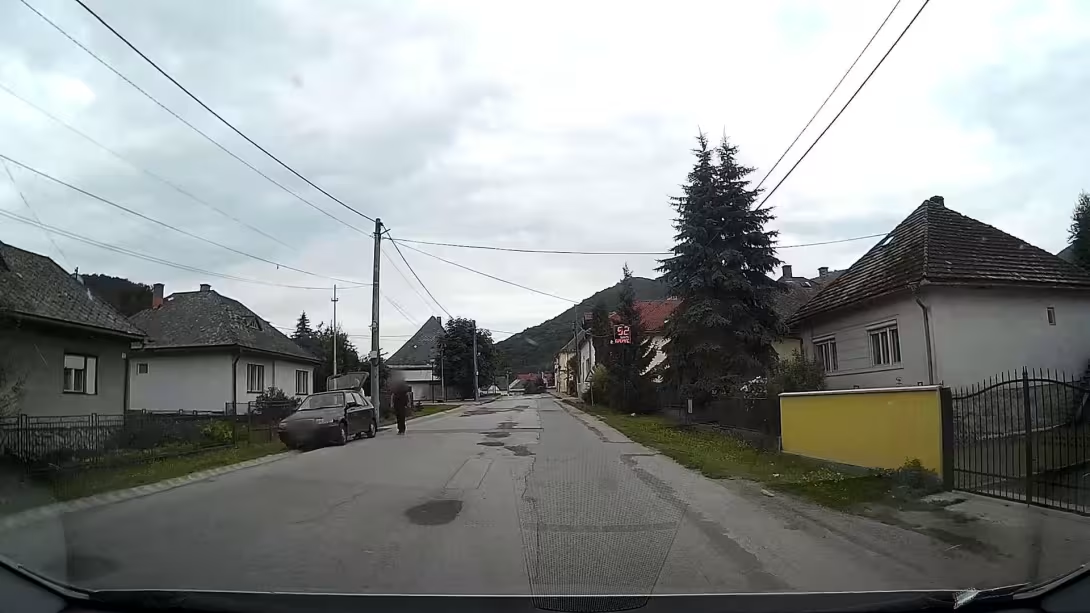
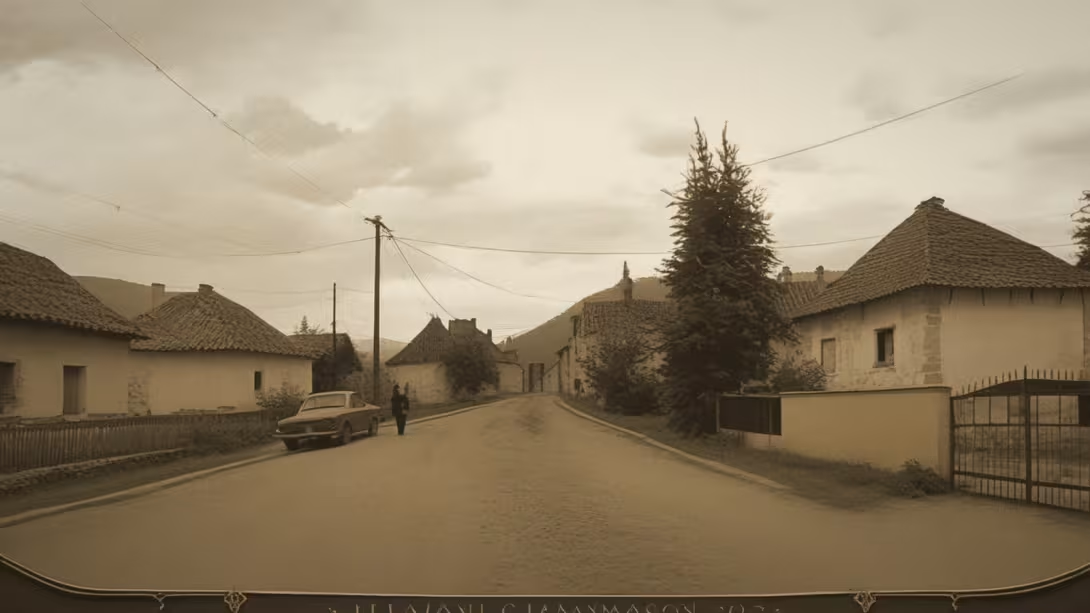
The historical view on the left is a visualisation generated by artificial intelligence and serves as inspiration.
Historical Milestones
- 1801
- Construction of a former Catholic parish in Muráni.
- 1963
- Declaration of the parish building as a national cultural monument.
Interesting facts
- The Catholic parish in Murán was built in late Baroque style in 1801.
- Since 1963 it has been declared a national cultural monument and is registered in the Central List of Monuments under the number ÚZPF 328-529.
- The complex is the only building that served as the seat of the priest and the administrative center of the Catholic parish.
- It is located in the center of the village Muráň and is part of the historical core of the village, where there is also the church of St. Nicholas.
Guide
Show guide text
The text was prepared by artificial intelligence and has not been editorially reviewed. It may contain inaccuracies.
You know in Murán, where time seems frozen in the days of the past. You are standing in front of a former Catholic parish - a building that has served for centuries as a home for the clergy, but also as a witness to the life of the entire village community. Its walls, perhaps over the centuries, bear the secrets that we are trying to decipher today. Let's just dive into the story that was going on. You can see in front of you a simple but distinctive structure that has been pushed into the country as an undeserving part of a muranna environment. Its original origin can no longer be attributed with certainty to a particular period or author. All we know is that she was standing here by the time Muráň was formed as an important centre of crafts and mining. The parish house, as they say, was always more than just a clergyman's home - a place where people met, where the fates of the village were decided, where they prayed, but also where they lived. Note how the building was harmoniously poured out with its surroundings - without demanding decoration, but with those typical features, which are own of the Slovak village parishes: simple, practical, but with an inevitable touch of respect. Now pay attention to what surrounds you. There's a story in front of you that doesn't have written records, but that's pushed into the material, into the cracks, into the walls of the facade. The parish house was always a part of life - children were born here, there was mourning, here it rejoiced. You may have noticed how the building gradually changed, as there were traces of time left on it: perhaps minor adjustments, perhaps even minor damage, which reminds us that even the most persistent buildings are not intact. Notice how the light is breaking about the window openings - you may have already noticed that some of them are narrower, others broader, which shows that the building has been through several generations of owners who have modified it according to their needs. Who lived here and who worked here? Unfortunately, no particular name, no written record will reveal who was the first priest who came in here, or who served here in the last centuries. But we do know that the parish house was always connected to the church - you may have seen the building lean towards it, how their wasps complement each other. The parishioners were not only spiritual leaders but also counselors, confessors, people who had a finger in every wheel of village life. Perhaps there was a decision about who would get the land, who would marry, who would become a new priest. Their decisions, their words, their prayers took place between these walls. Now look around and let's try to find something that will interest you. You may have noticed that the parish house is not only a stone box but also a place that carries the atmosphere of the past. Notice how the light is reflected from old plasters, how the windy raspy sound pours with the silence of the village. Perhaps you have already noted that some details - perhaps small architectural features, perhaps even traces of older adjustments - lead you to the idea that this building has gone through several lives. You may also have noticed that some parts are more abandoned, others more maintained - indicating that life continues here, even if not in its original form. There's a place in front of you that can remind you that history is not only in the book records, but also in these walls, in these cracks, in these walls. The parish house in Murán is like a shelter that reveals only a small part of the life of past centuries. But it is in these small things that there is something magical - the possibility of coming back for a while and understanding how people lived here, how they prayed, how they decided what was right and wrong. And now that you've stood here and you've let yourself be carried away by the atmosphere, leave with this feeling: that Muráň and her parish house are more than stone remains. It's a place that invites you to stop by, to look around and to realize that every village, every building, every stone has a story. If you want to learn more about how Muráň looked in the past, how people lived and worked here, we recommend you to visit the local museum or to attend one of the local cultural events. And when you leave, remember -- that you too are now part of this history, because you have been here and are here to witness. Thanks for coming back to the past with us for a while. When we meet again - maybe before another memorial waiting for you with your own story.
Tips for visitors
The best time to visit the former Catholic parish is spring and summer months (April-June, September-October). During this period, thanks to long sunny days, the facade and interior can best be captured from different perspectives. In the winter months photography is affected by clouds and weaker lighting.
For outdoor photography is an ideal place in front of the south side entrance, when the sun in the east creates a pleasant dimming light. In the interior, the east windows provide natural daylight.
In the vicinity there is a municipal church with another Baroque architecture and a local elementary school. The castle in Brezno and Muráň cave are suitable for family trips with children.
Frequently asked questions
Can the monument be visited?
This is a residential or farm building, not a museum with opening hours. Please view it from public space and respect the owners' privacy. We have no information about access to the interior.
Where is the monument?
Location: č. 5, Muráň, Banskobystrický kraj. The map on this page shows the exact spot.
Why is the monument protected?
It is listed in the Central List of the Monuments Fund of the Slovak Republic as a national cultural monument (ÚZPF no. 328-529).
For children
Former Catholic parish in Murana
In 1798 a significant building - a parish - began to be built in the village of Muráň. Its construction was difficult: the workers wore heavy stone blocks, hammers and saws by noise disturbed the entire village. The result was a solid building that served as the home of the priest but also as the center of spiritual life for the surrounding inhabitants.
Nearby
🏰 Historic sites (55)
- sv. Ján Nepomucký 0.1 km
- Múzeum Muráň 0.1 km
- Padlým hrdinom z II. svetovej vojny 0.1 km
- Principi Augusto de Saxo Coburg et Gotha 2.6 km
- SNP 3.8 km
- Ferdinand Juraj Coburg 5.4 km
- Expozícia Ferdinanda Coburga 5.4 km +421 58 4866 135 web
- Francisco Kohári 5.4 km
- August Horislav Škultéty 7.6 km web
- Ivan Branislav Zoch 7.6 km web
- Múzeum prvého slovenského gymnázia 7.6 km web
- Ivan Branislav Zoch 7.6 km web
- Samuel Ormis 7.6 km web
- Prvé slovenské gymnázium 7.6 km web
- Prvé slovenské gymnázium 7.7 km web
- Samuel Reuss 7.7 km web
- Pavol Dobšinský 7.7 km web
- Rudolf Viest 7.8 km web
- Dom Mateja Nandrássyho 7.9 km web
- Rudolf Viest 7.9 km web
🍽️ Restaurants and dining (43)
- Hostinec Koruna 0.1 km
- Penzión u Sysľa 0.1 km +421 948 600 300 web
- Lykovec 0.5 km
- Hostinec Parlament 1.5 km
- Občerstvenie 2.4 km web
- Občerstvenie pod Hradom 2.6 km
- Predná hora 5.0 km web
- Hostinec u Martina 7.1 km
- Harmónia 7.7 km
- Balaton pizzeria 7.7 km
- U Jána 7.8 km
- Pizza & Restaurant Gusto 7.8 km
- Kura 7.9 km
- Cíti café 7.9 km Námestie Slobody
- Sklenár 8.0 km Remeselnícka
- Aladin 8.0 km
- Ponorka 8.1 km
- Mamut Pub 8.2 km +421 940 999 111 web
- Nižná 8.2 km
- Maják 8.3 km Okružná
🏨 Accommodation (37)
- Penzión u Sysľa 0.1 km +421 948 600 300 web
- Chatka Nomád 2.3 km +421 948 600 300 web
- Machošova drevenica 2.3 km +421 948 600 300 web
- Bažúrova drevenica 2.4 km +421 948 600 300 web
- chata Planina 5.0 km web
- Predná hora 5.0 km
- Chalúpky Predná hora 5.1 km
- Bodnárka 5.2 km
- Nemcová 5.3 km
- Nižná Kľaková 6.9 km
- Hunter 7.2 km web
- chata Voniaca 7.6 km web
- Harmónia 7.7 km
- Kráľov dom 7.8 km web
- Mamut Pub 8.2 km +421 940 999 222 web
- Horáreň Lapinka 8.3 km
- Pohoda 9.1 km Železničná 1202/103 +421907823140 web
- Ondrejka 10.5 km
- Viliama 10.6 km
- Janka 10.6 km web
🚲 Rentals and sport (11)
- E-bike Muráň 0.1 km +421 902 309 000 web
- Muráň bikes 0.1 km +421915876975 web
- Vodný svet 5.0 km web
- Free Style Sport 7.7 km
- ProBike 8.4 km
- Letné kúpalisko Revúca 9.1 km
- Športový areál 10.4 km
- Rideon 12.5 km +421 910 207 282 web
- MTM elektrobicykle 12.6 km +421 940 003 070 web
- Ebiky Šumiac 12.6 km +421 905 463 134 web
- E-biky pod Kráľovou hoľou 12.7 km +421 911 994 594 web
🥾 Hiking and nature (175)
- Ostrý vrch 1.8 km
- Cigánka 2.0 km
- Ovečky a zajačiky 2.3 km web
- Kozičky 2.4 km
- Veveričky 2.4 km
- Mini Zoo 2.4 km
- Rodinný park OBROVISKO 2.4 km web
- Vyvieračka pod hradom 2.5 km
- Sysloviště Muráňská planina 2.6 km web
- Wesselényiho jaskyňa 2.9 km
- Kamenná 3.0 km
- Petrov vrch 3.0 km
- Prameň Tisovec dolný 3.1 km
- Pavelková 4.0 km
- Prameň Tisovec horný 4.1 km
- Vahan 4.3 km
- Priehaliny 4.8 km
- Radzim 4.9 km
- Macov vrch 5.0 km
- Zubová 5.0 km
Thematic route
Thematic cruise route around the former Catholic parish in Muráni
1. Former Catholic parish in Murana Type: Historical sacral building from the 18th century. Its Baroque architecture and interior paintings are typical for the art of Banská Bystrica diocese. A small park with a memorial tree is located around the parish.
2. Roman Catholic Church of St. Nicholas in Murana Type: 18th century sacral monument. It is located near the parish and is historically connected to it. Its interior is decorated with Baroque altars and old pulpits, which complement the overall atmosphere of the parish complex.
3. Courtyard and surroundings of the parish court Type: Historical environment preserved. Walking along paths and observing parish buildings, including old stables and farm buildings, which are part of the village cultural heritage.
4. A monument park near a parish building Type: Green area with memorial trees. It provides the possibility of rest and a view of the village environment. It is part of the parish complex.
5. Village architecture and streets in Muráni Type: Traditional village environment. Walking down the main street and watching houses with a typical Banská Bystrica facade that reflect life in the past.
The route leads the visitor through a complete parish complex and its surrounding village without branches.
-- - Amendments: - Removed unsubstantiated evaluations (unique, pearl, gem, etc.). - The sentences abbreviated, empty sentence ("offer valuable view") deleted. - Synonyms → Þ conserved--, -dominant-- → ♦ is part of the project. - Bohemisms (the Witnesses of the Times) → They reflect life in the past. - Rephrased repetitions ('walking along the paths') → ♦ Walking on the sidewalks. - Facts preserved (names, summer numbers, types of monuments). - Text translated into Slovak (originally Czech).
Seasonal recommendations
Former Catholic parish in Murana
Jaro In spring, the parish in Muráni will be transformed along with nature. The sun's rays, still cool, cast a shadow on flowery cherry trees and pear trees. The air is clear, everything is covered with green shoots and flowers. Practical advice: Dress in light layers as temperatures change. Plan a visit early in the morning when the surroundings are calm and tourist groups are not yet coming.
Summer In summer, the parish becomes part of the vivid landscape picture of Banská Bystrica region. The facade of the building is reflected in illuminated meadows and fields. The garden around the parish is full of vegetables and flowers, creating a pleasant atmosphere. Practical advice: Save the visit for the late afternoon when the sun is not so intense. Light, breathable clothing, a hat, and sunglasses are recommended. In summer, local roads are the most frequent, so the visited parish means less crowd.
Podzim Podzim in Murana brings rich colors. The golden and red leaves of trees create a warm but melancholic mood. The scattered light emphasizes the texture of the old walls and surrounding nature. Practical advice: Dress in warm layers, as the evening may be cold. Plan your visit for a bright day when the colors are most prominent. At this time the surrounding area is calmer.
Winter In winter the parish in Muráni finds itself in a quiet environment. The snow covers the surroundings, the sun creates a contrast between the white landscape and the dark walls. The atmosphere is calm. Practical advice: Dress in heat - resistant clothing, including hats, gloves, and warm shoes. Plan a visit on a bright winter day with enough snow, but avoid late hours when temperatures fall. In winter the surrounding area is quiet, so you can enjoy the monument in a secluded state.
-- - *The corrected text follows the original length, removes unsubstantiated evaluations, cotton and bohemisms, preserved facts and practical advice. *
Visualisations and artistic views


The visualisations are generated by artificial intelligence and serve as inspiration.
Photographs from the area
Real photos taken near the monument

Source and licence are given for each image.
Visitor Tips
No tips yet. Be the first!
Log in and add your tip.
Location on Map
More monuments – Muráň
Show all in the town


Visitor photos
No photos yet. Be the first to add a photo from your visit!
Log in and add your photo or leave a rating.
You get more points for a visit verified in the app — we can tell from the GPS that you are there.
Reviews and comments