








Fiľak Castle Castle
Fiľakovo castle is a medieval building in the village Fiľakovo in Banská Bystrica region. It is located above the city and today it houses the Castle Museum in Fiľakovo.
Archaeological findings date the settlement of the castle hill to the copper age, until about 3500 years before Christ. In the 12th century there was probably a stone castle. The first written record from 1242 states that he resisted Mongolian raids. From 1311 to 1321 the castle was owned by Matúš Čák Trenčiansky. The documents of 1348 and 1385 refer to it as royal property. In 1435 the Perénians put him in reserve, and in 1440 Queen Elizabeth entrusted him to John Jiskro. In 1483, the castle was conquered by the armies of King Matthias Corvinus and expelled by Stephen Pereni. Since 1490 he was the manager of Blazey Raška. His daughter married František Bebek, who won the castle as a dowry.
In 1551 the castle was rebuilt into a Renaissance fortress according to the plans of the Italian builder A. da Vedano. The middle castle with two pentagonal bastions was built, while the western one still bears the name Bebekova. Between the bastions is a six-meter wall with three artillery positions and six niches for hookers. In 1554 the castle was occupied by the Turks for 39 years. The government of it beg Hamza and then beg Šaman; the castle served as the center of Fiľakovski sandžak. Imperial armies conquered him in 1593.
In later centuries, the castle was managed by various persons, such as Captain Tomáš Bosniak de Magyarebil during the battles of the Betlens between 1621 and 1623. At the time of the Rákoci uprising, Captain Francis Veseléni was here. Since 1657 he was the hereditary captain of Štefan Koháry I and later Štefan Koháry II. In 1678 the castle faced unsuccessful attacks during the Tököli uprising. In 1682, after siege, the castle came into the hands of Tököli's troops with the support of the Turks. During this conflict, the castle and the county archives burned down and the city was destroyed. Since then, the castle has remained in ruins.
The architecture of the castle includes a cannon bastion, a residential tower, a tank, an access staircase and a well. The original 12th-century quadruple castle was extended by a park wall with round corner bastions and lower castle. It provided three polygonal bastions and two gate towers with a falling bridge over a ten - foot - long ditch. One bastion was preserved from the town fortification following the castle acropolis.
Since 1972, the preservation of ruins has taken place. In 2007 the Castle Museum in Fiľakovo was established, which is located in the reconstructed Bebek Baste. The exposition of the castle of Fiľakovo for centuries, on three lower floors, presents the history of the city and the castle from the first written mention to the year 1682. Visitors can see medieval and timely non-governmental discoveries, such as tiles depicting kings and saints, original castle keys, or objects from the Turkish occupation period.
Tehdy a dnes
Drag the slider and compare how the monument might have looked when it was built with the view today.
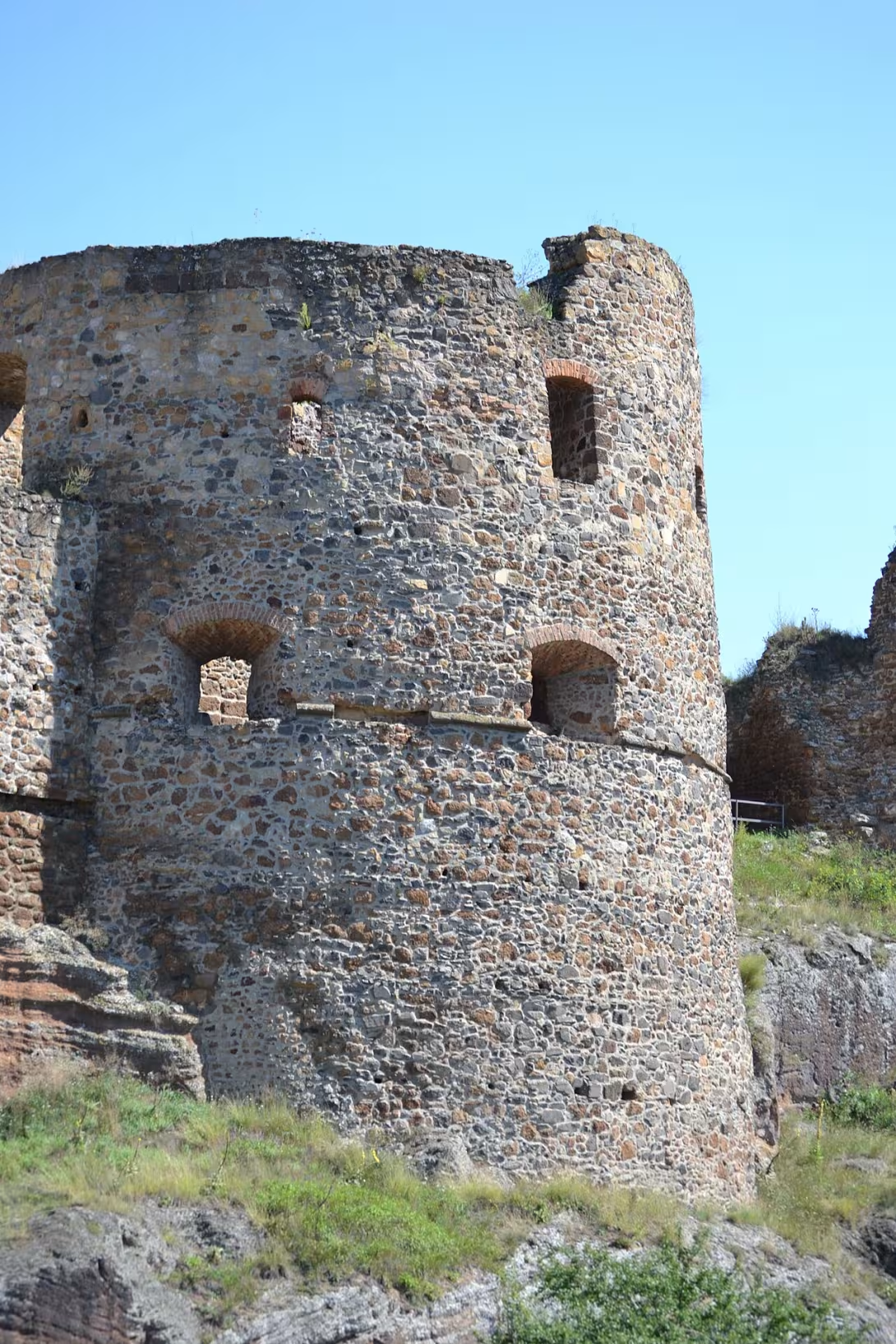

The historical view on the left is a visualisation generated by artificial intelligence and serves as inspiration.
Historical Milestones
- Bast cannon (garden core, gothic, con.15.st.)
- Tank, i. (Garden Core, Gothic, 13th century)
- Staircase access i. (Foreign I., Gothic, 13th)
- Access space (representation II., Gothic, 13.st.)
- Wall shield i. (Foreign I., Gothic, 13th century)
- Tower dwelling (garden core, Gothic, 13.st.)
- Cannon Tower (Renaissance II, 30.r.15.st.)
- Courtyard castle ii. (Foreign I., Gothic, 13th century)
- Wall wall ii. (Foreign II., Renaissance, 1600)
- Bast gate (Renaissance, 30.r.15.st.)
- Bastion ii.
Heritage surveys
-
2017 — Architektonicky-historícký výskum
Čiastkový pamiatkový výskum -
2016 — Architektonicky-historícký výskum
Čiastkový pamiatkový výskum -
2016/03-04 — Architektonicky-historícký výskum
Čiastkový pamiatkový výskum -
2015 — Architektonicky-historícký výskum
Čiastkový pamiatkový výskum
Interesting facts
- Archaeological findings date the settlement of the castle hill to the copper age, until about 3500 years before Christ. - The first written mention from 1242 states that the castle resisted the Mongolian raid. - In 1551 the castle was rebuilt into a Renaissance fortress according to the plans of the Italian builder A. da Vedano. - In 1554 the castle was occupied by the Turks for 39 years and served as the center of Fiľakovský sandžak. - The reconstructed Bebeková Baste houses the Castle Museum in Fiľakovo.
Guide
Show guide text
The text was prepared by artificial intelligence and has not been editorially reviewed. It may contain inaccuracies.
Welcome to Fiľak Castle. You stand in front of an impressive monument that dominates the landscape around the town of Fiľakovo in Banská Bystrica region. Before us, there is a place that is not just a set of stones and old walls, but mainly the centre of history that has broken through for thousands of years. Now that you stop like this and look at the whole complex for the first time, try to see not only its present appearance but also the invisible layer of time that surrounds it. You may feel the special peace that comes with the age structures, but at the same time you can feel the old tension and strategic importance of this place.
To understand what we have before us, we have to go much further than we might have imagined. Most of us, looking at the castle, think of the knights and kings from the Middle Ages, but the Fiľak Castle tells us a story that began in deep prähistoria. The archaeological findings that have been made in this location are fascinating. They showed that the castle hill was inhabited already in copper time, which moves us to about 3500 BC. Imagine - thousands of years ago, people found this very place ideal. They chose strategic points that gave them natural protection and insight into their surroundings. The fact that people lived here in copper time tells us about the natural value of this position. The castle was not created by chance, but it was built on a place that had been valuable to people since the dawn of civilization.
However, as we move forward in time to the period most of us associate with castles, we come to the first written reference from 1242. This date is not random. It is one of the most tragic, but at the same time the most shaping moments of medieval Europe. It was during these years that the Mongolian raids, which destroyed the entire city and wiped out thousands of lives, broke into our regions. However, the Fiľak Castle showed its strength in these cruel times. Historical records indicate that the castle resisted Mongolian attacks. This is an extraordinary fact that testifies to the quality of the former fortification and the courage of the people who defended it. So you stand before a place that was a symbol of stability and security in the Middle Ages at a time when the world was constantly changing and threatened to collapse.
Let's take a look at what you see in front of you in terms of architecture. As you go through the area, watch how the different styles and needs of the times were strenuous. The castle was not a static building but a living organism that had to adapt to new threats and new technologies. A key turning point occurred in 1551. During this period, the rules of war changed. Guns and cannons appeared to break old, tall, and thin medieval walls. The castle therefore had to be transformed. According to the plans of an Italian builder named A. da Vedano, this year the castle was rebuilt into a modern Renaissance fortress.
The Italians were at the time champions of military architecture. The Renaissance fortress was no longer just about height and inaccessibility, but about strategic layout, thicker walls and specially designed elements that should deflex the impact of the projectiles and provide better space for their own defence. Now, when you perceive the atmosphere of this complex, try to imagine this transformation. Imagine the Italian architect A. da Vedano decomposing his plans and planning, where there will be new bassions and how the silhouette of the castle will change to resist modern 16th century weapons. It was this renaissance element that gave the castle its distinctive fortification, which we can perceive today.
Although we don't know exactly the names of all the personalities that have gone through here, the castle itself left a mark. Every stone in these walls bears the story of looting, defense, and survival. Fiľakovo castle was not only a military base, but also an administrative centre, a place of power and a symbol of control over the strategic path. Imagine the silence of the morning hours when the fog hovered over the hill, and the guard on the walls watched the horizon to see the arrival of an enemy or an important messenger in time.
One of the most interesting things you might miss if you're not attentive is this continuity. It is fascinating to think that in the same place where you stand today with modern earphones, thousands of years ago, a copper man stood and perhaps asked the same questions about the world around him. Then came the medieval warriors who fought the Mongolians here, and later the Renaissance engineers who brought Italian taste and knowledge to the castle. This layeredness makes Fiľak Castle more than just a historical building. It is an archive of human efforts for security and survival.
Now when you look around, see the contrast between nature that surrounds the castle and the hardness of the stone. Note how the castle naturally merges with the terrain, which was crucial to its defensiveness. It was this symbiosis with the country that enabled him to survive for thousands of years. Although time has left its mark and the castle is no longer in its full capacity as a fortress, its majesty remains untouched.
Now that you know the basic lines of its history, from copper to Mongolian raids to the Renaissance Renaissance Renaissance Renaissance champion, I invite you to explore the castle with your own eyes. Let your curiosity guide you. Walk on the castle hill, touch the cold walls, and try to imagine the sounds that were cast here hundreds of years ago - the pounding of horses, the tinking of the armor and the voices of the people who lived and worked here.
Every corner of Fiľak Castle has something to say if we can just listen. Look at the details, see the vastness of the area and remember that you are standing in a place that has witnessed dramatic changes in the history of Central Europe. The castle now welcomes you in its silence, which is full of stories.
Thank you for your attention and I wish you a pleasant and inspiring walk around this fascinating historical place. Let Fiľakovo castle please you with its beauty and impress you with its deep history. We say goodbye, but the castle remains open to you for further discoveries. Have a nice day.
Tips for visitors
Fiľak Castle is best visited in spring and autumn months. Pleasant temperatures and colorful nature around the castle create an ideal atmosphere for walks along the ruins.
It is recommended to put on with a solid base, since it is a castle ruin with uneven terrain. Do not forget enough drinking water and clothing suitable for current weather conditions.
The location is available by car and public transport; check the current links in the search engine.
For the best photos we recommend to come during the time of the golden hour of the sun. The sun will beautifully highlight the texture of old brick walls and provide views of the town of Fiľakovo.
Fiľak Castle is a great place for children, where fantasies about knights and castle life can be built. However, children should be monitored for rocky surfaces and exposed parts of ruins when moving around the site.
Frequently asked questions
Can the monument be visited?
Some buildings of this kind are open for guided tours, others serve another purpose or are privately owned. We have not verified whether and when this monument is open – please ask the operator. According to the heritage register restoration is under way, so access may be restricted.
What are the opening hours and admission?
We have not verified the opening hours or admission. Current information is published by the operator.
Where is the monument?
Location: č. 1936, Fiľakovo, Banskobystrický kraj. The map on this page shows the exact spot.
Why is the monument protected?
It is listed in the Central List of the Monuments Fund of the Slovak Republic as a national cultural monument (ÚZPF no. 326-440).
For children
Hello, young adventurers! Today we will start with the story of the Fiľak Castle, which was founded in 1500, about 526 years ago. Imagine that we are living in a time when the shield knights walked and competed for powerful castles. This castle stands at the top of Fiľakovo, where since ancient times people have known its strategic view. The hero of that time was a noble knight who cared for the castle gates and nicely decorated halls. Every day, it was loaded here: from the seduction of water by the baking servants to the engraving battles taught by young noblemen.
Nearby
🏰 Historic sites (62)
- Hradné múzeum 0.1 km Podhradská +421 907 640 700 web
- Obetiam 2. svetovej vojny 0.1 km
- Obetiam 1. svetovej vojny 0.1 km
- Obetiam revolúcie 1848-1849 0.1 km
- Mestské múzeum Fiľakovo 0.2 km
- Kaštieľ Berchtoldovcov 0.2 km Námestie padlých hrdinov 657/2 web
- Viliam Hulita 0.2 km
- Holokaust 0.3 km
- sv. Anna 0.3 km
- Kúria Cebriánovcov 0.6 km Lučenská 435/6 web
- Koháryho kúria 0.6 km
- sv. Urban z Langres 0.9 km
- Pamätník 6.6 km
- Na pamiatku padlým v I. a II. svetovej vojne 8.0 km
- Horkovicsova kúria 8.8 km web
- Pamätník padlých v 2. svetovej vojne v Čiernom Potoku 8.9 km
- Padlým hrdinom partizánom 9.2 km
- Temetodomb 10.6 km
- Kúria 10.6 km Hlavná 39/77
- Hajnáčka 11.3 km
🍽️ Restaurants and dining (92)
- Cool Kebab 0.1 km +421 940 833 030 web
- Elite café 0.1 km
- Roxy bar 0.2 km
- Pizza Dolce Vita 0.2 km
- Bandi pub 0.2 km
- Bar Európa 0.3 km
- Victory 0.9 km
- Kohút 2.4 km
- Hamilton 2.5 km
- Molnár vendéglő 5.7 km
- Reštaurácia Koruna 5.9 km
- Reštaurácia na terase 10.2 km
- Rap Bar 10.5 km
- Hostinec u Andílka 10.5 km
- Malý mlyn 10.9 km web
- U poľovníka 11.0 km
- Latyak Büfé 11.1 km Táncsics utca
- Bohém Bistro 11.3 km
- Galax 11.4 km
- Sport Söröző 11.7 km
🏨 Accommodation (32)
- Penzión Bebek 0.1 km
- Pepita 0.4 km
- Kállai Vináreň a Penzión 0.5 km web
- chata Bučoň 6.0 km
- Karancsvölgye Pihenőház 9.9 km web
- Karancslak vendégház 10.8 km
- Bazalt Panzió 11.3 km Wesselényi utca 11 +36 30 948 3044 web
- Somoskő Vendégház 11.4 km Wesselényi utca 9 +36 20 362 2978
- Somoskői kirándulóközpont 11.4 km Wesselényi utca 14 +36 32 430 940 web
- Somoskabin 11.5 km Nyerges utca 9 web
- Somosi Fogadó 12.2 km Somosi út 188 +36 32 435 229 web
- Vargánya vendégház 12.6 km
- Miraj Resort 12.8 km +421 473 337 103 web
- Chata Salonkáš 12.9 km
- Hotel Reduta, Best Western 13.1 km +421 47 433 1237 web
- Reduta 13.1 km
- Pelikán 13.1 km +421 474 330 871 web
- Penzión Pé7 13.2 km +421 940 312 411 web
- Salgó Hotel 13.3 km
- Hotel Clavis 13.4 km +421 47 4303838 web
🚲 Rentals and sport (10)
- Elite fitness 0.1 km
- Hillex Studio 12.9 km
- Športová hala 13.3 km
- ssFitness 13.6 km
- Sportcentrum 13.9 km +421 917 840 926 web
- MAX Fitness & Spinning Centrum Lučenec 14.1 km Gorkého 1
- Tenisová hala 14.1 km Maxima Gorkého
- Interbike 14.1 km
- Mestská plaváreň 14.9 km +421 905 328 969 web
- Mestské kúpalisko 15.0 km
🥾 Hiking and nature (190)
- Prameň Adam 0.5 km
- Červená skala 1.0 km
- Vyhliadka 1.3 km
- Šarkan 1.9 km
- Kerčík 2.4 km
- Bukovina 2.9 km
- Chrastie 3.3 km
- Belinský vrch 3.6 km
- Okrúhlica 3.9 km
- Malý vrch 4.0 km
- Babský vrch 4.0 km
- Šťavica Torey 4.1 km
- Prameň Telep I 4.2 km
- Prostredné 4.3 km
- Pavlov vrch 4.3 km
- Tucháč 4.4 km
- Belinská skala 4.6 km
- Vysoká 4.9 km
- Veľké Hradište 5.0 km
- Veľký Bučeň 5.0 km
Thematic route
Fiľak Castle and its surroundings
1. Fiľak Castle
Type: Castle
Why it is worth visiting: Fiľakovo Castle is one of the oldest fortresses in Slovakia, built in the 13th century. Its historical jewels and panoramic view of the surroundings are an ideal opportunity for every interested in history and architecture. 2. St. Michael's Church
Type: Church
Why it is worth visiting: This church is located near Fiľakovo castle and is considered one of the oldest sacral monuments of the village. Its Gothic architecture and history are a fascinating part of the visit. 3. City Museum Fiľakovo
Type: Museum
Why it is worth visiting: In the town museum you can learn more about the historical and cultural development of the village Fiľakovo. Exhibitions depict the life and work of local residents, which provides a deeper view of the site. 4. Park near Fiľak Castle
Type: Park
Proč is worth a visit: The park around Fiľakovo Castle offers a peaceful prosthetic for relaxation and beautiful views of the surroundings. An ideal place for a moment of rest after discovering historical monuments. 5. Courtyard of Fiľakovo Castle
Type: Nádvorie
Why is it worth visiting: In the courtyard of the castle there are various historical elements and exhibitions that provide a more detailed view of life in the castle of Fiľakovo. It's a great place to photograph and get an impression about the historical environment. This route offers a combination of history, culture and nature in one fast accessible area.
Seasonal recommendations
A new life comes to the ruins of Fiľakovo Castle in spring. Nature in the surroundings begins to bloom, creating a contrast between the gray stone and the delicate light green vegetation. It is recommended to dress in a layered manner, as morning temperatures can be even cold, while afternoons are already pleasantly warm.
Summer season brings intense colors and strong sunlight to this site. The surroundings of the castle are in full summer flower. Due to the high temperatures it is advisable to visit the ammonia in the early morning hours or later in the evening when the air is cooler. Remember light clothes and sun protection.
Autumn transforms the surroundings of Fiľakovo Castle into a colorful mosaic of yellow and red tones. Mlhy, often spread out in the valley, adds a mysterious atmosphere to the ruins. Waterproof shoes and a warmer sweater are essential for comfortable terrain movement.
In the winter months, the castle works hard, especially if the ruins are covered with snow. The contrast of white landscape and dark stone creates a visual experience. Since the days are short, it is important to come in full day. Thermal layers of clothing and firm footwear with antislip soles are essential.
Visualisations and artistic views


The visualisations are generated by artificial intelligence and serve as inspiration.
Photographs from the area
Real photos taken near the monument


Source and licence are given for each image.
Visitor Tips
No tips yet. Be the first!
Log in and add your tip.
Location on Map
More monuments – Fiľakovo
Show all in the town
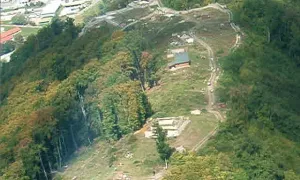

Visitor photos
No photos yet. Be the first to add a photo from your visit!
Log in and add your photo or leave a rating.
You get more points for a visit verified in the app — we can tell from the GPS that you are there.
Reviews and comments