








kostol sv.Jána Krstiteľa Church
St John the Baptist church in Demjat is a Baroque sacral building from 1774, located in the village of Demjata in Prešov region. It is a national cultural monument registered under number ÚZPF 11127 and is the only building in the area, which the Monument Office of the Slovak Republic protects.
The area of the monument consists only of the church of St. John the Baptist, without other objects. The building is typical for the Baroque style, which in this form developed in the second half of the 18th century.
More detailed construction characteristics of the church are not listed in the available documents. According to the registration data, it is located at No 130 in Demjata. The monument was declared a national cultural monument, but the concrete date of the declaration and the protection zone are not mentioned in the accessible sources. The church is currently functional sacral building, which serves as a local church for the parish of Demjata.
St. John the Baptist's church stands in the headquarters of the village of Demjata, where it forms one of its most important monuments. Its Baroque form is typical for regional sacral buildings of this time and represents an interesting example of architecture from the second half of the 18th century. For visitors dealing with the cultural village and the history of the region, the church represents a suitable stop on a walk through the village. His visit allows a better understanding of the cultural and architectural village that developed in this area.
Tehdy a dnes
Drag the slider and compare how the monument might have looked when it was built with the view today.
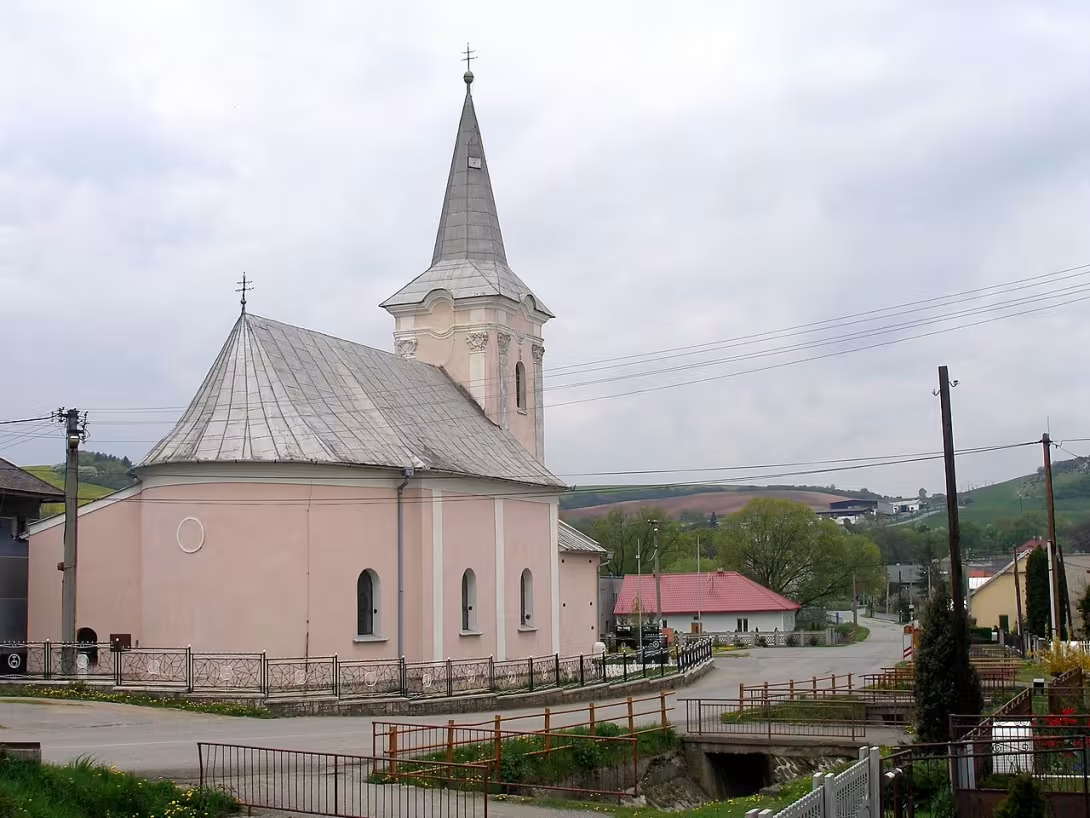

The historical view on the left is a visualisation generated by artificial intelligence and serves as inspiration.
Artistic features
-
vitráž s kresťanským symbolom — Baránok Boží
sklo, vkladanie do siete · moderna · okolo pol.20.st. -
vitráž s kresťanským symbolom — Kríž
sklo, vkladanie do siete · bez slohových znakov · okolo pol.20.st.
Source: Monuments Board of the Slovak Republic — open data, licence CC BY 4.0
Guide
Show guide text
The text was prepared by artificial intelligence and has not been editorially reviewed. It may contain inaccuracies.
Welcome to St John the Baptist's Baroque Church in Demjat!
You stand before one of the most beautiful sacral monuments of Eastern Slovakia, which with its elegance and historical value the bird into the heart of Demjata village. In front of you is a baroque building from 1774, which is a national cultural monument and conscience of not only local, but also of all who stop here. A pleasant feeling surrounds you at first glance - you perceive the atmosphere created here by the combination of stones, time and religious respect.
This church was built at a time when baroque architecture was developing in our territory, characterized by abundant decoration, dynamic shapes and deep religious expression. St John's Demjat Church The baptist is among those who have preserved themselves in the pure form of this era, without subsequent radical adjustments that could change his original form. Its creation is linked to the need for a local society for its own, representative worship building, which could serve as a centre for religious life and social assembly.
Let's move on to the details that surround you. The first thing that interests you is his facade. Baroque elements are manifested here in a fine rhythm of facade, where alternating semicircular windows and decorative motifs, which add soft elegance to the building. Note how stone blocks are connected to wooden elements that were typical of sacral buildings in Eastern Slovakia at this time. The church is located at No. 130, and when you look around, you may realize how its shape forms into the local environment - as if it became an undevil part of it.
Nyni pay attention to what surrounds you in the interior. Although there are not known specific details like paintings or statues that could be here, it is obvious that the inside of the church was in the past rich in art and symbolism. Baroque churches were characterized by a demanding decoration, which was intended to inspire visitors to prayer and respect. Thanks to its original state, there are still several elements that refer to this era - for example, fine details on ceilings that could be decorated with frescoes or stone elements that served as a basis for later painting.
When you look around the church, you may realize that its location is not random. It is located in the centre of the village, where religious life meets the dailyity of the local inhabitants. St John's Church He served the baptist here, still serving as a place of prayer, but also as a symbol of social cohesion. In the past there were held not only religious services, but also significant events that were connected with the life of the village.
One of the attractions that can be discovered here is the fact that Baroque churches like this often served as a center of educational life. In the past, certain religious courses or educational events were held here, which were intended for local residents. Visiting this church, you come into contact with the history that has taken place here, not in religious terms, but also in social terms.
When you manage to pass by the church and look at its surroundings, you may realize that its original appearance was even richer than we think today. Baroque churches were often adorned with statues of saints who were placed on the façades or in the vicinity of the building. Although specific details are not known, it is evident that this church was among those who were surrounded in the past by symbolic elements that provided additional spiritual matter to local monuments.
Nays look at the surroundings of the church and see how the various epochs are connected in time. St John's Church The Baptist is not a monument to the past, but also to how religious architecture developed in our territory. Its original appearance, which has been preserved until today, is proof of how Baroque aesthetics have been manifested in Eastern Slovakia and how a unique link between religious and cultural history has been established here.
When you manage to walk past the church and look at its facade, you may realize that its original appearance was even richer than we think today. Baroque churches were often adorned with statues of saints who were placed on the façades or in the vicinity of the building. Although specific details are not known, it is evident that this church was among those who were surrounded in the past by symbolic elements that provided additional spiritual matter to local monuments.
When you manage to walk past the church and look at its facade, you may realize that its original appearance was even richer than we think today. Baroque churches were often adorned with statues of saints who were placed on the façades or in the vicinity of the building. Although specific details are not known, it is evident that this church was among those who were surrounded in the past by symbolic elements that provided additional spiritual matter to local monuments.
When you manage to walk past the church and look at its facade, you may realize that its original appearance was even richer than we think today. Baroque churches were often adorned with statues of saints who were placed on the façades or in the vicinity of the building. Although specific details are not known, it is evident that this church was among those who were surrounded in the past by symbolic elements that provided additional spiritual matter to local monuments.
When you manage to walk past the church and look at its facade, you may realize that its original appearance was even richer than we think today. Baroque churches were often adorned with statues of saints who were placed on the façades or in the vicinity of the building. Although specific details are not known, it is evident that this church was among those who were surrounded in the past by symbolic elements that provided additional spiritual matter to local monuments.
When you manage to walk past the church and look at its facade, you may realize that its original appearance was even richer than we think today. Baroque churches were often adorned with statues of saints who were placed on the façades or in the vicinity of the building. Although specific details are not known, it is evident that this church was among those who were surrounded in the past by symbolic elements that provided additional spiritual matter to local monuments.
When you manage to walk past the church and look at its facade, you may realize that its original appearance was even richer than we think today. Baroque churches were often adorned with statues of saints who were placed on the façades or in the vicinity of the building. Although specific details are not known, it is evident that this church was among those who were surrounded in the past by symbolic elements that provided additional spiritual matter to local monuments.
When you manage to walk past the church and look at its facade, you may realize that its original appearance was even richer than we think today. Baroque churches were often adorned with statues of saints who were placed on the façades or in the vicinity of the building. Although specific details are not known, it is evident that this church was among those who were surrounded in the past by symbolic elements that provided additional spiritual matter to local monuments.
When you manage to walk past the church and look at its facade, you may realize that its original appearance was even richer than we think today. Baroque churches were often adorned with statues of saints who were placed on the façades or in the vicinity of the building. Although specific details are not known, it is evident that this church was among those who were surrounded in the past by symbolic elements that provided additional spiritual matter to local monuments.
-- -
If you manage to pass the church of St. John the Baptist in Demjato, you may realize that you have stopped at a place that is not a monument to the past, but also how religious architecture has developed in our territory. Its original appearance, which has been preserved until today, is proof of how Baroque aesthetic was manifested in Eastern Slovakia.
Look at the facade and see how different epochs are connected in time. St John's Church The Baptist is not a monument to the past, but also to how religious architecture developed in our territory. Its original appearance, which has been preserved until today, is proof of how Baroque aesthetic was manifested in Eastern Slovakia.
When you manage to walk past the church and look at its facade, you may realize that its original appearance was even richer than we think today. Baroque churches were often adorned with statues of saints who were placed on the façades or in the vicinity of the building. Although specific details are not known, it is evident that this church was among those who were surrounded in the past by symbolic elements that provided additional spiritual matter to local monuments.
-- -
If you manage to pass the church of St. John the Baptist, you may realize that you have stopped at a place that is not a monument to the past, but also how religious architecture has developed in our territory. Its original appearance, which has been preserved until today, is proof of how Baroque aesthetic was manifested in Eastern Slovakia.
You know, in Demjat, and you owe it to visit this beautiful baroque monument. When you leave here, you may realize that you stopped at a place that is not a memory of the past but also how religious architecture developed in our territory. Its original appearance, which has been preserved until today, is proof of how Baroque aesthetic was manifested in Eastern Slovakia.
When you manage to walk past the church and look at its facade, you may realize that its original appearance was even richer than we think today. Baroque churches were often adorned with statues of saints who were placed on the façades or in the vicinity of the building. Although specific details are not known, it is evident that this church was among those who were surrounded in the past by symbolic elements that provided additional spiritual matter to local monuments.
-- -
If you manage to pass the church of St. John the Baptist, you may realize that you have stopped at a place that is not a monument to the past, but also how religious architecture has developed in our territory. Its original appearance, which has been preserved until today, is proof of how Baroque aesthetic was manifested in Eastern Slovakia.
-- -
**When you manage to pass by the church of St. John the Baptist, you may realize that you have stopped at a place that is not a monument to the past but also how religious architecture has developed in our territory. His
Tips for visitors
St John the Baptist's Church in Demjat
Best Time to Visit The church is best to visit in the summer months, when the weather is pleasant and the opportunity to cross the surroundings. The best light for photography is then - in the morning the inside of the church is best lit by direct sunlight.
It is recommended to park in visitors' places which are usually marked.
The village is accessible by public transport.
What to take with you When visiting the church it is advisable to take comfortable clothes and shoes because inside it can be cooler. It is important to observe the curse and respect in the sanctuary. For photography it is advisable to take the lens with a higher resolution if you want to capture details of baroque painting and architecture. To visit the surrounding area, it is advisable to take a map or GPS device with you. In the summer months it is advisable to take protection from the sun and sufficient water.
Photography The best places for photography are the main altar, baroque paintings and windows with stains. For high-quality photos it is advisable to choose a time when light is pleasant - ideal in the morning or before sunset when light is lighter.
What to Visit Around There are few attractions around the church.
Tips for families with children It may be interesting for children to see the details of Baroque architecture and the painting of the church. In the vicinity of the village there are forests and fields where children can devote themselves to natural activities such as walking or searching for forest fruits. In the summer months you can also visit local festivals or events for families.
Frequently asked questions
Can the monument be visited?
Religious buildings are usually open mainly during services; at other times a visit is normally arranged with the parish or the operator. We have not verified specific times.
Where is the monument?
Location: č. 130, Demjata, Prešovský kraj. The map on this page shows the exact spot.
Why is the monument protected?
It is listed in the Central List of the Monuments Fund of the Slovak Republic as a national cultural monument (ÚZPF no. 417-11127).
Nearby
🏰 Historic sites (285)
- Semseyov kaštieľ 0.1 km web
- Kaštieľ Tulčík 1.9 km web
- Dolný kaštieľ Raslavice 4.8 km Kláštorná 56/1
- Andrej Juska 4.8 km
- Horný kaštieľ Raslavice 4.8 km Kláštorná 102/47 web
- Kúria 5.3 km Antona Mikitu 103/2
- Kaštieľ Terňa 5.6 km Hlavná 114/64 web
- Kapušiansky hrad 5.8 km web
- Galéria a múzeum ľudového umenia 6.4 km
- Dessewffyovský kaštieľ 6.4 km Grófske Nádvorie 210/1
- Panna Mária 6.5 km
- sv. Cyril a Metod 7.1 km
- Kúria 8.0 km
- Kúria 8.2 km
- Kaštieľ Želmanovce 8.3 km web
- Pád vrtulníka 2003 8.6 km
- Odlet leteckej jednotky do ZSSR, 31.8.1944 8.7 km
- Pamätník Slovenského národného povstania 8.7 km
- Nenarodeným deťom 8.7 km
- kpt. Ing. Richard Sépi 8.8 km
🍽️ Restaurants and dining (477)
- Arišš pub 4.1 km
- Fresh Corner 4.1 km
- Bowling Pub 4.8 km
- Cukráreň 4.8 km
- Live Sport Bar 4.9 km
- Steak house 6.2 km web
- Farmer area 6.2 km Bardejovská 708/23 +421 948 864 110 web
- Pohostinstvo pod Strážom 6.5 km
- The Stables 6.5 km
- Bar Fintas 6.5 km
- Legenda 7.0 km web
- Gazdovská stodola 7.0 km web
- Školská jedáleň 7.1 km
- Beerka-bar 7.1 km
- Tenis klub 15 7.2 km
- Reštaurácia Pohoda Lada 7.6 km
- Senti cafe 7.7 km
- U San Marka 7.8 km
- Video-BAR 8.2 km
- Základňa 8.2 km
🏨 Accommodation (77)
- chata Hradzenka 2.2 km
- Motel Raslavičan 4.9 km
- Chata pod Haľagošom 5.2 km
- Krivuľa 8.6 km
- Penzión Trio 8.9 km
- Turistická ubytovňa Chata Veterán 9.7 km Vranovská 2550/47 +421 51776 14 05
- Stavbár 9.7 km Strojnícka 13 web
- Turistická ubytovňa Dipena 10.0 km Strojnícka 2081/11 +421 903 603 457 web
- Ubytovanie Imrich Car 10.7 km Ľubochnianska 2072/3 web
- Robotnícka ubytovňa Ubytovanie Šariš 10.9 km +421 907 340 242
- Pension Zwicker 11.0 km Bardejovská 2705/48B +421 51 286 66 70 web
- Čergov 12.4 km +421 910 281 693 web
- Bytová agentúra rezortu Ministerstva obrany 12.4 km web
- Privat Prešov 12.5 km +421949444066 web
- King Stadium Hotel 12.6 km Björnsonova 8 web
- Domov mládeže Alexandra Duchnoviča 12.7 km Sabinovská 5107/2
- Čergovčanka 12.7 km
- Snežienka 12.8 km web
- Hotel Polo 12.8 km Karpatská 8708/18A +421 948 297 193 web
- Penzión Šariš 12.8 km +421 51 771 6351 web
🚲 Rentals and sport (97)
- Aeroklub Prešov 8.4 km Vranovská 72 web
- Majamisport 9.5 km +421 908 253 526 web
- Šariš Relax Centrum 10.3 km web
- Angel's Bikes 11.4 km
- TJ Sokol Ľubotice 11.6 km web
- Vonkajší lezecký profil 11.7 km
- Lezecký obchod Outdoor Park 11.7 km web
- Atletický areál a multifunkčné ihrisko ZŠ Šmeralova 11.7 km web
- Indoorová lezecká stena Bouldrovka 11.7 km Tomášikova 14576/62
- Boulderingová veža 11.7 km
- Big Swing 11.7 km
- Nízke lanové prekážky 11.7 km
- Veža 11.7 km
- Veľký okruh 11.7 km
- Lanáčik 11.7 km
- Vysoké tímové prekážky 11.7 km
- Ministienka 11.7 km
- Tarzanov skok 11.8 km
- Lanovka 11.8 km
- Pherun Outdoor 11.9 km Mirka Nešpora 40 web
🥾 Hiking and nature (214)
- Terba 1.1 km
- Taranok 1.4 km
- Vápenník 1.7 km
- Riš 1.9 km
- Dubina 2.3 km
- Hora 2.7 km
- Syrová hora 2.7 km
- Voľa 3.1 km
- Bukovina 3.2 km
- Na pasienku III. 3.6 km
- Na pasienku I. 3.6 km
- Čonkáš 3.7 km
- Haľagoš 4.6 km
- Eliašov prameň 4.9 km
- Kelemenka 4.9 km
- Pri Kameňolome 4.9 km
- Cibák 5.2 km
- Lesný telefón 5.4 km
- Šarišská hora 5.4 km
- Burdyla 5.4 km
Thematic route
Trip route around St John the Baptist church in Demjata
1. St John the Baptist's Church Baroque church from the 18th century stands on the site of older sacral building. Inside are Baroque altars and frescoes that document the art of this time.
2. Demjat Park The historical park with a large green area and old trees is suitable for relaxation and walks. Visitors can look at the church from a different angle and enjoy the environment. The park also serves as a place for local events and sanctity.
3. Demjat Square The central location of the village with traditional architecture and local bypasses offers the opportunity to know local life and culture. Visitors can shop local products here and look at people.
4. Path through Demjat Fields The sand trail through the fertile fields and pastures leads around the village. It goes for a short walk (about 1-2 km) with natural surroundings, where traditional agricultural methods and animals can be viewed. Suitable for family trips.
5. Demja chapel If there is a smaller sacral structure in or around Demjata, visiting the chapel may be interesting. If it isn't, stay near the park at the church.
Visualisations and artistic views


The visualisations are generated by artificial intelligence and serve as inspiration.
Visitor Tips
No tips yet. Be the first!
Log in and add your tip.
Location on Map
More monuments – Demjata
Show all in the town
Visitor photos
No photos yet. Be the first to add a photo from your visit!
Log in and add your photo or leave a rating.
You get more points for a visit verified in the app — we can tell from the GPS that you are there.
Reviews and comments