








kostol sv.Petra a Pavla Church
The church of Saint Peter and Paul is located in the village Bratislava-Záhorská Bystrica, which is part of the Bratislava region. This church is recorded as a national cultural monument and its historical importance dates back to the first half of the 14th century. According to data of the Institute for the Protection of Monuments of the Slovak Republic (ÚZPF), the church is registered under the number 694.
The area of the monument consists of individual objects that are protected together. According to the official annotation of the Monument Office of the Slovak Republic, the area is registered under number ÚZPF 694 and contains one main building: the church of Saint Peter and Paul, which is located at St Peter's Square and Paul 9123/15 in Bratislava-Záhorská Bystrica.
In terms of building character, the church does not contain details of its availability, flooring or floor plan. The material from which the building is built is not listed in the available data.
The monument item is located at St Peter's Square and Paul 9123/15 in Bratislava-Záhorská Bystrica. The church is protected as a national cultural monument, but specific information on the date of the conservation declaration, the existence of a conservation zone or a protection belt is not included in the available data. The current state and actual use of the church is not also detailed.
The church of Saints Peter and Paul is an interesting monument for its history and architecture, which dates back to the first half of the 14th century. Its location in Bratislava-Záhorská Bystrica makes it easily accessible for visitors and an interesting place for roundabouts, which offers insight into the past of the region.
Artistic features
-
maľba figurálna s dekorom — Zmŕtvychvstanie Krista
olejomaľba · historizmus · zač.20.st. -
vitráž figurálna s dekorom — sv.Michal Archanjel
sklo, vkladanie do siete · eklektizmus · 1.pol.20.st. -
vitráž s kresťanským symbolom — Božie oko
sklo, vkladanie do siete · eklektizmus · 1.pol.20.st. -
maľba figurálna s dekorom — sv.Ján Evanjelista
olejomaľba na omietke · historizmus · zač.20.st. -
maľba figurálna s dekorom — Kristus vyháňa kupcov z chrámu
freska · pseudohistorizmus · 2.pol.20.st. -
maľba figurálna s dekorom — Korunovanie Panny Márie
freska · pseudohistorizmus · 2.pol.20.st. -
maľba figurálna s dekorom — sv.Marek Evanjelista
olejomaľba na omietke · historizmus · zač.20.st. -
socha — sv.Peter
kamenárska práca · historizmus · koniec 19.st. -
maľba figurálna s dekorom — sv.Matúš Evanjelista
olejomaľba na omietke · historizmus · zač.20.st. -
maľba figurálna s dekorom — Panna Mária Kráľovná nebies
freska · pseudohistorizmus · 2.pol.20.st. -
vitráž figurálna s dekorom — sv.Ján Nepomucký
sklo, vkladanie do siete · eklektizmus · 1.pol.20.st. -
maľba figurálna s dekorom — Kristologický námet
olejomaľba · historizmus · zač.20.st. -
vitráž figurálna s dekorom — sv.František Xaverský
sklo, vkladanie do siete · eklektizmus · 1.pol.20.st. -
maľba figurálna s dekorom — Kristologický námet
freska · pseudohistorizmus · 2.pol.20.st. -
socha — sv.Peter,sv.Pavol
kamenárska práca · historizmus · koniec 19.st. -
maľba figurálna s dekorom — sv.Lukáš Evanjelista
olejomaľba na omietke · historizmus · zač.20.st. -
maľba figurálna s dekorom — Posledná večera
olejomaľba · historizmus · zač.20.st. -
vitráž figurálna s dekorom — sv.Jozef Pestún s dieťaťom
sklo, vkladanie do siete · eklektizmus · 1.pol.20.st. -
socha — sv.Pavol
kamenárska práca · historizmus · koniec 19.st. -
vitráž figurálna s dekorom — Nanebovzatie Panny Márie
sklo, vkladanie do siete · eklektizmus · 1.pol.20.st. -
vitráž figurálna s dekorom — sv.Alžbeta Uhorská
sklo, vkladanie do siete · eklektizmus · 1.pol.20.st. -
maľba figurálna s dekorom — Obriezka Krista
freska · pseudohistorizmus · 2.pol.20.st. -
maľba figurálna s dekorom — Nechajte maličkých prísť ku mne
olejomaľba · historizmus · zač.20.st. -
maľba figurálna s dekorom — Evanjelisti
olejomaľba na omietke · historizmus · zač.20.st. -
maľba figurálna s dekorom — Kristologický námet
olejomaľba · historizmus · zač.20.st. -
vitráž figurálna s dekorom — sv.Rodina
sklo, vkladanie do siete · eklektizmus · 1.pol.20.st.
Source: Monuments Board of the Slovak Republic — open data, licence CC BY 4.0
Guide
Show guide text
The text was prepared by artificial intelligence and has not been editorially reviewed. It may contain inaccuracies.
Welcome to Záhorská Bystrica. Right now, you are standing in a quiet and peaceful environment that is so typical of this site, and in front of your eyes, the churches of St. Peter and Paul are forming. Look at this building, which dominates its surroundings and acts as a solid point in a constantly changing world. The first impression you can take from this place is probably a feeling of peace and a certain inseparable weight that every historical building that has been in existence for years. Feel the atmosphere that rules here, and let yourself be carried away by those who hide this place.
When we try to find answers to questions about how this church originated, who built it, or at what exact time its foundations first touched this earth, we encounter a fascinating silence. History does not give us clear dates or names in this case. Unknown chronology and unknown architects make this place special. It is not just another building in the list of historical monuments; it is a place that refuses to be fully defined by written records. This lack of information, however, did not cause us to feel empty but rather a deep desire to discover. It is this confusion that gives the church its own unique identity. It is not only the result of a particular century or of a particular artist's work, but rather the result of collective efforts and faith by people whose names have long been scattered in the shadows.
Let us now look together at the very architecture you have in front of you. Although we have unknown precise architectural plans, you can see how this building was incorporated into the country of Záhorská Bystrica. See the silhouette that the church creates against the sky. Look at his facade and how its surface has been exposed to wind, rain and sun for many generations. In every detail you see now, this constant interaction with time is present. See the proportions of the building, its stability, and how its shapes flow with the surrounding space. Although we do not have expert material analysis, you can see how this building works as a solid, fixed pillar in the community. Look at the places where light breaks on the surface of the walls, and see the depth that shadow creates. Every corner of this building, every place where the sight stops, tells a story about durability, even if its details in the memory of the world are lost.
When we talk about the people who are immersed in this place, we have to look outside the great historical figures. We don't know kings or great generals here. The stories of this church are written in smaller letters, by the stories of the inhabitants of Záhorská Bystrica who have been coming here for centuries, praying and seeking comfort. They are anonymous people, their unknown and unknown voices that formed the soul of this place. It is this ignorance of historical people that makes us think about what it means to be part of the community. St Peter and Paul's church was not just a building; it was a center where lives met, where joys were celebrated, and sadness was experienced. Even if we don't know the names of individuals, you see their presence in every inch of this space. They're like an invisible presence that affects how you feel today when you're standing here.
And here comes something that may really interest you - this great mystery that this place carries. We often look in history for clear lines, exact years, and names to make us feel safer in our knowledge of the world. But this church offers us something else. It offers us beauty unknown. The mystery of its origin and the confusion of its origin teach us humility. What would happen if we knew everything? If we had every detail in the table? Maybe we'd lose the magic forehead that creates the feeling that we touch something infinite and incomprehensible. This ignorance is the real treasure of this place. It's a challenge to your imagination. When you look at these walls, you can think of thousands of people standing before you, even if no one knows their names anymore. This ignorance is not a mistake in history, it is her greatest gift.
Now I want to invite you to enjoy this moment. We find it difficult to meet places that do not provide all the answers to the questions we ask ourselves. But that's where their real strength lies. The church of Saint Peter and Paul does not ask you to just remember it as a fact, but to experience it as an experience. Feel the silence, perceive the weight of time, and perceive the invisible continuity that links the past, present, and future.
As you continue your journey, let this sense of peace and fascination of the unknown remain in your heart. You may look at other historical monuments in the afternoon a little differently - not just as objects with clear chronology, but as living witnesses of time that have their own, sometimes silent secrets. Thank you for being with us on this short discovery. Get ready for the next steps and continue your search for beauty around Záhorská Bystrica. We said goodbye.
Tips for visitors
We recommend the church of St. Peter and Paul to visit in early autumn or winter when it is more peaceful around. During this period light is suitable for photography.
You come to Záhorská Bystrica by car or public transport. Current public transport links can be found on the internet.
We recommend taking the camera to capture details and suitable clothing in colder weather. For better orientation we recommend a map or GPS.
We recommend that St. Peter and Paul take pictures in the morning or evening with less intense light. A good view is from the side of the northern entrances, from where the walls and shield are visible.
In Záhorská Bystrica there is a historical centre and surroundings suitable for short walks. These places are also suitable for families with children.
Frequently asked questions
Can the monument be visited?
Religious buildings are usually open mainly during services; at other times a visit is normally arranged with the parish or the operator. We have not verified specific times.
Where is the monument?
Location: Námestie sv. Petra a Pavla 9123/15, Bratislava-Záhorská Bystrica, Bratislavský kraj. The map on this page shows the exact spot.
Why is the monument protected?
It is listed in the Central List of the Monuments Fund of the Slovak Republic as a national cultural monument (ÚZPF no. 104-694).
For children
It's like we're getting into a time machine, let's go to the past! There is a church of Saint Peter and Paul in Bratislava Záhorsko, where we can embark on an unforgettable period. This church stands as a great guardian on the border between the past and the present.
Thematic route
1. The exterior of the church of St. Peter and Paul - Architectural details of the facade.
2. Interior of the church - Artistic elements of the interior with spiritual atmosphere.
3. Main altar - Detailed artistic working center of liturgy.
4. Church area - The immediate surroundings of the building for a peaceful reflection.
Visitor Tips
No tips yet. Be the first!
Log in and add your tip.
More monuments – Bratislava-Záhorská Bystrica
Show all in the town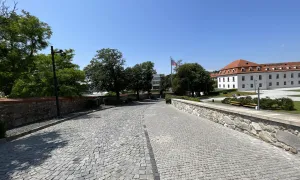
Visitor photos
No photos yet. Be the first to add a photo from your visit!
Log in and add your photo or leave a rating.
You get more points for a visit verified in the app — we can tell from the GPS that you are there.
Reviews and comments