








Primate's Palace Municipal palace and mem.plaque
Primate's Palace on Primate's Square in Bratislava is a classicistic building. It was the seat of the Archbishop of Esztergom. Today, the mayor of the capital city of Bratislava resides in it and some parts serve as exposure areas of the Bratislava City Gallery.
The building of the palace is related to the history of the town, which was the main and coronation city of Hungary in the first third of the 16th century. The place where the palace stands today was the central space of the medieval city. Archaeological findings testify to the settlement of this area in Roman times. On the site of today's construction was the bishop's house mentioned in the deed of 1370. Archbishop's property administrators were located in this house, and the church tithe was stored in a section near Laurinská Street today.
In August 1526 the Moháč field came to the battle in which the Hungarian army suffered defeat. This led to the resettlement of the royal court from Buda and the administrator of the church province from Esztergov to Pressburg. For Archbishop Paul Vardaya (1526 - 1549), the residential parts of the palace were converted into a Renaissance curio. The following archbishops contributed to its development, especially Juraj Sečéni (1685 - 1695), who had the palace built by one floor, and Imrich Esterházi (1725 - 1745), who rebuilt it in Baroque style.
Archbishop Joseph Baťán (1776 - 1799) brought the change of appearance. In the second half of the 18th century, the palace under his leadership was radically rebuilt by the architect Melchior Hefelem. The contract with Hefelem was signed on 24 February 1777 and was implemented until 1781. The palace served as the seat of the Archbishop, but after less than half a century the stewards moved again to Esztergov.
At the beginning of the 20th century the building was bought by the city of Bratislava and served as the seat of the city council. Today the palace is an administrative centre and a place for art and culture.
Architecturally, the Primate's Palace is a two-storey four-winged building with an area of the main facade. The central part is a rizalit with a balcony supported by Dorian tears and triangular tympanum.
Tehdy a dnes
Drag the slider and compare how the monument might have looked when it was built with the view today.
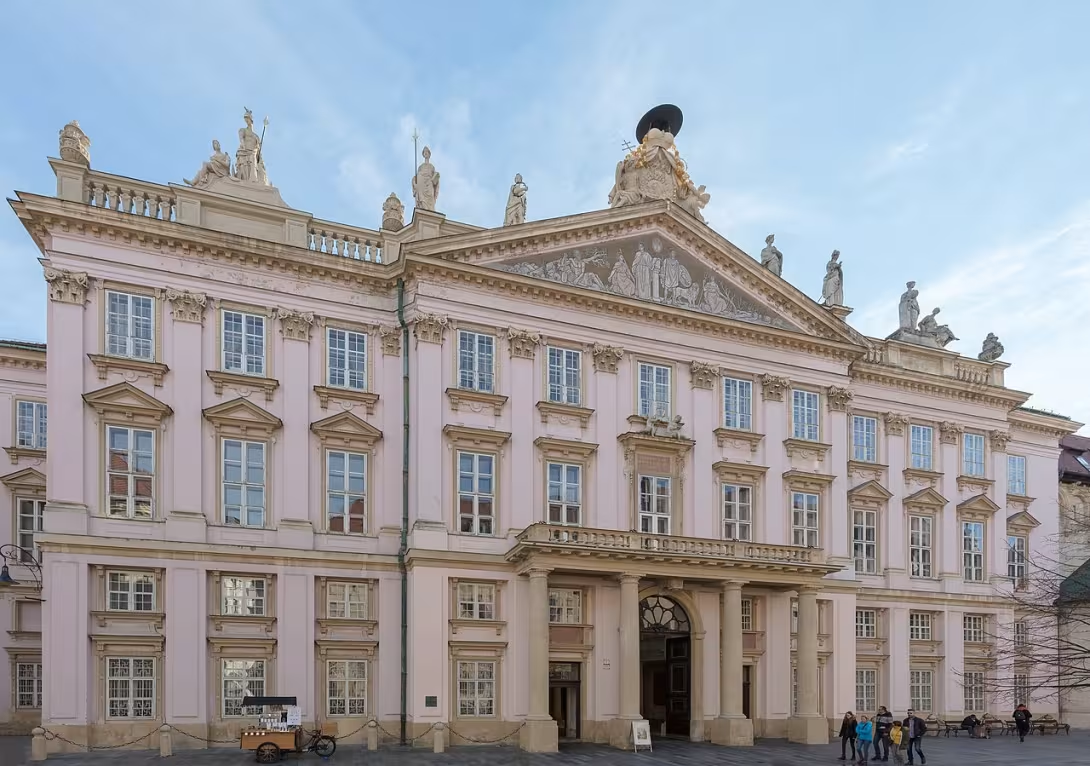
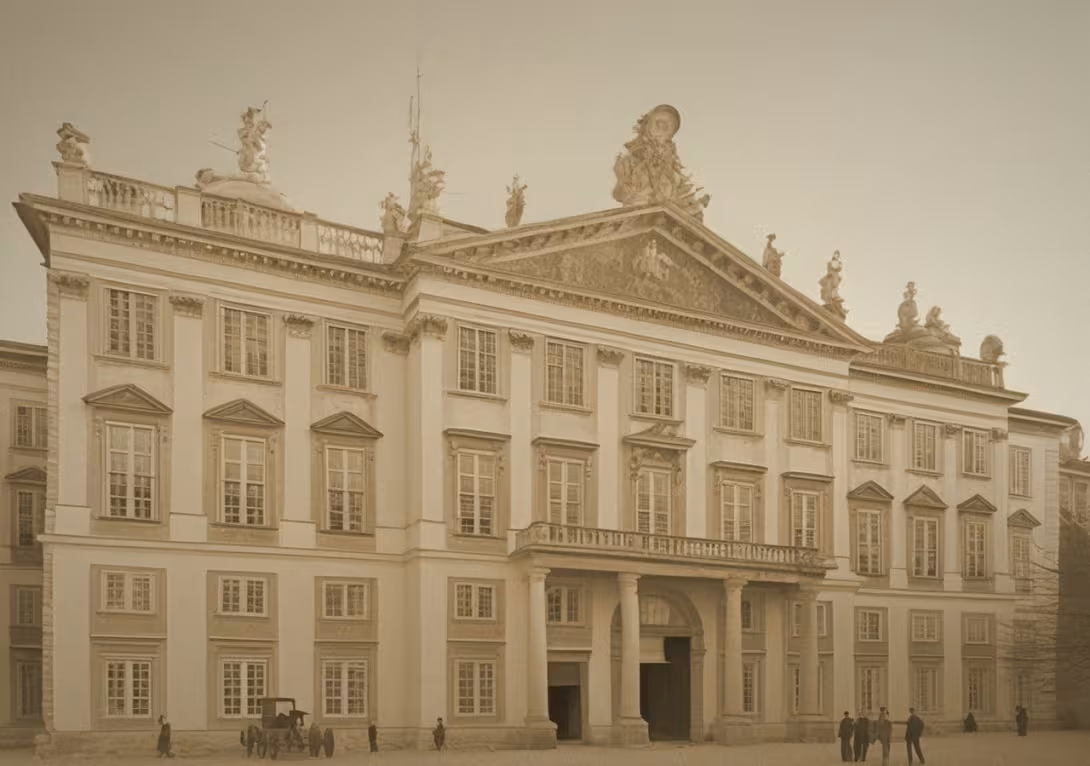
The historical view on the left is a visualisation generated by artificial intelligence and serves as inspiration.
Historical Milestones
- 1370
- First written memory of the bishop's house
- 1526
- Conversion of residential parts to Renaissance curia for Archbishop Paul Varday
- 1691
- Overbuilding of the palace by one floor archbishop Juraj Sečénim
- 1721
- Baroque adjustments, construction of new stairs and portico by Archbishop Imrich Esterhazi
- 1778
- The beginning of a radical reconstruction to the classicistic palace by Archbishop Joseph Baťán
Restoration history
| Years | Type | Extent | Condition after restoration |
|---|---|---|---|
| 2016 |
Obnova a reštaurovanie
Primaciálny palác |
Komplexná | dobrý |
Source: Monuments Board of the Slovak Republic — open data, licence CC BY 4.0
Interesting facts
- Archaeological findings testify to the settlement of the area on which the palace stands today, even in Roman times. - On the site of today's construction was the bishop's house mentioned in the deed of 1370. - The palace has been rebuilt into Renaissance and Baroque styles throughout history. - Between 1777 and 1781 the building was radically rebuilt by the architect Melchior Hefele. - The building is two-storey and four-winged with central rizalite, which has a balcony supported by Dorian tears.
Guide
Show guide text
The text was prepared by artificial intelligence and has not been editorially reviewed. It may contain inaccuracies.
Welcome to the heart of historical Bratislava. You stand by one of the most important and beautiful objects of this city - in front of the Primate's Palace. Let yourself be carried away for a moment by the feeling of grandeur that radiates this place. When you look at his monumental facade and overall architecture, you probably feel that there is a building in front of you that has always been a symbol of power, importance and constant growth. This palace is not just a fixed building made of stone and mortar, it is a living chronicler of history that bears on its face traces of centuries and various artistic directions.
However, before we embark on a more detailed view of his parable, we must go back deeper into the past to the very foundations of this place. You might be surprised that the history of this area does not begin with the building of a palace, but reaches back to ancient times. The archaeological findings that experts have discovered here show that the place you stand on today was settled even during the Roman times. This means that under your feet there is a layer of history that is much older than it might seem at first sight.
The first clear written trail leading us to today's palace dates back to 1370. The bishop's house is mentioned in a document from that time. At that time, it was not the palace we recognize today, but a more modest house for bishops. From this modest beginning, however, gradually, through gradual reconstruction, developed one of the most important aristocratic settlements in the region.
Let's move on now to the period when the character of the building began to change significantly. In 1526, at a time when the European map was changing under the influence of major political changes, an important reconstruction was carried out. Archbishop Paul Varday decided to transform the dwellings of the bishop's house into a Renaissance curio. The Renaissance brought a new sense of harmony and humanity to the architecture, which was reflected in the way space was then perceived. Although we see a different style in particular today, it was this era that laid the foundations for upbuilding grandeur.
As time progressed, the bishops ' needs increased along with their power. In 1691 the palace became even more dominant when Archbishop Juraj Secény ordered the building to be rebuilt by one floor. This change was not only aesthetic, but above all functional, because the palace had to meet the demands of ever-increasing administration and social life.
Now pay attention to what you see in front of you, especially if the form of the building seems very balanced and monumental. This appearance is the result of another key period. The Baroque era came in 1721. Archbishop Imrich Esterházy decided to make Baroque adjustments that would give the building dynamism and grandeur. It was during this period that important architectural elements were created, which define the movement and space around the building, such as new steps and portik. Barok was about emotion, about grandeur, and about the visitor immediately feeling the strength and authority of the place.
However, if you now look at the overall cleanliness of the lines and the discipline of shapes you perceive, you must know that what you see most is the result of a radical change that occurred later. Between 1778 and 1781 the palace became the subject of one of the greatest changes in its history. Archbishop Joseph Baťán initiated a reconstruction that turned the building into a classicistic palace. Classicism has brought order, symmetry and a return to the ancient ideals of beauty and reason. It was this style that gave the palace its present, elegant and balanced face, which you admire today.
When you stand there looking around, try to imagine this constant shift. Every epoha, every archbishop who lived here left his mark on the building. It is not just one building, it is a layered architecture where the Renaissance curie meets with Baroque dynamics and classicistic precision. Although we do not know the architects of these individual changes, their visual message is clear and tangible.
It is fascinating to think about how many people have met here over the centuries, how many decisions have been made here and how many history has been shaped. The Primate's Palace is not just an architectural one; it is a witness of the centuries who survived the transformation of styles and political systems.
Before you go to the next part of your tour of the city, remember one interesting thing that gives this place even more depth. When you look at the palace, you see the peak of architecture, but under your feet, in the earth itself, there are traces of ancient civilization. The archaeological findings mentioned above remind us that this place had its significance long before the first bishop's house was built here. It's like an endless circle of history where new layers of rebuilding and new styles build on older ones, up to Roman times.
We believe that this short story has helped you to better understand where you are now. The Primate's Palace is a real treasure of Bratislava and its fascinating transformation is evidence of the constant movement of time. Join in this historical atmosphere and continue to discover the beauty of Bratislava. We wish you a pleasant rest of the day and other unforgettable experiences while getting to know our historical monuments.
Tips for visitors
The best time to visit: The best is to visit the Primate's Palace in the autumn months when it is less warm and the city is free of tourists. Remember to focus on drink or food, especially if you are planning a longer visit.
Photography - the best places and light: The best photo moments can be captured from outside, where you can see the overall picture of the palace. Morning or afternoon times offer the most beautiful lighting conditions.
What to visit nearby (30 min from place): Nearby is the Old Town, where you will find a historic center with churches and streets. It is ideal to walk through the SNP Bridge or visit the SNP Square.
Frequently asked questions
Can the monument be visited?
Some buildings of this kind are open for guided tours, others serve another purpose or are privately owned. We have not verified whether and when this monument is open – please ask the operator.
What are the opening hours and admission?
We have not verified the opening hours or admission. Current information is published by the operator.
Where is the monument?
Location: Primaciálne námestie 494/2, Bratislava-Staré Mesto, Bratislavský kraj. The map on this page shows the exact spot.
Why is the monument protected?
It is listed in the Central List of the Monuments Fund of the Slovak Republic as a national cultural monument (ÚZPF no. 101-184).
For children
Close your eyes and imagine pressing a secret button on a time machine. Boom! He drove you right back in 248 years. You are in 1778 in the heart of Bratislava. There are no cars driving around you, but elegant carriages thrown away by proud horses. The air smells like smoke from fireplaces and streets, and the rhythmic sound of metal underwear on a stone surface. There's something absolutely spectacular coming up right now.
Nearby
🏰 Historic sites (828)
- sv. Ján Nepomucký 0.0 km
- Múzeum dejín mesta 0.1 km Radničná 1 +421 259 100 812;+421 259 100 811 web
- Vysielanie ČS rozhlasu v auguste 1968 0.1 km
- Národný salón vín Slovenskej republiky 0.1 km web
- Florián František Rómer 0.1 km
- Múzeum historických interiérov, Apponyiho palác 0.1 km web
- Palác Motešických 0.1 km
- Apponyiho palác 0.1 km Radničná 577/1 web
- Múzeum mesta Bratislavy 0.1 km Radničná 1 web
- Mariánsky stĺp 0.1 km
- Jesenákov palác 0.1 km Hlavné námestie 355/4
- Anton Petrák 0.1 km
- Galéria Nedbalka 0.1 km Nedbalova 459/17 web
- Schöne Náci 0.1 km
- Alois Kolísek 0.1 km
- Alexander Neumann 0.1 km
- Margit Neumann 0.1 km
- Kláštor Františkánov 0.1 km web
- F7 0.1 km
- Rybárska brána 0.2 km
🍽️ Restaurants and dining (2422)
- SRRRK 0.0 km Primaciálne námestie 1
- Manderla coffee 0.0 km
- Archa 0.0 km Uršulínska 440/6
- Café Malewill 0.1 km Uršulínska 436/9 +421 25 443 4440 web
- Čajovňa Pohoda 0.1 km +421 915 458242 web
- ORBIS Street Food 0.1 km web
- Divná múza 0.1 km
- Piana Vyshnia 0.1 km
- Pasteleria 0.1 km
- Mondieu 0.1 km +421 908 746 881 web
- Mondieu 0.1 km Laurinská 7 +421 917 356 192 web
- The Taste 0.1 km web
- Spin coctail bar 0.1 km
- Čiary 0.1 km Laurinská 138/11
- NARCOS 0.1 km web
- SUSHI MUSHI 0.1 km +421 902 666 333 web
- Hasushi 0.1 km Laurinská 4 +421948230918
- KeP’s 0.1 km
- The Miners 0.1 km
- Coco Bar 0.1 km Klobučnícka 4 +421911800064
🏨 Accommodation (219)
- Hostel Manderla Bratislava 0.0 km
- Grémium 0.1 km Gorkého 201/11 web
- Art Hotel William 0.1 km Laurinská 141/17 web
- ARCADIA Hotel 0.2 km Františkánska 424/3 web
- Aplent City Hotel Perugia 0.2 km web
- Skaritz Hotel & Residence 0.2 km +421 2 5920 9770 web
- We Stay Apartments 0.2 km Michalská 2 web
- Apart-Hostel ZERO 0.2 km
- Wild Elephants Hostel 0.3 km web
- Folks 0.3 km
- PALACE apartments 0.3 km +421 917 707 606 web
- VIP Apartments 0.3 km Michalská 19 +421 915 554 555 web
- Urban Elephants 0.3 km Kolárska 8 web
- Radisson Blu Carlton 0.3 km Hviezdoslavovo námestie 3 web
- BEIGLI 0.3 km +421 910 749 242 web
- Avance Hotel 0.3 km Medená 7426/9 web
- Roset Hotel & Residence 0.3 km +421 917 373 209 web
- Portus pension 0.4 km Paulínyho 158/10 web
- Marrol's 0.4 km +421257784600 web
- Bluebell 0.4 km +421 948 163 350
🚲 Rentals and sport (481)
- ROLAND 0.1 km web
- WhiteBikes - MANDERLAK 0.2 km web
- Námestie SNP 0.2 km
- WhiteBikes - REDUTA 0.2 km web
- Kamenné námestie 0.3 km
- WhiteBikes - HURBANOVO 0.3 km web
- WhiteBikes - POSTOVA 0.3 km web
- Hurbanovo námestie 0.3 km
- WhiteBikes - KAMENNE 0.3 km web
- Hunter Club 0.3 km Kamenné námestie 2392/1A +421911650032 web
- Kapucínska - Župné námestie 0.4 km
- Trekland 0.4 km +421 2 529 20 189 web
- WhiteBikes - PRISTAV 0.5 km web
- Šafárikovo námestie 0.5 km
- WhiteBikes - BERNARD 0.5 km web
- Švihaj Šop & Servis 0.5 km +421 905 612 687 web
- WhiteBikes - DREAM 0.5 km web
- Yoga House 0.6 km web
- Hodžovo námestie 0.6 km
- Bratislava Shooting Club 0.6 km web
🥾 Hiking and nature (462)
- Laurinská brána 0.1 km
- Františkánska záhrada 0.1 km
- Erb Bratislavy 0.2 km
- Park Márie Ďuríčkovej 0.3 km
- Zvonkohra 0.3 km
- Rudnayovo námestie 0.4 km
- Park Gábora Barossa 0.5 km
- Kačacia fontána 0.5 km
- Park Svoradova 0.7 km
- Park na Dunajskej ulici - Vešeléniho (Wesselenyiho) záhrada 0.7 km
- Park na Kollárovom námestí 0.7 km
- Park na Jakubovom námestí 0.8 km
- Grasalkovičova záhrada 0.8 km
- Park Škarniclova 0.8 km
- Tyršovo nábrežie 0.8 km
- UFO 0.9 km web
- Kempelenov vodovod 0.9 km
- Park na Námestí slobody 1.0 km
- Medická záhrada 1.0 km +421 2 59246111
- Sad Janka Kráľa 1.0 km
Thematic route
1. Courtyard of the Primate's Palace - Type: Outdoor space. It serves as a gateway to the historical complex and provides insight into Baroque architecture.
2. Interiors and exhibitions - Type: Exhibitions. They are open to the public and present works of art and historical mobility.
3. Palace garden - Type: Park. It is located in the city center and serves to relax.
Seasonal recommendations
Spring: The Primate's Palace in Bratislava is surrounded by flowering greenery in spring. Sunlight illuminates the architectural elements of the building. As the weather may be variable, layered clothing is recommended. A good time to visit is morning or evening when there are fewer visitors.
Summer: In summer, the park near the palace is full of vegetation. Due to the intense sun, it is recommended to use eye cream and hat. A good time to visit is morning or evening when temperatures are lower and fewer people. You can rest in the shade of the trees.
Fall: In the autumn, the surroundings of Primate's Palace turn into gold and red colors. Sunlight is less intense, so it is advisable to wear more layers of clothing. Visit is suitable at the beginning of the day or evening when there are less people around.
Winter: In winter, the landscape around the Primate's Palace is often covered with snow. Days are shorter and light weaker, so it is important to wear warm clothes, scarf, jacket and gloves. A good time to visit is morning or evening when there are fewer visitors.
Visualisations and artistic views


The visualisations are generated by artificial intelligence and serve as inspiration.
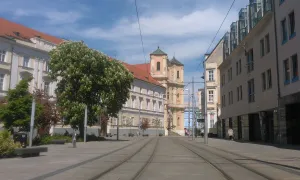
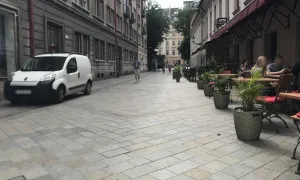
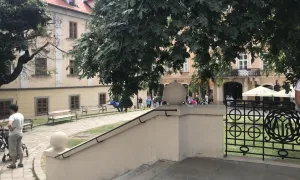
Photographs from the area
Real photos taken near the monument


Source and licence are given for each image.
Visitor Tips
No tips yet. Be the first!
Log in and add your tip.
Zdroje a literatura
The factual basis for this text was the article na Wikipedii, whose authors are Wikipedia contributors. The article is available under the licence CC BY-SA 4.0.
Location on Map
More monuments – Bratislava-Staré Mesto
Show all in the town

Visitor photos
No photos yet. Be the first to add a photo from your visit!
Log in and add your photo or leave a rating.
You get more points for a visit verified in the app — we can tell from the GPS that you are there.
Reviews and comments