








ľudový dom Vernacular house
The House of Folk in Spišské Podhradie in Prešov region is registered by the Monument Office of the Slovak Republic as a national cultural monument under the identification number of ÚZPF 737. According to the register, it is an 18th century building, namely 1800, carried out in Baroque style. The building is located at Prešovská 335/58 in the cadastral area of the village.
Areal protected monument consists of one building registered as 737/1. It is a folk house of the type crossing and rowing, dated to the 18th century and essay included in the baroque. The official annotation of the Monument Office of the Slovak Republic mentions exactly this structure of the complex without other present objects.
The location of the monument is fixed by the address Prešovská 335/58 and GPS coordinates 49.00358, 20.75713. Monument protection applies to the entire area under the number of the SEZPF 737. The source of the data is the public register of the Central List of Monuments Funds managed by the Slovak Monument Office. The registry shall not provide information on the date of the conservation declaration, on the existence of a conservation zone or protection zone, or on the state of play and how the object is used. More detailed construction characteristics, such as disposition, flooring, floor plan or materials used, are missing in the registration.
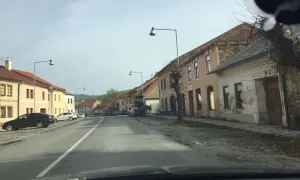
The monument is situated in the street Prešovská in the historical part of Spišské Podhradie. It represents a documented example of Baroque folk architecture in this location. Visit of the site allows visual verification of the exterior of the area in accordance with registered condition.
Tehdy a dnes
Drag the slider and compare how the monument might have looked when it was built with the view today.
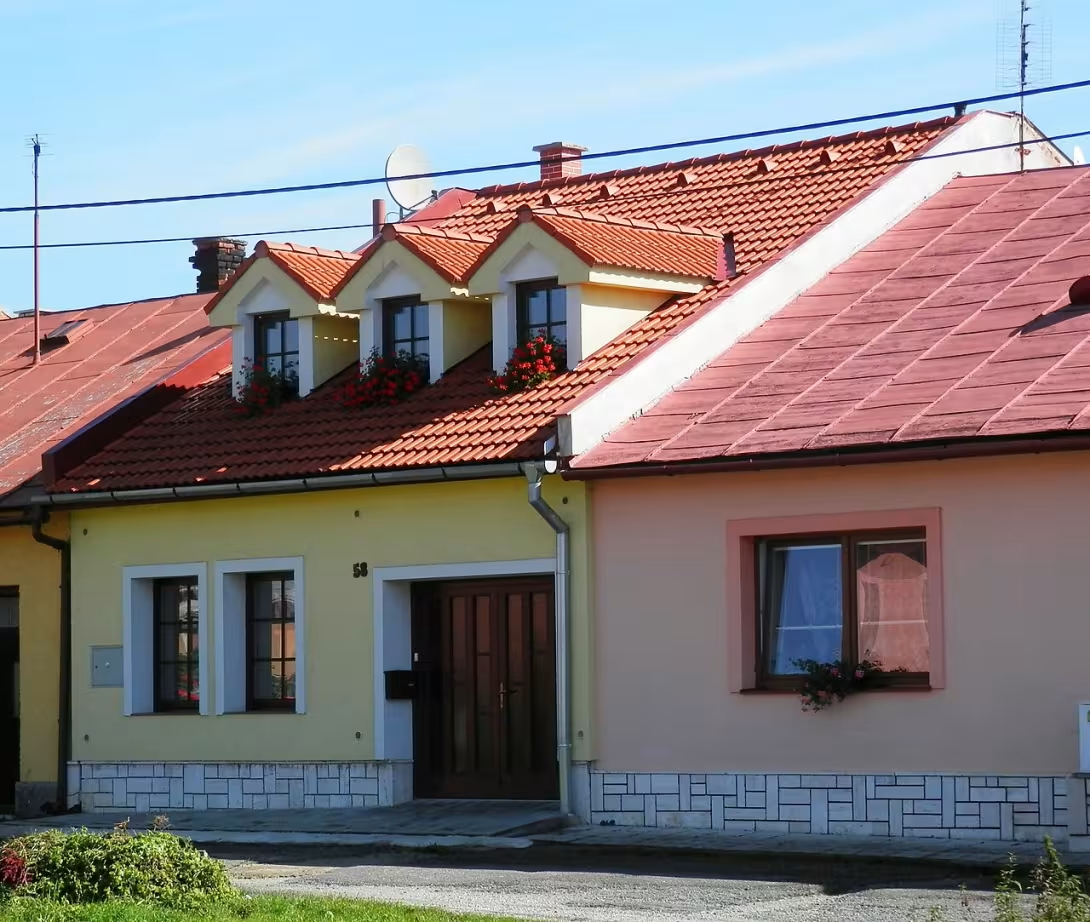
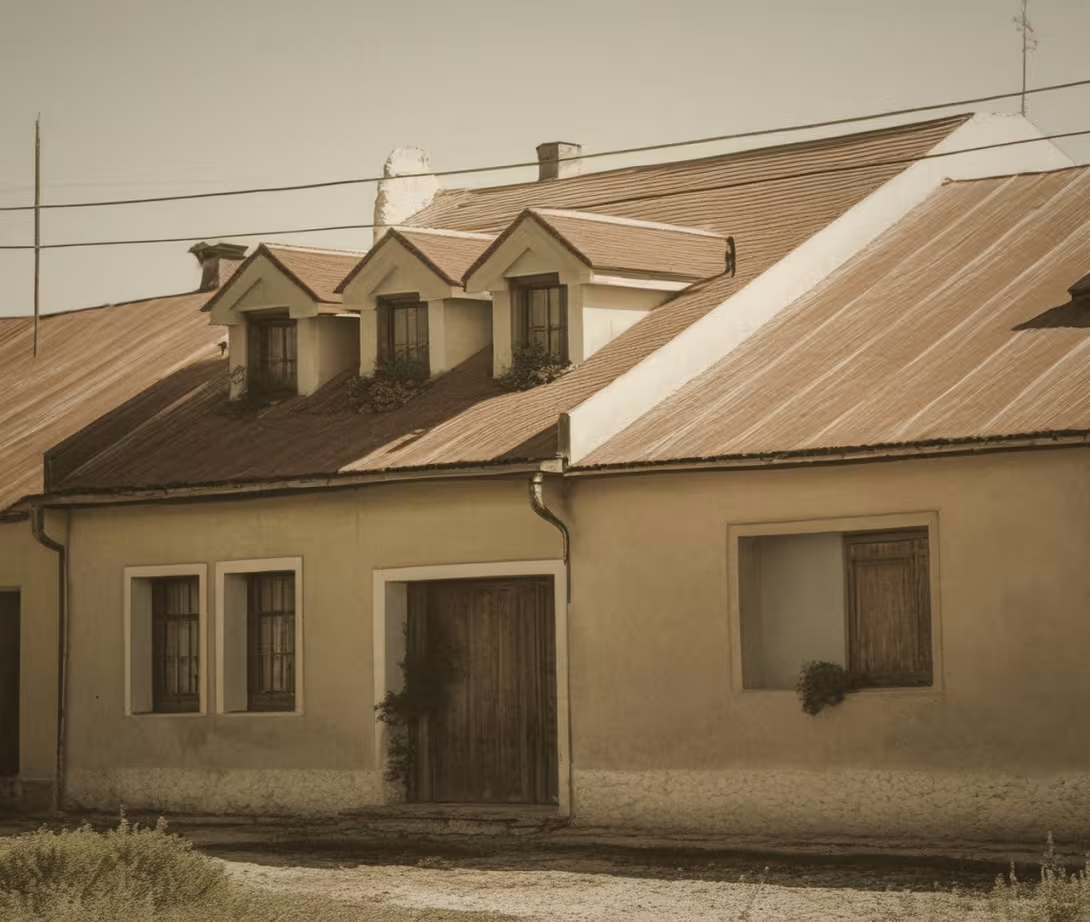
The historical view on the left is a visualisation generated by artificial intelligence and serves as inspiration.
Historical Milestones
- 1800
- Construction of a folk house in Baroque style
- 18. 0
- Creation of a folk house
Restoration history
| Years | Type | Extent | Condition after restoration |
|---|---|---|---|
| 2006–2009 |
Obnova
ľudový dom |
Komplexná | dobrý |
Source: Monuments Board of the Slovak Republic — open data, licence CC BY 4.0
Guide
Show guide text
The text was prepared by artificial intelligence and has not been editorially reviewed. It may contain inaccuracies.
Welcome to Spišské Podhradie. You are now standing in front of a building that bears a simple but profoundly meaningful name - the People's House. In front of you, the rods building, which at first glance cannot thrill the noble facade nor the wealth of ornaments, as known from church or noble residences in the surroundings. It is a building that is sincere, functional, rooted in a street maker, which requires an observer to have a measure of patience and a desire to look deeper, behind the surface of stone and plaster. Note its massif, the way it participates in the row of houses on this historic square. It is an architecture that does not speak the language of representation, but the language of association, work and determination.
You'll see that you're not in an isolated museum. You are pulsed by the life of a town that stood in the valley of Spiš Castle centuries. It was this proximity to the castle, the dominant rock taken from every street, that shaped the fate of this building. Spišské Podhradie was in the past a free royal town, a place of craftsmen, buyers and farmers, a place where German, Slovak and Hungarian worlds met. And it was in this diverse, sometimes tense environment that there was a need for space that belonged to people - ordinary people, not nobility or clergy.
Let's go back in time, although the exact dates and names of architects who designed and built this building remain unknown to us. The archives are silent, the written testimony is missing, so we must read from the context of the epoch. The phenomenon of folk houses is inseparably embedded with the period of Slovak national revival and later with the interwar expansion of Slovak association activities. In Hungary, the second half of the nineteenth century, in the time of the most violent Hungarianization, building its own houses became an act of political opposition. It wasn't just a stone and mortar, it was a symbol. Each such house was a statement: here we speak our language, here we sing our songs, here we read our newspapers
In Spišské Podhradi, where the German village was strong - Zipser Sachsen - and where the Hungarian government pressed for assimilation, the construction of the folk house was a throat. It was a collective success. The money was collected by gross, from contributions by craftsmen, loggers, teachers, parishioners. It was often built in replacement work when the hands were not occupied in the workshop or in the field. Therefore, when you touch the thick plaster of the facade today, remember: it is not just plaster. It is reinforced will of generations who wanted to have their ceiling above their heads, where they do not need to beg permission to speak Slovak.
Let's move closer to the entrance. Take the portal. Even if we do not know its original shape - whether it was made of wood, stone, or carvings - we know what lay behind it. The interior of the folk house has always been arranged according to the same, proven scheme. There was a big hall downtown. That was the heart of the whole building. Here were held general meetings, here were played amateur games, where city sons and daughters dressed into roles from Tajovsky, Hviezdoslav or local texts. This is where the chorus sounded, where there was a dance at the ball that was the only legitimate entertainment for young people. Here, however, there was also a vote on the future of the village, and there were strejkas organized, consumption and loans.
Look up to the windows of the first floor. Usually there was a library and a reading room. Imagine the tishina in which the pages of the newspaper were broken, the Slovak glances, the National Revival, or later, the "Gardistu" and the "Slovák." Here they learned to read those to whom the school did not give enough, and this is where knowledge and national knowledge were formed. Matica was also established here, or its local associations, Sokol, Eagle, Cirkvianska youth. These organizations were blood vessels of Slovak identity. The people's house was their heart, their cuartier, their home.
Now if you turn around and look down the square, you'll see a church, town hall, bourgeois houses with arcades. The folk house belongs to this congregation as an equal partner. It's not a palace, but it's a palace of the people. In the era of the first Czechoslovak Republic, when the building of folk houses became a mass phenomenon - hundreds of them rose all over Slovakia - this building gained new quality. It has become the centre of cultural and social modernity. Here came speakers from Bratislava, theatre sections from Prague, musicians. For the town in the valley of the castle, it was a window to the world, a confirmation that it was not just a periphery but an active creator of culture.
And here we come to the mystery that this building is closing in. Since we don't know the names of architects, we don't even know the names of those who put the foundation stone. We don't know who was the first president of the company that built the house. We don't know which actress played the first premium on this scene, which book was the first in the library. These names lost their time, lost their memorable memories, lost their brothers who were not recorded in the official chronicle, but were transmitted orally, from father to son, from mother to daughter. It is this anonymity that is the greatest fate of this place. We don't praise genius here, we praise the team. We don't honor an individual here, we honor social strength.
Let's see the atmosphere of the place. Even if the door is closed now, even if it does not stand in the hall, the walls remember. The stone has a memory. The air in the corridors still keeps the echo of speech, the laughter of children from the kindergarten that may have worked here, the anthems sung to celebrate the first May or the sacred celebrations. Feel the cold under your feet? It is the cold of the historical underground, where wood was stored for the winter, where the guerrillas hid in the year of the joy of nine, where secret prints were hidden during totalitarian regimes. The people's house survived the first and second world war, survived the fascist state, survived the Communist dictatorship, where it was often renamed the House of Culture and the House of Enlightenment, but the function remained the same: to be a place for people.
Today, when you look at it, you may see signs of time. Used facade, possibly upgraded windows, which replaced the original wooden frames. Don't turn away from that. Those are the lifebloods. The building that lives is changing. The building itself is dead. The fact that the Folk House in Spišské Podhradie still stands that it serves - whether for municipal offices, library, civic associations or commercial purposes - is proof of its vitality. It is proof that the idea for which it was built has not disappeared. The need to associate, talk, celebrate, and worry together is eternal.
Imagine now what this square looked like on the opening day. Stopped chariots, men in holy clothing - women in tip-tops and men in hats. Fanfare, chairman's speech, parishioner's blessing. And then the first dance in the hall. The parket that still smelled of wood, the chandeliers that hit with candlesticks. It was a moment of discipline. The moment when the gate of the --we and they--became together.
Now, when you reach the Spiš Castle, which is taken into account over the city as a guardian of history, realize the parallel. The castle was a symbol of power, feudal government, foreign to most inhabitants of this town centuries. The folk house is a symbol of freedom, of its own power, of self-regulation. Two dominants, two worlds, one horozond. And you stand with the other man, the human.
Don't leave too fast. Stand by the wall for a while. Put your hand on the cold plaster. Count how many generations have passed through the threshold. How many children's feet were taking the first steps into the world of culture. How many old hands were closing the grip after the last time. This isn't just stone and mortar. It's increased time. It's a materialized hope.
Thank you for stopping by. Thank you for taking the time to hear a story that has no names but has a heart. Now that you put your headphones in your backpack and go on - perhaps to the castle, perhaps to church, perhaps just for coffee at some cafe - carry a piece of this place with you. Remember, any unobservable building in every village and village can be such a heart. Just look deeper.
Have a good time and let the road in Spišské Podhradie lead you to new discoveries. Goodbye.
Tips for visitors
The best time to visit the folk house in Spišské Podhradie is spring or autumn. The weather is pleasant for walks and is less tourists. Take easy shoes for a walk on tiles and warmer clothes, inside it is cooler. Photography pays in the morning, side light pours out details of wood construction and equipment. Inside is allowed without lightning, check the rules on the spot. In the area within 30 minutes you will find Spiš Castle and other historical objects. Families with children can prepare a guide or look for interactive elements of exposure that bring life closer to the past in a fun way.
Frequently asked questions
Can the monument be visited?
This is a residential or farm building, not a museum with opening hours. Please view it from public space and respect the owners' privacy. We have no information about access to the interior. According to the heritage register restoration is under way, so access may be restricted.
Where is the monument?
Location: Prešovská 335/58, Spišské Podhradie, Prešovský kraj. The map on this page shows the exact spot.
Why is the monument protected?
It is listed in the Central List of the Monuments Fund of the Slovak Republic as a national cultural monument (ÚZPF no. 414-737). It is part of a UNESCO World Heritage Site.
For children
The user wants me to act as a language editor for a text about a Slovak cultural monument (a folk house). Constraints: 1. Fix grammar, spelling. 2. Shorten long sentences. 3. Repeat repetitions with synonyms. 4. Repeat Bohemisms (Czechisms) with standard Slovak. 5. MUST remove unsubstantiated value judgments: "unique", "unique", "most important," "most famous," "oldest", "perla", "skirt", "klenot," "dominant". Rewrite effectively or delete. 6. MUST removes the empty fluff ("the offer of a valuable view" "is witness to the times," "presents the architectural value of the region").
Nearby
🏰 Historic sites (72)
- Mariánsky stĺp 0.5 km
- Spišský hrad 0.9 km web
- Panna Mária s Ježiškom 1.0 km
- sv. Ján Nepomucký 1.2 km
- LáSKa 1.3 km
- Archeologické nálezisko na Pažici 1.4 km
- 100 rokov ochrany Dreveníka 1.9 km
- Kaštieľ Bijacovce 3.3 km web
- Kaštieľ Spišské Vlachy 6.2 km Partizánska 117/2
- Pomník obetiam SNP 6.6 km
- Generál M.R.Štefánik 6.6 km
- František Tondra 6.6 km
- Mariánsky stĺp 6.7 km
- Kaštieľ Spišský Hrušov 7.1 km
- Kostol sv. Stanislava 8.2 km web
- Kaštieľ Spišský Hrhov 8.4 km Osloboditeľov 36/36
- Izba tradícií 8.5 km
- Galeria 8.7 km
- Partizánske boje 8.8 km
- Vdp. Jozef Krišanda 8.9 km
🍽️ Restaurants and dining (102)
- Pod hradom 0.4 km
- U kastelána 0.4 km
- Reštaurácia Dreveník 0.5 km +421 949 339 789
- Imperio 0.5 km
- Kolkáreň 0.5 km
- U Spišských bratríkov 0.7 km
- Spiš Castle 0.9 km
- St. Martin Restaurant 1.1 km web
- Spišský salaš 1.9 km web
- St. Margita Cafe 2.5 km
- Giulia 3.4 km Hlavná 33/26 web
- Na Rázcesti 3.5 km Hlavná 30/23
- Eso Club 3.6 km
- U Medveďa 6.0 km
- Snack Bar 6.7 km
- Nova 6.7 km
- Bagetka 6.7 km
- Zlatý klas 6.7 km
- Sport club 7.0 km
- Domino Bar 7.7 km
🏨 Accommodation (50)
- Penzion Chalupka 0.2 km web
- A+S Penzion Podzamok 0.2 km
- Pacák 0.6 km
- Penzión St. Martin 1.1 km web
- Penzion Dreveník 2.0 km
- Sivá Brada 2.7 km Levočská cesta 665/13
- Penzión Živa 3.4 km +421 917 796 088
- Privát Milano 3.5 km
- Sedemnástka 4.0 km
- Vargas 4.7 km
- Skautské táborisko Žehrica 5.8 km
- Motorest Branisko 8.7 km
- Simona pod Smrekovicou 9.0 km
- Javorinka 10.1 km
- Farma Odorica 10.3 km web
- U Alžbetky 10.4 km
- Chata Levočské vrchy 10.6 km web
- Chata Bobor 10.8 km +421905475054
- chata Hrby 11.7 km
- Dievka 11.7 km
🚲 Rentals and sport (6)
- Soof 6.7 km
- Telocvična 7.3 km
- Turlíky Spišské Vlachy 8.7 km +421 902 416 379 web
- eMo BICYKLE 12.4 km +421905913338
- Obecné športové a oddychové centrum 13.5 km
- Obecný športový areál 14.9 km
🥾 Hiking and nature (246)
- Spišský hradný vrch 0.9 km
- Biskupská záhrada 1.2 km
- Pažica 1.8 km
- Krížová hora 2.0 km
- Sobotisko 2.2 km
- Malá ľadová jaskyňa 2.2 km
- Kamenný raj 2.2 km
- Jaskyňa nad chodníkom 2.3 km
- Veľká jaskyňa 2.3 km
- Hlboká jaskyňa 2.4 km
- Jaskyňa pod vrcholovým bodom 2.4 km
- Jaskyňa v Pekle 2.4 km
- Dreveník 2.4 km
- Peklo 2.4 km
- Svätého Kríža 2.5 km
- Jaskyňa v rokline 2.5 km
- Jaskyňa v rokline 2.5 km
- Syslia jaskyňa 2.5 km
- Sutinová jaskyňa 2.5 km
- Sivá Brada 2.5 km
Thematic route
Folk House - a cultural monument Centre point of the route with history and architecture of the social building from the end of the 19th century. Interiors document the lives of citizens and the activities of nuts in Spišské Podhradie.
Entrance hall and staircase - interior element The original wooden staircase with carvings and entrance hall with carving ceilings maintain an authentic look from the construction period and craft quality of the building intended for public events.
Large hall with podium - exposure area The main hall served for meetings, balls and theater games; today there are temporary exhibitions about the town history and cultural life. Acoustics and dimensions show the size of community meetings in the past.
Small Hall (library, reading room) - functional space Less space on the ground floor was intended for reading newspapers, committee meetings and smaller social events. The interior with the original placed shelves and benches document the everydayness of the civic association.
Courtyard and facade - exterior and architecture Outside you can see a neoclassical facade with pilasters, window sills and arch windows. The courtyard behind the building shows its insertion into the city park and representative function.
Seasonal recommendations
Seasonal recommendations for a visit to the folk house
Memory: folk house, Spišské Podhradie, Prešovský kraj
JARO Specific: Flowering trees and green vegetation. Practical advice: Warmer clothing is recommended. Expect more traffic. Best time: around 10:00.
AETO Specifics: Warm weather, fully green nature. Practical advice: Cooler clothes are appropriate. Expect more traffic. Best time: around 2:00 p.m.
UNDERSTANDING Specifics: Colder weather, colourful leaves. Practical advice: Warmer clothing is recommended. Expect more traffic. Best time: around 12:00.
ZIMA Specifics: Cold weather, possible snow, no leaves. Practical advice: Necessary warm clothes. Best time: around 10:00.
Visualisations and artistic views


The visualisations are generated by artificial intelligence and serve as inspiration.
Photographs from the area
Real photos taken near the monument


Source and licence are given for each image.
Visitor Tips
No tips yet. Be the first!
Log in and add your tip.
Location on Map
More monuments – Spišské Podhradie
Show all in the town


Visitor photos
No photos yet. Be the first to add a photo from your visit!
Log in and add your photo or leave a rating.
You get more points for a visit verified in the app — we can tell from the GPS that you are there.
Reviews and comments