








meštiansky dom Burgher house
Townhouse in Levoča
Townhouses in Levočia are typical examples of medieval residential buildings in Slovakia. During the Middle Ages, wooden houses were built, especially at solvent owners.
The tower house was a typical example of a medieval burgher house. It was a block multi-storey building situated on a plot with a high stone wall.
Chamber house was layouts similar to a peasant house. It had a simple longitudinal ground plan and could be located anywhere on the plot.
The house with a pass was a typical example of a burgher's house with a pass. It was a continuous space in the width of the whole plot, which was mainly useful as an operating space in the implementation of craft.
In the 17th and 18th centuries there was an increased interest of nobility in staying in the city. The nobles bought houses next to each other and rebuilt them into representative houses.
In the 19th century, the city population grew. Residential rental houses ensured a much higher population density.
Pavlačové houses were characterized by a closed layout of a four-winged block with a central courtyard. It was three- to four-storey facades with orbiting spiders, making individual apartments available.
Houses of poverty, iron houses were on the outskirts of the city, often forming part of the walls. They represented the existential minimum.
The function of housing remained in originally residential burgher houses until today, only the requirements of the standard of housing changed.
City House, Andreja Kmeťa Street 5, Banská Bystrica Štiavnica is a typical example of the townhouse. The area records the Monument Office of the Slovak Republic under the number ÚZPF 3049 and consists of 1 object: 3049/1 - House burgher (passing, rowing, baroque late, 17.).
This article is about townhouses.
Tehdy a dnes
Drag the slider and compare how the monument might have looked when it was built with the view today.
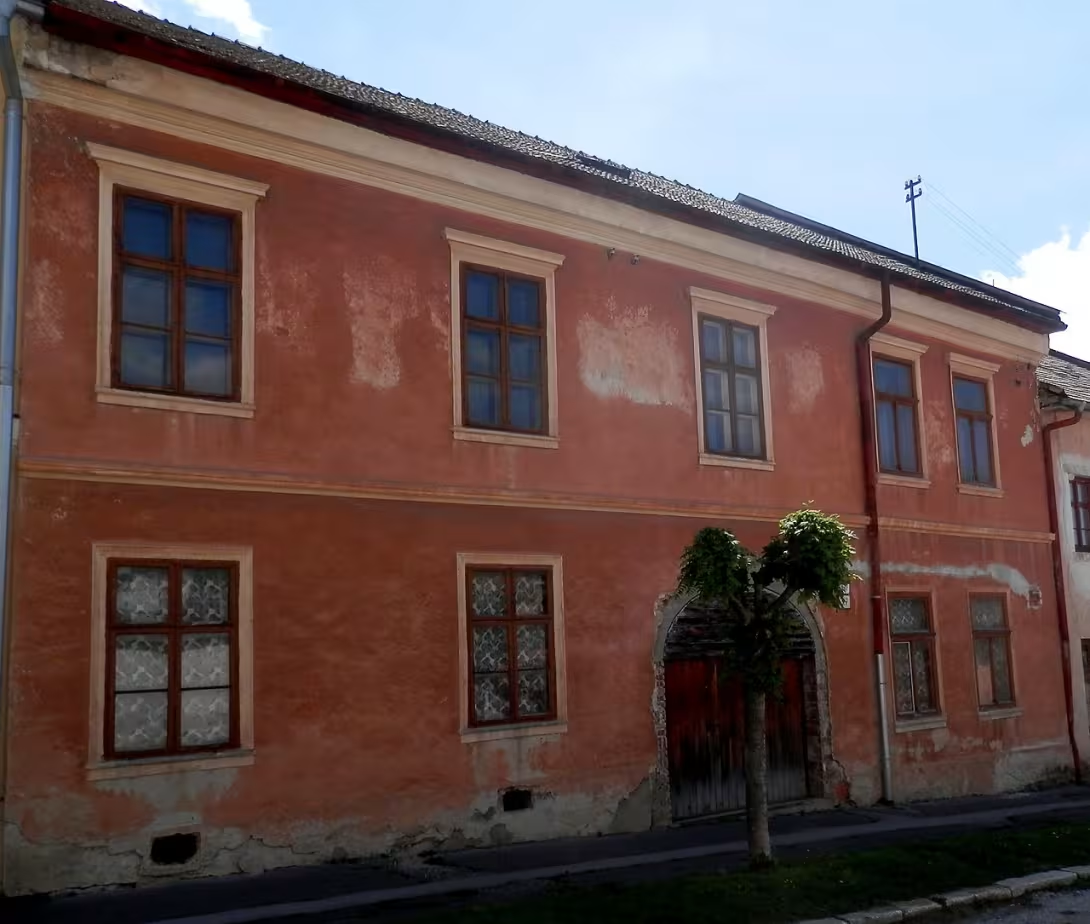
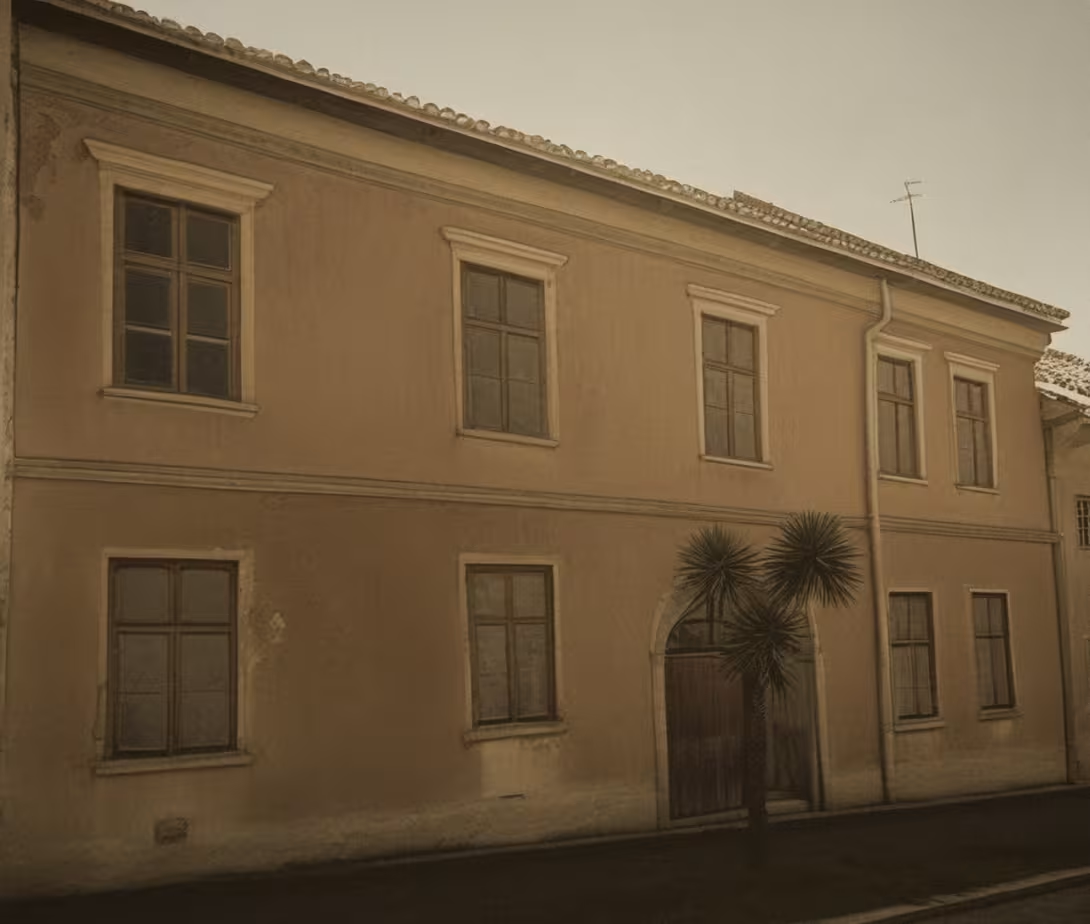
The historical view on the left is a visualisation generated by artificial intelligence and serves as inspiration.
Historical Milestones
- 17th and 18th centuries
- The nobles bought houses next to each other and rebuilt them into representative houses.
- 19th century
- The population in cities grew, with much higher population density.
Restoration history
| Years | Type | Extent | Condition after restoration |
|---|---|---|---|
| 2020 |
Obnova
meštiansky dom |
Čiastočná | vyhovujúci |
Source: Monuments Board of the Slovak Republic — open data, licence CC BY 4.0
Heritage surveys
-
2017/03 — Architektonicky-historícký výskum
Komplexný pamiatkový výskum
Interesting facts
No interesting facts about the Slovak histórical panama VYHRADNĚ are available in the text. The text is about burgher houses and their characteristics, but does not contain any lands related to history.
Guide
Show guide text
The text was prepared by artificial intelligence and has not been editorially reviewed. It may contain inaccuracies.
Welcome to Levoča, one of the most picturesque and historically important cities in Slovakia. You're standing right at the moment when time stops, and you have a chance to bypass something much more than just an ordinary building. Before you take the rods of the townhouse, which is not only a set of walls and roofs, but a living witness to the century transformation of the entire city. When you look at it, you may be immediately addressed only by its presence, the uncertain balance between the robustness of old buildings and the elegance brought into them later. See the atmosphere that radiates from his facade, and try to imagine the lives that have flowed, the steps that have taken over these paths over the centuries.
To understand why this house looks what it looks like, we need to go back to the past. When you look at the overall structure of the city, you will see that Levoča was not always this dense and uniform. In the seventeenth and eighteenth centuries there was a process that fundamentally changed the face of the city. At that time the nobility began to be actively interested in urban property. It wasn't just about housing, it was about prestige. The noble families gradually began to buy houses that were standing next to each other and then joined them into larger units. In this way, representative sites were established to reflect the power and position of their owners. This process of transforming smaller, divided units into spectacular residences has created a unique urban character that you can still perceive in many parts of the city. This house you are facing is part of this fascinating history of urban space transformation.
Later, when we moved to the nineteenth century, the city's dynamics changed again. There was a significant increase in the population during this period. Urban streets began to be filled with people, merchants, and craftsmen, resulting in a much higher population density. Homes that were then created or modified no longer had to serve as luxurious settlements of nobility but became important centers of urban life, where work, business, and family life met. It is this density and the need to use every available space within urban quarrels that shaped the appearance of buildings that you now see as such a narrow and harmonious line of houses.
Now I ask you to pay attention to the architecture itself and the details you have right in front of your eyes. Although we do not know the exact name of the architect who designed these lines, his manuscript is readable in every detail of the facade. Look at the rhythm of the windows, how the building turns on across the street, and how it communicates with the path under your feet. Note how architecture adapted to the needs of time - from the original structures that bore traces of aristocratic representation to the adjustments brought by a dynamic nineteenth century life. Feel the texture of the materials and the way the light hits the surface of the building. Even though the details may be merely common to many, they are every sign to the expert of how this place lived, how it was built, and how it adapted to the changing needs of society.
You might wonder who lived everything in these walls. Although historical records of specific personalities associated with this house are not preserved, its existence tells us of thousands of anonymous people. About owners who invested their assets in rebuilding in the seventeenth century to build their name in Levoča. About families who raised their children in the 19th century in these cramped but living quarters and built their livelihoods. Every house is actually a memorial to people whose names may not be found in the textbooks of history, but whose contribution to the city's development was irreplaceable. We're just a short moment here compared to the time these walls survived.
However, there is also a mystery that persists in these buildings. It's a mystery unknown. Although we see the resulting shape of the building, the depth of its history remains partly hidden behind its facade. Who was the real visionary who led the construction workers? Who was the one who decided at the time of the major changes that this house would become part of the representative change of the city? This uncertainty, this lack of precise manities of architects or owners, gives places like Levoča a special charm. It's not just about facts and data, it's about the feeling that you touch something big that goes beyond our knowledge. It is this uncertainty that forces us to be searchers and araştırmites, not just passive viewers.
Now that you have adopted the context of this place, I suggest you continue to discover it again. Levoča is full of these quiet stories waiting to be captured. Do not forget to stop at other burgher houses, see their differences and look for patterns that connect the entire historical area. Every street, every gogoc and every detail of the facade can lead you to a new knowledge. Thank you for sharing this moment of discovery with us. We firmly believe that your passage through history will be full of surprises. We wish you a pleasant walk with beautiful Levoča.
Tips for visitors
Townhouse
The best time to visit is all year round, except in exceptional cases.
When you visit, do not mention:
* Keys to the House * What you want to see and try
Photography is possible in the best places as well as in the light. In the area (30 min from the place) you can visit:
* [insert nearby attractions or landmarks]
Tips for families with children: [insert tips for families with children].
Frequently asked questions
Can the monument be visited?
This is a residential or farm building, not a museum with opening hours. Please view it from public space and respect the owners' privacy. We have no information about access to the interior.
Where is the monument?
Location: Špitálska ulica 337/27, Levoča, Prešovský kraj. The map on this page shows the exact spot.
Why is the monument protected?
It is listed in the Central List of the Monuments Fund of the Slovak Republic as a national cultural monument (ÚZPF no. 414-3049). It is part of a UNESCO World Heritage Site.
For children
We were at a time when Levoča was a living city with a dense history. The townhouse that they visit today also has its amazing history.
Centuries ago, this house was a house for rich merchants and owners. They were people who lived on horse, cattle, and other cattle business. The place was full of life whispers and rushes.
We were at a time when the city house was a place where people met and discussed business, people learned and practiced their crafts.
Nearby
🏰 Historic sites (79)
- Slovenské národné múzeum - Spišské múzeum v Levoči 0.1 km Mäsiarska 298/18
- Dom Majstra Pavla z Levoče 0.2 km +421 53 451 3496 web
- Klietka hanby 0.2 km
- Historická radnica 0.2 km +421 532457000 web
- 700. výročie Levoče 0.2 km
- Galéria mesta Levoča 0.2 km web
- Výtvarná kultúra na Spiši 0.3 km +421 53 451 27 86 web
- Thurzov dom 0.3 km
- sv. František z Assisi 0.3 km
- Ľudovít Štúr 0.3 km
- Starý minoritský kláštor 0.4 km +421 53 451 27 86 web
- Mariánsky stĺp 0.5 km
- Július Bálint 0.5 km
- sv. Ján Nepomucký 2.1 km
- sv. Ján Pavol II. 2.1 km
- Panna Mária 2.3 km
- Panna Mária 2.4 km
- Galeria 4.5 km
- Izba tradícií 4.5 km
- Kaštieľ Spišský Hrhov 4.6 km Osloboditeľov 36/36
🍽️ Restaurants and dining (219)
- Reštaurácia Arkáda 0.1 km
- Reštaurácia u Leva 0.1 km
- Cukráreň Oáza 0.1 km
- VEGETARIAN 3 0.2 km
- Leutschau Cafe/Bar 0.2 km
- Big Bar 0.2 km web
- Reštaurácia Biela pani 0.2 km
- Zmrzlina Oáza 0.2 km
- Reštaurácia Bigoš 0.2 km web
- U Troch Apoštolov 0.2 km
- Mestský pivovar 0.2 km
- Kaviarnička Levoča 0.3 km
- Kupecká bašta 0.3 km +421 908 989 626 web
- Planéta Levoča 0.3 km Námestie Majstra Pavla 38
- Cukráreň 0.3 km
- Art Galery Cafe 0.3 km
- Happy Food 0.3 km
- Teatro Café 0.3 km
- Slovenka 0.3 km
- U Jozefa Janusa 0.3 km web
🏨 Accommodation (81)
- Penzión Rodina 0.1 km +421915656028
- Rezidencia Levočský Pivovar 0.1 km
- Hotel u Leva 0.1 km
- Hotel Arkáda 0.1 km web
- Stredná pedagogická škola - internát 0.2 km
- Hotel Satel 0.3 km
- GARNI - Hotel Barbakan 0.3 km web
- Kiska 0.3 km web
- Penzión Hubert 0.6 km +421 53 488 44 88
- Apartmány Podkova 0.7 km +421 944 610 196 web
- U Veteránov 0.8 km web
- Penzión Texon 0.8 km +421 53 451 44 94
- Penzión Hubert 2.5 km web
- Penzión Pod Mariánskou horou 2.9 km
- Levočská dolina 3.0 km +421 903 255 440 web
- Farma Odorica 3.6 km web
- Drevenica Pod lipou 5.1 km Levočská Dolina 1034/9 web
- Apartmány pri Slovenskom raji 6.3 km +421 917 872926 web
- Chata Bobor 6.5 km +421905475054
- Chata Levočské vrchy 6.5 km web
🚲 Rentals and sport (11)
- eMo BICYKLE 0.3 km +421905913338
- Cyklo ABC 8.9 km +421 53 4413 064 web
- Free Sport 9.0 km
- Sportisimo 9.1 km
- Schwabik bicykle 9.1 km
- Futbalový štadión 9.5 km
- Krytá plaváreň 9.7 km Za Hornádom 2249/13
- Letné kúpalisko Spišská Nová Ves 9.8 km web
- Intersport 9.9 km
- Tatran 10.4 km
- Elektro bicykle Čingov 11.7 km web
🥾 Hiking and nature (207)
- Námestie Štefana Kluberta 0.4 km
- Končistá 2.0 km
- Mariánska hora 2.2 km
- Vajcovka Regrund 2.4 km
- Šibeník 2.6 km
- Jazerec 3.2 km
- Burk 3.4 km
- Výhľadňa 3.8 km
- svätý Ján 4.2 km
- Diablov vrch 4.3 km
- Zimná hôrka 4.4 km
- Medvedie vrchy 4.5 km
- Lúč 4.5 km
- Ostrá hora 4.6 km
- Diablova diera 4.7 km
- Kaštieľsky park 4.8 km Osloboditeľov
- Predná Šípka 4.8 km
- Fľakov vrch 4.8 km
- Kačelák 4.8 km
- Zadná Šípka 5.1 km
Seasonal recommendations
Pamánka: Mesiansky dom (House of Towns), Levoča, Prešov region Status:
JARO: This year's special lighting. The atmosphere is full of optimism and enthusiasm. Visit in time from 9 to 15 hours, suitable clothing is soft and air-conditioned, crowds are the largest on Saturday.
LÉTO: The atmosphere is warm and sunny, the natural scenery is amazing. Visit in time from 10 to 16 hours, suitable clothing is soft and sewn, crowds are the largest in Sunday.
SUBSIDISATION: This year's special lighting. The atmosphere is full of nostalgic feelings and reflections. Visit in time from 9 to 15 hours, suitable clothes are warm and sewn, crowds are the largest on Saturday.
ZIMA: The atmosphere is cold and narrow, the natural scenery is amazing. Visit from 10 to 14 hours, suitable clothing is warm and sewn, crowds are the largest on Monday.
I removed unnecessary phrases and words, as well as the redundant descriptions of the atmosphere in each season. I also reproduced some ideas to make them more concise and clear. The text is now written in Slovak, as required.
Visualisations and artistic views


The visualisations are generated by artificial intelligence and serve as inspiration.
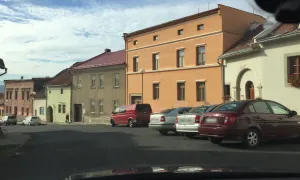
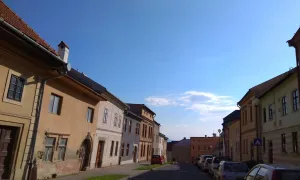
Photographs from the area
Real photos taken near the monument

Source and licence are given for each image.
Visitor Tips
No tips yet. Be the first!
Log in and add your tip.
Location on Map


Visitor photos
No photos yet. Be the first to add a photo from your visit!
Log in and add your photo or leave a rating.
You get more points for a visit verified in the app — we can tell from the GPS that you are there.
Reviews and comments