








meštiansky dom Burgher house
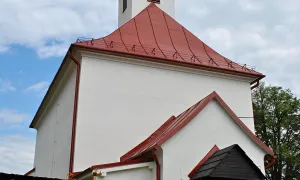
Townhouse in Banská Bystrica, located in Banská Bystrica region, is an example of building heritage from the Baroque period. This object, registered by the Monument Office of the Slovak Republic under the number of ÚZPF 2380, represents a typical pass and row house from the first half of the 17th century.
Background and historical context
During the Baroque period, the nobility began to focus more on the residence in the cities, which was consistent with the changes in the function of county and military administration. This trend led to noble families rebuilding their houses to representative residences. The city palace has become one of the main features of these modifications, with landscaped front courtyards and social spaces in the first part of the floor.
Architecture and visual design
Architecturally, the burgher's house in Banská Bystrica differs from its cross-country and terraced structure, which is characteristic of baroque style. This type of house allowed efficient use of space on narrow urban plots. The house was designed to provide sufficient space not only for housing, but also for business activity, which was preserved in the original functions of the house until today.
Owners, administrators, fates
Details of specific owners or administrators of the house in Banská Bystrica are not provided in the available documents. The historical context suggests that such buildings were often linked to the nobility and wealthier urban inhabitants who were interested in representative housing estates.
Today
Today the townhouse in Banská Bystrica is proud to maintain its original function as a residential building. Only the housing standard requirements have changed, but the architectural concept and the basic composition of the house remained essentially unchanged. This object is an important part of the city's monument.
A visit to this house offers a view of the life and architecture of the Baroque period, thus becoming part of the trip to the historical towns of Slovakia.
Tehdy a dnes
Drag the slider and compare how the monument might have looked when it was built with the view today.
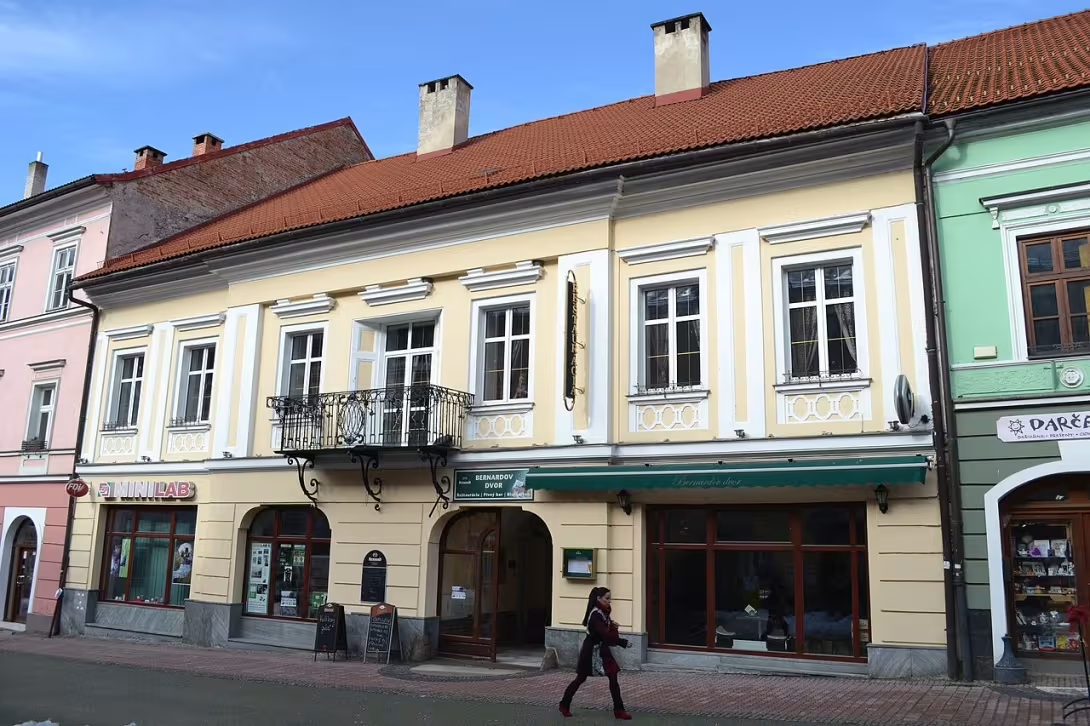

The historical view on the left is a visualisation generated by artificial intelligence and serves as inspiration.
Historical Milestones
- round 1700
- The creation of a townhouse in Banská Bystrica as an example of baroque architecture.
- 17th century, first half
- The period when the nobility began to focus more on urban residence and rebuilt its houses into representative residences.
- 17th century
- Baroque trend, which led to the creation of city palaces with landscaped front courtyards and social spaces.
- today
- The townhouse in Banská Bystrica works as a residential building with preserved original function.
Interesting facts
The townhouse in Banská Bystrica is an example of a building heritage from the Baroque period.
- This object represents a typical pass and row house from the first half of the 17th century.
- Architecturally different with its passing and row structure, which is characteristic of baroque style.
- The house was designed to provide space not only for housing, but also for business, which was preserved in the original functions of the house until today.
- Today, he is proud to maintain his original functionality as a residential building.
Guide
Show guide text
The text was prepared by artificial intelligence and has not been editorially reviewed. It may contain inaccuracies.
Welcome to the heart of historical Banská Bystrica. You are standing in a place where time has stopped and where every stone wall tells a story about ancient glory, urban life and building evolution that shaped the face of our region. Look around you. You may have noticed that the architecture of this city is not just a random set of buildings, but a precise weaving of history where different epochs are plundered. Right now, in front of you, there is one of those quiet but extremely important witnesses of this era - the burgher house.
Get carried away by the atmosphere of this place. When you stand by this building, you must not be confused by the feeling that you are looking at something ordinary. Although this object is now part of the city's daily green panorama and serves as a residential building, its roots extend deeply to the time when Banská Bystrica was formed as an important Central European centre.
In order to understand exactly what you see, we must return to the seventh half of the seventies in mind, but before that, when this particular house has fully materialized. In the 1970 ' s, a fascinating change occurred in our cities. It was a time when the nobility and rich burgherry began to focus increasingly on living in urban areas. Home was no longer just a haven or a simple haven, but it became a representative seat. People began to require more space, more elegance and more prestige. This trend led to city palaces that would capture the spirit of the Baroque.
It was in this context, around the year 1700, that this burgher house was created. It is a classic example of baroque architecture that began to spread through the city streets at that time. View this building not only as an object of brick and stone, but as a result of the desire of people in the seventies for beauty and order. At that time the architecture stopped focusing only on functionality and began to find a way to express social status through shapes and structures.
Now pay attention to the very structure of the building you have right in front of you. If you look at how this house is all over the street, you'll see its typological essence. It's a so-called row house. This means that the building is part of a continuous line of houses that form the border between public space street and private life inside the city. Such a terraced structure was crucial in the baroque period for dense, organized urban buildings.
Note, though, one important thing that distinguishes this house from the normal building line. It's his passing structure. This element is characteristic of the Baroque style and was extremely practical. The passage served as a link between the street and the inner space, often leading to the courtyard. At the time when it was created, it was not only a space for the movement of people, but also for the movement of carriages, wagons with goods or for the arrival of guests. This crossing created an important dynamic between what is happening in the public market or street and what is happening in the privacy of the family or in the social spaces inside the house.
Although we do not know the names of the specific architects who designed the house today, nor do the names of the individual owners who lived in it feel their presence in every detail. Although history names are sometimes lost in the shadow of time, their soul remains preserved in the geometry of the building itself. Feel the harmony this house brings across the street. It is proof that even a mere burgher's house can carry high aesthetic value.
It may seem to you now to be just an old building, but it is actually a fascinating puzzle about how our ancestors' lifestyle changed. Imagine the times when tourists with headphones did not walk in this house, but people in period sessions who were dealing with business or preparing for evening social events. The Baroque trend that affected this house has brought a new sense of social space to cities. The house was no longer a closed fortress, but began to communicate with the surroundings through its front courtyards and modified facades.
There is one interesting thing you might be interested in looking at this object. This house is one of the authentic examples of building heritage that allows us to understand the transition from stricter, closed structures to more open, representative architecture. It's like a bridge between a medieval city and a modern urbanized citizen. The passage we mention was a symbol of wealth and openness in many cities at the time - the ability to have its own space, which is linked to urban pulsation, was a sign of success.
Now, looking at the facade, try unknowingly to perceive the rhythm that the building is creating. See how this house participates in the overall picture of Banská Bystrica. It's part of something bigger, something that makes up this city's identity.
Let you continue your journey. This burgher's house will continue to stand here as a silent witness of the centuries past, waiting for the next generations to enjoy its beauty and historical importance. Don't forget to stop by other buildings nearby because each of them has its own voice and its own story, which is just waiting to be revealed.
We wish you a pleasant and inspiring walk through the historical streets of Banská Bystrica. We'll say goodbye, but the history around you continues.
Tips for visitors
The townhouse is an important cultural monument. Best to visit in the autumn months when the climate is pleasant and not so mass visitors.
When visiting, take a conscience about health protection measures and facilities as well as a map of the site. Photo enthusiasts should have a high-quality camera or smartphone with a good lens.
Photography is most successful in early mornings or dinner when light is mild and less tourists. The best places for photos are the surrounding streets and garden areas.
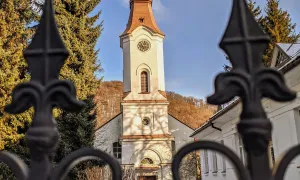
In the immediate vicinity is the historical church of St. Nicholas, which is an architectural monument. It may also be interesting for families with children to visit the locality with toys and interactive tours.
Frequently asked questions
Can the monument be visited?
This is a residential or farm building, not a museum with opening hours. Please view it from public space and respect the owners' privacy. We have no information about access to the interior.
Where is the monument?
Location: Dolná 169/36, Banská Bystrica, Banskobystrický kraj. The map on this page shows the exact spot.
Why is the monument protected?
It is listed in the Central List of the Monuments Fund of the Slovak Republic as a national cultural monument (ÚZPF no. 321-2380).
For children
Close your eyes and imagine pressing a secret button on a time machine. Boom! You fly deep into the past, exactly 326 years ago. Right now you landed in Banska Bystrica while horses were riding the streets and people wore funny hats and big lace collars.
The Townhouse is standing before you. It's not just a house where people just live. It's a real piece of the Baroque world. At that time the baroque was like the latest trend in fashion and architecture. Everything must have been elegant, impressive, and a little showy.
Nearby
🏰 Historic sites (115)
- Viliam Figuš Bystrý 0.1 km
- Pamätník holokaustu a rasového násilia 0.2 km
- Významné lesnícke miesto 0.2 km
- Sovietskej a rumunskej armáde 0.2 km
- Jozef Dekret-Matejovie 0.2 km
- Jozef Dekret Matejovie 0.2 km web
- Jozef Dekret Matejovie 0.2 km web
- Park Jozefa Dekreta Matejovie 0.2 km web
- Thurzov Dom 0.3 km web
- Štefan Moyses 0.3 km
- Mons. Dr. Andrej Škrábik 0.3 km
- Laco Novomeský 0.3 km
- Morový stĺp 0.4 km
- Viliam Pauliny 0.4 km
- Pápež Ján Pavol II. 0.4 km
- sv. Ján Pavol II. 0.4 km
- Barbakan 0.5 km web
- Chaviva Reiková 0.5 km
- Pamätník SNP 0.5 km
- Lietadlo Li-2 0.5 km web
🍽️ Restaurants and dining (251)
- Bernardov Dvor 0.0 km
- Choco Boss 0.0 km Dolná 167/34 +421914598655 web
- PUB 32 Food & Beer 0.0 km Dolná 165/32 web
- Mačacia Kaviareň RagdollCafe 0.0 km
- Leonardo caffe bar 0.0 km
- Pizzalino 0.0 km Dolná 29 web
- Bothár 0.1 km Dolná 35
- Samurai 0.1 km +421 917 803 104 web
- Why Not 0.1 km
- Bonanno 0.1 km web
- Alanda 0.1 km Dolná 9
- Čajovňa Gaia 0.1 km Dolná 9 +421 902 093 925
- Street Foodie 0.1 km Dolná 52 web
- The Fleck coffee roasters 0.1 km +421 911 243 752 web
- Déjà Vu 0.1 km Dolná 7
- Wild Shape 0.2 km
- Ozay Kebab 0.2 km
- Yalla Habibi 0.2 km
- Červený rak 0.2 km
- Zlatý bažant 0.2 km Námestie SNP 11
🏨 Accommodation (69)
- Penzión Boca 0.1 km
- Národný dom 0.3 km
- Arcade 0.3 km
- Urpin City Residence 0.3 km J. Cikkera 910/3
- Gran Hostel 0.4 km Kapitulská 312/11 +421905654006 web
- YMCA 0.5 km
- Penzión Kúria 0.5 km
- Art pension 0.6 km web
- Lux 0.9 km
- Al Corso 0.9 km +421 48 381 1189 web
- Ubytovňa Stavoprojektu 1.0 km +421 918 109 680 web
- Penzion Uhlisko 1.1 km Lesná 224/3
- Penzión Maják 1.3 km Okružná 592/15
- Bella 1.7 km
- Penzión Adonai 2.4 km Zvolenská cesta 3744/17
- City 3.0 km Partizánska cesta 3806/85
- Madona 3.2 km web
- Chata Vatra 3.3 km
- Penzión u Vinca 4.1 km Kremnička 16 web
- Iliaš 4.4 km
🚲 Rentals and sport (42)
- Husky 0.1 km Dolná 39
- LESONA poľovnícke potreby 0.1 km Dolná 34 web
- Bike sport 0.2 km
- Pagy Bike 0.4 km
- Tenisia - kurty v mestskom parku 0.4 km web
- CoolBike 0.5 km +421 48 415 13 76 web
- Be-cycles 0.5 km Lazovná 22 +421 949 166 133 web
- Decathlon 0.5 km
- Športová hala Dukla 0.7 km Cesta olympionikov 1271/2
- Trekland 0.7 km
- Plaváreň Štiavničky 0.8 km Cesta olympionikov 1624/4 +421 48 423 04 01 web
- Yonex aréna 0.9 km
- I 0.9 km
- Rivel sport 0.9 km web
- L 1.0 km
- Trekbikes 1.0 km
- Z 1.0 km
- Tipsport arena 1.0 km
- Old I 1.0 km
- Detský bazén 1.1 km
🥾 Hiking and nature (341)
- Park Jozefa Dekreta-Matejovie 0.2 km
- Mestský park 0.5 km
- Veliteľský bunker 0.5 km
- Park pod pamätníkom SNP 0.7 km
- Park Juraja Hudeca 0.7 km
- Medokýš 0.8 km
- Urpín, vyhliadka 0.9 km
- Urpín 0.9 km
- Park na Námestí slobody 1.0 km
- Oddychová zóna Tajovka 1.1 km web
- Parčík kráľovnej Alžbety 1.2 km
- (bývalé) Dopravné ihrisko 1.2 km
- Kačica 1.5 km
- Turíčka 1.9 km
- Vartovka 1.9 km
- Stráž 2.1 km
- Dúbrava 2.7 km
- Okrúhle 2.8 km
- Malachovské skalky 2.9 km
- Bánoš 2.9 km
Thematic route
Thematic cruise route from Banská Bystrica
1. House bourgeois (City House) Type: Monument building This historic house was the seat of merchants and citymen who prospered in Banská Bystrica. Architecturally interesting with Baroque elements, visitors here can understand the life and culture of the 17th to 19th century.
2. Old Museum (Museum of Old Town) Type: Historical Museum Located nearby The House of Towns, the Old Museum offers an overview of the history of the Banská Bystrica region. It exhibits artifacts and documents from the mint age.
3. Old Town Hall (Radnica) Type: Historical monuments The Old Town Hall is the seat of the city mayor and part of the historical area of Banská Bystrica Town Hall. It's a 14th century gothic example.
4. State Museum of SNP (SNP Museum) Type: Historical Museum This museum focuses on the historical development of the Slovak National Uprising and offers an understanding of the political events that shaped modern Slovak identity.
5. Medieval business area (Business area) Type: Historical location This area offers a view of traditional urban livelihoods with interesting streets and buildings that reflect the business activity of the past.
This route offers a view of the historical and cultural wealth of the Banská Bystrica region.
Seasonal recommendations
Jaro: In spring Banská Bystrica will turn into a green country ideal for visitors. In sunlight, the architectural beauty of the burgher house appears in the best light. Visitors should consider a visit at the beginning of the day, when crowd identities are minimal and it is possible to enjoy quieter moments. It is important to wear clothes suitable for changing weather - a combination of warm wardrobes with the possibility of adding gloves or a coat.
Leto: In summer Banská Bystrica becomes the centre of activity. In the sunlight, the townhouse manifests itself in the best possible form, but this time of the year can also be the most difficult in terms of crowds. Visitors should plan a visit earlier on the day to avoid large crowds and longer waiting times. It is recommended to wear soft clothing and sunglasses.
Under: Banská Bystrica will transform into a city with an honest atmosphere. Greening becomes orange-rud, adding a new dimension to historical buildings. In a weaker light, the architectural details of the burgher house appear differently and can be fascinating to explore in more difficult times. Visitors should avoid visiting during significant tax periods, as there are probably more people on the streets. It is advisable to wear clothes suitable for colder and wet weather, as well as a bookmark or cloak.
Winter: In winter Banská Bystrica will become a place with magical atmosphere. The townhouse manifests itself in the best form with warm lamps, which adds romantic rhinestones to its historical columns. Visitors should plan a visit in the early days of the day when the mob identities are minimal and it is possible to enjoy quieter moments. It is essential to wear warm clothes - furs and cups on the head - and be ready for a shorter open time of sights.
Visualisations and artistic views


The visualisations are generated by artificial intelligence and serve as inspiration.
Photographs from the area
Real photos taken near the monument

Source and licence are given for each image.
Visitor Tips
No tips yet. Be the first!
Log in and add your tip.
Location on Map
More monuments – Banská Bystrica
Show all in the town

Visitor photos
No photos yet. Be the first to add a photo from your visit!
Log in and add your photo or leave a rating.
You get more points for a visit verified in the app — we can tell from the GPS that you are there.
Reviews and comments