








New Castle, Hanging Castle Castle
Hanigov Castle, also known as the New Castle (lat. castrum Wywar), is a 14th-century castle ruin located above the village Hanigovce in the region of Horná Torysa in Prešov region. The building is located on the castle cliff at an altitude of 771 m above sea level and is registered by the Monument Office of the Slovak Republic as a Gothic ruin from 1342.
Originally in this place stood wooden castle, which had built nobleman Mikcho on the former Slavic castle, which belonged to the royal property of the castle Šariš. In 1342, a request for the conversion of the castle into stone was accepted, which was necessary to consolidate the border zone of the Kingdom for the rule of Louis I.
The stone castle had a rectangular plan with dimensions of approximately 55 x 20 meters and the entire area was surrounded by wall fortification. The two-storey palace was rectangular in size 14.7 x 6 meters. Access to the courtyard was on the south side over 2.5 metres wide, which was provided by a watchtower. The entire complex protected the barrier with the entrance gate, while fortifications were carved cannon beds and gun rooms. In the courtyard were farm buildings that were probably built of wood.
After the extinct of Mikčová branch of the genus, the castle passed in 1398 into possession of Ladislav, son of Mikuláš from Sharišský Svätý Jur. It was then acquired by Prokop Balický for 6000 gold florons and in 1401 by King Zigmund. In 1404 he put the castle in reserve for another 6000 gold florons to the cousins Prokop - Andrej, Ján and Ladislav. In 1408 the castle was won by Imrich of Perin, the secret chancellor of King Zigmund, in exchange for the castle of Sklabin. Since 1410, it was owned by Peter Perényi, who received the castle as a reward for saving the king's life in the battle against the Turks. In 1512 the tycoon of Perino released the castle to noblemen from Torysa.
In 1448 the castle was under the influence of cousins, from which they threatened the town of Bardejov. Wars of the King Mateja attacked the castle in 1460 and was captured the following year. In 1556 the castle was occupied by Ferdinand I. Together with the castle in Kamenica, the Hanigov castle burned down in 1557. The new owners, the noblemen Martin and Gašpar Pečovské, have not renovated the building since they built their seat in Nová Ves.
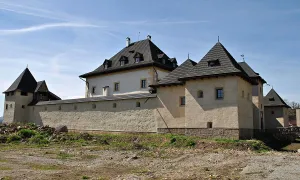
At the same time, the original objects are identifiable in the interior of the castle, while the palace is covered up to the sills of ground-floor windows. The fortification has been preserved locally up to 2 to 3 meters and cannon beds are visible. The ruin is taken care of by the Civic Association Novum castrum, which reconstructed the gate and preserved the defence wall along with part of the palace. Access to the castle is possible from the village of Ľutina following the yellow hiking trail or from the village Hanigovce following the green hiking trail.
Ruina provides insight into the border fortification of the kingdom and is the goal for those interested in medieval architecture and the history of the region.
Tehdy a dnes
Drag the slider and compare how the monument might have looked when it was built with the view today.
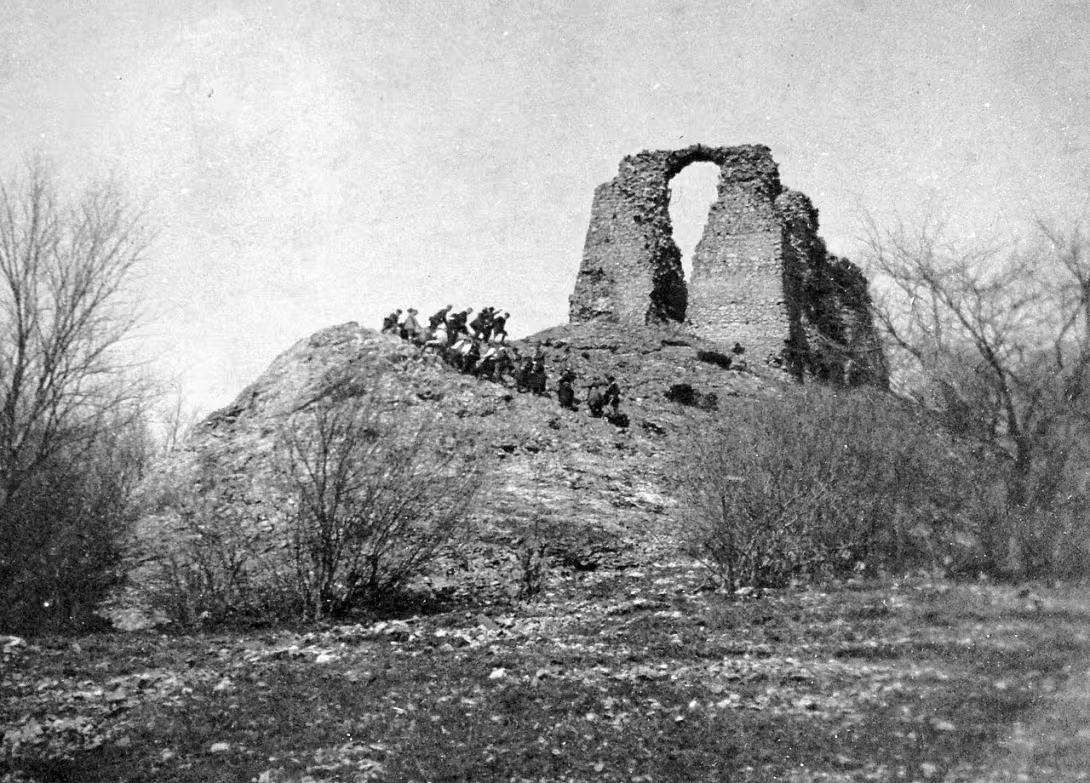

The historical view on the left is a visualisation generated by artificial intelligence and serves as inspiration.
Heritage surveys
-
Architektonicky-historícký výskum
Čiastkový pamiatkový výskum -
2015 — Architektonicky-historícký výskum
Čiastkový pamiatkový výskum
Interesting facts
- Originally in this place stood wooden castle, which had built nobleman Mikcho on the former Slavic castle. - In 1342, a request for the conversion of the castle into stone was accepted, which was necessary to consolidate the border zone of the Kingdom for the rule of Louis I. Peter Perényi won the castle in 1410 as a reward for saving the king's life in the battle against the Turks. - In 1448 the castle was under the influence of cousins, from which they threatened the town of Bardejov. - The castle burned down in 1557 and new owners, Martin and Gašpar Pečovský, did not renew it.
Guide
Show guide text
The text was prepared by artificial intelligence and has not been editorially reviewed. It may contain inaccuracies.
Welcome to Hanigovce. You stand by one of those places where time seems to be stopped and where every stone trail tells the story of ancient ages. The remains of the Hanigov castle, sometimes known as the New Castle, lie before you. Look around you and see the atmosphere. Although you see more fossilized fragments and remains of walls in front of you today, try to imagine the strength and significance of this castle in the past. You stand in a strategic place that has served as a watchpoint and a symbol of power for a century. Feel the silence of this place, which is transported only by the noise of the wind and the sounds of the surrounding nature, but beneath this peace lies a dynamic history of great change.
To understand why this castle is located right here, we need to go back to the past, to the very roots of this site. This castle didn't rise from anything. The place where you are now standing had its sacred and strategic significance long before stone fortresses began to be built here. It is a former Slavic castle. Ancient ancestors have understood that this place offers natural protection and a view that is invaluable. Over time, civilization began to form here, and it was on these old foundations that new order began to be built. The first major player in this chapter was nobleman Mikčo. He understood the need to have a solid base in this place and had a wooden drain built. Imagine this primary object - it was not yet the monumental stone we would be looking for today, but rather a functional, skillful wooden structure that used natural topography of the defence site.
However, gradual developments have brought new challenges. The world has changed, the political situation in the kingdom has become more complicated and the need for defence has become more demanding. That is why a breakaway event took place in 1342. The request to rebuild this castle from the original wooden building to a permanent stone fortress was accepted. This step was not random or easy. It required enormous effort, resources and technical knowledge. This was due to the need to consolidate the Kingdom border zone. In the reign of King Louis I, border security was a priority because a stable state needs reliable points that can reflect threats and control the surroundings. The reconstruction to the stone castle meant that Hanigovsky Castle became part of a wider military and political network that protected the heart of the kingdom.
Now, when you look at the remains of these walls, pay attention to how stone blocks fit into the terrain. Even if you don't see the entire buildings or the high towers that we'd expect today, see the massiveness of the material. Note how the stone structure tries to match the natural rock and slopes. This architecture was not about beauty in the modern sense, but about functionality, resilience and ability to survive attacks. Every piece of stone you see here has been carried in order to create an invincible barrier. Look at the way these remains break down into the surroundings - you can see not only the demise but also the power that has long worked here. The atmosphere of this place is connected with this transition from wood to stone, from provider protection to permanent symbol of state power.
In this history there are not only buildings, but also specific names defined by the castle. In addition to the aforementioned nobleman Mikč, who laid the foundations, it is necessary to mention King Louis I, whose reigning era led to this important military modernisation. The castle was also part of a wider property world dominated by Peter Perényi at the time of his glory. These personalities, although their lives are separated by hundreds of years, are inseparable for the Hanigov Castle. Their decisions, their political ambitions and their need to ensure the stability of the country have directly influenced what you see before your eyes today. Without their decisions, there would be nothing here today but an empty mountain.
There is also one great mystery that can draw your attention. It's the constant question of continuity. How did it happen that this place lasted from the Slavic times, through the wooden castle to the stone fortress? What happened here on quiet nights when the castle was guarded by soldiers, or when the fates of entire families were decided here? This constant transformation of the materials and purposes we see here makes us think about how quickly the world is changing and how only these stone witnesses of our presence remain. Something fascinating about it is that although people are long gone, their legacy of these remains still resists time.
Now that you have acquired a basic understanding of what the Hanigov castle represents, we invite you to continue to approach these remains. Be carried away by your own imagination. Go around, see the depth of this country, and try to find your own details in these stone tracks. Each step can lead you to a new disclosure of the atmosphere of this historic place. Thank you for being with us on this short journey of time. We wish you a pleasant continuation in discovering the beauty of Hanigovec and their rich heritage. We'll say goodbye, but let this view of history stay in your memory for a long time.
Tips for visitors
Visit to the Hanigov castle is recommended to plan in spring or autumn when green vegetation is around and light is soft. It is ideal for photographers in the morning or later in the afternoon when long shadows model the relief ruin. Nearby is the village Hanigovce, where you can enjoy the peaceful atmosphere of the countryside. Focus on the castle itself and its panoramic view.
Frequently asked questions
Can the monument be visited?
According to the heritage register the site is not presented to the public – there are no accessible remains or information on site.
Where is the monument?
Location: Hanigovce, Prešovský kraj. The map on this page shows the exact spot.
Why is the monument protected?
It is listed in the Central List of the Monuments Fund of the Slovak Republic as a national cultural monument (ÚZPF no. 418-285).
For children
What about the beginning of the Hanigovsky Castle? About 684 years ago, in 1342, the construction of one of the most interesting castles in Slovakia began. Let's just say that you're in time with an arrow transferred to that time and you see yourself in front of a wooden drain. This castle stood at the place where Hanigov castle is located in the village Hanigovce. The castle was originally built by the nobleman Mikčo and was located where the Slavs were thousands of years ago. Nobleman Mikcho thought the wooden castle was good for protection.
Nearby
🏰 Historic sites (51)
- Hanigovský hrad 0.0 km
- Modely drevených cerkvi na Slovensku 2.5 km
- Galéria Mikuláša Klimčáka 2.7 km
- Památník partyzánů 2.8 km
- Panna Mária 5.0 km
- Kamenica 5.1 km
- Centrum tradičnej kultúry 5.7 km +421 907 612 070 web
- Pieta 5.7 km
- sv. Ján Nepomucký 5.7 km
- Padlým v II. svetovej vojne 6.0 km
- Panna Mária Skákavá 6.2 km
- sv. Hubert 6.5 km
- sv. Florián 6.6 km
- Kaštieľ Rožkovany 6.9 km
- Ringov kaštieľ 6.9 km Ľutinská 177/32 web
- Augustín Roškováni 7.0 km
- Kostol sv. Antona 7.1 km
- Kaštieľ Kornheizer 7.3 km Hlavná 64/33 web
- Kaštieľ Bornemisza 7.5 km Kostolná 433/47 web
- Pamätník padlým partizánom z obce Livov 7.6 km
🍽️ Restaurants and dining (65)
- Miľopš Pub 2.3 km
- U Revilačka 3.0 km
- Majdanka 3.5 km
- Bar Hradské 4.0 km +421905 178 054 web
- U svätého Floriána 5.8 km
- Vináreň u starého richtára 5.9 km
- Motorest Špárová 6.2 km
- pohostinstvo Ihrisko 6.3 km
- Bačovská koliba - Farma Kamenica 6.4 km +421 908 996 077 web
- Bowling u Piťa 6.5 km
- Ikigai Streetfood 6.7 km Sabinovská 64/3 +421 950 893 149 web
- Hostinec Rožkovany 6.7 km +421 907 534 328
- PIZZA BONO 6.8 km Kollárova 131/2 web
- Dublin bar 6.8 km
- Kaštieľ Rožkovany 6.9 km +421 51 457 21 06
- Pizza Yogi 6.9 km +421 905 141 939 web
- Pizzeria Biely dom 6.9 km +421 905 159 622 web
- Döner Kebab Lipany 7.0 km Krivianska 553 +421 949 820 300 web
- Pohostinstvo u Joja 7.1 km
- Biely Kôň 7.1 km
🏨 Accommodation (28)
- Rekrea 4.2 km
- Penzión u Nepomúckeho 5.7 km +421 918 789 149
- UFO 6.0 km
- Špárová 6.2 km
- chata Gola 6.3 km
- Agropenzión SANTANA 6.4 km Kamenica 600 +421 948 255 040 web
- Kaštieľ Rožkovany 6.9 km +421 908 471 001
- Kočanka 7.1 km
- Milk Agro 7.4 km
- Lysanka 7.5 km
- Hotel Javorná 7.5 km web
- Šport 7.6 km +421 905 615 166 web
- Horský hotel Javorina 7.7 km web
- Ride pub 7.9 km
- Privat Ženčuch 8.0 km
- ROYAL M 9.3 km +421 948 103 859 web
- Begálka - Penzión & Wellness 9.5 km Hollého 352/32 +421 948 656 464 web
- Encián 9.8 km
- Chata Evička 10.2 km web
- Hotel Torysa 10.4 km
🚲 Rentals and sport (8)
- Aquapark Lipany 5.9 km web
- Feltysport 6.5 km Ovocinárska 12 +421 907 121 005 web
- Cyklošport 6.9 km +421 905 459 795 web
- Mestské kúpalisko Lipany 7.2 km
- Offroad Areal Adrenalín 7.4 km
- Bike Rent Michal 7.9 km +421 905 897 522 web
- Cevelo 10.7 km
- Mestské koupaliště Sabinov 11.2 km Levočská 673/1 +421 948 145 125 web
🥾 Hiking and nature (203)
- Švabľovka 0.6 km
- Vysoká hora 1.2 km
- Havranka 1.2 km
- Ostrá 1.9 km
- Hrabienka 2.1 km
- Babie 2.2 km
- Hostcová voda 2.2 km
- Chrám sv. vmč. Dimitrija Solúnskeho 2.3 km web
- Gregorka 3.0 km
- Hrb 3.1 km
- Michalka 3.2 km
- Kostolný vrch 3.2 km
- Lazy 3.4 km
- Forgáčka 3.5 km
- Hýrová 3.7 km
- Dvoriská 3.8 km
- Hrnčiarka 4.1 km
- Balážová 4.2 km
- Veľký Hrašov 4.5 km
- Hrnčiarky 4.5 km
Thematic route
1. Courtyard of the New Castle - Type: Outdoor space. The entrance part, which gives visitors the first impression from the architecture of the castle.
2. Interior Exposition - Type: Museum. A place where you can learn about the history of the building and its importance to the region.
3. Castle Tower - Type: Observation tower. Ideal point for panoramic view of the village Hanigovce and surrounding countries of Prešov region.
4. Castle area - Type: Park. Prostor designed for relaxation and walks in nature.
Seasonal recommendations
In spring, the Hanigov castle revives along with the thriving nature. The country is turning green and the air is refreshing. It is recommended to prepare for variable weather, layer clothing. It is best to visit the site during clear hours.
In summer, the surroundings of the castle are dense and green. The light is strong and bright, ideal for observing the details of the ruin. Since it is a rough terrain, do not forget solid shoes and sun protection. The best times to move are early morning or late afternoon.
In the autumn season, a visit brings colorful variety. Early milks give the ruins a mysterious charm, but may limit visibility. It is advisable to have a waterproof and warmer layer of clothing with you. The golden hour before sunset is best for photography.
In winter the Hanigov castle has a majestic impression between bare trees. The atmosphere is quiet and peaceful. Due to the possible frost or snow it is necessary to have quality winter clothes and shoes with good stability. Since the days are short, it is recommended to plan a visit during the middle hours of the day.
Visualisations and artistic views


The visualisations are generated by artificial intelligence and serve as inspiration.
Visitor Tips
No tips yet. Be the first!
Log in and add your tip.
Zdroje a literatura
The factual basis for this text was the article na Wikipedii, whose authors are Wikipedia contributors. The article is available under the licence CC BY-SA 4.0.
Location on Map

Visitor photos
No photos yet. Be the first to add a photo from your visit!
Log in and add your photo or leave a rating.
You get more points for a visit verified in the app — we can tell from the GPS that you are there.
Reviews and comments