








sidlo štábu sovietskej armády Villa with grounds
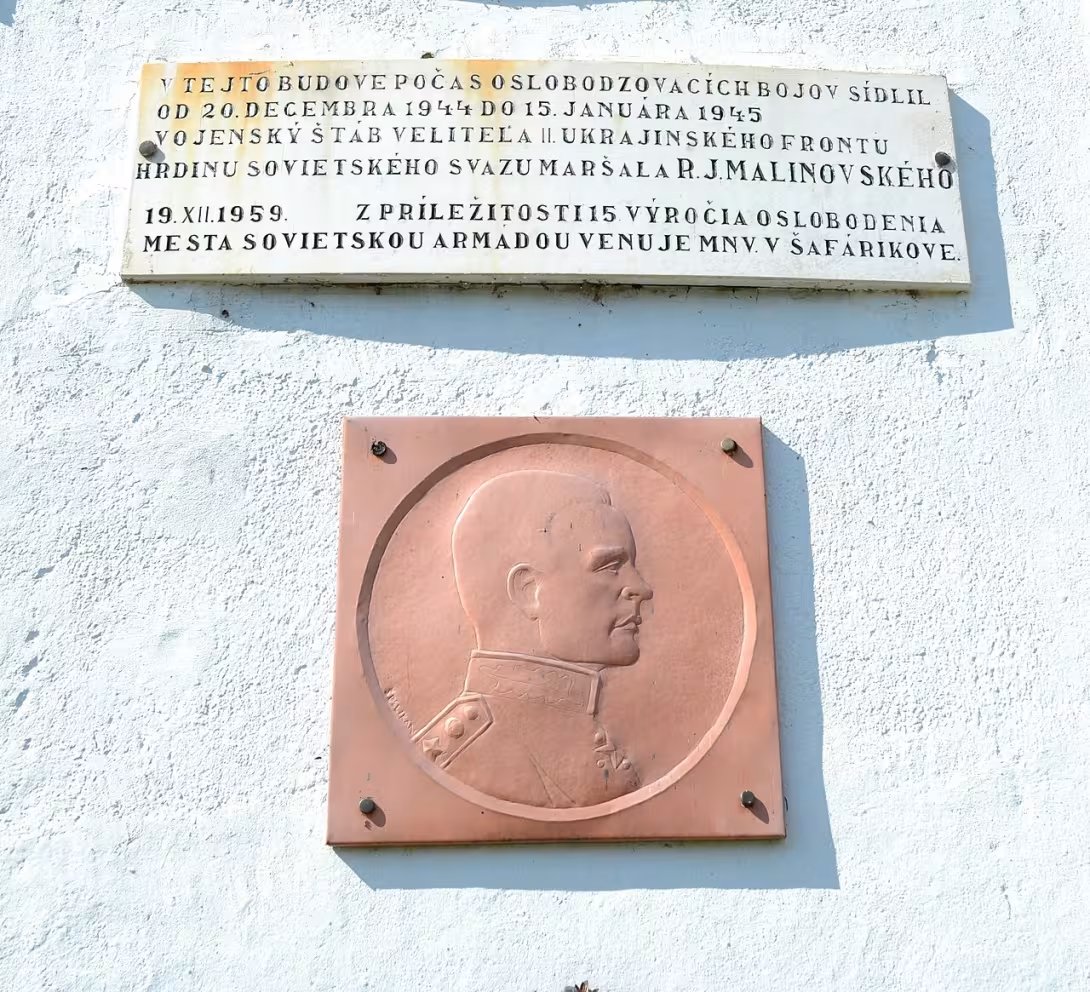
The national cultural monument of the villa type with the area is located in the village Tornaľa at the address Letná 1134/6. It consists of a memorial villa, fence and a memorial plaque associated with the history of the Soviet Army headquarters.
Tehdy a dnes
Drag the slider and compare how the monument might have looked when it was built with the view today.

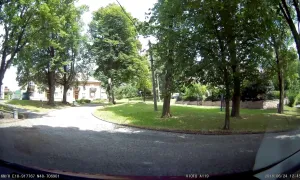
The historical view on the left is a visualisation generated by artificial intelligence and serves as inspiration.
Historical Milestones
- 1928
- A villa of Soviet army in Tornali
- 1959
- The Memorial Table was added
Guide
Show guide text
The text was prepared by artificial intelligence and has not been editorially reviewed. It may contain inaccuracies.
Welcome. You're standing in front of a building that looks like sleep after the storm today, but whenever you stopped here 20 or 30 years ago, you'd feel tension, order, and smooth force in your eyes. In front of you is the former headquarters of the Soviet army - a villa with a campus that served as a nervous center of military power on this piece of Gemer. Today you don't hear any commands, you don't see any guards at the gate, just winds in the crowns of old trees and quiet scratching of metal gates in the wind. Let's go back together until this place wasn't on the maps, or it was just like an empty, unpublished field. When you are enlarged, note the expansion. The villa stands a little distant from the main road, protected by natural terrain and length of time. It's not a palace or a castle in the understanding of the historical epoch. It is a functional building, representative only to a slight degree - one that must be home to the highest command in a foreign country. The design is simple, tactile with windows that were shining all night long. Today, many of them are dark, some broken, others covered with blankets. Around the villa there is a stretch of premises - several auxiliary buildings, garages, somewhere concrete road blocks, which have ever been reinforced hiding for clutch soldiers. There is the strange contrast: a house that was supposed to be home to the generals and their crews, and around it a machine, raw military economy. The creation of this bowl is indirectly absorbed with August 1968. When the Warsaw Treaty troops joined Czechoslovakia, Tornaľa became one of many nodes in the network of occupation troops. The exact chronology of the construction of this particular villa and the area remains unknown until now - the archives were partially destroyed before the army left in 1991, partly transported to Russia, so the exact date of the foundation stone laying, the names of architects who designed this construction, as well as the first commanders who sat here at the maps, are lost to us. But we know for sure: this was one of the control bodies of the Central Group of troops in Czechoslovakia. From Tornaľa, there were parts of the troops in the vicinity, in Revúc, in Rimavská Sobota, throughout the southeastern wing of the Slovak border. Vila was not just the commander's residence - she was a working, communication and logistical vein. Let's take a closer look at what you see now. The main building - villa - has two floors and attic. The input group is not monumental, you don't see any poop or poop. It's a practical solution: a covered front, a massive thick steel door that was protected from a wave explosion, but today they hang freely on grains. If you look at the facade, you will notice traces of the unmounted boards, perhaps even the light markings that directed the vans and cars. The windows have typical profiling of the 1960s and 1970s - wide, rectangular, with internal grids that served as passive defenses. In the attic, behind wooden windows, there were housing units for senior command officers or special workers - cryptographers, liaisons, divorce bosses. Now move towards the side facade, where communication leads to the inner courtyard. Here you can see the bump of concrete panels and iron fences. The fence was not merely symbolic - it was a physical barrier separating the world of soldiers from the city. A city that was alien to them, although they were here for years. This barrier created microcosmos here: own rules, own time, own language. Inside the area was arranged according to military logic. Battle car garages and supplies standing on the north side, towards the forest, where it was possible to quickly disguise. Right next to the villa, in the side wing, there were operative staff offices. Here the decision was made on the training, the transfers of units, the relationship with the local authorities of the National Committee. The walls of these offices are silent today, but their silence is louder than any command. When you turn to the south, you'll see leftover sports ground and gym. For soldiers physical performance was a matter of survival and discipline. Here, in the morning, dozens of men gathered in uniform clothing, their steps farewell to the noise of the future military mama. Today, the grass overgrowths asphalt, the gates are collapsed, baskets on a basket without nets. It's an image of the decline of power that seemed infallible and eternal. The key figures of this place remain nameless. There are no historical personalities, no generals here to compile their message. It's not a coincidence. Sovet generals on Czechoslovakia rotated - they stayed here for two, three years, then left for new duties to GDR, Hungary, Poland, or back to SSR. Their names have remained in the service documents, in the unit's diaries, in the secret reports that are now in Moscow archives, accessible only to selected ones. We don't know which one planned training here. "Danube" who dealt with fuel logistics for tank company in the area, who threw letters into the trash home because censorship didn't release them. Anonymity is the greatest memory here. It was part of the system - the unit was more important than the individual. So you stand in front of a house that doesn't know its creatures, just your functions. However, even in this anonymity there is an interesting thing that can be a mystery to you. Villa and the area in Tornaly were not an isolated fortress. They were part of the city, although it didn't seem like it. Soldiers went to local shops - there they bought things that were missing in the home zone: jeans, quality shoes, coffee, cigarettes. They traded them for ruble rubles, for possessions from military stores. Locals learned Russian, soldiers learned Slovak - at least basics: "beer," "bread," "thank you." The children of soldiers were taught at the school in Tornalyach, their women were treated in the hospital. It was the paradoxical, upright, sometimes tense, sometimes friendly contact of two worlds that were to be separated by an iron curtain. And this very place - the mansion of the staff - was the point where these worlds officially met. This is where the mayor of the town of commander Garnizón accepted, where disputes about damaged field after maneuvers were settled, here were signed agreements on the water network for barracks. The interesting thing that remains is what happened in the last months of 1991. Departure was planned, but fast. The last chief of staff - who he was, we do not know - sat in this office on the first floor, looking for a map where his responsibility ends and where the responsibility of the new, Slovak army begins. The keys to the gate, the garages, the secret document safe - to whom did he hand them over? Some of them remained hanging on the hrebík in the ground floor, others were handed over to the mayor, others were repackaged into the trunks and taken to the train in the eastern direction. The area was taken over by the Slovak army, but it stayed only for a short while. Then came the time of privatisation, unclear ownership, negotiating time and vandalism. Today, the villa is in private hands, but its future is unclear, just like its past. You're standing here now, in silence that's not empty. It is full of echo steps, voices in radio stations, noise of engines, laughter and fear. This place doesn't offer you beautiful frescoes, golden ceilings, no statues of heroes. It offers you something else: truthfulness about the time when there were guests who became natives, and natives who became guests in their own house. The villa with the Tornaly complex is a memory of the strength that was here and the weakness that finally locked it up here. Now, if you turn around and take care of yourself, after the communication that leads out of the area, look back again. You will see a building that looks like any other older villa in Slovakia - perhaps a little more tired, a little more forgotten. But now you know what he's hiding. He's hiding layers of history that can't be read from the tables, because there are no tables hanging. He hides the stories of the men who spent the best years of their youth here, and the men who spent the worst years of their ministry here. He hides the question: what's left of power when he leaves? Thank you for stopping by. Thank you for listening to the silence of this place. If you decide to walk further, in the yard, in the garages, under the trees that grow here longer than any military mission, remember: You walk on a land that remembers every step. Have a good time and let yourself be guided by your own sheariness.
Tips for visitors
The best time to visit is autumn or spring, when the weather is mild and the area is not overloaded by visitors. It is recommended to take comfortable shoes, water jacket and own water, because there is a lack of refreshment facilities. The best light for photography is morning and late in the afternoon, when the side light highlights the facade of the villa and details of the area. In the immediate surroundings (up to 30 minutes drive) the documents do not indicate any other memorials; for families with children it is appropriate to prepare a short search program and take care of the safety of the unfinished parts of the area.
Frequently asked questions
Can the monument be visited?
This is a residential or farm building, not a museum with opening hours. Please view it from public space and respect the owners' privacy. We have no information about access to the interior.
Where is the monument?
Location: Letná 1134/6, Tornaľa, Banskobystrický kraj. The map on this page shows the exact spot.
Why is the monument protected?
It is listed in the Central List of the Monuments Fund of the Slovak Republic as a national cultural monument (ÚZPF no. 328-2933).
For children
Imagine that you are climbing in the yard, where 98 years ago freshly painted paint and a new wooden window floor tiles under the shoes of the first owners. 1928. In Tornala in the south of Gemera grows a villa that looks like the future - white, square, with large windows through which the sun is poured. It was like a boat in the green, ready to sail dry.
Nearby
🏰 Historic sites (66)
- Kaštieľ Szentivanyi 2.3 km
- Tompa Mihály a Petőfi Sándor 2.4 km
- Kráľ Matej Korvín 3.3 km
- Czinka Panna 3.4 km
- Kaštieľ Gemer 3.5 km
- Klasicistická kúria 3.7 km
- Gemerský hrad 3.9 km
- Kaštieľ Lenka 4.2 km
- Kúria Kovácsovcov 5.9 km
- Kúria 6.0 km
- Kúria Kubínyiovcov 6.3 km
- Kúria 6.6 km
- Kúria 7.0 km
- Vysťahovaným obyvateľom obce 7.4 km
- Kúria 7.7 km
- Kúria 7.7 km
- Rozprávková kancelária Meseiroda 7.7 km
- Trianon 100 emlékkő 8.3 km
- Stará huta 8.8 km
- Kúria 8.8 km
🍽️ Restaurants and dining (38)
- B&B Kebab 0.2 km +421 940 154 422
- Manuel 0.3 km
- El paso 0.3 km
- Mamma Mia 0.3 km
- U Bieleho koňa 0.3 km
- Centrál 0.3 km +421 911 989 955 web
- Hostinec Buck 0.4 km
- Jedáleň Salute 0.4 km
- Hostinec Buck 0.4 km
- Fresh Corner 0.6 km
- Terasa 2.2 km
- Hubert 3.2 km
- Pohostinstvo Lenka 4.1 km
- Motorest Eva 5.2 km
- Bikers caffé -GP 6.2 km
- Dôner&kebab 11.0 km +421 904 043 772
- Retro pub 11.3 km
- Village 12.1 km
- Espresso NOAL 12.4 km
- Büfé 12.4 km
🏨 Accommodation (30)
- Zelený dom 0.3 km
- Tornaľa 1.8 km
- Kakasvári Vendégház 9.0 km
- E. Kovács vendégház 9.1 km +36 48 435 008
- Biokertes vendégház 9.2 km +36 20 407 6875
- Mohos Vendégfogadó 10.5 km Tompa Mihály út 159
- Ferdi rancs 11.5 km
- Penzión Kamila 12.2 km
- Paplak 12.4 km
- Fruktárium Vendégház 12.5 km Petőfi Sándor út 22
- Trizsi kulcsosház 12.5 km
- Rimava 12.5 km
- Baradla Turistaszálló 13.7 km
- Penzión Skalná ruža 13.9 km +421 587 921458;+421 905 718 046 web
- Éden vendégház 13.9 km +36 20 550 2841 web
- Hôrka 13.9 km
- Barlang Vendégház 13.9 km
- Molnár vendégház 14.1 km Ady Endre út 3
- Dapsy vendégház 14.1 km +36 30 719 4338
- Bokros vendégház 14.2 km +36 30 355 1172
🚲 Rentals and sport (2)
- Veronika 13.8 km
- Sajóvölgye focisuli - Elek Ákos központ 14.9 km +36 70 454 9281 web
🥾 Hiking and nature (132)
- Kostolný park 0.1 km
- Mestský park Tornaľa 0.2 km
- Park Králik 1.6 km
- Cerie 2.7 km
- Pustý vrch 2.8 km
- Koč 3.5 km
- Čistina 4.3 km
- Ozvena 4.9 km
- Farská studňa 4.9 km
- Čeleň 5.1 km
- Muší vrch 5.3 km
- Makov 5.4 km
- Uhoľný kopec 5.6 km
- Orogváň 5.7 km
- Nová vinica 5.8 km
- Stráne 6.0 km
- Bukovina 6.4 km
- Remetka 6.4 km
- Bukovec 6.7 km
- Ruňa 7.0 km
Thematic route
1. Villa staff of the Soviet army - the main building of the campus, where after 1968 the command of the Soviet army was based. It retains the original layout and part of the interiors.
2. Courtyards with building facilities - garage halls, warehouses and accommodation blocks of crew; shows logistical background and the size of the camp in the center of the village.
3. Exposition of Soviet occupation (inside villas) - photos, documents and personal objects of the soldiers of the Varsav Treaty to their arrival in Tornaľ, descent and impact on the city.
4. Park at the villa - originally officier recreation area, today freely accessible with information boards to the history of the place.
Seasonal recommendations
JARO
Clear weather and flowering nature create favourable conditions for visitors. It is recommended to come by 10:00 a.m. when there are fewer visitors. At the entrance to the area it is worth to photograph the blooming nature. The entrance is free.
FLIGHTS
In the summer season the attendance is high. It is recommended to arrive before 9:00. Entrance to the area will be without waiting and allow comfortable photography. Take water and food on the trip, there are no shops in the area.
UNDERSTANDING
The weather is changing, it can affect the visit. We recommend warm clothes and strong shoes. Entry remains free. Smaller attendance allows peaceful passage through the area.
ZIMA
It is appropriate to visit the monument in milder weather. The entrance is free. The complex is operated by a cafe where you can relax and report photos.
Visualisations and artistic views


The visualisations are generated by artificial intelligence and serve as inspiration.
Photographs from the area
Real photos taken near the monument


Source and licence are given for each image.
Visitor Tips
No tips yet. Be the first!
Log in and add your tip.
Location on Map


Visitor photos
No photos yet. Be the first to add a photo from your visit!
Log in and add your photo or leave a rating.
You get more points for a visit verified in the app — we can tell from the GPS that you are there.
Reviews and comments