

st. Jude Tadeah's church Church
St. Jude Tadeáša in the village of Štítnik in the Košice region is a Roman Catholic baroque church from the middle of the 18th century. It is a national cultural monument with interior equipment from the Baroque and Rococo period.
The building was created between 1749 and 1753, some of which date from the completion of concretely until 1753. The building belongs to the parish Štítnik and is registered under the number ÚZPF 559.
The building has a small tower built into the shield facade, which ends with shingle roof.
The interior contains a late baroque main altar and a side altar from 1750 connected with the Podonner tradition. In the space there is a rococo pulpit from the construction period, baptistery and Confessor. The baroque organ serves liturgical purposes.
Tehdy a dnes
Drag the slider and compare how the monument might have looked when it was built with the view today.
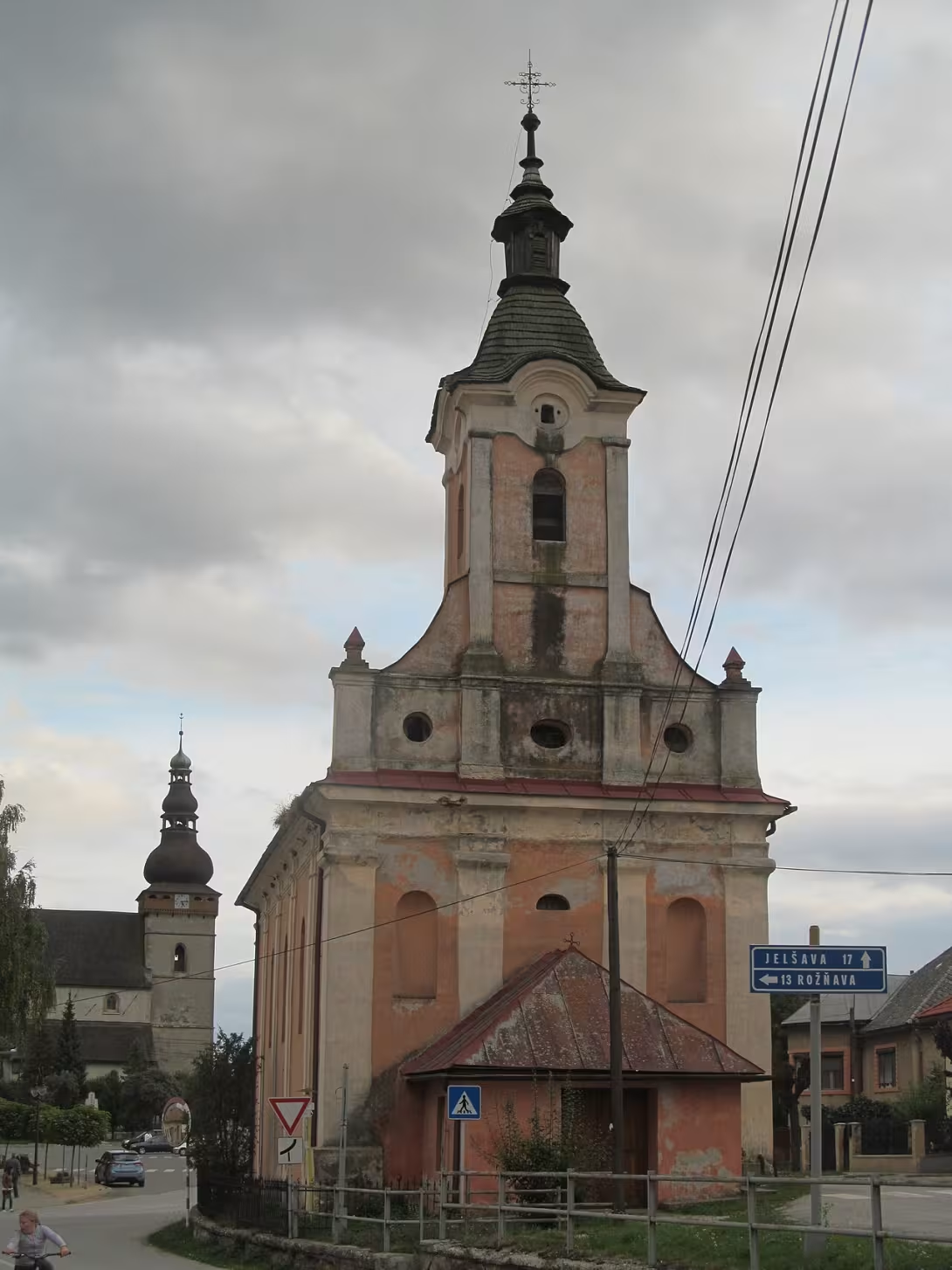
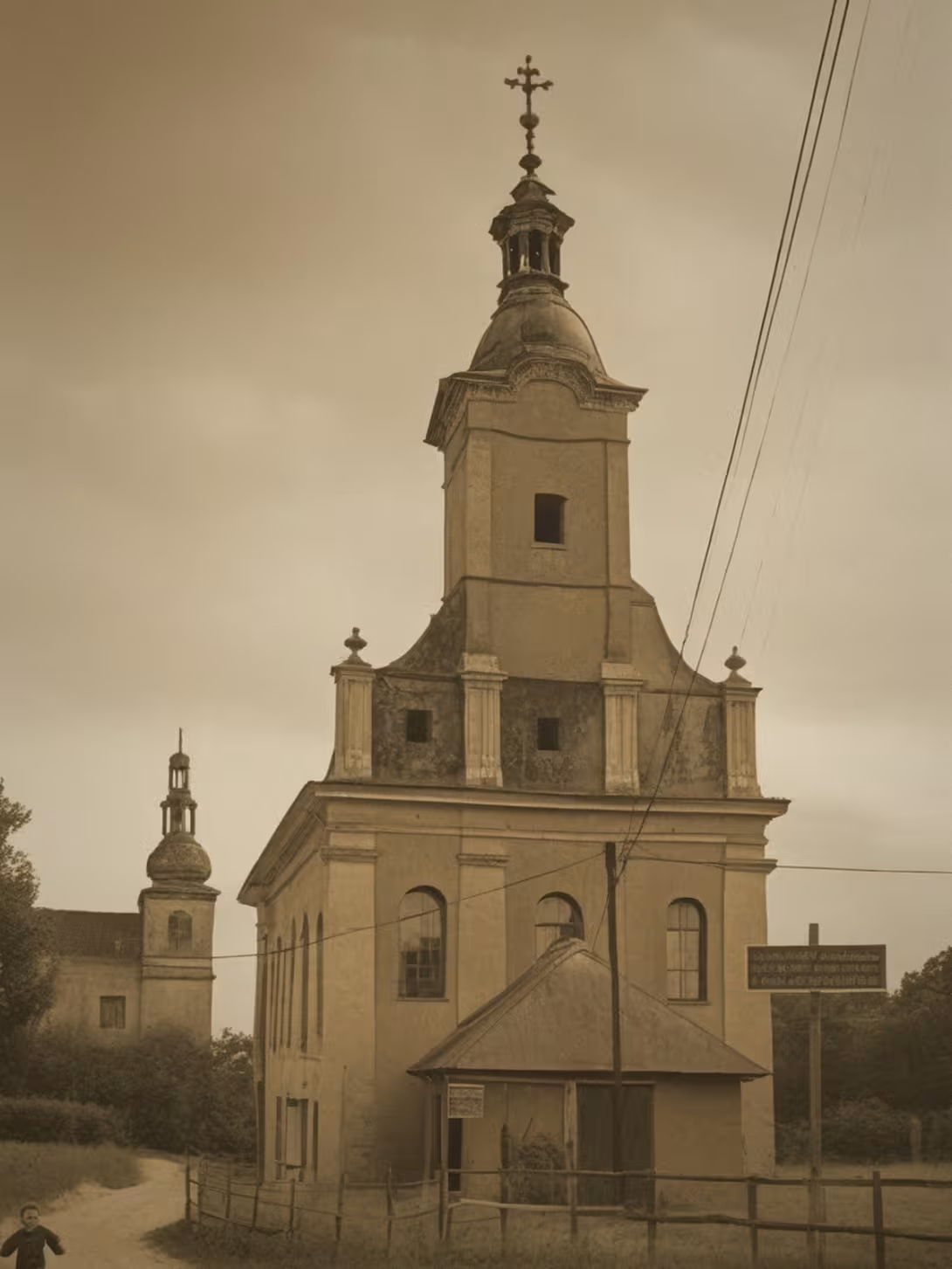
The historical view on the left is a visualisation generated by artificial intelligence and serves as inspiration.
Historical Milestones
- 1749
- The beginning of the construction of the Roman Catholic Baroque temple.
- 1750
- The creation of a side altar associated with the Podonner tradition.
- 1753
- Complete the construction of St.Judah's church.
- 1753
- Interior equipment with rococo pulpit and baroque organ.
Interesting facts
- It is a Roman Catholic baroque church from the middle of the 18th century, which is declared a national cultural monument. - The building was built between 1749 and 1753. The building has a small tower built into the shield facade with shingle roof. - The interior contains a late baroque main altar and a side altar from 1750 connected with the Podonner tradition. - In the space there is a rococo pulpit, baptistery, Confessor and Baroque organ.
Guide
The guide was voiced by a synthetic voice created by artificial intelligence.
Show guide text
The text was prepared by artificial intelligence and has not been editorially reviewed. It may contain inaccuracies.
We welcome you to Štítnik, the heart of Košice region, where time seems to be stopped for a while. You stand right in front of the church of St.Judah Tadeas, who is a silent but powerful witness to the history of this city. When you look at it now, you may first be impressed by its peaceful atmosphere and the way it fits into the environment. It is a place that requires peace and discretion in order to be able to feel the spirit of the time in which it originated. You have before you a Roman Catholic temple, which is today a fair representative of Baroque architecture and also a declared national cultural monument. Let's now come crashing into the past together to understand how this temple was built. In the mid-eighth century, at a time when the baroque, with its dynamic shapes and deep spirituality, dominated the European space, decided to build a new church in Štítnik. The first shovel was stuck in the ground in 1749. In that period context, it was not just about building a building but about expressing the faith and community identity of the local people. The construction then proceeded with the consistency typical of this epoch, and the whole process lasted four years. In 1753 the construction of St.Judah's church was finally completed, making it the dominant of local spiritual life. Now I ask you to pay attention to the details of the building you see right in front of you. Look up at the front of the temple. Note the shield facade that gives the building its characteristic character. It is here that there is a small tower that is organically built into the facade itself. If you look even closer to the finish, you will see a shingle roof that gives an entire ansamble a certain local color and nature. It is a detail that contrasts with the Baroque size and reminds us of the crafts skills of builders from the mid-eighth century. Although we do not know exactly who the architects who designed the project, their work with proportions and simple elegance is still a testament to their talent. When we take a look at the interior equipment we learn from historical records, we find that 1753 was not only the date of completion of the walls but also the time when the temple was filled with its spiritual and artistic content. At this time the interior was enriched with a rococo pulpit and baroque organ. These elements are not only furniture, but are instruments that would make people feel amazed and elevate their thoughts to God. Imagine the sound of an organ that first rang under the vaults of this temple in 1753 and complemented the atmosphere of the newly formed sacred space. We should stop by one of the most interesting art parts of the church. In the interior there is a late baroque main altar, which forms the center of liturgy. However, the real pearl on which you should go is the side altar. It was created in 1750, i.e. during the construction of the temple itself. What is special about this altar is its connection with the Podonner tradition. The Donner family represented one of the most important artistic dynasties in the Central European Baroque, known for its dynamic statues and precise processing of details. The presence of elements of this tradition in Štítnik shows that the local community had ambitions and contacts at the time the most modern artistic currents. It is fascinating to think that while the walls of the church were still being finished, there was already this side altar in the interior, which preceded the anticipate overall aesthetic direction of the building. This is a reminder of how the planning and implementation of major projects worked in the past, where art works were often created in workshops in parallel with the construction of the walls themselves. Although history does not mention the specific names of architects or known personalities associated with this place in dramatic stories, the building itself is a story of perseverance. To stand before this church is to stand before a monument that has survived centuries of change, political overflow and social transformations. The fact that it is declared a national cultural monument today is a recognition of its historical and artistic value for the whole of Slovakia. You may be interested in why this temple is so important in Štítnik. The answer lies in its authenticity. Baroque temples from the mid-eighth century are valuable witnesses in our region of the time when craft and trade developed in the cities, allowing investment in such quality buildings. At the same time, feel the silence surrounding him, and try to imagine how many generations of people went through this door, looking for comfort, celebrating happy moments, or saying goodbye to the closest ones. Now that you have examined the exterior and learned about the inner wealth, I invite you to go through the surroundings of the temple in peace. Feel the texture of the walls, the view of the shingle roof of the tower and the overall harmony that this baroque jewel brings to the country. Let yourself be guided by your curiosity and give yourself a moment of meditation on how much the world has changed since 1749, but this church of St. Jude Tadeas remained a fixed point in time. Thank you for sharing with us this short trip to the history of Štítnik. We hope this view of the church has helped you to better understand its value and beauty. We wish you a pleasant continuation in your journey and discover other gems of our common cultural heritage.
Tips for visitors
It is appropriate to visit the spring and summer months, when the surroundings of the church of St.Judah Tadeáš are in bloom. You can reach the village of Štítnik by car or public transport; check the current links in the search engine.
We recommend shoes with fixed soles suitable for walking around the village. Since it is a sacral object, we recommend adequate clothing.
The exterior of the church can be photographed in its immediate vicinity. For images of the facade is recommended morning light or light shortly before sunset.
Families with children can explore the surroundings of the building during the visit.
Frequently asked questions
Can the monument be visited?
Religious buildings are usually open mainly during services; at other times a visit is normally arranged with the parish or the operator. We have not verified specific times.
Where is the monument?
Location: Námestie 1. mája, Štítnik, Košický kraj. The map on this page shows the exact spot.
Why is the monument protected?
It is listed in the Central List of the Monuments Fund of the Slovak Republic as a national cultural monument (ÚZPF no. 428-559).
For children
Close your eyes now and imagine pressing the invisible button of time. Boom! You fly deep into the past, exactly 273 years back. Cars, cell phones and asphalt roads will disappear around you. The air smells like fireplace smoke and fresh bread. You just landed in the village of Štítnik at the time when something very special began to build here.
Nearby
🏰 Historic sites (103)
- Morový stĺp 0.0 km
- Dom meštiansky 0.0 km
- Sebőkova kúria 0.0 km Ochtinská 33/2
- S.N.P 0.1 km
- Kerekes Gabi 4.0 km
- Ján Kožár 4.2 km
- Július Botto 4.8 km
- Ľubošovi Lestákovi 6.5 km
- Dr. h. c. prof. Ing. Ján Fabián, Csc. 6.9 km
- Dom baníckych tradícií 6.9 km +421902966099
- Pamätník Vojtechovi Róthovi 7.1 km
- Pališov 7.7 km
- Ján Gonos-Markuš 8.0 km
- Pamätná izba Pavla Dobšinského 8.3 km web
- Pavol Dobšinský 8.3 km
- Pavol Dobšinský 8.7 km
- Baníkom 9.3 km
- SNP 9.4 km
- Pamätný dom P. J. Šafárika 9.5 km +421 587951243
- Huta Etelka 9.7 km web
🍽️ Restaurants and dining (97)
- Aragonit 0.0 km
- PizzaCaffe za kostolom 0.0 km +421 949 657 654 web
- Penzión HOSTINEC U VINTNERA 0.1 km
- Espresso Marka 3.7 km
- Doppio caffe 3.8 km
- U Barbory 5.1 km
- Cent-Rum 5.6 km
- Pohostinstvo 5.8 km
- Bar Vanesska 8.2 km Námestie SNP 89/3
- Lepšie ako doma 8.5 km
- Route 68 9.3 km
- Maja 9.5 km
- Bella Piazza 9.6 km +421 907 804 854
- Hostinec Kolkáreň 9.9 km
- Konský dvor 10.1 km +421 907 947 668 web
- Street food 10.3 km
- Sultán 10.7 km
- Harapatka 11.0 km +421 902 111 005 web
- Penzión TKM 11.1 km Polomská cesta 553/41 +421 905 439 667 web
- Wood pub 11.3 km +421 905 399 568
🏨 Accommodation (42)
- Repisko 4.7 km
- Hotel Hrádok 5.1 km +421584860220 web
- poľovnícka chata Rusnák a Maďari 5.3 km
- Chata na Petermanskom vrchu 6.5 km
- Chata Poliačky 7.0 km web
- Chata Zeme 7.0 km web
- chata Ondrejka 7.5 km
- Rarmen 9.4 km
- Penzión Poľovný dom 9.9 km Kúpelná 196/7
- Konský dvor 10.1 km +421 907 947 668 web
- Erika 10.2 km
- Diana vadászház 10.3 km
- Areál Jelšinka 10.8 km web
- Chalupa Ida 11.3 km +421 907 047 280 web
- Davi Penzion & Bowling 11.4 km Štítnická 214/36 +421 915 500 939 web
- Barónka Bed & Breakfast 11.4 km +421 910 405 569
- Galleria Betliar 11.5 km +421 944 550 858 web
- Hotel Gemer 11.7 km Štítnická 2040/62 web
- Penzión Pri kaštieli 11.8 km +421 58 788 20 02 web
- Areál ZAMMA 12.0 km +421 905 526 798 web
🚲 Rentals and sport (11)
- Hotel Hrádok 5.1 km web
- Konský dvor 10.1 km +421 58 73 21 620 web
- Bicykle-Servis-Šport 12.0 km +421 907 101 619 web
- Detské centrum Rožňava 12.1 km +421 911 735 795 web
- Bicykle Signal 12.3 km +421 58 733 1690 web
- J Gom 12.4 km
- Miko šport 12.4 km +421 58 732 8249
- Ebike tour 12.5 km
- Lezecká stena Rožňava 12.6 km +421 902 988 207 web
- Veronika 13.5 km
- Július 13.8 km +421 903 324 947 web
🥾 Hiking and nature (314)
- Evanjelický a. v. kostol 0.2 km Teplická 207/1 web
- Trojštít 1.5 km
- Psí chrbát 1.7 km
- Klen 1.8 km
- Roveň 2.0 km
- Ortáš 2.1 km
- Háj 2.5 km
- Glac 2.8 km
- Sivá skala 3.1 km
- Úzka jaskyňa 3.1 km
- Na krížoch 3.1 km
- Železné vráta 3.2 km
- Veľká vlčia priepasť 3.4 km
- Štít 3.6 km
- Šingliarova priepasť 4.0 km web
- Ochtinská aragonitová jaskyňa 4.0 km +421 58 488 1051 web
- Hrádok 4.0 km
- Kameň 4.0 km
- Červená chrasť 4.1 km
- Vlčí štít 4.2 km
Thematic route
As there are no other objects in the area of the area, I propose a thematic route within the area:
1. St. Júdu Tadeáša - sacral building in the village Štítnik. 2. Interior of the church - artistic details and altar. 3. Church area - courtyard and surroundings of the building.
Seasonal recommendations
In spring, the surroundings of the church of St.Juda Tadeáš in Štítnik will wake up to life and the landscape over the Košice region will begin to green. The sun in this period provides fine light that is ideal for photographing the exterior of the building. It is recommended to put on with firm soles due to wet soil and visit in the morning when the air is cleanest.
Summer months bring intense lighting and rich colors of surrounding nature, creating contrast with historical facade. Due to high temperatures, it is advisable to choose morning or late evening hours to avoid direct sun exposure. Practical is light, airwear and UV protection during the sightseeing.
Podzim in Štítnik is characterized by golden tones of leaves and melancholy atmosphere, which complements the sacral character of the building. It is during this period that light is lighter and creates nostalgic mood. It is advisable to wear layered clothes and not to browse with a visit until late evening, as the days are significantly shorter.
Winter season brings peace and silence to this area, while the snowy region around the church creates a dramatic visual effect. The atmosphere is withdrawn and introverted, which in turn emphasizes the monumentality of the building. Warm and waterproof shoes and layered winter clothes are essential to manage low temperatures in this part of the country.
Visualisations and artistic views


The visualisations are generated by artificial intelligence and serve as inspiration.
Photographs from the area
Real photos taken near the monument


Source and licence are given for each image.
Visitor Tips
No tips yet. Be the first!
Log in and add your tip.
Location on Map


Visitor photos
No photos yet. Be the first to add a photo from your visit!
Log in and add your photo or leave a rating.
You get more points for a visit verified in the app — we can tell from the GPS that you are there.
Reviews and comments