

blacksmith's fire Forge
Kováčska excavation in the village Myto pod Ďumbierom in Banská Bystrica region is a national cultural monument from the first half of the 20th century. This folk-style craft house is still in operation.
The building is brick with rectangular floor plan and gabled roof with non-original metal covering. Before the entrance there is an indoor space with a frame structure, in which there is a school for rolling steers.
The area is registered by the Monument Office of the Slovak Republic under the number of ÚZPF 10766.
Tehdy a dnes
Drag the slider and compare how the monument might have looked when it was built with the view today.
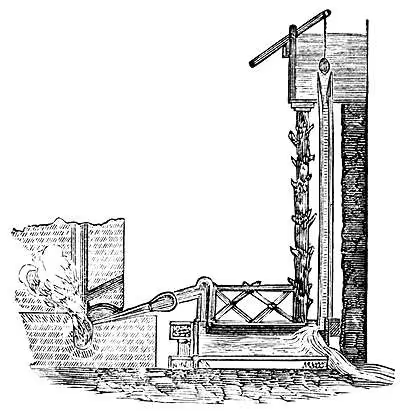
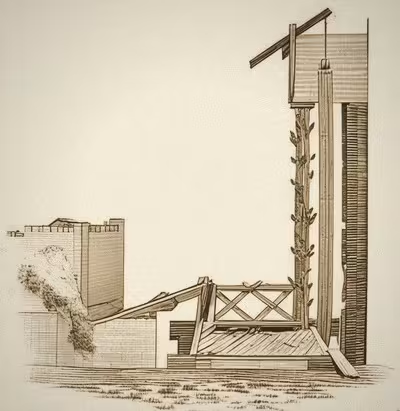
The historical view on the left is a visualisation generated by artificial intelligence and serves as inspiration.
Historical Milestones
- 1900-1950
- the formation of blacksmiths in folk style
- 2024
- object is registered as a national cultural monument and remains in operation
Interesting facts
- Kovac Exhibition in the village Myto pod Ďumbierom is a national cultural monument from the first half of the 20th century. - This folk-style craft house is still in operation. - The building is brick with rectangular floor plan and gabled roof with non-original metal covering. - Before the entrance there is an indoor space with a frame structure, in which there is a school for rolling steers.
Guide
The guide was voiced by a synthetic voice created by artificial intelligence.
Show guide text
The text was prepared by artificial intelligence and has not been editorially reviewed. It may contain inaccuracies.
Welcome to the village Myth under Dumbier. Right now, you are facing an extraordinary monument that is a living witness to the craftsmanship of our country. Before you lies the blacksmith, also known as the House of Crafts. When you look at it, you may first perceive its modesty, but it is in this simplicity that it is of great value. It is a place where history meets everyday work and where time seems to slow down for a while to remind us of the time when the hands of craftsmen shaped the world around us. Let's take a look at when and how this place was created. The blacksmith's exile was built in the first half of the 20th century, namely between a thousand nine hundred and a thousand nine hundred and fifty. At this time, blacksmithy was a key pillar of the operation of each municipality. The blacksmith was not just a man who repaired the tools but was at the heart of the community, as the architecture of this house approached. The building was designed in folk style, which means it did not become a symbol of power or luxury, but a symbol of functionality, honesty and benefit. Although we do not know the names of the specific architects who designed this project, their work has survived for decades and still tells us about the aesthetics of the human building. Now that you are still standing outside the building, pay attention to the details of its architecture. Note that it is a brick object with rectangular floor plan. This form has been chosen to maximise the interior space for blacksmiths while ensuring the stability of the construction. Look up on the roof. It is a gable roof that is typical of houses in our border areas. It is important to mention that the current metal covering is not original, but it is fulfilling its purpose and protects the interior from bad weather. Now, if you look straight ahead of the entrance, you'll see the covered bay. It is this element that is an important detail, which protected the entrance to the workshop and provided room for handling the materials before they reach the inside itself. Blacksmith work has always been associated with fire, the noise of hammers, and hard discipline. Although we do not have the names of particular personalities in historical records, we can imagine generations of blacksmiths who spent their days here. Imagine the sound of hot iron that got soaked in water, and the rhythmic blows of hammers that rang across the village. This house was not just a workshop, but a place where the problems of local farmers were solved, horseshoes were forged, and instruments needed to survive in a mountain landscape were produced. Every corner of this house has a trail of thousands of hours of hard physical labor. And now comes the most interesting thing that makes this place really unique. Most of the historical workshops from the first half of the twentieth century now only function as museums where glass exhibits are in place and visitors can only remotely observe old tools. However, the blacksmith's extortion at Myth below Ďumbierom is different. The most interesting thing is that this craft house is still in operation. This means that the monument is not a dead object, but a living organism. This is a rare example of continuity, where traditional craft has not only been the subject of study, but has remained part of the current reality. In the year two thousand twenty four was officially registered as a national cultural monument, which confirms its immense value for the entire Slovak Republic. It is fascinating to think that the processes that took place here almost 100 years ago can still take place today. Do you see this atmosphere? You're standing in front of a building that has been bridged for two centuries. From a simple brick house in folk style to a recognized national cultural monument. It is a place where material meets with artisticity and history touches the present. Finally, we invite you to go around the whole object in peace and to see its simplicity and strength. Let yourself be swallowed up by the feeling that you are in front of a place that has never ceased to perform its function. If you have the option, try to stop and forget the moment of the modern world in which things are produced in series in factories. Here, in Myth under Ďumbier, there is still room for things made with precise care and human energy. Thank you for sharing with us this short trip to the world of crafts. We wish you a pleasant further stay in this beautiful area and hope that a visit to the blacksmith has inspired you to take a deeper interest in our cultural heritage. Goodbye.
Tips for visitors
We recommend a visit in spring and autumn months, when there is pleasant weather in Myth under Ďumbier.
We recommend shoes with fixed soles to the historical excavation environment. For a longer stay in the locality, wrap up water and light snacks.
For photography are suitable details of blacksmith tools and texture of wood and metal. The exterior images of the building are the most suitable during the time of the -Golden clock-- shortly before the sun melts, when the shadows are softer.
Families with children can explore traditional crafts and metal processing in this area. This is an opportunity for a practical lesson on the history of regional skills.
Frequently asked questions
Can the monument be visited?
This is a technical monument. Some are open as exhibitions, others are out of use or on private land. We have not verified whether this one is accessible.
What are the opening hours and admission?
We have not verified the opening hours or admission. Current information is published by the operator.
Where is the monument?
Location: Mýto pod Ďumbierom, Banskobystrický kraj. The map on this page shows the exact spot.
Why is the monument protected?
It is listed in the Central List of the Monuments Fund of the Slovak Republic as a national cultural monument (ÚZPF no. 323-10766).
For children
Imagine it's morning. The sun is slowly rising above the mountains, and the air is cold and fresh. But in a small village Myth under Ďumbier's already smacking and cracking. It's not the leaves on the trees or the sound of the wind. It's the sound everyone knew in the village. The streak, the sting, the sting. The golden sound of a hammer about metal. You led the old road here, and it was here that there was a house that was the heart of the craftsmen.
Nearby
🏰 Historic sites (90)
- sv. Florián 2.1 km web
- Potraviny 3.1 km
- Pamätník SNP 3.2 km
- Pamätník SNP 4.0 km
- RČS 1918-1928 4.0 km
- Samuel Sekuris 4.7 km web
- Horehronské múzeum - Meštiansky dom 4.8 km +421 48 6112283 web
- Ján Chalupka, Adolf Peter Záturecký, Martin Rázus 4.8 km web
- Martin Rázus 4.8 km web
- Karol Kuzmány 4.8 km
- Horehronské múzeum - Literárne Brezno 4.8 km +421 486112453 web
- Ján Chalupka 4.8 km
- Gustáv Kazimír Zechenter-Laskomerský 4.8 km
- Horehronské múzeum 4.8 km +421 48 6112453 web
- Padlým v 2. svetovej vojne 4.8 km web
- Radnica - národná kultúrna pamiatka 4.8 km web
- Jozef Miloslav Hurban 4.8 km web
- Sídlo SNP 4.9 km
- Milan Rastislav Štefánik 4.9 km
- Opevnenie mesta Brezna 4.9 km
🍽️ Restaurants and dining (130)
- Autralian Coffee Company 0.5 km +421907840251 web
- Mýto Reštaurácia 0.7 km
- Aprés Ski Bar 0.7 km
- Koliba Bystrá 1.8 km +421 905 504 220 web
- Bufet PIT STOP 94 1.8 km
- Dedečkova chata 1.8 km web
- Penzión Mýtnik 2.2 km
- Kúria na Táloch 2.3 km +421 944 616 983 web
- Horehronie Infocentrum Bystrá 2.4 km +421 903 513 535 web
- Bystrinka 2.6 km +421 905 413 495 web
- Bufet pri Jazere 3.2 km
- Tálska bašta 3.4 km web
- Slovenská reštaurácia 3.4 km
- Reštaurácia Stodola 3.5 km
- Koliba 3.7 km
- Motorstop 4.4 km
- Bufet Banisko 4.5 km
- VELÍN cafe s.r.o. 4.6 km +421 901 797 777 web
- Televízor 4.6 km
- La Trattoria 4.7 km
🏨 Accommodation (124)
- Penzión v stráni 0.1 km
- Rojas 0.3 km
- Adika 0.9 km +421 48 619 53 00 web
- Chata Lenka 1.3 km
- Penzión Encián 1.3 km +421 48 6195274 web
- Penzión Bystrina 1.6 km +421486170053 web
- Hotel Bystrá 1.7 km +421 48 6195 253 web
- Biela medvedica 1.7 km +421 903 529 442 web
- Penzión EKA 1.7 km +421 907 828 863 web
- Chata Chopok 1.7 km +421 907 745 483 web
- Zruby Bystrá 1.7 km +421 910 922 218 web
- Penzión Dúhový pstruh 1.7 km +421 905 504 220 web
- Privát Eva 1.8 km +421907647250 web
- Vila pod lesom 1.8 km +421911663233 web
- Apartmány Bystrá-Chopok 1.8 km web
- Chata pod Chopkom 1.8 km +421 907 745 483 web
- Penzión Bystrá 94 1.8 km +421918738331
- Chata Ďumbier 1.8 km +421 907 745 483 web
- Ubytovanie u Zaja 1.9 km +421903624033 web
- Chalupa Bystrá 2.2 km web
🚲 Rentals and sport (27)
- Ski Alp Point 0.4 km
- Wellness Bystrá 1.7 km +421 48 6195 835 web
- Bystrá 94 1.8 km
- Lanový park Tarzania 3.2 km web
- Sportisimo 4.6 km
- E-bike Rental 4.8 km +421 911 633 119 web
- Bike šport 5.0 km web
- BikeLandia 5.2 km web
- Yogi sport 5.2 km web
- Pool Polianka 6.1 km
- Tennis center 6.1 km
- Cyklo Servis Šport 6.3 km
- BMT 6.6 km web
- Kolkárnička 8.5 km Sládkovičova 79/15
- SIGO e-bike Servis 8.5 km +421 908 658 594
- SV stena 9.7 km
- Centrálna stena 9.8 km
- Galéria 9.9 km
- Dolná terasa 10.0 km
- Severná stena 10.1 km
🥾 Hiking and nature (238)
- Šanské 1.8 km
- Stupka 1.9 km
- Krajčovo 2.0 km
- Prameň sv. Antona 2.3 km
- Marek 2.5 km
- Horný diel 2.5 km
- Skalka 2.5 km
- Bystrianska jaskyňa - východ 2.6 km
- Bystrianska jaskyňa 2.8 km web
- Skalka 3.0 km
- Prameň Sv. Huberta 3.3 km
- Perníková chalúpka 3.3 km
- Prostredný vrch 3.4 km
- Prameň sv. Jána 3.8 km
- Horné lazy 3.9 km
- Prameň Dolná Kyslá 3.9 km
- Chodorov vrch 3.9 km
- Prameň Horná Kyslá 3.9 km
- Prameň sv. Petra 4.0 km
- Jubilejný háj RČS 1918-1928, Horná Lehota - sedlo Príslop 4.0 km
Thematic route
As there are no other sites in the area of the area, I propose a thematic route in the area of the main objective:
The route within the blacksmith's exile (House craftsman's house)
1. Blacksmith's Exhibition (main exposure) - a place where you can follow the traditional metal processing process. 2. Courtyard House craftsmanship - a space connecting parts of the area from which is seen blacksmith equipment. 3. Exhibition space - a place with a tour of finished products and tools.
Seasonal recommendations
In spring, around Myth under Ďumbier awakens nature and landscape greenery. The sun is warm, but the air remains refreshing. It is recommended that footwear with a firm sole, as the roads can be moist and muddy after the melt. Good time to visit is the morning part of the day.
Summer season brings intense lighting and rich colors of mountain nature. In the Banská Bystrica region there may be a great influx of tourists at this time. Light, breathable clothing and plenty of drinking water are recommended. Ideal to arrive early in the morning or late in the afternoon to avoid high temperatures.
Autumn in Mýto pod Ďumbierom brings color change of leaf cover. The golden and red tones around the blacksmith's extermination create a visual contrast with the materials of the building. Due to variable weather and morning mist, it is advisable to dress with layers and wear an unsightly jacket. Suitable are early morning hours when light is soft.
Winter brings silence and snow cover to this area. The atmosphere is raw and calm. Warm, layered clothing, thermoregulatory layers and winter shoes with anti-slip sole are essential. Due to the short day it is advisable to plan a visit until noon.
Visualisations and artistic views


The visualisations are generated by artificial intelligence and serve as inspiration.
Photographs from the area
Real photos taken near the monument


Source and licence are given for each image.
Visitor Tips
No tips yet. Be the first!
Log in and add your tip.
Location on Map
More monuments – Mýto pod Ďumbierom
Show all in the town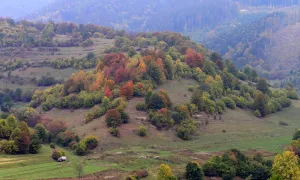
Visitor photos
No photos yet. Be the first to add a photo from your visit!
Log in and add your photo or leave a rating.
You get more points for a visit verified in the app — we can tell from the GPS that you are there.
Reviews and comments