








burgher's house Burgher house
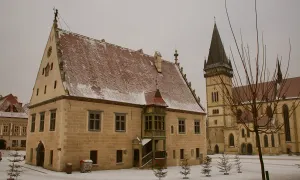
Townhouse in the village Bardejov in Prešov region is a terraced Renaissance building. The Slovak Monument Office dates back to its creation in the 17th century. The object is registered under number ÚZPF 1744.
In the Middle Ages, burgher houses were mostly wooden; brick buildings were owned only by solvent owners. Their typology depended on the material used, the method of heating, property status of the owner and defence needs. Tower houses were block multi-storey buildings that formed a defense system. Chamber houses had a simple longitudinal floor plan with a front room, black kitchen and a chamber. Hall houses had a hallway even on the floor, while the hall later moved to the solar side.
A frequent layout was the house with passage. A simpler variant was a house with a height that had a reduced attic for storing grain or moisture sensitive goods. On the facade, these spaces were shown by a series of small windows with external shutters or forged knocks.
In the 17th and 18th centuries, due to administrative functions, the interest of nobility in urban residence increased. The noble families bought several plots and rebuilt them in city palaces with a landscaped front courtyard and representative staircases. In the 19th century, with an increase in population, rentals and pavilions were created. Pavlačové houses formed a four-wing block with a central courtyard and three- to four-storey facades with orbiting spiders that led to flats. On the outskirts of the cities, especially at the walls, houses of poverty were found.
This monument in Bardejov represents a series type of burgher house from the Renaissance period. According to data from the Monument Office of the Slovak Republic comes from the 1950s.
Tehdy a dnes
Drag the slider and compare how the monument might have looked when it was built with the view today.
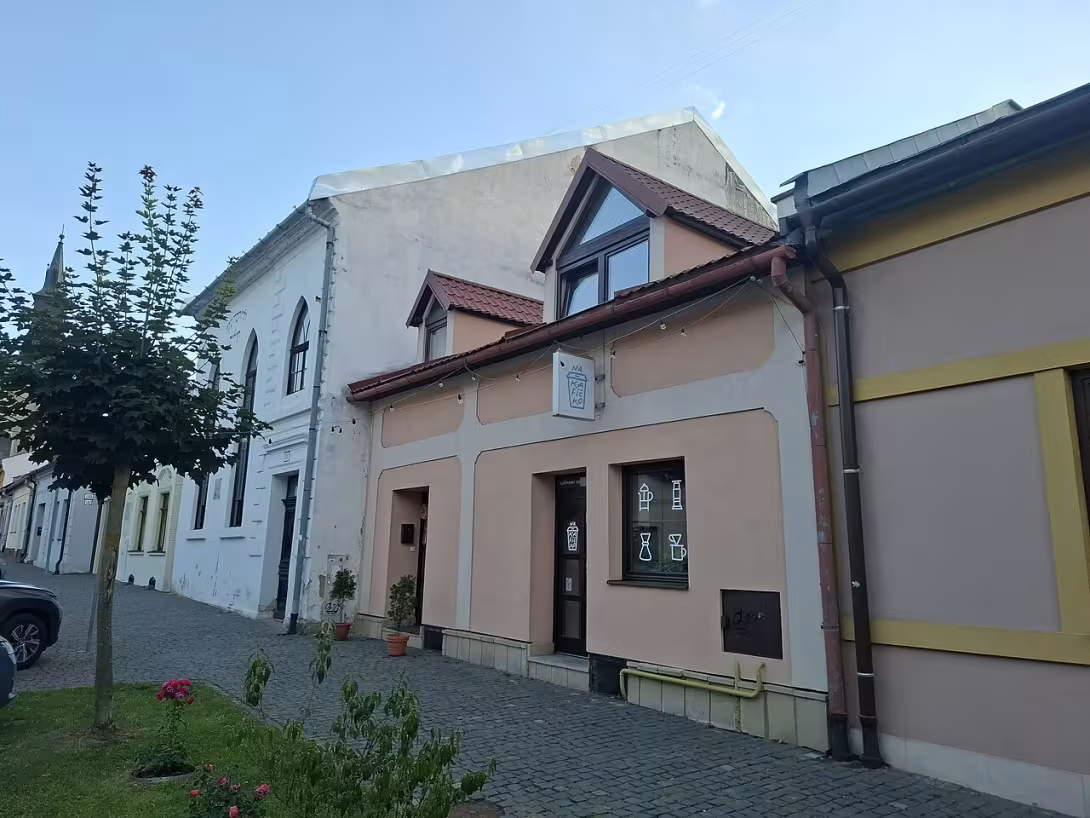

The historical view on the left is a visualisation generated by artificial intelligence and serves as inspiration.
Historical Milestones
- round 1650
- The creation of a terraced Renaissance building of the townhouse in Bardejov.
- 1750
- Documented date associated with the object.
- 17th - 18th century
- The period of increasing interest in the nobility of urban residences and home-building.
Interesting facts
- It is a row Renaissance building in Bardejov. - The Slovak Monument Office dates back to its creation in the 17th century. - The object is registered under number ÚZPF 1744.
Guide
Show guide text
The text was prepared by artificial intelligence and has not been editorially reviewed. It may contain inaccuracies.
We welcome you to Bardejov, a city with a rich history and a unique atmosphere where the story of the past is hidden in every stone. Right now, you are facing one of the many witnesses of ancient times, which is this burgher's house. When you look at it, you may see in the first moment only one of a series of historical buildings that make up a characteristic image of the city centre, but in fact you are in front of a construction that represents the golden age of local citizenship and their ambitions. At the moment, feel the way this place makes you feel, and try to imagine how this square beat up hundreds of years ago when merchants, craftsmen, and local councilmen met here.
Let's now dive deeper into the history of this object. This house is a typical example of a terraced Renaissance building that is characteristic of Bardejov. According to data from the Monument Office of the Slovak Republic, we can date the establishment of this building until about the fifth century. Imagine, then, a period around 1650 when the first stones were laid and the walls of the house were floating. At that time the Renaissance was at our end a period of flowering, stability and development of business routes, which was reflected in how the townspeople built their residences. The house was not only a place of housing but also a symbol of the status and wealth of its owner.
Now, when you absorb the overall form of the building, take note of its rhythm and the way it fits into the other houses. The Renaissance architect was marked by the pursuit of harmony and balance. Although we do not know exactly who the architect of this building was, it is clear that they were experts who understood spatial planning in a densely stopped urban zone. Look at the facade and perceive its vertical and horizontal lines. It was this type of terraced building that created a compact and elegant urban complex in Bardejov, which fascinates us to this day.
If we move on in time, we'll stop by 1750. It is this date in the documentation linked to the object and indicates the period when certain changes or modifications could be made in the house. It is fascinating to see how buildings evolve along with the needs of the people living in them. In the eighteenth and eighteenth centuries there was an interesting social trend. The nobles began to show increased interest in urban residences. Many noble families have moved from remote settlements closer to the city centre and business, leading to the rebuilding of existing burgher houses. This process brought to interiors and exteriors new elements, which should reflect the higher social status of new owners.
Although history does not mention the specific names of the persons who would live in this house, we can imagine the life that has taken place here. Who could it be? Perhaps a rich kupaca that traded fabrics or spices, or a significant artisan whose products were valued throughout the region. Each of them brought their dreams, fears, and ambitions to these walls. Imagine morning conversations in the premises of the house, the sound of the shed in the streets before the entrance and the smell of morning air in the city, which was then one of the most important business nodes on the right bank of the Danube.
However, there is also a detail that may not be visible at first sight, but is crucial for professionals. This object is officially registered under the number ÚZPF 1744. It may seem to be just a dry administrative number from the register of the memorial fund, but it is actually a confirmation that this house is recognised as an important part of our cultural heritage. It is a promise that future generations will be able to see the same thing that you see now.
Mystery remains, however, the exact form of the original interior from 1650 and exactly how the transition from the burgher to the possible noble character of the house in the 18th century influenced its inner disposition. Each such building in Bardejov is like a book from which we have read only a few pages today, but many unseen stories remain hidden between its walls.
Now that you've learned about the origins and historical context of this Renaissance house, I suggest you not commit with the next few minutes. Stay here for a while, feel the silence of the historic centre and try to feel the connection with the people who lived here three centuries ago. This house is just one of many corners of Bardejov waiting for your discovery.
Let's finish the tape and invite you for another walk. Bardejov has many secrets waiting to be revealed in the surrounding streets and other monuments. Thank you for sharing this moment of history with us. We wish you a pleasant stay and an inspiring further exploration of this beautiful city.
Tips for visitors
Visit the burgher's house early in the morning or later in the afternoon when Bardejov streets are quieter. The building is not a museum and is only available from the exterior, so focus on its architectural features and facade.
You can reach the city center with a short Piala.
For a visit, comfortable shoes on historical tiles are enough. During a longer tour of the city in the summer months, we recommend taking water and hat.
Take the photos with natural light before sundown, when the rays fall directly on the facade and highlight the details. Suitable angles are from the opposite side of the street or from the corner.
Families with children can combine the tour with the search for architectural details on the facades, which will help children to maintain their attention.
Frequently asked questions
Can the monument be visited?
This is a residential or farm building, not a museum with opening hours. Please view it from public space and respect the owners' privacy. We have no information about access to the interior.
Where is the monument?
Location: Kláštorská 130/12, Bardejov, Prešovský kraj. The map on this page shows the exact spot.
Why is the monument protected?
It is listed in the Central List of the Monuments Fund of the Slovak Republic as a national cultural monument (ÚZPF no. 411-1744). It is part of a UNESCO World Heritage Site.
For children
Now close your eyes and imagine you're moving on with time. Can you feel the wind? Do you smell fresh bread and hear the stout of horses on the stone pavement? We just landed in Bardejov. We crossed out exactly 276 years ago, until when people didn't wear jeans but woolen coats, and instead of cell phones, they wrote letters with a pen.
Nearby
🏰 Historic sites (43)
- sv. Florián 0.2 km
- Šarišské múzeum - Prírodovedná Expozícia 0.2 km +421 54 472 2009 web
- Šarišské múzeum - Expozícia Ikony 0.2 km +421 54 472 2009 web
- Šarišské múzeum - Historická expozícia 0.2 km +421 54 474 6038 web
- Pomník Juraja Wintera 0.2 km
- Bazilika svätého Egidia 0.2 km Radničné námestie 47/47
- Šarišské múzeum - Výstavná sieň 0.2 km +421 54 472 43 09 web
- Leonard Stöckel 0.2 km
- Leonard Stöckel 0.2 km
- Pomník Mikulovskému pluku 0.2 km
- Pomník vďaky a priatelstva 0.2 km
- Pomník Aloisa Jiráska 0.2 km
- Dr. Ján Andraščik 0.2 km
- Pamätník holokaustu 0.4 km
- Židovské suburbium 0.4 km
- Pomník Jozefa II. 0.9 km
- Pamätník padlých hrdinov 1.2 km
- Pomník Gašpara Šeredyho 3.6 km web
- Kúpeľný dom Astória 4.2 km Bardejovské kúpele 1994/32
- Múzeum ľudovej architektúry - Skanzen Bardejov 4.2 km web
🍽️ Restaurants and dining (115)
- Na kafíčko 0.0 km
- Peppino 0.0 km
- Alibaba 0.1 km
- Viecha 0.1 km
- Francesco 0.1 km
- Parada 0.1 km
- Eiscafe Tranquilla 0.1 km
- Eis café Tranquilla 0.1 km
- Slovenská reštaurácia - Slovak Pub 0.1 km +421944555135
- Cukráreň Babička 0.1 km Radničné námestie 41/41 +421 54 476 72 38
- Assisi 0.1 km Františkánov 139/2 +421 919 218 967 web
- Irish Pub 0.1 km
- El Peňo 0.1 km
- BarBar 0.1 km
- Rock Café 0.1 km
- Reštaurácia hotela pod Bránou 0.1 km
- Tvoj deň Coffee & Cake 0.1 km
- Libresso Löwy 0.2 km
- Palacinkáreň & Bagetéria 0.2 km
- Maja bagetéria 0.2 km
🏨 Accommodation (30)
- B&B Alibi 0.1 km +421948123500 web
- Hotel pod Bránou 0.1 km Hviezdoslavova 1 +421 54 472 23 48 web
- Hotel Šariš 0.2 km Námestie SNP 171/1 +421 54 488 33 80 web
- Le Monde 0.3 km +421 902 123 555;+421 948 636 100
- Hostel H18 0.3 km
- Magura 0.4 km
- Artin 0.5 km Fučíkova 25 +421905618118 web
- SEMAFOR 0.6 km +421 905 830 984 web
- Bellevue 2.5 km
- Lipka 3.2 km +421 950 589 575 web
- Privát u Jozefa 3.2 km
- Penzión Adrián 3.3 km +421 903 633 210 web
- Kolibrik 4.0 km
- Mníchovský potok 4.0 km
- Alexander 4.0 km web
- Motorest Mark 4.1 km
- Ozón 4.2 km +421544772101 web
- Penzión Zunama 4.2 km Bardejovské kúpele 4309/70A +421 903 642 820 web
- Hotel Mier 4.5 km Bardejovské kúpele 2009/46 web
- Geffertova chata 6.8 km
🚲 Rentals and sport (10)
- Trespass 0.3 km
- Cycleland 0.4 km +421 949 815 775 web
- Mc Sport 0.5 km
- SLR sport Hockey shop 0.7 km
- Intersport 0.9 km
- Letné kúpalisko Bardejov 1.1 km
- Sportisimo 1.2 km
- Detský bazén 4.6 km
- Letné kúpalisko Bardejovské Kúpele 4.7 km +421 54 477 4421 web
- Prírodné kúpalisko Makovica 14.7 km
🥾 Hiking and nature (199)
- Park John Lennona 0.1 km
- Park Emila Korbu 0.1 km
- Park Františkánov 0.1 km
- Rinková studňa 0.2 km
- Promenádny Park 0.2 km
- Park Aloiza Jiráska 0.2 km
- Zvony Ján a Urban 0.2 km web
- Miniatúrny model historického Bardejova 0.2 km
- Lampový stĺp 0.2 km Jiráskova
- Park Vďaky a Priateľstva 0.2 km
- Katov dom 0.3 km Veterná 168/10
- Park hlavna pošta 0.3 km
- Park Dolná brána 0.4 km
- Park Zdravia 0.5 km
- Lekárensky Park 0.5 km
- children park Komenského 0.5 km Komenského
- Park Európy 0.6 km
- Nemocničný park 0.6 km
- Park Filantropov 1.2 km
- Šibeň 1.4 km
Thematic route
1. House burgher - Architectural exterior. (Type: Historical building). Take a look at the decorations and architectural details of this building. 2. House burgher - Interior and exposition. (Type: Cultural exposure). In the premises of the house you will know the history and lifestyle of the inhabitants of the region. 3. House burgher - Courtyard. (Type: Building area). Visit the area in the immediate vicinity of the house.
Seasonal recommendations
In the spring, the townhouse in Bardejov is surrounded by waking nature. Soft spring light allows detailed observation of architectural elements from the street. It is recommended that shoes suitable for walks in the historic centre and visit in the morning.
Summer season brings intense sunlight, highlighting the colors of the building and creating contrasts in detail. Due to high temperatures it is advisable to arrive early in the morning or late in the evening. Easy clothes and a sun hat are practical.
Podzim is characterized by golden tones of leaves in the background of the house. Lighting is softer and warmer in this period. A layered clothing that can handle variable October weather and cooler evenings is suitable.
Zimą is a bourgeois house monumental, especially if the facade is covered with snow. In advent times in the surroundings prevail cozy atmosphere and evening lighting of the city. Warm shoes with anti-slip sole and winter equipment are essential.
Visualisations and artistic views


The visualisations are generated by artificial intelligence and serve as inspiration.
Photographs from the area
Real photos taken near the monument


Source and licence are given for each image.
Visitor Tips
No tips yet. Be the first!
Log in and add your tip.
Location on Map

Visitor photos
No photos yet. Be the first to add a photo from your visit!
Log in and add your photo or leave a rating.
You get more points for a visit verified in the app — we can tell from the GPS that you are there.
Reviews and comments