








burgher's house Burgher house
The townhouse in Banská Štiavnica in Banská Bystrica region is a baroque solitaire from the second third of the 18th century. The building represents the type of burgher house of the late Renaissance period and the Baroque. It is registered by the Slovak Monument Office under number ÚZPF 3331.
The building is located on micronámestie as a corner building. Fixes the original urban situation in relation to main and side communication. The house retained the overall expression and ground plan-space composition, although the removal of the side wing part disrupts its material expression. The architectonic concept of the facade has been partially modified by modification of the parter.
Banská Štiavnica burgher houses are characterized by a situation in a violent terrain. Examples are the buildings near the Square of St. Trinity. They are three- to four-storey, the last floor serving as the ground floor in the back alley. In some houses the cellars were dug into the rock subsoil in the sheds. Originally, narrow streets were maintained in the building, which later disappeared as a result of the expansion of houses, and rowed buildings were formed.
In the Middle Ages were houses in the city mostly wooden, brick were only isolated. Typology developed from tower houses that formed a defense system, through chamber and hall houses to houses with passages and houses with height. The latter served reduced attic to store wet - sensitive goods. In the 17th and 18th centuries, the interest of nobility in the town's stay increased due to the county and military administration. This led to the rebuilding of several plots in city palaces with landscaped front courtyards and decorated staircases.
In the 19th century there were rental houses, pavilion houses with a four-wing block and a central courtyard, as well as houses of poverty and iron houses on the outskirts of the city near the walls. Original objects were later modernized mainly in the partrium, where the way of selling goods in stores changed. The housing function has been preserved in burgher houses to this day, although housing standards have changed.
Tehdy a dnes
Drag the slider and compare how the monument might have looked when it was built with the view today.
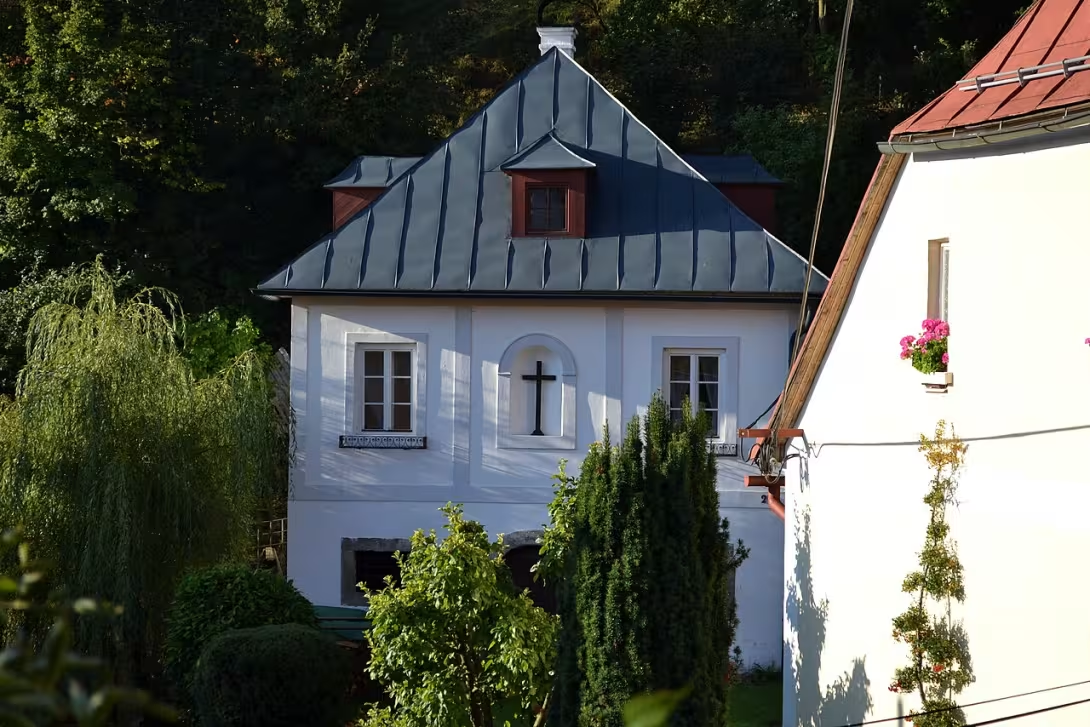

The historical view on the left is a visualisation generated by artificial intelligence and serves as inspiration.
Historical Milestones
- middle ages
- The period of dominance of wooden houses and the emergence of tower houses in the city
- 1600-1700
- Rebuilding parcels on city palaces for county and military administration
- 1733-1766
- creation of baroque solitaire of the town house
- 1800-1899
- The discovery of rental and pavilion houses in the city
- 20th century
- Modernisation of house parties to change the way goods are sold
Interesting facts
- It is a baroque solitaire from the second third of the 18th century, representing the type of burgher house of the late Renaissance period and the Baroque. - The building is located on micronámestie as a corner building and fixes the original urban situation. - The house retained the overall expression and ground plan-space composition, although the removal of the side wing part disrupts its material expression. - The architectonic concept of the facade has been partially altered by modification of the parter.
Guide
Show guide text
The text was prepared by artificial intelligence and has not been editorially reviewed. It may contain inaccuracies.
Welcome to Banska Stiavnica, a city with fascinating history and a unique atmosphere that surrounds you at every turn. Right now, you are standing in front of a building that is a silent but significant witness to the changes that this city has seen in recent centuries. Before you lies the townhouse, which bears a trail of ancient times and represents the life of the inhabitants of this mining town. When you look at it, you may see only one of many historical houses in the first moment, but in fact there is an architectural solitaire in front of you who helps us understand how Banská Štiavnica evolved from a wooden settlement to a rich centre of administration and trade. To understand the meaning of this house, we must return to the Middle Ages for a while. At that time, the city was flooded with wooden buildings and gradually began to appear so-called tower houses, which testified to the ambitions and wealth of the then inhabitants. However, times changed, along with the needs of the city. During the seventeenth century, namely between the year thousand six hundred and a thousand seven hundred, the plots themselves began to change. Original smaller houses were rebuilt into magnificent city palaces. The reason was the need for a new area for county and military administration, which changed the overall face of the city and gave him a new, more official identity. It is in this context that the house you are facing has been created. Its present form dates from between the year thousand seven hundred thirty-three and a thousand seven hundred forty-six. It is a baroque solitaire from the second third of the eighth century. This house is not just an ordinary building, but it represents a typical burgher house from the late Renaissance and Baroque period. It is basically the embodiment of aesthetics and functionality when the city became the dominant force in the city and demanded housing that reflected its status and stability. Now take a closer look at the location of the building. Note that the house is located on a small micron square and is built as a corner building. This location is not random. It is thanks to the fact that the house stands at this point that fixed the original urban situation of the city. This means that although the surrounding area may have changed, this house keeps in space the original structure of streets and squares as planned hundreds of years ago. It's like an anchor at a time that allows us to imagine exactly where the old roads were going and where people met at a time when the city lived a completely different rhythm. When you overlook the facade and the overall appearance of the house, feel its stability. Although time did not pair everything, the house retained its overall expression and ground plan-space composition. This is very valuable because it allows us to see the house in almost the form in which unknown architects designed it almost three centuries ago. At the time, it was not just aesthetics, but a precise layout of the premises, which should serve both the being and the representative purpose. Let's go a little further in time into the nineteenth century. During this period, between the year thousand eight hundred and a thousand nine hundred, new types of buildings, namely rentals and pavlač houses, appeared in Banská Štiavnica. These buildings brought new dynamism to the city and changed the way people stayed. However, our burgher house remained a symbol of an older, more solid era, while the city grew around it and got thicker. An interesting detail you should be aware of is the ground floor of the house. If you look at the bottom of the building, you will see the outcome of the modernization from the twentieth century. There was a fundamental change in the way goods were sold and traded. In order to adapt to new economic conditions and customer needs, the parties of many houses, including this one, have been modernised. This contrast between the Baroque upper part and the modernized ground floor tells us a story about the city's adaptability and how the historic centre has changed so that it can still serve its inhabitants. You might wonder who lived in this house or what secrets it holds. Although the specific names of historical personalities associated with this house are not explicitly mentioned in the records, the house itself is a personality. It is an embodiment of anonymity of thousands of townsmen, craftsmen and merchants, who formed the ridges of Banská Štiavnica. Every detail of this building, from its corner location to its ground floor change, is a fragment of the great puzzle that forms the history of this city. The exact identity of its creators remains a mystery, since architects of that time often remained infamous, but their work survived centuries. It is fascinating to think of how many generations of people have passed through this door and how many conversations have taken place in these rooms, while regimes have changed behind the windows, technology has changed, and the city has become a world unique. Now that you have looked at this baroque solitaire and felt his atmosphere, we invite you to continue your research in Banská Štiavnica. The surroundings of this house and this entire micron square are full of other details that await discovery. Let yourself be guided by quiet streets, note wall textures and window shaping, as every building in this city has its own unique chronicle. Thank you for spending this short moment with us in front of this beautiful townhouse. We wish you a pleasant next walk and plenty of new experiences in this magic city.
Tips for visitors
Visit the city in spring or autumn months. Temperatures are pleasant then and there are fewer tourists in the center. The building is used for housing, so it is only available from the exterior. Focus on observing the facade and architectural elements typical for burgher houses in Banská Štiavnica.
You will also arrive in Banská Štiavnica by public transport; check your current links in the internet search engine.
For a walk, choose comfortable shoes with solid soles. Landscape in Banská Bystrica Štiavnica is hilly and the surfaces form historical tiles. Due to variable mountain weather we recommend layered clothing and water bottle.
Photograph early in the morning or shortly before sundown. Soft light highlights the texture of the walls and details of the house. The entire building in the urban context is best captured from the opposite side of the street.
Families with children can connect the visit to the search for details on the facades. Children can search for old hangings, ornaments, or blacksmith elements, which will help them keep their eye on the show.
Frequently asked questions
Can the monument be visited?
This is a residential or farm building, not a museum with opening hours. Please view it from public space and respect the owners' privacy. We have no information about access to the interior.
Where is the monument?
Location: Antona Pécha 84/20, Banská Štiavnica, Banskobystrický kraj. The map on this page shows the exact spot.
Why is the monument protected?
It is listed in the Central List of the Monuments Fund of the Slovak Republic as a national cultural monument (ÚZPF no. 322-3331). It is part of a UNESCO World Heritage Site.
For children
Imagine you're in time. There are no cars, no computers, and instead of a smooth asphalt under your feet, you feel an uneven stone. It is half of the 18th century and you walk through narrow streets of Banská Štiavnica. The air smells like fireplace smoke and you hear the rhythmic sound of horse hooves on the street. This is exactly what it looked like hundreds of years ago when this magnificent house began its journey.
Nearby
🏰 Historic sites (226)
- sv. Ján Nepomucký 0.2 km
- Galéria Schemnitz 0.2 km
- Starý zámok 0.2 km web
- SNP 0.3 km
- Mariánsky stĺp 0.3 km
- Vzbura baníkov v roku 1852 0.3 km
- Emil Grillusz 0.3 km
- Cesta v čase 0.3 km web
- Július Farbaky 0.3 km
- Lajos Fekete 0.3 km
- Samuel Porubszky 0.3 km
- Morový stĺp 0.3 km
- Ján Szeberinyi 0.3 km
- Samuel Zipser 0.3 km
- Karol Fizély 0.3 km
- Anton Kerpely 0.3 km
- Hugo Heincz 0.3 km
- Karol Kachelmann 0.3 km
- Galéria Jozefa Kollára 0.4 km +421 918 990 449 web
- Dom Maríny 0.4 km
🍽️ Restaurants and dining (158)
- OPERA Prosecco Bar 0.1 km
- Pasta per-te v opere 0.1 km +421 907 841 794
- Reštaurácia Monarchia 0.2 km web
- Lemberg 0.3 km Radničné námestie 10 +421 911 220 126 web
- U Jašteríc 0.3 km
- Čajovňa Klopačka 0.3 km +421 905 980 499 web
- Coburg coffee & burger 0.3 km
- Archanjel Cafe Bar 0.3 km web
- Bansky Dom 0.3 km
- RUINbar 0.3 km web
- Barcadam 0.3 km
- Pizzeria Black M 0.4 km +421 45 692 0202 web
- Reštaurácia Gallery 0.4 km +421 45/692 12 52
- Pivovar ERB 0.4 km +421456921147 web
- Svätá Barborka 0.4 km
- Gavalier 0.4 km +421 903 802 226 web
- Penzión Príjemný oddych 0.4 km web
- Na Trojici 0.4 km
- Stará škola 0.4 km
- Cukrkandel 0.4 km
🏨 Accommodation (107)
- Skautský dom 0.2 km Antona Pécha 69/2 +421905382885 web
- Skautský dom 0.2 km web
- Penzión Resla 0.3 km
- BARCADAM 0.3 km Námestie sv. Trojice 17/13 +421 908 965 202 web
- Boutique Hotel ERB 0.3 km +421 456 789 555 web
- Gavalier Design Rooms 0.4 km +421 903 222 309 web
- Penzión Na trojici 0.4 km Námestie sv. Trojice 21/17
- Subyt 0.4 km
- Black M 0.4 km Kutnohorská 603/1 +421 910 947 187 web
- Penzión Rozália 0.4 km +421 948 221 213 web
- Bristol 0.4 km Andreja Kmeťa 123/11
- Apartmán Zlatý dvor 0.5 km
- Penzión Cosmopolitan II 0.5 km web
- Penzión Matej 0.6 km
- Hotel Grand Matej 0.6 km
- Penzion Nostalgia 0.6 km Ing. Štefana Višňovského 208/3
- Penzión Tomino 0.7 km
- Ubytovanie Klinger 0.7 km +421 915 779 620 web
- Salamander 0.7 km
- Villa Botanica 0.8 km web
🚲 Rentals and sport (18)
- Pontónová plaváreň na Klingeri 0.8 km
- Diana poľovnícke potreby 1.0 km
- Ortler sport 1.0 km
- BS-Rent 1.1 km +421 948 908 737 web
- MK bike service 1.4 km +421 904 494 573
- Tanad sport 1.6 km
- Bikepro - Hotel Salamandra 2.6 km web
- ŠK Lesy Banská Belá 4.5 km
- Požičovňa vodných bicyklov 6.4 km
- Sedací bazén 7.8 km
- Detský bazén 7.8 km
- Rekreačný bazén 7.8 km
- Jaskynný parný kúpeľ 7.9 km
- OFK Štart Prenčov 10.9 km
- Lodenica Hliník nad Hronom 12.5 km
- Cyklosport 3000 12.9 km Májová 280/3
- Bazén Ďuricov majer 13.9 km
- Plážové kúpalisko Žiar nad Hronom 14.4 km
🥾 Hiking and nature (583)
- Banskoštiavnicky betlehem 0.3 km web
- História mesta (reliéf) 0.3 km
- Nad Reslou 0.3 km
- Na centrum 0.3 km
- Banka lásky 0.4 km web
- Kaufhaus šachta 0.4 km
- Michal štôlňa 0.4 km
- Cherubín dedičná štôlňa 0.4 km
- Na kalváriu 0.4 km
- Z Lichardovej 0.5 km
- Od Červeného kríža 0.5 km
- Z Vodárenskej 0.5 km
- Nad Šmintorínom 0.5 km
- Z Dolnej ružovej 0.5 km
- Z Hornej ružovej 0.5 km
- Z Katovej 0.6 km
- Z Vodárenskej 0.6 km
- Štiavnica z nadhľadu 0.7 km
- Žigmund šachta 0.7 km Na Zigmund šachtu 1647/15
- Ján štôlňa 0.8 km
Thematic route
As the list of surroundings is not completed, I propose a thematic route in the area of the main objective:
1. Townhouse (building) - A place where you can familiarize yourself with the architecture and history of Banská Štiavnica. 2. Interiors and expositions (exhibitions) - A tour of the interior of the house and the way of life of the then townspeople. 3. Courtyard (outdoor) - Place to relax and observe details of the facade and construction of the building.
Seasonal recommendations
In spring in Banská Štiavnica stands out burgher house in natural light, which highlights the details of the facade. It is recommended to visit him in the morning. Due to the variable weather in the mountain area, it is advisable to wear layered clothing and shoes suitable for walking down historical streets.
Summer months bring intense sunlight, sharp contrasts and rich colors of the city. Since it is a residential building that can only be seen from outside, it is the best time early in the morning or later in the evening. It is practical to take a hat and sunscreen.
Autumn brings golden tones that complement the architecture of the burgher house. The light has a warm shade suitable for outdoor photography. Due to colder evenings and morning fog, it is advisable to carry a lightweight sweater or jacket.
Winter in Banská Štiavnica changes the dynamics of the city, while snow highlights the geometry of buildings. In advent time, the days are short and the light disappears quickly. When visiting the house it is necessary to wear warm winter clothes and wet shoes due to cold and possible ice on the roads.
Visualisations and artistic views


The visualisations are generated by artificial intelligence and serve as inspiration.
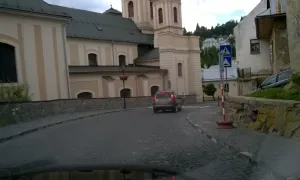
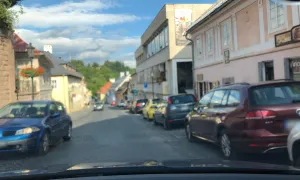
Photographs from the area
Real photos taken near the monument

Source and licence are given for each image.
Visitor Tips
No tips yet. Be the first!
Log in and add your tip.
Location on Map
More monuments – Banská Štiavnica
Show all in the town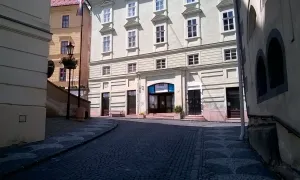


Visitor photos
No photos yet. Be the first to add a photo from your visit!
Log in and add your photo or leave a rating.
You get more points for a visit verified in the app — we can tell from the GPS that you are there.
Reviews and comments