








Slovak Church Church
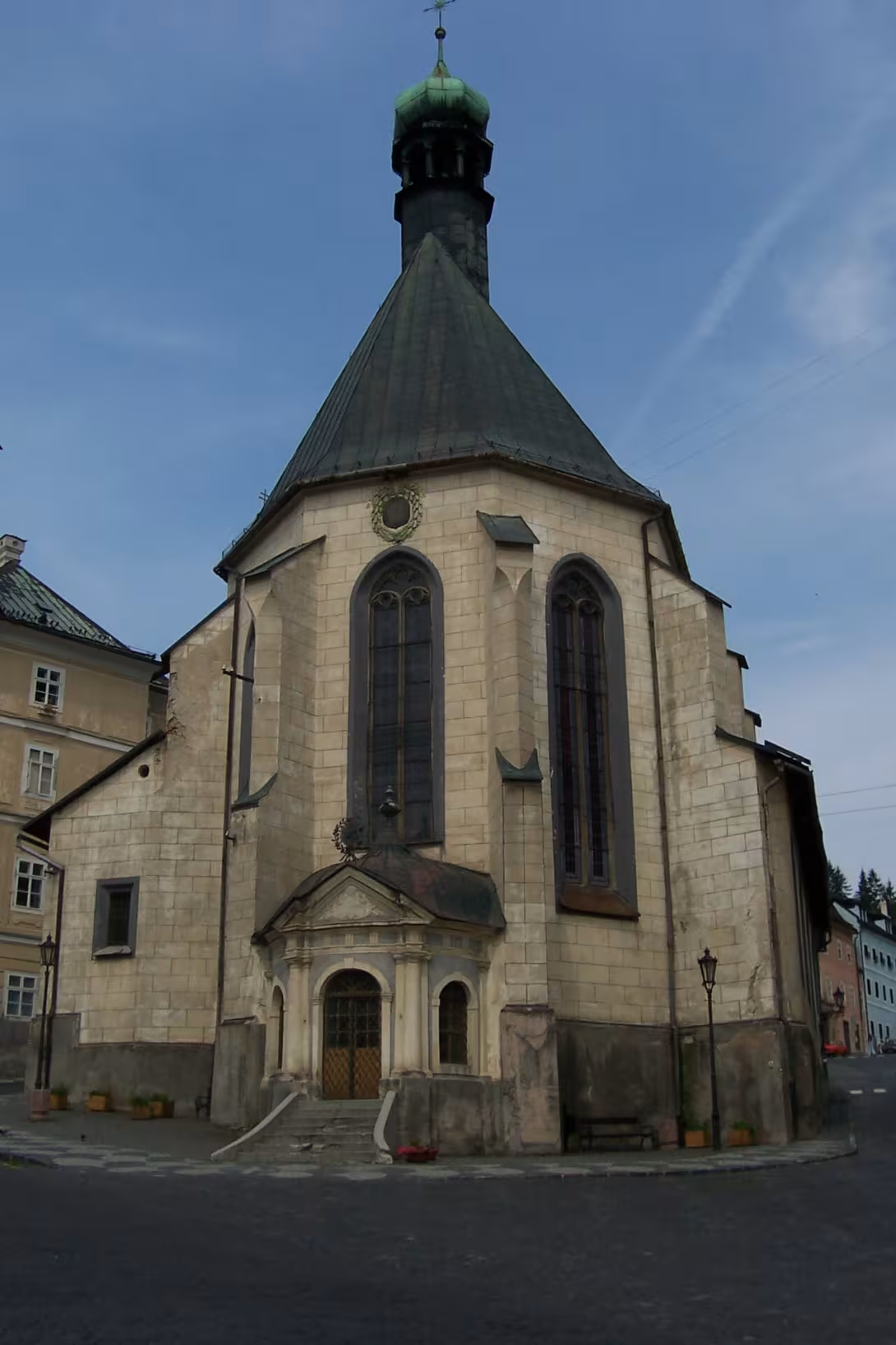
The church of St Catherine, located in the village of Banská Štiavnica in Banská Bystrica region, is a late-Gothic Roman Catholic church. This church of interesting architectural character was built between 1488 and 1491 and consecrated in 1500. Since 1658 it began preaching in Slovak, so it is known as the "Slovak Church.".
Background and historical context
The church of St. Catherine was built on the territory of today's Banská Štiavnica in the period after the destruction of the old town. Older sources report that the beginning of the building dates back to 1443 or 1444, when the population moved to the territory of today's city. Between 1488 and 1491 the church was completed by construction and consecrated in 1500. Between 1555 and 1672 the church belonged to Slovak Gospels, while in 1555 it was renamed parish church.
Architecture and creation
Architecturally, the church of St. Catherine is distinguished by a late-Gothic single-shiped structure with a polygonal seal of the sanctuary. This space without dividing by a triumphal arc merges with the ship and the western chorus. In the church there are supporting pillars drawn inside the disposition, characteristic of the late gothic style. Among the support pillars are inserted on the north side three Gothic chapels, which have a late-Gothic net vault. The windows of the main boat are filled with icing and finished with half three-leaf circles.
Owners, administrators, fates
The initiators of church construction were rich families of mining entrepreneurs, known as "Ringburgers" who owned houses on St. Trinity Square. In 1962 and the end of the 19th century, the church underwent renovation, while the chapel of St. John Nepomuk was built and the interior was regotized.
Key events and attractions
The church is known for the fact that in 1658 it started preaching Slovak. The similarity of the arch with the Kežmarok church of St. Cross indicates that the same stonemasons worked on both structures. In the script under the church were buried noblemen and prominent townsmen Banská Štiavnica.
Today
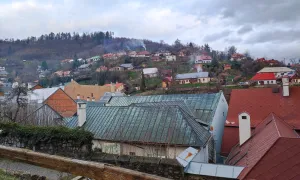
Today, the church of St. Catherine stands on a relatively steep slope, closing the lower part of St. Trinity Square. It is situated at the intersection of the two most important medieval city roads and is accessible to visitors. Its rich historical heritage and architectural importance make it an attractive destination for tourists.
The church of Saint Catherine is a witness to the rich historical and cultural heritage of Banská Štiavnica. Its architecture and historical importance make it a valuable monument worth visiting.
Tehdy a dnes
Drag the slider and compare how the monument might have looked when it was built with the view today.

The historical view on the left is a visualisation generated by artificial intelligence and serves as inspiration.
Historical Milestones
- 1488-1491: Construction
- 1500: Sanction
- 1555: Conversion to parish church
- 1580-1672: It belonged to Slovak Gospels
- 1776: St John Nepomuk's Chapel
- 1962: First renovation
Artistic features
-
vitráž dekoratívna — Kobercový vzor
sklo, vkladanie do siete · historizmus · 1890-1900 -
vitráž figurálna s dekorom — sv.Trojica
sklo, vkladanie do siete · historizmus · 1901-1910 -
vitráž dekoratívna — Kobercový vzor
sklo, vkladanie do siete · historizmus · 1890-1900 -
vitráž dekoratívna — Kobercový vzor
sklo, vkladanie do siete · historizmus · 1890-1900 -
vitráž figurálna s dekorom — sv.Jozef,sv.Ján Krstiteľ
sklo, vkladanie do siete · historizmus · 1901-1910 -
vitráž figurálna s dekorom — Videnie sv.Dominika
sklo, vkladanie do siete · historizmus · 1901-1910 -
vitráž figurálna s dekorom — sv.Alžbeta Uhorská,sv.Imrich
sklo, vkladanie do siete · historizmus · 1901-1910 -
vitráž figurálna s dekorom — sv.Juraj,sv.Alojz Gonzaga
sklo, vkladanie do siete · historizmus · 1901-1910 -
vitráž dekoratívna — Geometrický dekor
sklo, vkladanie do siete · bez slohových znakov · neurčené -
vitráž dekoratívna — Kobercový vzor
sklo, vkladanie do siete · historizmus · 1890-1900 -
vitráž dekoratívna — Kobercový vzor
sklo, vkladanie do siete · historizmus · 1890-1900 -
vitráž figurálna s dekorom — Zvestovanie Panne Márii
sklo, vkladanie do siete · historizmus · 1901-1910 -
vitráž dekoratívna — Kobercový vzor
sklo, vkladanie do siete · historizmus · 1890-1900 -
vitráž dekoratívna — Kobercový vzor
sklo, vkladanie do siete · historizmus · 1890-1900
Source: Monuments Board of the Slovak Republic — open data, licence CC BY 4.0
Heritage surveys
-
2014 — Architektonicky-historícký výskum
Čiastkový pamiatkový výskum
Interesting facts
- Since 1658 it began to preach in Slovak, so it is known as the - The initiators of the construction were wealthy mining entrepreneurs known as Ringburgers. - The similarity of the arch with the Kežmarok church of St. Cross indicates that the same stonemasons worked on both structures. - In the script under the church were buried noblemen and prominent townsmen Banská Štiavnica. - The church stands on a relatively steep slope and closes the lower part of the square of St. Trinity.
Guide
Show guide text
The text was prepared by artificial intelligence and has not been editorially reviewed. It may contain inaccuracies.
Vite in the heart of the historical Banská Štiavnica, a city that is a living museum of its own history. You stand in a place where wealth, spirituality, and deep identity unite. Before you, the rods build, which is not just a mere house of deity, but a symbol of the survival and cultural growth of the entire region. Look at this church and see its presence. While time is constantly changing and the world around us is constantly changing, this building stands here as a silent witness to the centuries that have passed by and events that shaped the character of this city and the entire nation. See the atmosphere created here by a combination of the historical environment and the meaning that this structure represents. There's something grand about it when you stand before an object that has survived so many generations.
Now that we try to understand how this church originated and what its historical context is, we must return to the time when Banská Štiavnica was one of the richest and most important cities within the entire kingdom. The unknown architect here and the exact date of construction, but the traces they left behind are unmistakable. This building was not just a chance promise, but was the result of the ambitions of the people who at that time had a huge impact on life in the region. The initiators of this construction were rich mining entrepreneurs, who in history signed up under the name Ringburger. They were people whose possessions and power came from the rich finds of metals in the surrounding mountains. It is their financial strength and their desire to build lasting values that have enabled this significant construction to be carried out here. Although their names may not be explained in every textbook, their message is in every stone block you see here.
Let us now look at architecture and what you should notice when observing this construction. Although we do not know the exact hands of the architects who designed the project, their artistic sense and technical skills are clearly legible. When you perceive the overall structure and proportions, pay particular attention to the vault. It contains a fascinating detail that connects Banská Štiavnica with other places within the entire former kingdom. There is a proportionality and a form of processing that resembles a vault in the Kežmarok church of the Holy Cross. This similarity is not just a random visual element. It suggests something much deeper - that the same masters, the same capable stonemasons, worked on both of these important structures. At that time, artistic and technical know-how spread among craftsmen who traveled from town to town and brought with them the most modern technologies and styles. See the precision and continuity that this connection between Kežmarok and Banská Štiavna brings. It is proof that although cities are far apart, their cultural and artistic DNA was linked. Under this construction there are also scripts, quiet and mysterious parts that give the site even more weight and depth.
Now I want to invite you to the most important story this church bears. It's the story that gave him his name. You may wonder why this building is called the Slovak Church. The answer is not hidden in architecture, but in the words that have been heard in the past. In 1658 something groundbreaking happened in this church. It was then that preaching began in our mother tongue - Slovak. At a time when language was socially limited in many areas or under pressure from other cultural influences, this church became a safe haven for Slovak identity. It was the moment when the spiritual ministry became close to the people while they were being understood, thus turning the church into a pillar of the survival of the national spirit. This fact makes this place something much more than a religious object; it makes it a symbol of cultural growth and pride.
When you look at this church, not only perceive its stone matter but also the invisible spiritual and linguistic message that remains. There's a mystery you can imagine every step after this place. Although the names of many historical figures and the creators of this building have been lost in history, their contribution is undoubtedly present. It's this unfamiliarity, this void in architect records, which raises questions and forces us to imagine the people who stood before us who worked here and who believed here. Who were the real people who financed this construction? Who were those stonemasons who, with such precision, worked stones to form a vault that fascinates us to this day?
See the atmosphere of depth and mystery that you feel here. Every detail, from arches to scripts below, tells a story about human ambition, artistic effort and the importance of their own language. This church is living proof that even if the names of individuals disappear in time, their actions and their legacy remain relentlessly rooted in the environment they have created.
Now we invite you to continue your journey with this beautiful city. Let yourself be absorbed in the atmosphere of Banská Štiavnica, discover other historical attractions and see every moment you spend here. Every street and every building here has its own voice waiting for you to listen to it. Thank you for spending time with us and for looking at this important symbol of our history. We wish you a beautiful and inspiring tour of the whole city. We'll say goodbye, but keep this atmosphere in your heart and the stories you just met.
Tips for visitors
Best time to visit and why: The best time to visit the church in Banská Štiavnica is early autumn. The weather is at that time the most peaceful, and light is ideal for shooting architectural details. This time of the year also offers picturesque hikes suitable for short walks.
Public transition to Banská Štiavnica: The public transition is a convenient choice, especially in periods of large visitors.
What to take with you: We recommend that sunglasses for sunscreen and wide zoom camera be included in the backpack in a detailed photograph of church architecture.
Photography - the best places and light: For shooting moments we recommend that you get the highest possible position to capture the overall picture of the church. It is best to use morning or evening light for a romantic and dramatic effect.
What to visit nearby (30 min from place): Nearby is a Banská Bystrica castle, which offers views of the entire city and its historical monuments.
Tips for families with children: Banská Štiavnica offers various activities for children, such as visiting a mineral exhibition or walking across the historic streets of the city.
Frequently asked questions
Can the monument be visited?
Religious buildings are usually open mainly during services; at other times a visit is normally arranged with the parish or the operator. We have not verified specific times.
Where is the monument?
Location: Radničné námestie 110/17, Banská Štiavnica, Banskobystrický kraj. The map on this page shows the exact spot.
Why is the monument protected?
It is listed in the Central List of the Monuments Fund of the Slovak Republic as a national cultural monument (ÚZPF no. 322-2485). It is part of a UNESCO World Heritage Site.
For children
Close your eyes and imagine pressing a secret button on a time machine. Boom! You fly deep into the past, exactly 538 years ago. Banská Štiavnica will suddenly appear around you, but not as you know from the trips. It's a town full of humour, dust and secrets, where every corner breathes adventure.
Nearby
🏰 Historic sites (232)
- Mariánsky stĺp 0.0 km
- Dom Maríny 0.0 km
- SNP 0.1 km
- Cesta v čase 0.1 km web
- Morový stĺp 0.1 km
- sv. Ján Nepomucký 0.1 km
- Galéria Schemnitz 0.1 km
- Židovská synagóga 0.1 km
- Galéria Jozefa Kollára 0.1 km +421 918 990 449 web
- Vzbura baníkov v roku 1852 0.1 km
- Starý zámok 0.1 km web
- Sándor Petőfi 0.2 km
- Kalmán Mikszáth 0.2 km
- Andrej Sládkovič 0.2 km
- Hugo Heincz 0.2 km
- Emil Grillusz 0.2 km
- Július Farbaky 0.2 km
- Lajos Fekete 0.2 km
- Anton Kerpely 0.2 km
- Galéria u Bindera 0.2 km
🍽️ Restaurants and dining (163)
- Reštaurácia Pizzeria Marína 0.0 km +421 0911 533 337 web
- Bansky Dom 0.0 km
- Archanjel Cafe Bar 0.0 km web
- Coburg coffee & burger 0.0 km
- Lemberg 0.1 km Radničné námestie 10 +421 911 220 126 web
- U Jašteríc 0.1 km
- Svätá Barborka 0.1 km
- RUINbar 0.1 km web
- Reštaurácia Gallery 0.1 km +421 45 692 12 52
- Reštaurácia Monarchia 0.1 km web
- Pivovar ERB 0.1 km +421456921147 web
- Eleuzína 0.1 km web
- Stará škola 0.1 km
- Divná pani 0.1 km +421 45 679 09 45 web
- Čajovňa Klopačka 0.1 km +421 905 980 499 web
- Barcadam 0.1 km
- Gavalier 0.1 km +421 903 802 226 web
- Cigar Bar 0.2 km
- U Böhma 0.2 km
- Trotuar Cafe 0.2 km
🏨 Accommodation (106)
- Penzión Rozália 0.1 km +421 948 221 213 web
- Boutique Hotel ERB 0.1 km +421 456 789 555 web
- Skautský dom 0.1 km Antona Pécha 69/2 +421905382885 web
- BARCADAM 0.1 km Námestie sv. Trojice 17/13 +421 908 965 202 web
- Bristol 0.1 km Andreja Kmeťa 123/11
- Gavalier Design Rooms 0.1 km +421 903 222 309 web
- Apartmán Zlatý dvor 0.2 km
- Skautský dom 0.2 km web
- Penzión Resla 0.2 km
- Penzión Na trojici 0.2 km Námestie sv. Trojice 21/17
- Subyt 0.2 km
- Penzión Cosmopolitan II 0.2 km web
- Penzión Matej 0.3 km
- Black M 0.3 km Kutnohorská 603/1 +421 910 947 187 web
- Hotel Grand Matej 0.3 km
- Penzión Tomino 0.3 km
- Penzion Nostalgia 0.3 km Ing. Štefana Višňovského 208/3
- Salamander 0.4 km
- Villa Botanica 0.4 km web
- Ubytovanie Tatiana 0.5 km
🚲 Rentals and sport (18)
- Diana poľovnícke potreby 0.7 km
- Ortler sport 0.7 km
- BS-Rent 0.9 km +421 948 908 737 web
- MK bike service 1.1 km +421 904 494 573
- Pontónová plaváreň na Klingeri 1.1 km
- Tanad sport 1.4 km
- Bikepro - Hotel Salamandra 2.9 km web
- ŠK Lesy Banská Belá 4.2 km
- Požičovňa vodných bicyklov 6.6 km
- Sedací bazén 7.8 km
- Detský bazén 7.8 km
- Rekreačný bazén 7.8 km
- Jaskynný parný kúpeľ 7.9 km
- OFK Štart Prenčov 11.0 km
- Lodenica Hliník nad Hronom 12.6 km
- Cyklosport 3000 13.2 km Májová 280/3
- Bazén Ďuricov majer 14.2 km
- Plážové kúpalisko Žiar nad Hronom 14.3 km
🥾 Hiking and nature (593)
- História mesta (reliéf) 0.0 km
- Banka lásky 0.0 km web
- Kaufhaus šachta 0.1 km
- Banskoštiavnicky betlehem 0.1 km web
- Michal štôlňa 0.1 km
- Na centrum 0.2 km
- Z Hornej ružovej 0.2 km
- Z Dolnej ružovej 0.2 km
- Od Červeného kríža 0.2 km
- Z Lichardovej 0.2 km
- Z Vodárenskej 0.2 km
- Cherubín dedičná štôlňa 0.3 km
- Z Katovej 0.4 km
- Z Vodárenskej 0.5 km
- Na kalváriu 0.5 km
- Glanzenberg dedičná štôlňa 0.5 km web
- Park SNP 0.6 km
- Nad Reslou 0.6 km
- Žigmund šachta 0.7 km Na Zigmund šachtu 1647/15
- Glanzenberg 0.8 km
Thematic route
1. Interior of the church - sacral space with architectural and artistic details.
2. Church tower - observation tower, which offers a view of the village Banská Štiavnica and surroundings.
3. The area of the church - courtyard in the immediate vicinity of the building designed to relax and think.
4. Exposition in the church - space with information about the history and spiritual meaning of the object.
Seasonal recommendations
In spring Banská Štiavnica awakens into life, where nature illuminates the architecture of the church. It is recommended to dress in a layered manner and leave in an earlier morning.
In summer there is intense sun and full colors around. In the main season of the city there are more visitors, so it is advisable to plan the trip in the early hours. The practical solution is easy clothing and sun protection.
Autumn brings golden colors of leaves and fog, which gives the place a melancholy atmosphere. The low autumn sun creates long shadows ideal for photographing the facade. It is advisable to choose warmer clothes and visit the locality in full-time.
In winter, the church contrasts with white snow, creating a peaceful appearance. Due to low temperatures, it is essential to wear very warm clothes and watch out for icy trails.
Visualisations and artistic views


The visualisations are generated by artificial intelligence and serve as inspiration.
Photographs from the area
Real photos taken near the monument


Source and licence are given for each image.
Visitor Tips
No tips yet. Be the first!
Log in and add your tip.
Zdroje a literatura
The factual basis for this text was the article na Wikipedii, whose authors are Wikipedia contributors. The article is available under the licence CC BY-SA 4.0.
Location on Map
More monuments – Banská Štiavnica
Show all in the town

Visitor photos
No photos yet. Be the first to add a photo from your visit!
Log in and add your photo or leave a rating.
You get more points for a visit verified in the app — we can tell from the GPS that you are there.
Reviews and comments