

calvinist church Church with grounds
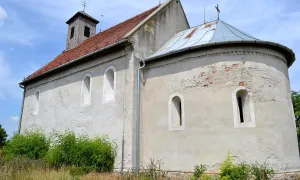
The reformed church with the area in the village Šamorín in the Trnava region is a medieval monument registered under number ÚZPF 121, which dates back to the 12th to 17th century, while the church itself comes from around 1220 and bears Gothic signs. The area currently includes four specific objects.
The origin and historical context of this area dates back to the medieval and Gothic period. Historical sources and research results define the existence of building objects until the 12th to 17th century, the oldest parts being the church itself and the adjacent carner.
The architecture and artistic design of the monument are based on the building-historical and artistic-historical research from 2015 and 2016 carried out by authors Mgr. Ing. arch. Andrej Botek, PhD., Ing. arch. Róbert Erdélyi, Ing. arch. Paul Paulina, PhD. and Ing. Arch. Barbora Vachová. The main building, which is a reformed church, comes from around 1220 and shows Gothic signs. The area under number ÚZPF 121 consists of four objects: the church (registered under number 121/1 as a reformed church, Gothic, around 1220), the foundations of the carner (121/2, partially studied, Gothic, the end of the 12th century to the 13th century), the buildings with foundations (121/3, partially examined, without essays, 16th to 17th century) and the church cemetery (121/4, unexplored, medieval, 12th to 13th century).
Owners, administrators and precise fates of the individual historical stages are not specified in the available documents in addition to building modifications and research.
Key events and attractions are associated with the expert survey of this site. The area underwent a conservation protection in the form of reconstruction and in 2015 and 2016 was subjected to detailed architectural and historical research.
Today, this monument is accessible to those interested in history and architecture thanks to research and conservation. A visit to this area offers a view of preserved medieval objects and building layers ranging from the 12th to the 17th century.
Tehdy a dnes
Drag the slider and compare how the monument might have looked when it was built with the view today.
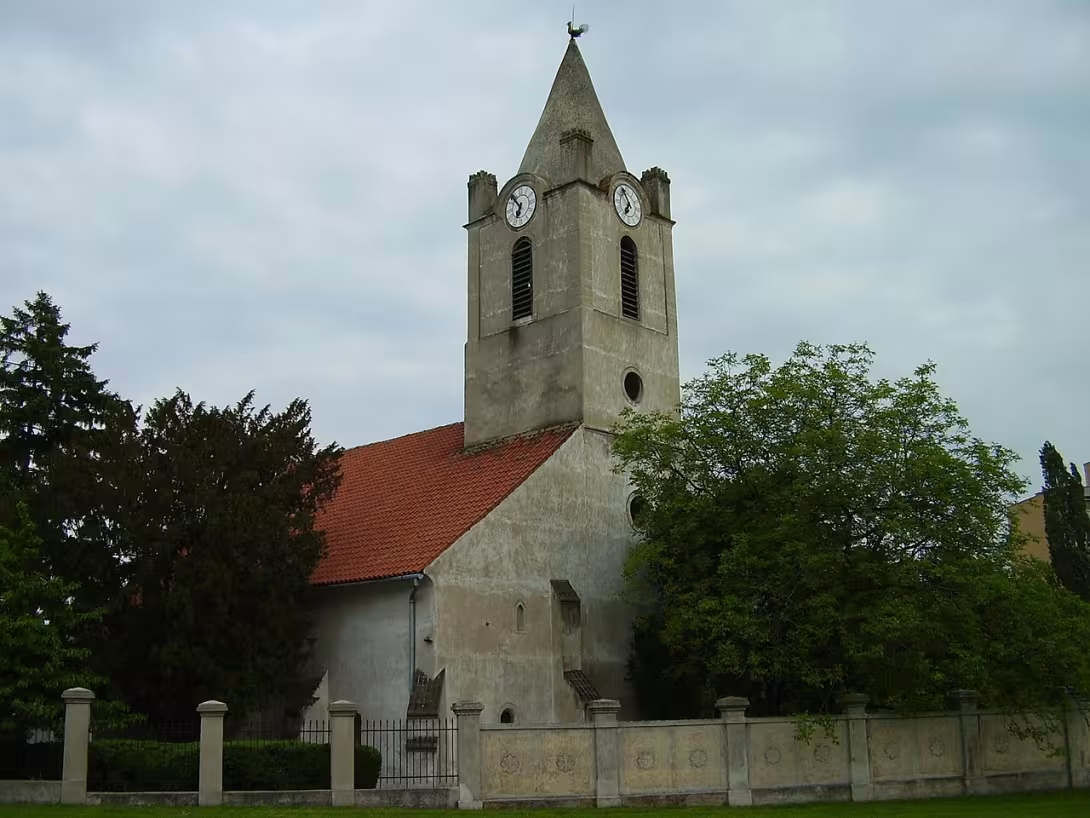
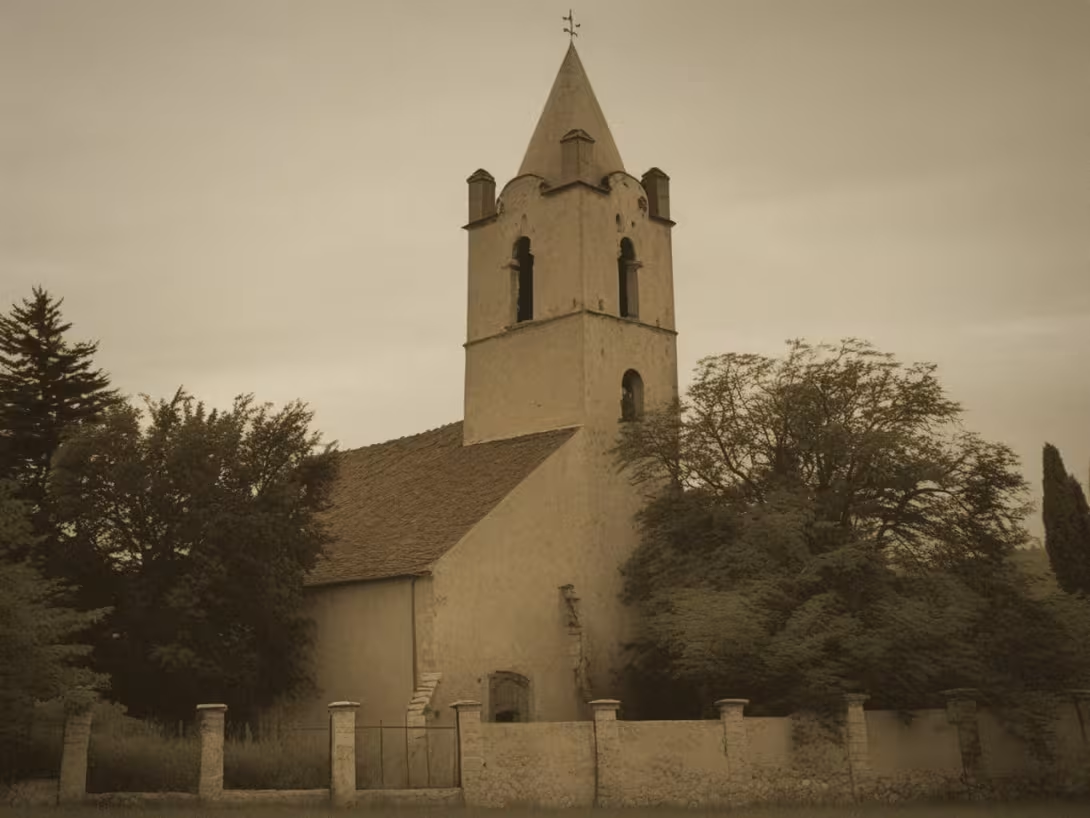
The historical view on the left is a visualisation generated by artificial intelligence and serves as inspiration.
Historical Milestones
- 1220
- The creation of a reformed church with Gothic characters itself.
- round 1200
- The foundation of the carner and the church cemetery.
- 1600
- Construction of another building with foundations dating back to the 16th to 17th century.
- 2015
- Realization of detailed building-historical research of monuments.
Heritage surveys
-
2014/05 - 2015/12 — Architektonicky-historícký výskum, Umelecko-hisotrický výskum
Komplexný pamiatkový výskum -
2014/05 - 2015/05 — Architektonicky-historícký výskum
Čiastkový pamiatkový výskum
Interesting facts
- The Reformed church itself comes from around 1220 and bears Gothic characters. - The whole area under the number of the ÚZPF 121 consists of four specific objects: the church, the foundations of the carner, the building with foundations and the church cemetery. - In 2015 and 2016 there was a detailed construction-historical and art-historical research of monuments carried out by authors Andrej Botek, Róbert Erdélyi, Pavol Paulina and Barbora Vachová.
Guide
Show guide text
The text was prepared by artificial intelligence and has not been editorially reviewed. It may contain inaccuracies.
Welcome to Shamorin. You are standing right in front of a precious historical monument, the Calvinist Church and its entire adjacent area, which hides centuries of deep history and secrets. As you look around, feel this unique atmosphere that breathes this quiet and sacred place. Before your eyes, there is a complex that is one of the oldest Witnesses of spiritual life in the region. Make yourself comfortable, put on your headphones and let's go to the past together that shaped this corner of Slovakia. Let us first look at the very origin and historical context of this place. The Reformed Church itself, which you see before you, has its roots deep in the past and comes from around 1220. At its birth it already bore distinctive Gothic characters, which still define its construction essence. Although accurate architects remain in the shadow of history and their names have not been preserved until today, the work they have left behind speaks clearly of their mastery. Around 1200, the foundations of an ancient carner and a church cemetery were established, indicating that this place served its purpose before the construction of the temple itself. History, however, went on and on and on. Around 1600 another building grew in the area, whose foundation dates back to the sixteenth to the seventeenth century. The whole historical complex, kept in the list of monuments under the number of ÚZPF 121, consists of four specific objects, which are the church itself, the foundations of the carner, mentioned building with its ancient foundations and the church cemetery. Now pay attention to the architecture itself and the details that are offered right in front of you. Take a look at the exterior and facade of this medieval temple and see the gothic elements that shape its face. The architecture of this temple bears the legacy of past times when it was built with humility and emphasis on the durability of materials. Although the precise visual details of the individual stages of construction have changed over time, the overall composition of the complex is harmonious and compact. Stop for a moment and walk through the walls of the church that remember generations of our ancestors. When we think about the personalities taken with this place, history does not reveal the specific great names of rulers or church dignitaries. The stories of ordinary people, builders, believers, and communities who have lived here for centuries resonate, praying and burying their loved ones in the church cemetery. Their quiet presence and everyday life were shaped by genia loci of the entire area. Every stone here tells a story about faith, survival and building common values. The capture or mystery that makes this place really special lies in its long-term and deep-rooted development, which has long resisted complete knowledge. This is evidenced by an event of a more significant past. In 2015 and 2016 there was a very detailed construction-historical and artistic-historic research of this monument, and the actual implementation of this in-depth research took place in 2015. The experts then uncovered a layer by layer to understand the precise chronology and construction development of the entire area, which combines medieval roots with later building modifications. This research brought new insights into how the church and its surroundings developed from the thirteenth century to later periods. Finally, I would like to invite you to further explore this beautiful place and surroundings of Shamorín. Walk around the walls, experience the peaceful atmosphere that this ancient area radiates, and let yourself breathe the spirit of ancient times. Thank you for listening to this story, I wish you to enjoy Šamorín to the fullest, and I'm saying goodbye to you on this special occasion. Goodbye.
Tips for visitors
Transport: The place is available by car and public transport. Equipment: Comfortable footwear and camera are recommended. Photography: Suitable conditions for capturing details of architecture are morning and evening. Families with children: The surroundings allow for walks.
Frequently asked questions
Can the monument be visited?
According to the heritage register the site is not presented to the public – there are no accessible remains or information on site.
Where is the monument?
Location: Veterná 19, Šamorín, Trnavský kraj. The map on this page shows the exact spot.
Why is the monument protected?
It is listed in the Central List of the Monuments Fund of the Slovak Republic as a national cultural monument (ÚZPF no. 211-121).
For children
Imagine a huge time machine that takes you back eight hundred and six years. It is the year of a thousand twenty, and in the quiet country of today's Shamorín there is a building that stands here today. It was like an adventurous movie where knights in shiny armor defend their territories and people build massive shrines of stone. The air smells of fire smoke, you hear the trampling of horse hooves, and people are just laying the first foundations of a building that has survived for ages and remembers the times that we are only learning about today in thick books.
Nearby
🏰 Historic sites (165)
- sv. Štefan I. Uhorský 0.1 km
- At Home Gallery 0.2 km web
- Mathias Rex 0.2 km
- M. R. Štefánik 0.3 km
- Trojičný stĺp 0.3 km
- Lavičky našich osobností 0.5 km
- Gróf Ödön Szechényi 0.5 km
- István Sidó 0.5 km
- dr. Ferenc Tomány 0.5 km
- Historická hasičská výstava 0.5 km
- Štefan Németh Šamorínsky 0.7 km
- John Lennon 0.7 km
- Vlastivedný dom 0.7 km Bratislavská 92/15
- Freddie Mercury 0.7 km
- Jim Morrison 0.7 km
- Kurt Cobain 0.7 km
- Jimi Hendrix 0.7 km
- Bon Scott 0.8 km
- Sv. Florián 1.4 km
- Sv. Ján Nepomucký 1.4 km
🍽️ Restaurants and dining (255)
- Mimi's Bakery 0.1 km
- Norken Pub 0.1 km +421 911 774 388 web
- Bella Italia 0.1 km +421 908 432 383 web
- Uni 0.1 km +421 911 752 227 web
- Prima 0.1 km
- P. P. Pizza 0.1 km +421 907 121 341 web
- Šup Šup Music Club 0.1 km
- Beer House 0.1 km
- ARTIVA Gallery & Café 0.1 km +421 918 364 270 web
- Legendary pizza 0.2 km +421 905 120 955 web
- Lombardi 0.2 km +421 917 939 939 web
- ARENA 0.3 km
- Corner coffee 0.3 km
- Coffee & Tapas 0.3 km
- Caffe Siesta 0.3 km
- Franco 0.3 km
- Samaria 0.3 km +421 908 14 14 24 web
- Lavazza 0.3 km
- Sanyi's restaurant 0.4 km
- Bemme 0.4 km
🏨 Accommodation (52)
- Samaria 0.3 km Bratislavská 2110/100D +421 905 26 20 92 web
- Villa Park 0.7 km +421 902 115 266 web
- Stellplatz Čilistov 1.4 km web
- X-BIONIC hotel 1.5 km web
- Hotel Kormorán 1.8 km web
- Rodinné vinárstvo Bartal 2.2 km Gančháza 1112/1 web
- Vadvíz Kemping 4.8 km Gyümölcsös utca 8 +36 30 486 6922 web
- Klaudia's 5.0 km +421 940 610 821 web
- Ördög tavi sátorozóhely (vadkemping) 5.4 km
- Penzión TÜCSÖK 5.5 km web
- Vízpart Camping Dunakiliti 5.7 km Csölösztői út 5 +36 30 225 3318 web
- Diamant Wellness Hotel 5.8 km
- Kemping Čunovo 6.0 km web
- Divoká Voda 6.1 km web
- Villa Hedi Panzió 6.1 km
- YACHTER CLUB Modrá Čajka 6.3 km +421 940 61 40 40
- Penzión pri rybníku 6.9 km +421 905 446 969 web
- Zalka vendégház 7.0 km
- Princess Palace 7.1 km
- Castel Pension & Restaurant 7.5 km
🚲 Rentals and sport (59)
- Modrá Žabka - kurzy plávania 0.2 km +421 914 501 515 web
- Olympia Squash 0.3 km
- Bike Union 0.7 km +421 910 111 500 web
- Sportisimo 1.3 km Bratislavská 2862 +421232179880 web
- x-bionic equestor sphere 1.4 km web
- X-bionic premium store 1.4 km
- VDG Yacht Centrum 2.6 km
- Areál RC Šport Model Klub 3.3 km web
- Jazdecký areál Davidov 4.2 km
- kenu kikötő-átemelőhely 4.2 km
- kenu kikötő-átemelőhely 4.3 km
- Heléna-tavi kenu kikötőhely 4.3 km
- kenu kikötő-átemelőhely 4.5 km
- Vadvíz kenukikötő 4.8 km
- Vadvíz kenukikötő 4.8 km
- Vadvíz kenukikötő 4.8 km
- Vadvíz kenukikötő 4.9 km
- Športovo-rekreačný areál Hamuliakovo 5.2 km web
- Ördög-tavi kenu kikötőhely 5.2 km
- Ördög tavi kenu kikötőhely 5.5 km
🥾 Hiking and nature (35)
- Park mládeže 0.8 km
- Park Kormorán 1.8 km
- Šikmá veža v Hamuliakove 4.7 km
- Pútnické miesto Sedembolestnej Matky 5.1 km
- Alžbetin park 6.7 km
- Címer 6.9 km
- Pozorovateľňa vtáctva DUNA 7.0 km web
- Kalinkovská rozhľadňa 7.5 km
- samoobslužná kompa 7.5 km
- Šibeničný kopec 7.6 km
- Štefánikov park 7.7 km
- Hapota 7.8 km
- Kalinkovská lesostep 8.4 km
- Park Sadová 8.4 km
- Rekreačné stredisko 8.4 km
- Lipový park 8.5 km
- Vízitúra táborhely 8.7 km
- Anna park 9.2 km
- templomkert 10.3 km
- Prírodný amfiteáter Čunovo 10.5 km
Thematic route
I propose a thematic trip aimed at discovering historical and cultural values in the village Šamorín and its immediate surroundings. The route consists of two points and focuses on sacral architecture.
1. Calvin church (Church with campus) - Type: Sacral monument / Historical area - Why it is worth a visit: The main destination of the trip includes historical development and characteristic architectural form. The church area contains building details that document the development of sacral creation in the region.
2. Roman Catholic Church Assumptions of the Virgin Mary - Type: Sacral monument - Why it is worth a visit: The building is located near the first point and adds the character of the village center. It contains medieval construction stages and preserved artistic and historical elements.
This route allows you to know the historical buildings in Šamorín without having to travel to more distant locations.
Seasonal recommendations
The spring brings nature awakening and the surroundings of the Calvinist church in Šamorín are driven into fresh green tones, while the spring sun rays light the historic walls pleasantly and create ideal conditions for peaceful outdoor walks. During this period it is worth wearing layered clothing and windproof jacket, because spring weather is variable and windy, especially during the early days of April. The best time to visit is the morning when soft light ideally stands out for taking pictures of the outdoor area.
Summer envelops the Šamorín region into warm, bright light and long sunny days provide enough time for a detailed examination of the exterior of the monument. Nature in the surroundings is in full bloom and the high crown of surrounding trees provides a pleasant shade near the perimeter wall, although the construction works and scaffolding resemble the ongoing renovation. For the summer visit, choose light, airy clothes and remember to cover your head and plenty of drinking water, as the direct midday rays can be very intense. The ideal time to arrive are early morning hours or evening, when temperatures drop and setting sun creates warm yellowish reflections on the church's facade.
Autumn brings melancholy atmosphere to the Danube lowland and the surrounding greenery is slowly colored in shades of yellow, orange and brown, which gives the area a special visual charm. The sun drops lower above the horizon and creates long shadows, while morning mist often wraps sacral construction into mysterious haze. During this period, it is necessary to choose warm, waterproof clothing and firm shoes, as grassy areas around the area may be moist and slippery. The most appropriate time to visit is the afternoon when the autumn rays pressurize through the diluted treetops and offer interesting light conditions to observe the exterior.
Winter provides the Calvinist church with a quiet, almost fabulous atmosphere, especially if the landscape covers a layer of fresh snow that dampens the surrounding sounds. The nature around the monument sleeps and the bare branches of the trees strengthen the strenuous yet impressive silhouette of the historical construction at the restoration stage. Dress closely for a winter walk around the exterior - you can use a warm winter jacket, cap, gloves and high-quality footwear with non-slip soles. The best time to visit is shortly before noon, when there is a chance for the best visibility and daylight at least a little warms the cool exterior.
Visualisations and artistic views


The visualisations are generated by artificial intelligence and serve as inspiration.
Photographs from the area
Real photos taken near the monument

Source and licence are given for each image.
Visitor Tips
No tips yet. Be the first!
Log in and add your tip.
Location on Map
Visitor photos
No photos yet. Be the first to add a photo from your visit!
Log in and add your photo or leave a rating.
You get more points for a visit verified in the app — we can tell from the GPS that you are there.
Reviews and comments