

calvinist church Church
Calvinist church in the village of Hrhov in the Košice region is a national cultural monument originating in 1785, built in classical style and registered in the Central List of Monument Fund under the number of ÚZPF 2405. This sacral object has undergone during its history construction development, porom and subsequent renovation.
Construction of the church started in March 1784 on the basis of a collection of 789 gold. The building itself was built within the year and the official year of establishment dates back to 1785. Ten years later, in 1795, the tower was added to the building.
The church is built in the classical style. After a big fire in 1846 that destroyed most of the building then and from which only the tower remained, the church was built virtually again on the original foundations of the destroyed temple.
The area records the Monument Office of the Slovak Republic under number ÚZPF 2405 and consists of one building, which is a reformed church from the second half of the 18th century, more precisely from 1785. The report of the church is provided by the local parish. The dramatic moments in the history of the building included fire in 1846 and events during the First World War, when the army reclaimed a large bell and damaged some pipes of the organ.
Key historical events include the beginning of the building in 1784, the completion of the temple in 1785 and the addition of the tower in 1795. The crucial milestone was the year 1846 when the church burned down in a big fire and only the tower was preserved, which required new construction on the old foundations. During World War I, the church lost a large bell due to the prop army and the organ was damaged. After the war, the parish priest let the new bell spill and arrange for organ repair. Interesting features include interior equipment from the mid-19th century, which includes a wooden pulpit, benches and stylish furniture as the work of master Janos Wanderák. In the interior there is also an organ with 8 registers from 1886 from the workshop of the Budapest master Sándor Ország, who purchased the parish for 1 371 pengő from the proceeds of church vineyards.
Today this national cultural monument serves its purpose and reminds of the construction and historical history of the village of Hrhov. A visit to this classicistic church offers a view of the preserved interior of the mid-19th century and historical organ.
Tehdy a dnes
Drag the slider and compare how the monument might have looked when it was built with the view today.
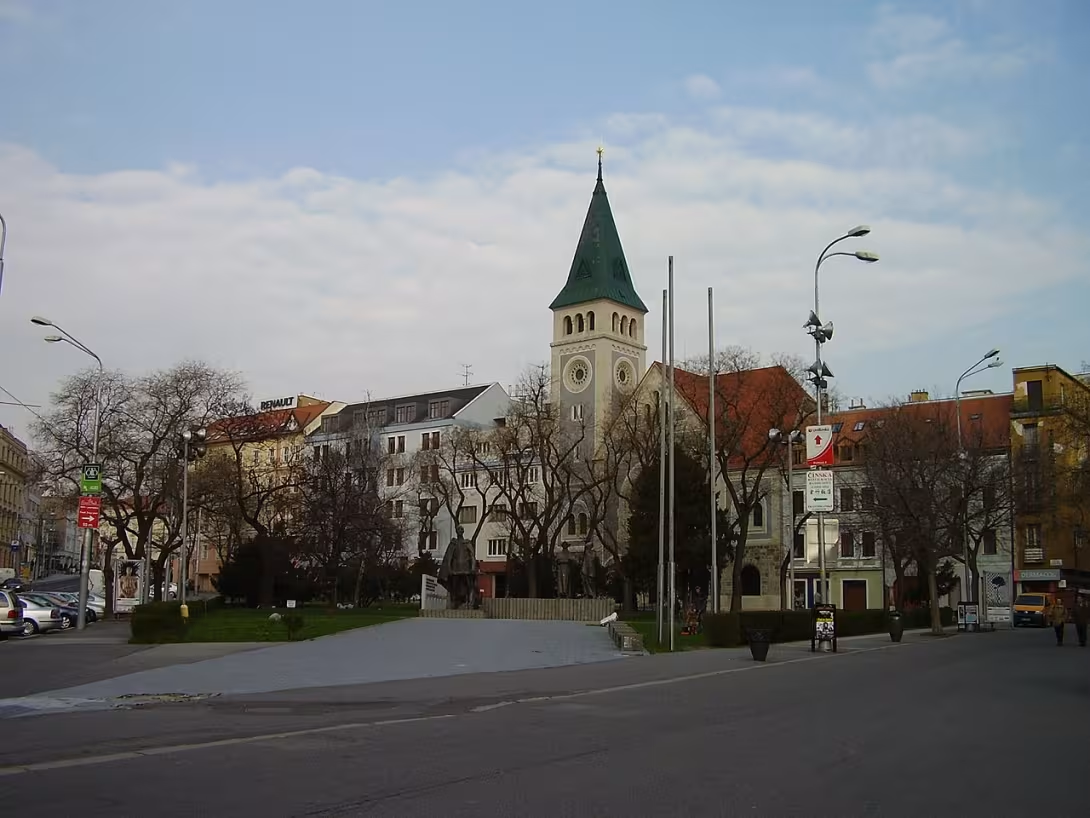
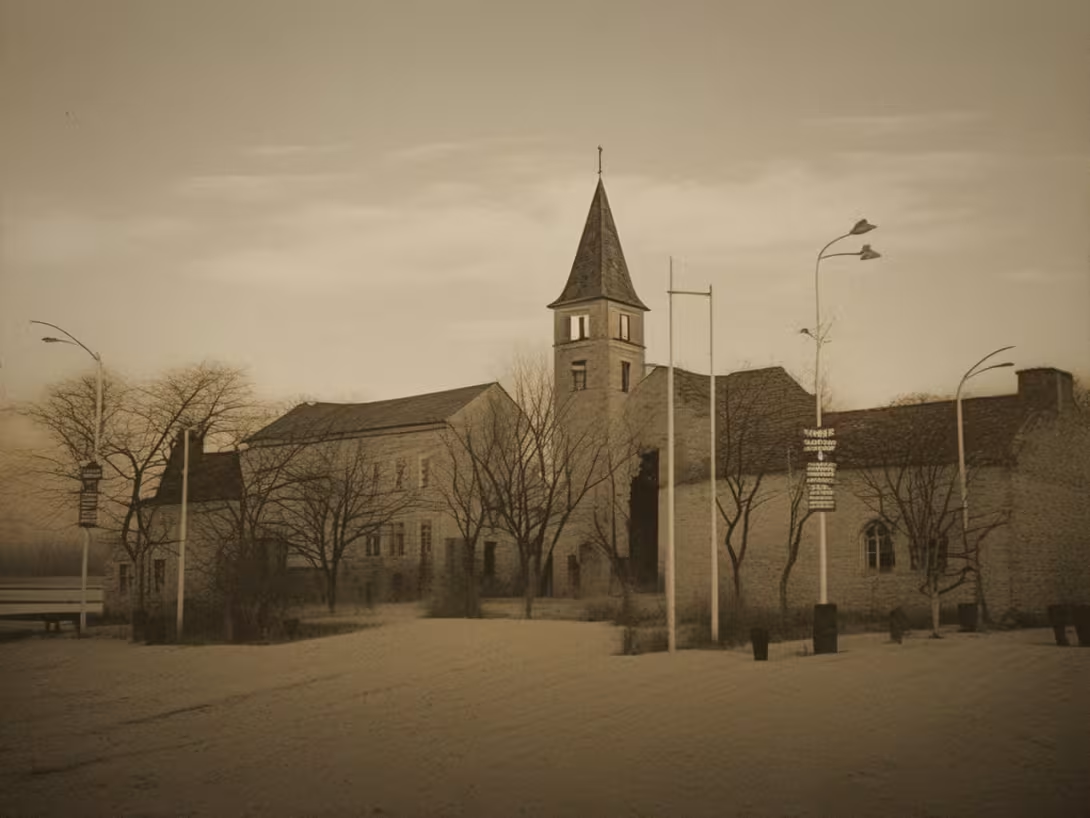
The historical view on the left is a visualisation generated by artificial intelligence and serves as inspiration.
Historical Milestones
- In March 1784 the construction of the church started on the basis of a collection of 789 gold.
- The church was built within the year.
- In 1795 a tower was added to it.
- In 1846, the church burned down in a big fire, leaving only a tower.
- The church was built practically new in classical style on the foundations of the destroyed temple.
- During the World War I, the army reclaimed a large bell and some pipes of the organ were damaged.
- After World War I, the parish had the new bell cast and the organ repaired.
Interesting facts
- Construction of the church started in March 1784 on the basis of a collection of 789 gold and was completed in 1785. - The tower was added to the church ten years later, in 1795. - After a big fire in 1846 that destroyed most of the building and from which it remained only a tower, the church was built practically again on the original foundations. - During World War I, the army reclaimed a large bell and damaged some of the pipes of the organ, leaving the parish after the war to cast a new bell and to repair the organ. - The interior equipment from the mid-19th century includes a wooden
Guide
The guide was voiced by a synthetic voice created by artificial intelligence.
Show guide text
The text was prepared by artificial intelligence and has not been editorially reviewed. It may contain inaccuracies.
We welcome you to the village of Hrhov, in the heart of Košice region, where you are now facing a silent witness of history and faith - Calvinist Church. When you look at it, you may at the first moment feel the peace and simplicity of this building, which is naturally written into the country around you. You stand in front of a building that is not just a set of walls and roofs, but a symbol of the perseverance of the local community that built it and maintained it for its children and grandchildren. Look at the overall shape of the object and see the atmosphere of this place where spiritual need meets with architectural moderation. Let's take a look at how this building originated and what its historical context is. Although the exact names of architects and particular personalities that designed this temple remained forgotten in time, the construction process itself is well documented. Everything began in March 1784. At the time, it was not just a religious act but a huge joint effort. The construction was possible thanks to a fund collection of seven hundred and fifty-nine gold. Imagine the value of this sum at the end of the eighteenth century and how much detachment people from Hrhov had to have to collect for the construction of their church. The work progressed quickly and already in 1785 the construction was completed, making it the center of spiritual life for local Calvinists. Pay attention to the architecture and details you see right in front of you. When you change the facade and the overall composition of the building, notice the tower. It may seem to you to be a natural part of the whole, but it did not really belong to the church from the very beginning. The tower was added ten years later, namely in 1795. This detail tells us that the general need and opportunities of the community grew after the completion of the main part of the building, which led to this later supplementary building, which still defines the silhouette of this temple. However, when you look at the walls of the church, you must realize that what you see today is the result of a great test and restoration. The history of this place is not only a story of construction, but also a story of rebirth. In 1846 a tragic wydarje occurred in Hrhov - a big fire broke out. The flames were so devastating that they destroyed most of the building. At that time, only one part remained, just the tower that resisted the fire and became the only witness to the original size of the temple. Imagine that feeling of hopelessness when most of the building collapsed in flames, but at the same time this resentment of the inhabitants who did not give up. After this disastrous fire, the church was built practically from the ground up again, which gave it new life energy and strengthened its importance in the hearts of local people. It is in this story about fire and reconstruction that the greatest attraction of this place is hidden. It is fascinating to think that the tower you are now seeing is probably the only part that has survived this great disaster of the middle of the 19th century, linking the original 1795 building with what is standing here today. It is like a bridge between two epochs - between the period of initial enthusiasm for construction and the period of stubborn rebuilt after a great loss. Now invite your senses to quiet contemplation. Look through the entire facade, see the rhythm of the windows and the simplicity of the lines. This church is not overloaded with wasteful ornaments, because its beauty lies precisely in the true modesty and functionality typical of Calvinic tradition. It is a place where more than a thousand words speak quietly and where each stone resembles the work of generations of people from Hrhova. We hope this short trip to the past has helped you to better understand the meaning of this construction. This Calvinist church is not only a historical monument but a living proof that the community can build something permanent and that even after the greatest disaster it is possible to rise from the ashes and start over. Now we invite you to further explore the surroundings and to enjoy the atmosphere of this beautiful region in peace. Thank you for your attention and we wish you a pleasant follow-up tour of Hrhove and Košice region.
Tips for visitors
The best time to visit the Calvinist church in the village of Hrhov is spring or autumn, when the surrounding nature offers impressive scenery and mild weather ideal for walks. Transport to the site is possible by car and public transport, while check the exact and actual traffic connections in the search engine. It is worth taking comfortable shoes for a walk through the village and a camera to capture historical architecture. Photography of this sacral object stands out especially in the morning, when the side light nicely highlights the details of the exterior of the building. For families with children, the visit is suitable as an easy walk associated with learning about the rural history of Košice region.
Frequently asked questions
Can the monument be visited?
Religious buildings are usually open mainly during services; at other times a visit is normally arranged with the parish or the operator. We have not verified specific times.
Where is the monument?
Location: č. 407, Hrhov, Košický kraj. The map on this page shows the exact spot.
Why is the monument protected?
It is listed in the Central List of the Monuments Fund of the Slovak Republic as a national cultural monument (ÚZPF no. 428-2405).
For children
Imagine that you are about twenty years ago - two hundred and forty years ago, the year is eight hundred and eighty... no, wait, we are in the year one thousand seven hundred and eighty-five! The air smells of smoke from wooden houses, in the distance of Erdžie horses and the village of Hrhov lives a completely different rhythm than today. No phones, no tablets, not even electricity. There's a lot of tension and a lot of curiosity everywhere, because something incredible is happening here. The locals decided to build something magnificent with their own hands.
Nearby
🏰 Historic sites (79)
- ľadovňa 0.5 km
- Kaštieľ Bôrka 2.8 km web
- Pomník dvoch rumunských vojakov 3.4 km
- Obetiam 1. a 2. svetovej vojny 3.9 km
- Zrúcanina kostola 3.9 km web
- Vodný mlyn Kováčová 5.2 km +421 949 306 413 web
- Hadik-kastély 5.5 km
- Zádiel 6.3 km
- Múzeum Zádiel 6.4 km
- Osloboditeľom 6.6 km
- Tomáš Čamek 6.7 km
- Sveťo Poláček 6.7 km
- Pamätník leteckého nešťastia 6.8 km
- Ľubo 6.8 km
- Kecskevár 7.1 km
- 1849 7.4 km
- Drnavská železiareň 7.5 km web
- Kaštieľ Andrássyovcov 7.7 km
- Művészetek Magtára – MagtArt 7.7 km Akácos út 30 +36 30 699 2714 web
- Esterházy-Koós-kastély 7.8 km Petőfi Sándor út 12
🍽️ Restaurants and dining (43)
- Piton klub 0.3 km
- Kora Presso 0.3 km
- Victory 0.7 km
- Csárda 3.7 km
- Fresh Corner 4.6 km
- Vodný mlyn 5.2 km
- Szadivo 5.4 km
- Espresso 5.5 km
- Granárium 5.9 km web
- Zádielska chata 6.1 km +421 58 7979 222 web
- Bufet 6.4 km
- Bufet Zádiel 6.4 km
- Zanzibar 6.7 km
- Café Kispest 7.5 km +421 905 446 635 web
- Hullám söröző 7.7 km Szabadság út 41
- Pod Skalou 8.1 km
- Gambrinus söröző 8.4 km
- Gambrinus söröző 8.4 km
- Határ söröző 8.7 km
- Koliba Soroška 8.7 km +421 903 720 714
🏨 Accommodation (56)
- Shambhala mind & outdoor centrum 3.2 km +421 918 637 205 web
- "Hubertusz" Vadászlak 4.6 km
- Tanya 4.8 km
- Granárium 5.9 km +421 915 347 333 web
- Turistiská ubytovňa Zádiel 6.4 km
- Zádiel 6.4 km web
- Banský potok 6.9 km
- Diófa Vendégház 7.8 km +36-30-576-6334
- Helena Kulcsárová – ubytovanie v súkromí 8.2 km +421 55 466 63 69
- Turistická ubytovňa 8.3 km +421 55 466 25 28
- Vila u Kovácsa 8.4 km +421905828169
- Matusz vendégház 8.4 km Tornai út 39 +36 30 959 6387
- Čierna Moldava 8.4 km
- Chata Skalky 8.5 km
- Turistická ubytovňa 8.6 km
- chata Hegen 9.5 km
- poľovnícka chata Zenderling 9.5 km
- Szalamandra-ház 9.6 km
- Nefelejcs vendégház 9.6 km Szabadság út 63
- Bíbor vendégház 9.6 km Szabadság út 63
🚲 Rentals and sport (7)
- Granárium 5.9 km web
- Maďarská 6.6 km
- Orlia bašta 6.7 km
- Tulipán - Sedliacky dvor 7.5 km +421 907 794 813 web
- Veža na vlásku 8.0 km web
- BUZGÓ bike 12.5 km +421 940 991 555 web
- Kúpalisko Medzev 15.0 km web
🥾 Hiking and nature (723)
- Hrhovský vodopád 0.1 km
- Fornagörgöi falukút 0.3 km
- Oltárna diera 0.8 km
- Kozia diera 0.9 km
- Úkryt dievčat 1.0 km
- Úkryt žien 1.0 km
- Holubia skala 1.5 km
- Kresadlo 2.0 km
- Povalová jaskyňa 2.1 km
- Luhota 2.4 km
- Veľký Paklán 2.6 km
- Okrúhly Ďur 2.6 km
- Žmeňská studňa 2.7 km
- Lônová jaskyňa 2.8 km
- Pod skalou 2.8 km
- Milá 2.8 km
- Kokón 2.8 km
- Výhľad na Hrhov 2.8 km
- Tegart 3.0 km
- Šikmá 3.0 km
Thematic route
I propose a thematic trip aimed at exploring this historical monument and its immediate surroundings in the village of Hrhov.
1. Calvinist Church - Type: Historical sacral building - Why it is worth a visit: The main goal of our journey is an important architectural dominant of the village of Hrhov. This sacral monument will impress with its rich history and characteristic exterior, which reflects the spiritual legacy of the region.
2. Calvinist Church Area - Type: Monument exterior and surroundings - Why it is worth visiting: The immediate surroundings of the building offers an opportunity for a quiet walk in the historical environment. Visitors can admire the details of architecture from close proximity and enjoy the atmosphere of this quiet place.
Seasonal recommendations
In spring, nature is waking up around the village of Hrhov. Calvinist church stands under the slopes of the Slovak Karst. The earth is green, melting snow fills watercourses and sun rays allow for early outdoor photography of the building. The weather is variable and windy, layered clothing and sturdy shoes are recommended for wet meadows. The number of tourists is low in this period. It is suitable for a visit in the morning due to the visibility of the valley.
The summer is a Calvinist church surrounded by dense vegetation. The tall sun creates contrasts on white walls and roof. During sunny days there is an audible singing of birds and insects from adjacent gardens and meadows. In the heat we recommend light breathable clothing, head cover and drinking water. In the evening the setting sun illuminates the walls of the building.
Autumn changes the landscape around Hrhova into yellow, orange and brown shades. The morning fog in the village gradually retreats to the granny lat. Cooler morning and evening air requires a warm jacket, scarf, and waterproof shoes because the grass is rosy. There are fewer visitors in the village this time. It is appropriate to arrive at noon when nature is colored.
Winter will cover the Calvinist church with snow. Early dusk and snow affect the atmosphere in the village. For a safe visit in the winter months it is necessary to wear winter clothes, hats, gloves and firm footwear with non-slip soles, because the terrain can be icy.
Visualisations and artistic views


The visualisations are generated by artificial intelligence and serve as inspiration.
Photographs from the area
Real photos taken near the monument

Source and licence are given for each image.
Visitor Tips
No tips yet. Be the first!
Log in and add your tip.
Location on Map
More monuments – Hrhov
Show all in the town


Visitor photos
No photos yet. Be the first to add a photo from your visit!
Log in and add your photo or leave a rating.
You get more points for a visit verified in the app — we can tell from the GPS that you are there.
Reviews and comments