

chapel of St.Martin, bull.far.ko. Church
St Martin Chapel in Nové Košariska in the village Dunajská Lužná in the Bratislava region is a Romanesque building from the 13th century. It is a preserved presbytery of the original parish church, which served as a kindergarten church for the surrounding parish Misérd.
Construction dates back to the 13th century. The account of the visitation from 1781 mentions that the church exists for about six centuries. Chronicleskon on the tower states that in 1736 a tower was restored that blackened after 500 years. The author of the building is unknown.
The original church, called ecclesia mater in church Latin, was built of stone and burnt bricks. The tiles consisted of square blocks of stone. The ship and the presbytery covered the tiles and the sacristy of shingles. The stone tower was 19 metres high and 2,80 metres wide; it was equipped with an iron cross, clock, and four windows. The Sanctuary of today's chapel was 7 x 5.40 metres high at 6.30 metres. The ship was 16 metres long, 6,60 metres wide and 8,20 metres high. The spaces were connected by a winning arc, the back of which was an organ on the chorus built on two columns. The Sacristy on the left side of the sanctuary has been encircled.
In the 17th century, the church came into the hands of the Gospels, and in 1710 it returned under the administration of Catholics. In 1736 the tower was repaired. In 1773 the reconstruction began, funded by the patrons: Count Ján Illésházy, Count Juraj Apponyi, Count František Balassa and widow after Count Ján Balass. Under the direction of the priest Žigmund Kunics, the building was enlarged by a chorus and the works finished in 1774.
The proximity of the blacksmith's workshop in the canonical calling of 1781 caused fire hazard warnings. In 1852, the fire occurred, burning all wooden parts of the ship and sacristy, including church garments. Only a polygonal presbytery was preserved. Subsequently, the inhabitants of the village carried stone and bricks from the ruins of the ship. The preserved sanctionarium was adapted to a separate small church, which was described as a chapel in the books of the parish.
It is a romantic building which was rebuilt in the first half of the 18th century. Spaces including sacristy on the north side are encircled by spring vaults and the facade is divided by supporting pillars. The interior contains the main altar from the end of the 18th century with Baroque sculptures of the Virgin Mary and St. John the evangelist and a newer statue of St. Martin. The 1968 List of Monuments also lists the wooden corpus on the cross and hanging images of Ecce homo and the Holy Trinity from the mid-19th century.
The building is registered in the Central List of Monument Fund of SR under the number 502/1. In the second half of the 20th century, the chapel underwent a resizing of walls and got a new roof and tower. Historical research took place between 2012 and 2013 and developed Mgr in 2015. Marian Havlík architectural-historical research. In 2016 reconstruction was carried out for the amount of 85 thousand Euro, co-financed by the municipality of Dunajská Lužná, BSK and the Ministry of Culture of the Slovak Republic.
The chapel served mainly for forgiveness celebrations, church activities and cultural meetings. Since Saint Martin is a patron saint of blacksmiths, the object has local significance for respect for this craft.
Tehdy a dnes
Drag the slider and compare how the monument might have looked when it was built with the view today.
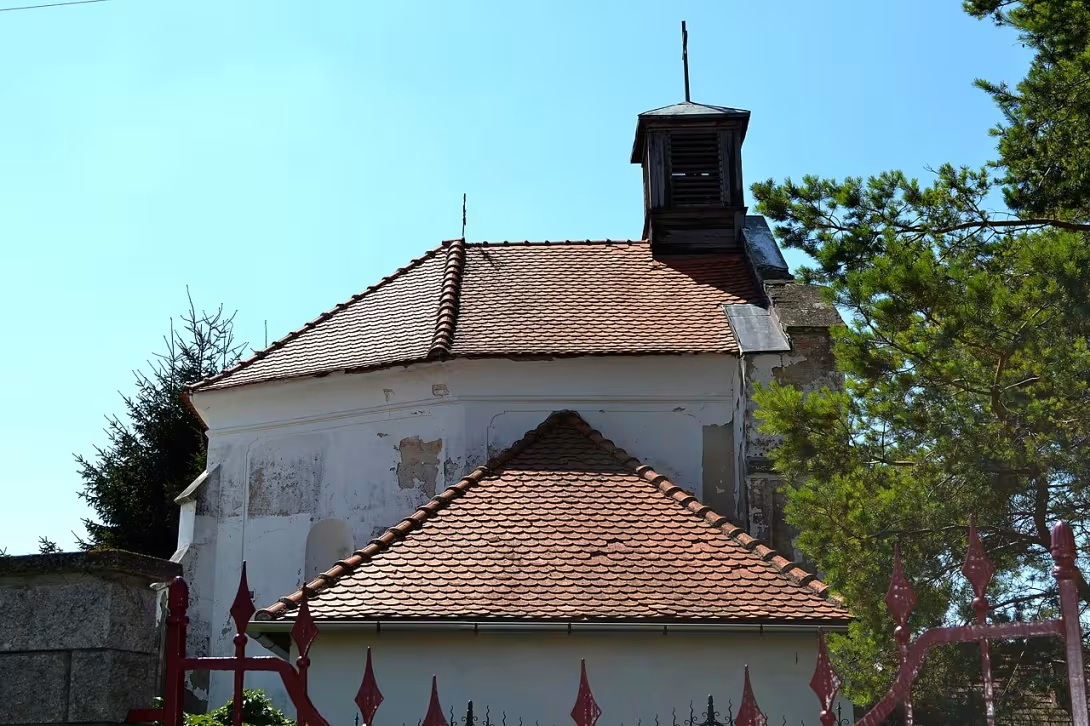
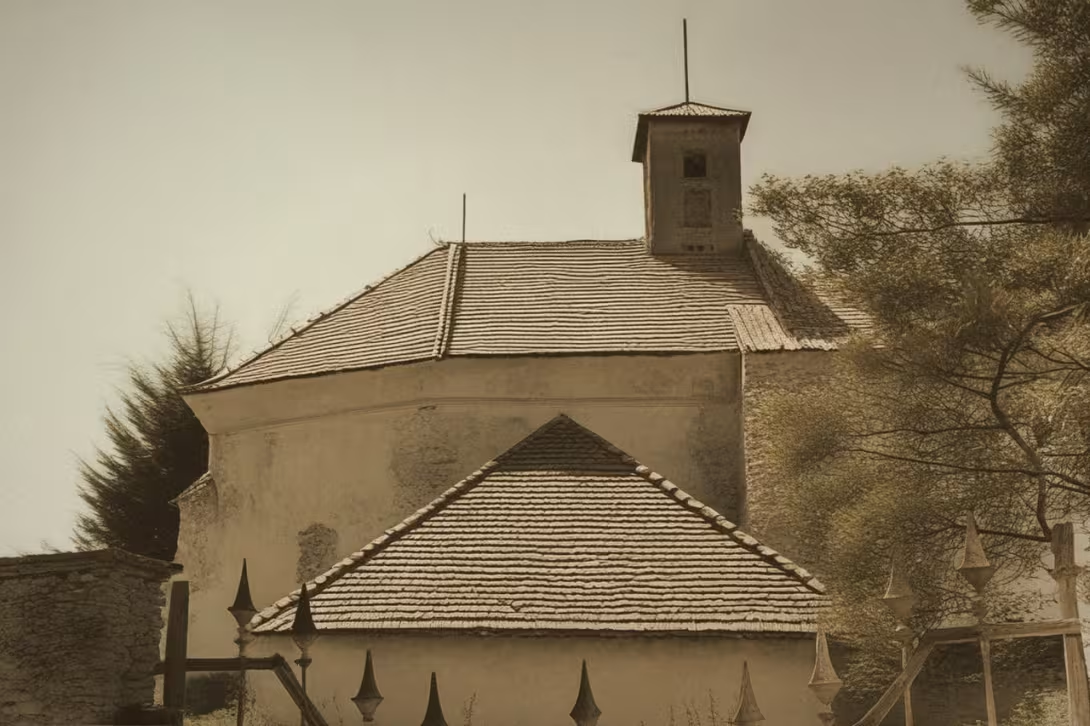
The historical view on the left is a visualisation generated by artificial intelligence and serves as inspiration.
Historical Milestones
- 1710
- The church returned to the Catholics after the 17th - century Gospels owned it.
- 1736
- Restoring the church tower.
- 1773
- The beginning of a major repair and reconstruction of the church, where it was enlarged by chorus.
- 1774
- Complete the reconstruction of the church.
- 1852
- The fire that destroyed the wooden parts of the ship and the sacristy; only the sanctuarium was preserved.
Heritage surveys
-
2015/09 — Architektonicky-historícký výskum
Komplexný pamiatkový výskum
Interesting facts
- St.
Guide
Show guide text
The text was prepared by artificial intelligence and has not been editorially reviewed. It may contain inaccuracies.
Welcome to the village Dunajská Lužná. Right now you are standing in front of a place that hides hundreds of years of local history and spiritual tradition. In front of you is the chapel of St. Martin, which may seem modest at first sight, but in fact is the center of a fascinating story about survival and change. Now that you're looking at it, you can't see the whole building that the ancestors knew in the previous centuries, but you see the precious fragment that survived the fire and time test.
Let's now get together in a deeper context and find out how this construction has arrived. To understand the current state of the chapel, we must return to the thirteenth century in our minds. It was at this time that the original Romanesque building was created, which served as a parish church. The periodal architecture places great emphasis on stability and durability, as reflected in materials. The original church was built from a combination of stone and brick, which gave it the necessary strength. The dominant of the village was then a massive stone tower, which with a height of nineteen meters certainly meant a significant point of reference for all travellers around.
However, if we move a few centuries forward, we will find that the building was not only a witness to prayers but also to changes in religious currents. In the 17th century, the church came into the hands of the Gospels, reflecting wider political and religious flows within Europe and the Habsburg country. This condition lasted until 1710, when the building returned to the Catholics. With the return of the Catholic report, the first major repairs began. In 1736 it concentrated on the restoration of the tower, which was a key part of the entire complex.
Nyni, pay attention to how the construction progressed. In the second half of the eighteenth century came a time of great change. In 1773 a large-scale repair and reconstruction of the entire church began. The aim was not only to reduce material wear but also to increase building capacity. Within the framework of these works, the church was expanded by choir, which allowed better room for musicians and singers. The whole process of rebuilding was relatively fast and already in 1774 the building was completed in its new form.
Now that you're standing in front of the chapel, feel the atmosphere of this place and think about what happened here almost 200 years ago. This is where two planes meet: one is the plane of the Romanesque presbytery, and the other is the plane of loss. The key moment defined by the present appearance of the monument was 1852. A devastating fire broke out this year. The flames then devoured almost all the wooden parts of the ship and the sacristies. It was a tragic time when the history of the parish church seemed to end. However, due to the fact that the basic structures were made of stone and brick, the miraculously preserved sanctuarium.
It is this preserved sanctionarium that represents what you see before you today. Saint Martin's chapel is therefore not an independent small building that would be created later, but it is essentially a preserved presbytery of the original parish church. He is such an architectural witness who survived the disaster, while the rest of the building died. It is fascinating to realize that although the rest of the church is gone, this 13th - century core still stands and reminds us of the Roman era.
Now note the details documented in the documents. Although you can no longer see the nine - foot - long [90 m] tower that had ever undergone restoration in 1736, you can feel the majesticness of the original thought - provoking work. Look at the walls and see the material. The combination of stone and burnt brick we talked about is precisely what enabled this part of the building to survive the fire of 1852. If the whole building was made of wood, we probably wouldn't be standing here today.
It's a place full of silence and humility. Although we do not know the names of the specific architects who designed this construction in the 13th century, their work survived for almost a thousand years. It is perhaps the greatest mystery of this place - anonymity of the creators, whose work survived generations of inhabitants of Dunajská Lužná.
Let's go back and sum up what we found. You stand before the fragment of the Romanesque parish church, which passed through the hands of the Gospels and Catholics, was expanded in the eighth century by choir and finally almost completely destroyed by fire in the middle of the 19th century. However, what remains is a valuable historical document.
Let's finish our short tour of this monument. I'm going to invite you to enjoy the peace of this place for a while, and maybe you've tried in your imagination to fill those missing parts of the ship and the tall tower that ever ruled. Thank you for your attention and we wish you a pleasant further survey of the beautiful Dunajská Lužná and its surroundings. Let the next steps reveal many other interesting things from the history of this region. Enjoy your day.
Tips for visitors
The best time to visit the Chapel of St. Martin in Dunajská Lužná is during sunny spring and autumn days, when the surrounding nature offers a pleasant atmosphere for walks and admiration of the exterior of this historic sacral building. For comfortable transport you can use your own car or regional public transport, and you can easily check the specific traffic links in the current timetables. Do not forget to take comfortable shoes around the monument, plenty of drinking water and camera to capture interesting details of architecture. The best light to photograph the exterior of the monument and its surroundings reigns during the early morning or later in the afternoon, when soft sunlight highlights the historical character of the building. Since there are no other recommendations for the surrounding area within 30 minutes or specific tips for families with children in the available documents, we recommend to adjust the visit to the individual needs of your family and focus on a quiet walk in this location of the Bratislava region.
Frequently asked questions
Can the monument be visited?
Religious buildings are usually open mainly during services; at other times a visit is normally arranged with the parish or the operator. We have not verified specific times.
Where is the monument?
Location: Námestie svätého Martina 137/6, Nové Košariská, Dunajská Lužná, Bratislavský kraj. The map on this page shows the exact spot.
Why is the monument protected?
It is listed in the Central List of the Monuments Fund of the Slovak Republic as a national cultural monument (ÚZPF no. 108-502).
For children
Imagine stepping in time. Not in the future, but in the past, exactly seven hundred and twenty-six years ago. It was about 1300. At that time in Dunajská Lužná there were things that no one would really believe in you at school today. There was a huge parish church in a place where trees are cut down today. It wasn't just a building. It was the heart of the entire village, the place where all the inhabitants met to pray and discuss.
Nearby
🏰 Historic sites (673)
- M. R. Štefánikovi 0.4 km
- 80 rokov Lurdskej jaskyne v Dunajskej Lužnej 0.6 km
- Rezbárska galéria v parku 0.8 km
- Milan LESKY Leskovský 1.1 km
- Sokol Štefánikovce 1958 2.8 km
- Podunajský remeselný dvor 4.4 km web
- Kaštieľ Lieskovec 4.6 km Lieskovec 10386/13
- Pamätník padlým v I. a II. svetovej vojne 5.3 km
- Patrik Šipoš 5.5 km
- Pomník padlým v 1. a 2. svetovej vojne 5.5 km
- Trojičný stĺp 5.5 km
- Sanctus Stephanus Rex 5.6 km
- Dr. Robert Koch 5.7 km
- Kaštieľ Podunajské Biskupice 5.7 km
- Kópia rímskeho míľnika 5.7 km
- Bitter House 5.8 km Tomášovská 542/20 +421 917 262 594 web
- Danubiana Meulensteen Art Museum 5.9 km +421262528501 web
- Panna Mária 6.1 km
- Múzeum obchodu Bratislava 6.2 km +421245243167 web
- Kúria Juraja Alberta 6.2 km Linzbothova 9736/16
🍽️ Restaurants and dining (2121)
- Gagarin 0.1 km
- Na dvojke 0.1 km
- Döner kebab 0.1 km +421 905 324 496
- Caffé Hausbrandt 0.2 km
- Reštaurácia u Poleho 0.2 km
- Hostinec u Zola 0.5 km
- Jánošík 0.6 km
- Čárda Betyár 0.6 km
- Western House 0.7 km
- PIZZA PLANET 0.8 km +421 907 11 22 33
- D.L.B Caffe 0.9 km
- Lokál Burger 1.0 km Športová 747 +421 949 049 744 web
- Pizza Mattarello 1.1 km +421907964099 web
- Torch 1.1 km Lipnická 312/83 +421 904 410 410 web
- Coffee me 1.2 km web
- Acqua & Farina 1.3 km +421 911 390 123
- Lotus 1.3 km
- Crunch coffee 1.4 km +421 903 783 779 web
- Langos galéria 1.4 km
- STREET CAFE 1.4 km
🏨 Accommodation (199)
- Penzión Hviezda 5.9 km Hviezdna 6238/64 +421902817666 web
- Rodinné vinárstvo Bartal 6.2 km Gančháza 1112/1 web
- YACHTER CLUB Modrá Čajka 6.2 km +421 940 61 40 40
- Penzión Relax 6.3 km web
- Divoká Voda 6.4 km web
- Kemping Čunovo 6.4 km web
- Hotel Garny 7.0 km
- Villa Park 7.0 km +421 902 115 266 web
- Stefani Panzion 7.3 km Novosadná 276/12 +421 905205274
- Modrý dunaj 7.5 km Závodná 12422/2B
- Art Hotel Kaštieľ 7.6 km +421 2 209 093 00 web
- Ubytovňa Javorina 7.8 km
- Hotel Modena 7.9 km +421 948 998 488 web
- Samaria 7.9 km Bratislavská 2110/100D +421 905 26 20 92 web
- Táborisko Dronte 8.2 km
- Kvapka 8.3 km web
- Ubytovňa Robinson 8.3 km Vlčie hrdlo 935/58 web
- Vlnka 8.4 km web
- Bublinka 8.4 km web
- X-BIONIC hotel 8.5 km web
🚲 Rentals and sport (436)
- BMX dráha Dunajská Lúžna 0.9 km web
- MAREK BIKE 1.1 km +421 905 347 174 web
- Tenis – bedminton klub Dunajská Lužná 1.1 km +421 902 355 812 web
- RENTeBIKE.sk 2.7 km +421 908 107 132 web
- Zóna oddychu a relaxácie 3.6 km
- Jazdecký areál Davidov 3.6 km
- Relaxačno-športové centrum 4.2 km
- Jazdecký areál Anna majer 4.4 km
- Aqualina klub baby plávania 4.6 km +421 915 992 783 web
- Sportisimo 4.7 km
- Športový areál Tryskáč 5.0 km
- Športovo-rekreačný areál Hamuliakovo 5.1 km web
- Športservis 5.6 km +421 2 40 20 16 02 web
- Trojičné námesite 5.6 km
- Korytnická Podunajské Biskupice 6.2 km
- Cyklohavrila 6.2 km +421 2 4595 1036 web
- Marina YACHTER CLUB Modrá Čajka 6.2 km web
- DYC Marína - Prístavisko Čunovo 6.3 km web
- Sportisimo 6.5 km Bratislavská 2862 +421232179880 web
- Areál Divoká voda 6.5 km web
🥾 Hiking and nature (122)
- Štefánikov park 0.3 km
- Lipový park 3.7 km
- Anna park 3.8 km
- Kalinkovská rozhľadňa 3.9 km
- Pozorovateľňa vtáctva DUNA 3.9 km web
- samoobslužná kompa 3.9 km
- Park Sadová 4.1 km
- Alžbetin park 4.2 km
- Kalinkovská lesostep 4.3 km
- Šikmá veža v Hamuliakove 5.7 km
- Park mládeže 7.0 km
- Park Kríková 7.3 km
- Šibeničný kopec 7.4 km
- Vrakunská rozhľadňa v lesoparku 7.9 km
- Kaštieľsky park 8.0 km
- Pamätná studňa 8.1 km web
- Lesopark Vrakuňa 8.2 km
- Gešajovský mlyn 8.2 km web
- Trampská osada Gerulata 8.4 km
- Korzo Zálesie 8.5 km
Thematic route
St. Martin's Chapel, former parish co. Type: Historical sacral monument Why it is worth visiting: Medieval building in the village Dunajská Lužná attracts original construction details.
Seasonal recommendations
In the spring, nature awakens in Dunajská Lužná, which adds fresh atmosphere to the surroundings of the Chapel of St. Martin. Morning light makes it easier to observe architectural details of the exterior. Due to variable weather and wind, we recommend layered clothing and firm shoes, as spring rains can leave the grassy surroundings moist.
During the summer, the building is surrounded by lush vegetation and tall trees provide shade. The setting sun tonight illuminates the walls of the former parish church. During warm months we recommend light clothing, plenty of fluids and protection from insects. The best time to visit are the early morning hours when you avoid the midday heat.
On the yen the scenery turns into a palette of warm shades and fallen leaves change the character of the site. The low sun creates shades of shadows and often masks the landscape with mist or morning fog. Due to colder air and dry weather, we recommend a windproof jacket and a warm cap. For a walk it is best to choose noon when temperatures are highest.
Winter season brings to Dunajská Lužná silence. Snow highlights the chapel's silhouette. For a comfortable visit is necessary warm clothes and winter shoes with non-slip soles. The ideal time to stay outside is afternoon, while natural daylight is available.
Visualisations and artistic views


The visualisations are generated by artificial intelligence and serve as inspiration.
Photographs from the area
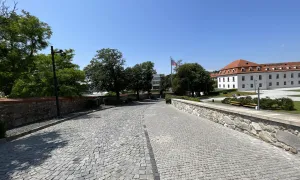
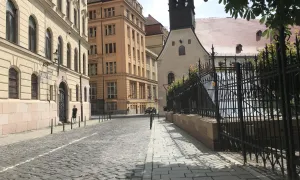
Real photos taken near the monument


Source and licence are given for each image.
Visitor Tips
No tips yet. Be the first!
Log in and add your tip.
Location on Map
More monuments – Dunajská Lužná
Show all in the town


Visitor photos
No photos yet. Be the first to add a photo from your visit!
Log in and add your photo or leave a rating.
You get more points for a visit verified in the app — we can tell from the GPS that you are there.
Reviews and comments