








chudobinec Almshouse
Poor house in Banska Bystrici is a monument located at Lazovná 254/23. It is registered in the Register of the Office for the Protection of the Hills and Monuments of the Slovak Republic under the number 321-10025. It was exhibited in 1600 and represents an example of Renaissance architecture from the 16th century.
According to data of the Monument Office of the Slovak Republic, the area contains one object: the poorhouse (salter, Renaissance, 16th century). It is protected as a national cultural monument. Details of the construction character, such as disposition, flooring or materials used, are not given.
Chudobinec is located in Banská Bystrica, the capital of Banská Bystrica region. Information on the cadastral territory, date of declaration as a monument or the existence of a conservation zone and a protection belt is not available. The current state and use of the poor also unknown.
Tehdy a dnes
Drag the slider and compare how the monument might have looked when it was built with the view today.
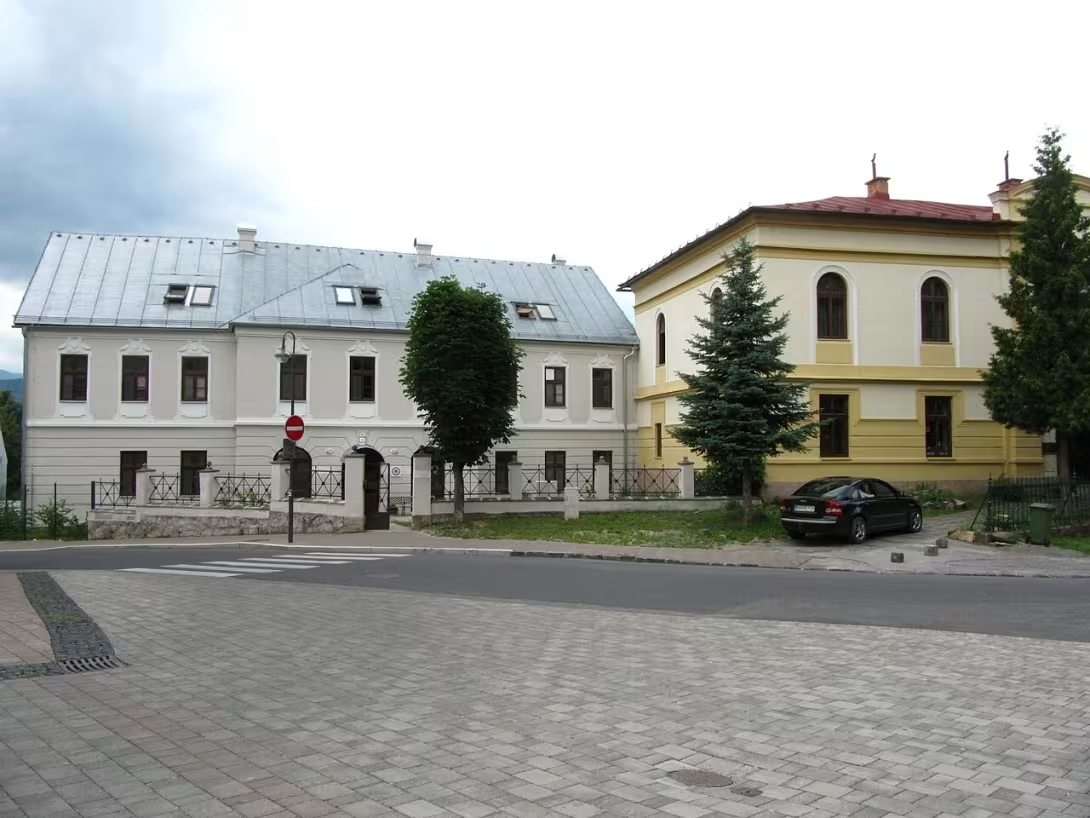

The historical view on the left is a visualisation generated by artificial intelligence and serves as inspiration.
Interesting facts
- Chudobinec is a monument located in Banská Bystrica. - It was exhibited in 1600 and represents an example of Renaissance architecture from the 16th century. - It is protected as a national cultural monument.
Guide
Show guide text
The text was prepared by artificial intelligence and has not been editorially reviewed. It may contain inaccuracies.
Welcome to Banska Bystrica, a city with a rich history where every house and every alley tells their own story. Right now, you are standing in front of a building that at first glance may not seem as monumental as large city palaces or majestic churches, but its significance is extremely great from a deeply human point of view. In front of you, there's a building that's known as the Chudobain. Look at her and see her atmosphere. It is a place that bears a silent witness about the fates of the people who lived in this city, but they remained almost completely forgotten in official chronicles.
When you stop and see the silence of this place with your headphones placed, try to imagine what function this house has performed in the past. The poor thing wasn't just a building, it was a harbor for those who lost everything in their lives. In the historical context of cities such as Banská Bystrica, which flourished thanks to the banquet and trade, there was a sharp contrast between the immense wealth of rich townsmen and the deep poverty of those who fell to the margins of society. It was for these last ones, the old, the sick and the lonely, that this house was created. Although the exact dates of its creation and the names of the architects who designed it, the time was erased from memory and records, the very existence of this building tells us about the then sense of responsibility of the city towards its weakest members.
Now, please look at the overall architecture of the building. Notice her moderation. Here you will not see any spectacularly decorated portals, no precious stones or pomps that characterize the residences of rich families in the city center. This simplicity is not random. The architecture of Chudobinec was to reflect its purpose and the status of its inhabitants. Look at the facade and see its proportions. It's a building that doesn't try to dominate the surroundings, but it's more like a subtle bird that wants to protect the privacy and dignity of those who found refuge in it. Notice how the building communicates with the space around it. It is an architecture of functionality and humility, where every detail served primarily practical needs, not aesthetic pleasure.
Now let's think about the people who have passed through. Although historical backgrounds do not contain the specific names of known personalities associated with this place, this anonymity is the most powerful part of the story of Chudobinca. Imagine hundreds of unknown faces passing through these thresholds. They may have been former miners who were not allowed to work in the depths of the winter, widows who had no one to look after them, or people whose circumstances in their lives led them to complete need. These walls testify to thousands of days of hope, but also despair, of mutual assistance among people who had nothing but one another. It was in these walls that there were dramas that never entered the textbooks of history, but which make up the true fabric of the city's humanity.
You may now wonder why we do not know so many specific details about this place, why architects and accurate data are unknown. It is at this point that we come to one of the greatest mysteries and, at the same time, the most sad truths about historical monuments. History often recorded the names of winners, kings, and wealthy merchants, while the lives of the poor remained undocumented. The fact that we don't know exactly who built the Chudobinec or when it was finished is symbolic. It's a reflection of how society used to perceive people who lived here. Their lives were invisible, so the history of their home remained invisible. However, this lack of information creates room for our imagination. Look again at the building and try to hear the echoes of people whose names were not written but whose presence we still feel.
To see such an object in the city center is important because it reminds us that the city is not only a set of beautiful facades and museums, but it is primarily a place for people in all their life situations. The poor guy is a myth of solidarity and also of the fragility of human destiny. When you stand in front of him today, you see more than just an old building. You see evidence that even in times without modern social systems, there was an effort to provide a roof over those who did not have it.
Before I say goodbye and let you continue to discover the beauty of Banská Bystrica, I suggest you observe the details of this building in silence for a while. Note how light falls upon it, how its function has changed over the centuries, and how it operates today in the context of a modern city. It is a place that teaches us humility and gratitude.
Thank you for your attention and for taking the time to this quiet part of town. Now I invite you to continue your journey and discover the other gems that await you in the streets of Banská Bystrica. Enjoy the trip and let each next stop lead you to new attractions and discoveries. I wish you a pleasant walk and a peaceful siege in the atmosphere of this historic city. Goodbye.
Tips for visitors
Poor house in Banska Bystrica is best to visit in summer or autumn.
It is not possible to park near the workhouse, so we recommend using public transport.
When visiting, take comfortable clothing, long walking shoes, and sunglasses. It is recommended to have water and a provider, especially during a full-day stay.
Photography is the best morning and evening. See also interior with architectural details.
In the vicinity of the workhouse you will find the historical center of Banská Bystrica, its monuments and the Roma Museum. Families with children can visit the park or town zoo.
Frequently asked questions
Can the monument be visited?
The building is in use (offices, a school, shops and the like). The interior is generally accessible only during operating hours and tours are not usually offered; we have not verified the details. You can see the exterior from the street.
Where is the monument?
Location: Lazovná 254/23, Banská Bystrica, Banskobystrický kraj. The map on this page shows the exact spot.
Why is the monument protected?
It is listed in the Central List of the Monuments Fund of the Slovak Republic as a national cultural monument (ÚZPF no. 321-10025).
For children
Imagine the time when shops were getting better and the town of Banská Bystrica began to bloom like a morning flower for a jaupka. This was not only about metal peeling and precious stones, but also about taking care of the poorest. And so the round of 1600, that's exactly 426 years ago, began the construction of the poorhouse in Banská Bystrica.
Nearby
🏰 Historic sites (115)
- Štefan Moyzes a Karol Kuzmány 0.3 km
- Matejov dom 0.3 km Námestie Š. Moysesa 48/20 web
- Banská Bystrica 0.3 km web
- Rex Bela IV. 0.3 km
- Barbakan 0.3 km web
- Viliam Pauliny 0.3 km
- Pápež Ján Pavol II. 0.4 km
- Mons. Dr. Andrej Škrábik 0.4 km
- Štefan Moyses 0.4 km
- Galéria 0.4 km Námestie Š. Moysesa 51/25
- Morový stĺp 0.4 km
- Imrich Ďurica 0.4 km
- Sovietskej a rumunskej armáde 0.4 km
- Pamätník SNP 0.4 km
- Thurzov Dom 0.4 km web
- Významné lesnícke miesto 0.4 km
- Viliam Figuš Bystrý 0.5 km
- Chaviva Reiková 0.5 km
- Ladislav Sára 0.5 km
- Improvizovaný pancierový vlak Štefánik 0.5 km
🍽️ Restaurants and dining (243)
- Regal Burger 0.1 km +421910611158 web
- Bottova 0.1 km +421 948 874 256 web
- Kaviareň Poetika 0.1 km Lazovná 16 +421915277366
- Canvas 0.1 km
- Kúria 0.2 km
- Shadow 0.2 km
- Beerstrica 0.2 km web
- 365.café 0.2 km
- Bystrička 0.2 km
- Jazz art café Mefisto 0.2 km Námestie Štefana Moyzesa 15 +421907263764
- Mefisto 0.2 km
- Záhrada 0.2 km Námestie SNP 16 +421 907 628 127 web
- mlsnacava 0.2 km
- Ristorante La Secchia 0.2 km Terézie Vansovej 21 +421905269227 web
- Palacinkáreň Bonjour 0.3 km
- GoodZone Hookah&Bar 0.3 km +421944921144
- Mäsiareň tržnica 0.3 km +421 907 956 717 web
- Klubovňa 0.3 km
- Plzenská 0.3 km
- SOHO 0.4 km +421907384349
🏨 Accommodation (69)
- YMCA 0.1 km
- Penzión Kúria 0.2 km
- Art pension 0.3 km web
- Gran Hostel 0.5 km Kapitulská 312/11 +421905654006 web
- Arcade 0.5 km
- Urpin City Residence 0.6 km J. Cikkera 910/3
- Národný dom 0.6 km
- Penzión Boca 0.6 km
- Al Corso 0.7 km +421 48 381 1189 web
- Ubytovňa Stavoprojektu 0.8 km +421 918 109 680 web
- Lux 0.9 km
- Penzion Uhlisko 1.3 km Lesná 224/3
- Penzión Maják 1.7 km Okružná 592/15
- Bella 2.3 km
- City 2.8 km Partizánska cesta 3806/85
- Penzión Adonai 3.0 km Zvolenská cesta 3744/17
- Chata Vatra 3.6 km
- Madona 3.8 km web
- Penzión u Hastrmana 4.6 km Hlavná 265/7A web
- Penzión u Vinca 4.7 km Kremnička 16 web
🚲 Rentals and sport (34)
- Be-cycles 0.1 km Lazovná 22 +421 949 166 133 web
- CoolBike 0.4 km +421 48 415 13 76 web
- Pagy Bike 0.5 km
- Tenisia - kurty v mestskom parku 0.5 km web
- Trekland 0.5 km
- Bike sport 0.6 km
- Husky 0.6 km Dolná 39
- LESONA poľovnícke potreby 0.7 km Dolná 34 web
- Decathlon 1.0 km
- Plaváreň Štiavničky 1.0 km Cesta olympionikov 1624/4 +421 48 423 04 01 web
- Yonex aréna 1.0 km
- Športová hala Dukla 1.0 km Cesta olympionikov 1271/2
- I 1.0 km
- L 1.1 km
- Tipsport arena 1.1 km
- Old I 1.1 km
- Z 1.1 km
- Detský bazén 1.2 km
- Fit Arena 1.3 km
- Trekbikes 1.5 km
🥾 Hiking and nature (342)
- Mestský park 0.4 km
- Park Juraja Hudeca 0.5 km
- Park Jozefa Dekreta-Matejovie 0.6 km
- Veliteľský bunker 0.6 km
- Parčík kráľovnej Alžbety 0.6 km
- Park pod pamätníkom SNP 0.7 km
- Park na Námestí slobody 0.9 km
- Kačica 1.0 km
- Medokýš 1.0 km
- (bývalé) Dopravné ihrisko 1.2 km
- Oddychová zóna Tajovka 1.3 km web
- Urpín, vyhliadka 1.4 km
- Urpín 1.5 km
- Stráž 1.6 km
- Turíčka 2.2 km
- Vartovka 2.4 km
- Bánoš 2.6 km
- Laskomer 2.6 km
- Dúbrava 2.9 km
- Sásovská Dolina - Zelené miesto 3.0 km
Thematic route
Thematic cruise route from Banská Bystrica to the workhouse
1. Poor thing. Type: Historical monument Poor house in Banska Bystrica is one of the oldest in Slovakia and is located in the heart of the city. He's an example of Renaissance architecture. 2. Old Square Type: History location The old square is the center of Banská Bystrica and there are many historical buildings around it, including the town hall. It serves as a transition point between the workhouse and other attractions. 3. Evangelical Church Type: Religious monument The church is an example of Baroque architecture with an important history for the city. Its interior frescoes and stucco decorations are part of the cultural heritage of Banská Bystrica. 4. Historical area of the poorhouse Type: Exposition and park Around the house itself is a picturesque courtyard with historical buildings. The area offers expositions from the heritage of local history. 5. Student Street Type: Place with cultural atmosphere Student street is famous for its shops and caviar shops, where you can experience the local core. It serves as the conclusion of the route for relaxation after the discovery of the history of the poorhouse. This route will allow you to cross the historical and cultural places of Banská Bystrica, starting from the workhouse itself and ending in the heart of the city.
Seasonal recommendations
Jaro: The weather in the spring is usually warm and sunny. The natural beauty of the surrounding area is reflected in flowering orchards and green meadows. The atmosphere is calm and ideal for relaxation. The best time to visit is early June, when the crowds are still minimal. We recommend wearing suitable shoes for lawn and soft clothing.
Léto: The Léto is the poorhouse most visited, especially in July and August. Sunny weather increases the attractiveness of walks. Prepare for larger crowds, especially exceptional days. Warm clothes and protective lines are essential.
Under: In the background, the atmosphere is calmer and nature is encouraging to walk between yellow leaves. Sunny days in October are ideal for visiting when it is the least waiting. Get ready for colder weather even when the sun lives.
Winter: The winter is calmer and has shorter open hours due to lower temperatures. The atmosphere is mildly calm. We recommend warm clothes and shoes suitable for freezing weather. Visiting the workhouse is the best morning when hours are open longer.
Visualisations and artistic views


The visualisations are generated by artificial intelligence and serve as inspiration.
Photographs from the area
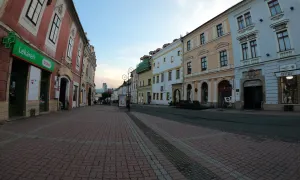
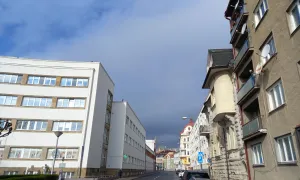
Real photos taken near the monument


Source and licence are given for each image.
Visitor Tips
No tips yet. Be the first!
Log in and add your tip.
Location on Map
More monuments – Banská Bystrica
Show all in the town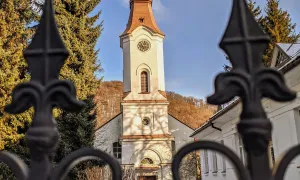



Visitor photos
No photos yet. Be the first to add a photo from your visit!
Log in and add your photo or leave a rating.
You get more points for a visit verified in the app — we can tell from the GPS that you are there.
Reviews and comments