

church of Our Lady of Seven Painful Church
Church of Our Lady of Seven Painful in the village Partizánska Ľupča in Žilina region is a Gothic building from 1263. Later she went through Renaissance and Baroque adjustments. The area registers the Monument Office of the Slovak Republic under the number of ÚZPF 359 and it is formed by the church itself under the number of ÚZPF 359/1.
The church was established around 1263 in a location formerly known as the German Ľupča. Until 1479 he performed the function of a parish church. This year he stopped to meet the needs of the parish and was degraded into the chapel. The sacral object stood in the middle of the cemetery, in its surroundings began to oragne the building and buried here.
In the 17th century the church was extended by a Renaissance hall and fortified. In the 18th century he went through Baroque enchantment and overcasting. In 2021 there was an architectonic-historical research, authored by Mgr. Kristina Zvetelová, PhD.
It is a single-boat space with a polygonal closure of the presbytery, which is encircled by the lunet rib vault. The entrance to the sacristy is Gothic, the original is also the southern Gothic portal with rods in the lining. The ship has latebaroque Prussian vaults and smooth facades break gothic and baroque windows. The Presbytery has two-tier support pillars in the exterior. On its eastern side there is a baroque plastic group of Calvary from the mid-18th century.
The main altar is neo-Gothic by V. Merklas. It contains a picture of Piety by T. Kolbay and images of St. Peter and John the evangelizer on the wings of A. Springer from around 1850. The side altar complements the picture of P. Bohúň's preaching in 1861. In the sacristy there is a fragment of the Gothic wing altar of the four-field type with painted saints and a Baroque rustic statue of the Virgin Mary in the closet.
The church is registered in the Central List of Monument Fund of Slovakia under number 359/1. It has undergone reconstruction, but the current situation is not very good. It continues to serve its purpose and is located on the northern edge of the village Partizánska Ľupča.
The building retains layers of medieval Gothic, Renaissance and Baroque.
Tehdy a dnes
Drag the slider and compare how the monument might have looked when it was built with the view today.
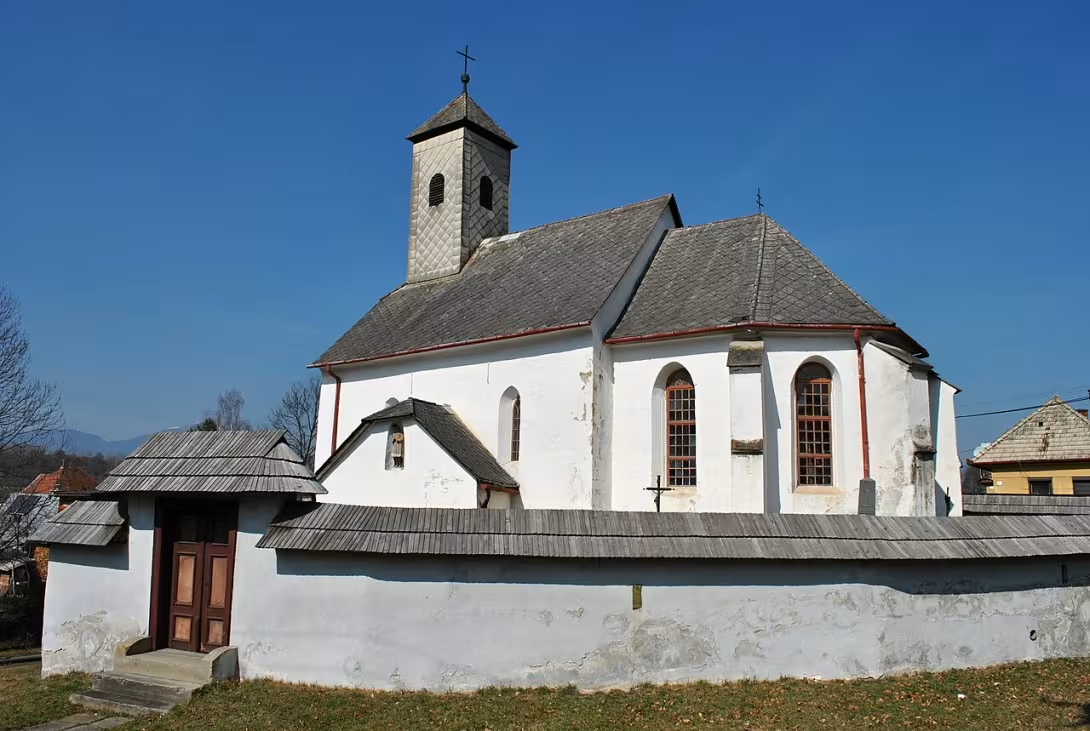
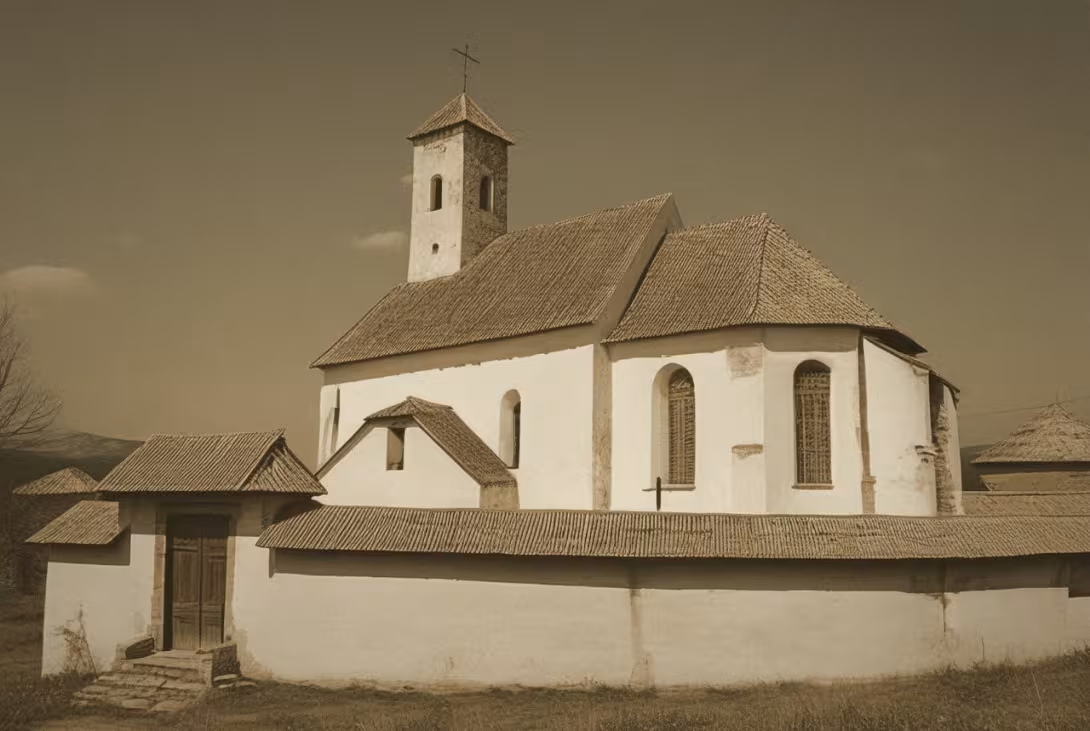
The historical view on the left is a visualisation generated by artificial intelligence and serves as inspiration.
Historical Milestones
- 1263: Gothic church building
- 1479: The church ceased to fit as a parish and began serving as a chapel
- 17th century: Extension of Renaissance hall and fortification of the church
- 18th century: Baroque closing and over-fasding
- 2021: Implementation of architectural and historical research
Heritage surveys
-
2020/12 — Architektonicky-historícký výskum
Komplexný pamiatkový výskum
Interesting facts
- The church was established around 1263 in a locality formerly known as Nemecká Ľupča and until 1479 it fulfilled the function of a parish church, when it was degraded to the chapel due to lack of capacity. - In the 17th century, the church was expanded with a Renaissance hall and fortified, while in the 18th century it passed through Baroque enchantment and prefasding. - On the east side of the Presbytery there is a baroque plastic group Calvary from the middle of the 18th century. - The side altar completes the picture of P.
Guide
The guide was voiced by a synthetic voice created by artificial intelligence.
Show guide text
The text was prepared by artificial intelligence and has not been editorially reviewed. It may contain inaccuracies.
Welcome to the picturesque Partizánska Lupča. Right now you are standing in front of the historical gem, which is the Church of the Virgin Mary the Seven Painful. When you look ahead to yourself, you see a building with deep roots in the past of this region. Listen to the sounds of the surrounding area and let me accompany you in a place that remembers centuries of development, for names and structural transformations. Let's move on to the very beginning of this interesting place. The history of this tabernacle began as early as about a thousand two hundred sixty-three. At that time, this site was located in an area known as German Ľupča. Imagine life in this village in ancient centuries. The place lived with its own rhythm, and this church played an irreplaceable role in the lives of local inhabitants. Until the year one thousand four hundred seventy-nine fulfilled the proud function of the parish church. However, time went by, the community grew, and the original spaces soon ceased to be enough of the pressure of believers. Because of its lack of capacity, the church was therefore demoted into the chapel in the same year by a thousand four hundred seventy-nine, which did not in any way diminish its historical significance and spiritual legacy for future generations. Now pay attention to the architecture itself and the visual details you have before you. Like the parish needs, the face of the building itself changed. In the 17th century, the church underwent an important construction process, when it was extended to the Renaissance hall. At the same time, it also became defensive because it was fortified, reflecting the restless times of the time when it was necessary to protect not only human lives but also sacred space. A century later, that is, in the eighteenth century, the construction was able to make further adjustments, this time in the Baroque spirit, which left an indelible mark on its overall appearance. When you look at this facade and surroundings, see this cross-cutting transformation, where the Gothic foundations meet with Renaissance and Baroque elements. Although the history of this place does not stand out in historical annals by the names of famous rulers or great architects, the story of the community itself is all the stronger. Local residents, craftsmen and builders have left a piece of their lives here. Each generation that has entered has contributed their part to the building's survival of changing times and serving its purpose. The church is not only a silent witness of the past, but a living book of local history, which we read through its walls and architectural details. It is this contrast between the original meaning of the main parish church and its later role as a chapel that makes this place special. Imagine the change that the inhabitants of that time had to perceive when the centre of the spiritual life of the village became a chapel due to growing spatial demands. This smooth transition and the ability to adapt to changing conditions over the centuries is a fascinating testimony to the tenacity of the people here. Finally, I would like to encourage you to explore this place further, deeper. Enjoy the peaceful atmosphere that reigns around the Church of the Virgin Mary of Seven Pain to this day, and let the spirit of the old times act upon you. Thank you for your attention, I wish you pleasant moments to discover other secrets of Partizánska Ľupče and goodbye.
Tips for visitors
To visit the Church of Our Lady of Seven Painful is a suitable spring and summer when the surroundings in the flower and architecture excel in natural light.
When visiting it is recommended shoes suitable for walking around the historical centre of the village. It is sacral construction, therefore appropriate clothing with respect to the place.
The exterior of the church is suitable for photography especially during the golden hour before sunset, when light highlights the details of the facade. The interior can be photographed in accordance with the rules of the object.
For families with children is a short walk around, where you can get to know the historical atmosphere of the village and the architecture of the building.
Frequently asked questions
Can the monument be visited?
Religious buildings are usually open mainly during services; at other times a visit is normally arranged with the parish or the operator. We have not verified specific times.
Where is the monument?
Location: č. 9, Partizánska Ľupča, Žilinský kraj. The map on this page shows the exact spot.
Why is the monument protected?
It is listed in the Central List of the Monuments Fund of the Slovak Republic as a national cultural monument (ÚZPF no. 315-359).
For children
Imagine being in time about seven hundred and sixty - three years ago. There's only wild nature around you, there's roaring forests, and the air smells wood and smoke from fire. That's when, sometimes around the year your twelve hundred and sixty-third, the wise builders began to fold the first stones to the place where the ancient church of the Virgin Mary of Seven Pain in Partizánska Ľupča still stands. It was like a thrilling strategy game where each stone laid was a huge success.
Nearby
🏰 Historic sites (242)
- Milan Rastislav Štefánik a obetiam 1. svetovej vojny 0.5 km
- Pamätník SNP 0.5 km
- Cirkevný zbor evanjelickej cirkvi 1525-2010 0.5 km
- Kaštieľ Partizánska Ľupča 0.5 km web
- Vodny hrádok 0.7 km
- Michal Král 0.8 km
- Hrádok 2.6 km
- Hradisko sv. Ďur 2.6 km
- Archeopark Liptovia 2.9 km
- Kaštieľ Ivachnová 3.4 km
- Kaštieľ Bešeňová 3.5 km Mitošiny 117/4
- SNP 3.7 km
- SNP 3.8 km
- Kaštel rodiny Kubínyi 3.9 km
- Krížľová 4.3 km
- sv. Alžbeta Uhorská 4.3 km
- Kaštieľ Liptovská Teplá 4.3 km
- SNP 4.5 km
- Magura 4.6 km
- Banský kríž 4.7 km
🍽️ Restaurants and dining (269)
- Cukráreň Tatiana 0.4 km
- Bistro 0.5 km
- Vináreň pod lipami 0.5 km +421 908 096 052
- Pizza Jumi 0.8 km +421 908 143 971 web
- Sojka 1.7 km
- Prameň 2.5 km Námestia Martina Benku
- Prameň 2.5 km Námestia Martina Benku
- Pohostinstvo REZOD 2.5 km Vyšnianska
- Kozí vŕšok 3.1 km web
- Koliba Bešeňovka 3.3 km web
- Na Majeri 3.3 km
- Vila 27 3.3 km +421 914 271 271 web
- Dobrota 3.4 km
- Pohoda Pilsner Pub 3.5 km
- Giovanni 3.5 km
- Cullinaria 3.5 km
- Sweet & Coffee 3.5 km
- Grill House 3.5 km
- Kúria 3.5 km
- Pri kameni 3.5 km
🏨 Accommodation (226)
- Evanielický penzion 0.5 km
- Harmónia 1.0 km
- Penzión č. 270 1.1 km
- Penzión Dvita 1.6 km
- Penzión Havránok 1.7 km
- Sojka 1.7 km
- Dom na strome 2.9 km +421 944 266 078 web
- Drevenica u Luptákov 3.1 km
- Apartmány Butterfly 3.3 km
- Vila 27 3.3 km Andreja Hlinku 210/11 +421 914 271 271 web
- Apartmány Best 3.4 km
- Happy village kaštieľ Ivachnová 3.4 km web
- Privat4you 3.4 km
- Summit 3.4 km web
- Privát Anna 3.4 km Jánska 9/34
- River Cottage Bešeňová 3.4 km Ľudovíta Bešeňovského 130/82 web
- Privát Bystrá 3.5 km
- Privát Mária Zacharova 3.5 km
- Hotel Giga 3.5 km Ľudovíta Bešeňovského 176/102
- Hotel Galeria Thermal Bešeňová**** 3.5 km Bešeňová 136/100 +421 44 2901 357 web
🚲 Rentals and sport (78)
- Relaxačný sedací bazén 3.5 km
- Veľký relaxačný bazén Mara 3.5 km
- Relaxačný sedací bazén 3.5 km
- Bazény pre hotelových hostí 3.5 km
- Tobogany - dopadový bazén 3.5 km
- Detský atrakčný bazén 3.5 km
- Tobogany a šmýkačky - dopadový bazén 3.5 km
- Veľký plavecký bazén 3.5 km
- Divoká rieka 3.6 km
- Bazén Termal 3.6 km
- Relaxačný bazén s vodným barom Cosmopolitan 3.6 km
- Plavecký bazén Šport 3.6 km
- Relaxačný bazén Čaša 3.6 km
- Bazénová hala 3.6 km
- Bazén s vlnobitím 3.7 km
- Detský atrakčný bazén 3.7 km
- Diving centrum - potápačský bazén 3.8 km web
- Fun bubble pool 3.8 km
- Raft river 3.8 km
- 1. FC 3.9 km
🥾 Hiking and nature (1166)
- Ivachnovský potok 1.3 km
- Hvozdec 1.5 km
- Kalinový jarok 1.6 km
- Hvozdec 1.7 km
- Bežan 1.9 km
- Sliačanský kráter 2.1 km
- Sliačanská minerálka Teplica 2.1 km
- Kráter 2.1 km
- Teplica 2.1 km
- Lovisko 2.3 km
- Zádiel 2.5 km
- Skalka 2.8 km
- Kostolná hora 3.2 km
- Pod Kopanicami 3.3 km
- Váha 1958 3.4 km
- Záhumnie 3.4 km
- Vajdová 3.5 km
- Helikoptéra 3.6 km
- Perová 3.8 km
- Hôrka 3.8 km
Thematic route
Church of the Virgin Mary of the Seven Painful Type: Sacral monument Why it is worth visiting: This Gothic church in Partizánska Ľupča has preserved historical architecture and artistic details. It provides space for learning about spiritual heritage.
Seasonal recommendations
Spring brings nature awakening in the vicinity of Partizánska Ľupče and under mountain scenery begins to color fresh green color. The church of Our Lady of Seven Painful operates freshly during this period when the spring sun rays reveal the details of his stone facade. The atmosphere is calm and suitable for the perception of architecture. Since spring weather is variable and temperatures are fluctuating rapidly, choose layered clothing and firm shoes, as the terrain can be wet and muddy after melting snow. A good time to visit and photograph the exterior is the morning when light illuminates the front portal of the building.
Summer months surround the monument with vegetation and daylight, which falls into the streets of the village. Long sunny days and early dawn create conditions for morning walks, while the air is fresh before the afternoon heat. The surroundings of the church provide shade under trees where you can relax. Remember to take drinking water, sunglasses, and head cover, as sun exposure during noon is intense. Afternoon storms are common in the region, so it is worth watching the weather forecast and having a waterproof layer of clothing at hand.
Autumn paints the landscape around Liptov into shades of yellow, orange and brown, creating contrast with the stone and church architecture. The morning fog often floats above the valley and adds a mysterious atmosphere appreciated by photographers. The sun falls below the horizon during this period and creates a side light suitable for capturing the structure of the masonry. However, air temperatures are falling, especially in the evening, so it is necessary to wear a warm windshield, scarf and strong shoes that keep you warm and dry during walks in the cold wind.
The winter season will cover Partizánska Ľupča in the snow, in which the church of Our Lady of Seven Pain is located in the village. Low sun and white surroundings create light conditions that operate cleanly in the clear sky. The atmosphere in Advent time is chambery and suitable for walking through the snowy village. Because of the frosts, snow and ice on the sidewalks, it is necessary to wear a winter jacket, a cap, gloves, and footwear with non-slip soles. A good time to visit is at noon when temperatures are highest and daylight reaches maximum, as days are short in the region.
Visualisations and artistic views


The visualisations are generated by artificial intelligence and serve as inspiration.
Photographs from the area
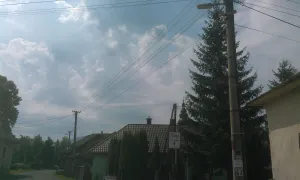
Real photos taken near the monument


Source and licence are given for each image.
Visitor Tips
No tips yet. Be the first!
Log in and add your tip.
Location on Map
More monuments – Partizánska Ľupča
Show all in the town


Visitor photos
No photos yet. Be the first to add a photo from your visit!
Log in and add your photo or leave a rating.
You get more points for a visit verified in the app — we can tell from the GPS that you are there.
Reviews and comments