

church of the Virgin Mary Birth Church
The church of the Nativity of the Virgin Mary in the village Town in the Prešov region is a classicistic building from 1843. The monument combines classicism with the background elements of the Baroque. It is registered in the Central List of Monument Fund of SR under the number 10 380/1.
The year of construction confirms the summer above the entrance. The renovations took place in 1895, 1937 and after World War II.
It is a one-ship church with a round cap presbytery. On the west façade there is a built-in tower with an entrance portal. The tower has a baroque mine and at the top of the lyric frame. Facades are divided half circled windows.
Internal equipment comes from the construction period. The main altar, the side altars and the pulpit exhibit the baroque elements.
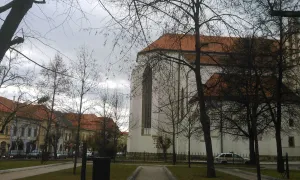
The church stands in the eastern part of the village in front of the cemetery. The building is in good condition and fulfills its original function.
Tehdy a dnes
Drag the slider and compare how the monument might have looked when it was built with the view today.
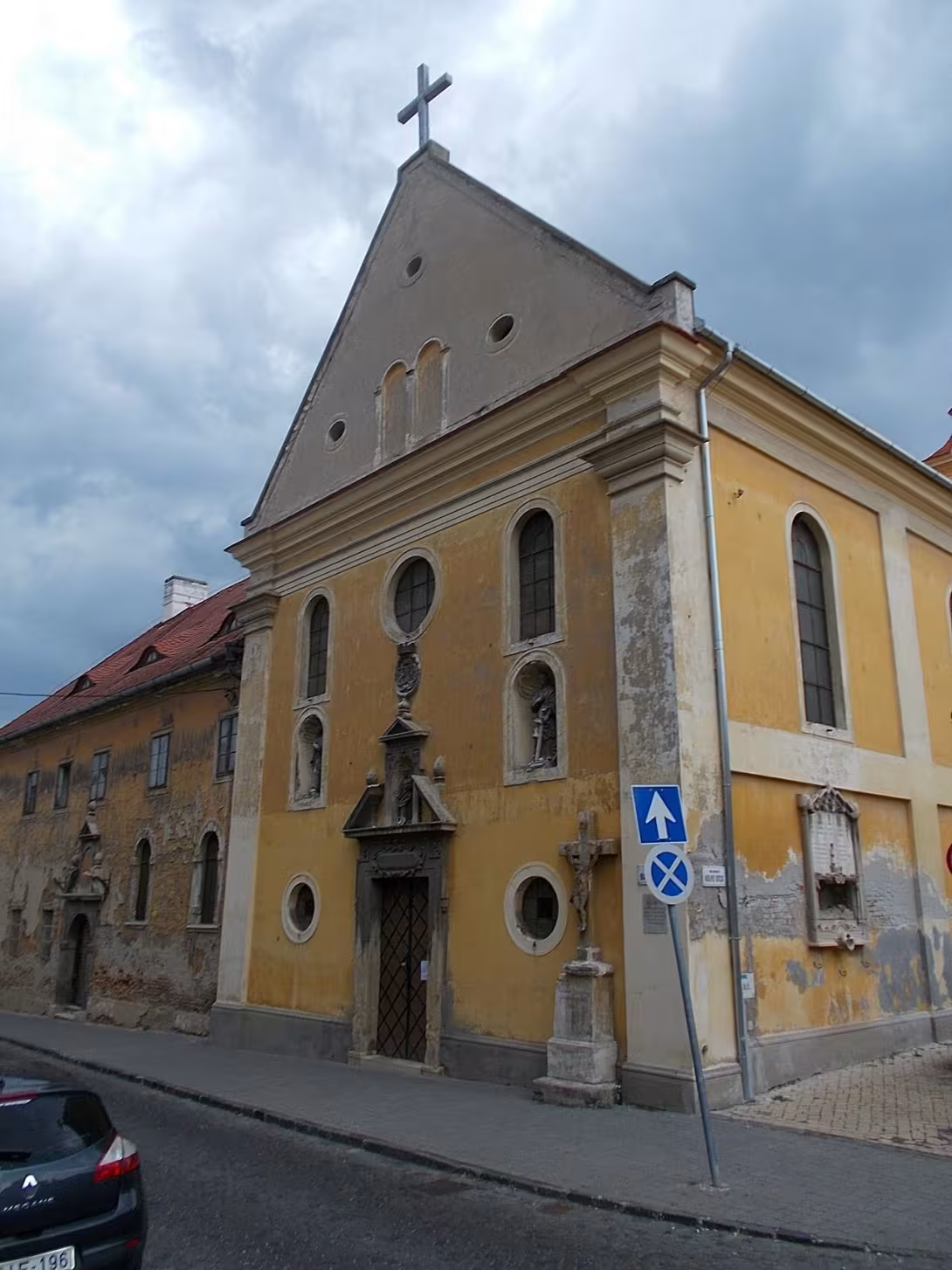
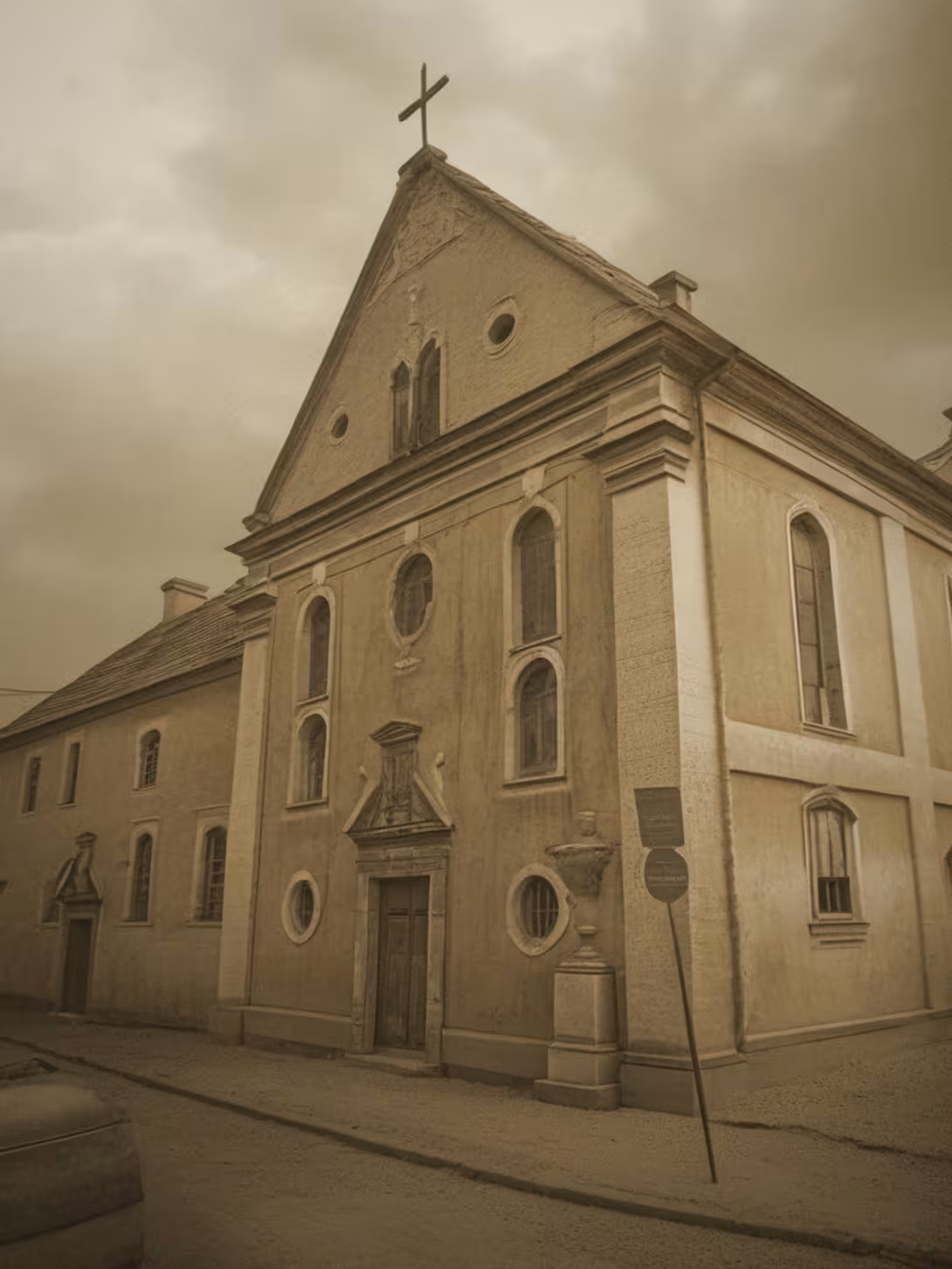
The historical view on the left is a visualisation generated by artificial intelligence and serves as inspiration.
Historical Milestones
- 1843: church construction
- 1895: renovation
- 1937: renovation
- after world war ii: renovation
Interesting facts
- It is a classicistic building from 1843 which combines classicism with the background elements of the Baroque. - The year of construction is confirmed C.E. placed above the entrance. - The building is a single-ship church with a round cap Presbytery and a tower with a baroque mine. - Interior furnishings, namely the main altar, side altars and pulpit, show the late baroque elements. - The church is located in the eastern part of the village before the cemetery.
Guide
Show guide text
The text was prepared by artificial intelligence and has not been editorially reviewed. It may contain inaccuracies.
You will find yourself in Mestisk, where you will be welcomed today by quiet streets and the historical atmosphere of this picturesque town in Prešov region. You are standing right in front of the Church of the Nativity of the Virgin Mary, a building that at first glance requires a moment of attention to affect its unique character. Prepare to see that this building is not just a sacral building but rather an architectural bridge between two epochs. When you look at it, you will likely notice its classicistic character, but at a closer look, you will begin to discover the fine but striking traces of the late baroque that have reached the work. It is a place where history does not border with sharp lines, but flows smoothly from one artistic wave to another, creating a unique visual experience for anyone who has set out here to seek peace and aesthetic pleasure.
Let's move closer to the object itself and try to understand how it was created. According to available historical records, this church was built in 1843. This date is not only a dry number in the chronicle, but is physically anchored directly on the building. If you look above the main entrance, you will find there a number that serves as official confirmation of the year of construction. This fact is very important to historians and to you, visitors, because it precisely defines the time period in which the building was realized. Forty-nine years of the nineteenth century were similar in our region when classicalism, inspired by ancient Greek and Roman architecture, was applied in architecture, but local builders and masters often failed or did not want to leave the aesthetic that ruled the previous decades completely. That's why we're seeing a special combination here that makes this church such an interesting phenomenon.
Nynís pay attention to the architectural details you can observe directly in front of you. The church is conceived as a single-ship building, which means that its inner space is open and spacious, without side ships that would divide space. This typical shape allows the view and sound of prayers or singing to naturally spread throughout the space. Look at the back of the building where the presbytery is located. Its cap is not sharp or horned, but has a round shape, which is another element that resembles the warmer and more organic aesthetic of the baroque. Now raise your eyes. The building is dominated by a tower crowned by a so-called Baroque mine. This type of roof, characterized by its rounded, mine shape, is typical for Central Europe and gives the whole object a majestic and ground-floor appearance. The contrast between the classicistic facade and the Baroque mine on the tower is just what makes this church visually so rich.
The interior furnishings of the church, although you do not see it from outside, are equally important parts of this work. According to the information at our disposal, the main altar and side altars are located inside. Although the backgrounds do not indicate the exact style of these altars in such details as it is on the exterior, their presence suggests that the space was equipped with emphasis on liturgical function and aesthetic treatment. For a visitor who looks inside, it is an opportunity to perceive the atmosphere that rules here. It is a place where he meets spiritually with artistic expression. The main altar is probably the central point of attention around which the whole liturgical life of the parish unfolds. The side altars then combine this image and create a harmonious whole that promotes contemplation and prayer.
When we consider the historical context of this place, we need to realise that the City is an area with a rich history where the influences of different cultures and religious traditions intersect. The Church of the Nativity of the Virgin Mary is not an isolated object, but part of the wider social and spiritual life of the village. Construction in 1843 shows that the community then had sufficient resources and motivation to build such a significant building. It was a time when national awareness and the need to have representative places where people met in Hungary, and thus in the territory of today's Slovakia, developed. The church thus served not only as a place of prayer but also as a symbol of identity and continuity.
One of the most interesting things you can notice is this architectural hybridity. At a time when classicalism was in fashion and was designed to express rationality, order and relationship to ancient heritage, there are elements that are typical of the baroque, that is, the era of emotions, movement and rich decorating. It's like builders want to express modernity, but at the same time maintain a link with tradition. This combination is not by mistake, but rather the result of a transitional period when the forces overlapd. For you, a visitor, this means that looking at the church you can perceive two different aesthetic languages that coexist. It is an opportunity to see how architecture evolves and how sometimes there is no sharp break, but a smooth transition.
In addition to architectural elements, it is important to perceive the atmosphere surrounding this church. The town offers a quiet environment where you can enjoy the silence and beauty of nature. The church stands in an environment that gives it another dimension. If you walk around it, you can see how its silhouette is reflected in the sky and how it is associated with the surrounding landscape. It's a place where time seems to slow down. You can imagine the bells ringing here in the past, coming here to weddings, baptisms, and funerals, as generations met here. Every stone, every detail of the facade has its own story, although not all are known today.
Mystery, or rather interesting, that may attract your attention, is the exact location of C.E. over the entrance. This detail is often overlooked, but it is crucial for historian. It confirms that the building was completed and sanctified in 1843. It's not just a decorative element, it's documentary evidence. When you look at it, you can imagine what the City looked like back then, what human lives were like, what technology and possibilities were like then. It's a bridge to the past that allows us to get to know the history of this place.
Finally, I would like to invite you to enjoy the church from different angles. Let
Tips for visitors
Visit the Church of the Birth of the Virgin Mary in spring or early autumn when temperatures allow for a detailed view of the exterior. You come to the city by car or public transport; check your current connections in the internet search engine.
We recommend footwear with fixed soles and clothing corresponding to the sacral character of the building. Photography is suitable in the morning or full-time, when natural light highlights architecture.
Focus on observing the facade and surroundings of the building. For families with children the visit is an opportunity for a short lesson on architecture in Prešov region.
Frequently asked questions
Can the monument be visited?
Religious buildings are usually open mainly during services; at other times a visit is normally arranged with the parish or the operator. We have not verified specific times.
Where is the monument?
Location: č. 7, Mestisko, Prešovský kraj. The map on this page shows the exact spot.
Why is the monument protected?
It is listed in the Central List of the Monuments Fund of the Slovak Republic as a national cultural monument (ÚZPF no. 41C-10380).
For children
Close your eyes and imagine pressing a secret button on a time machine. Boom! We'll be transported right back 183 years. The year is 1843. Where are we? In the picturesque town of Prešov region. The air smells like smoke from fireplaces, there's a hoof in the street, and everything around us looks completely different than today.
Nearby
🏰 Historic sites (39)
- Hrad Svidník 2.6 km
- Galéria Dezidera Millyho 5.0 km web
- Kaštieľ Svidník 5.0 km Partizánska 45/20 web
- Múzeum ukrajinsko-rusínskej kultúry 5.3 km Centrálna 258/6
- 10. výročie vzniku ČSR 5.4 km
- Múzeum ukrajinskej kultúry 5.4 km web
- Ludvík Svoboda 5.5 km
- Vojenské múzeum 5.6 km Bardejovská 414/25 +421 54 752 1398 web
- Padlým ruským vojakom 5.7 km
- Pamätník duklianskych tankistov "TARAN" 7.5 km web
- kpt. Adolf Weinhold 8.0 km
- Stropkovský hrad 8.0 km Zámocká 519/3
- Chrám sv. Michala archanjela 8.2 km web
- Pamätník padlím z I. svetovej vojny 8.7 km
- Tank T-34 9.7 km
- Pomník sov. dôstojníka P. A. Tolseľa 9.7 km
- Tank T-34 9.7 km
- Kaštiel Kurima 10.4 km Námestie sv. Michala 210/35 web
- Tank T-34 11.2 km
- Tank T-34 11.3 km
🍽️ Restaurants and dining (36)
- Motorest Polianka 2.4 km Stročín 120
- BURI Kebab 5.1 km Centrálna 676/75
- Hello Quan 5.1 km Stropkovská 568/1
- Slávia 5.2 km
- Slávia 5.2 km web
- Pizza Grill Cafe Marco 5.2 km Poštová 274
- Life Coffee Club 5.2 km
- Mc. KEBAB Svidník 5.3 km Komenského 65/16
- Hostinec 5.3 km
- ZDROJ Beer & Restaurant 5.3 km Centrálna 694/80
- Cafe Siesta 5.4 km
- Vermex Lokal 5.6 km web
- Esspresso 5.7 km Sov. Hrdinov 627/37 web
- STEAK HOUSE u Mamy 5.7 km
- Reštaurácia Družba 5.7 km
- Monte Carlo 6.0 km
- Hanoi Bistro Svidník 6.0 km 8. mája 696/54
- Hostinec u Jakuba 6.4 km
- Fresh Corner 6.4 km
- Royal pizza & restaurant, Svidník 6.7 km +421 908 030 011 web
🏨 Accommodation (11)
- chata na Kozej brade 4.1 km
- Slávia 5.2 km Gen. Svobodu 706/37 web
- Hotel RUBÍN 5.2 km Centrálna 274/9
- Stara Posta 5.3 km web
- Comenius Apartments - Apartmány na rohu 5.6 km Komenského 315/24
- Poľovníček 7.2 km
- Horal 8.4 km
- Country house 9.4 km
- Chata Evička 9.7 km +421 905 657 515 web
- Penzión v údolí 11.5 km +421 905 472 489 web
- Chata Tajomné Karpaty 14.3 km +421 949 852 904 web
🚲 Rentals and sport (4)
- Peem Servis 5.0 km web
- AquaRelax 5.9 km
- Kúpalisko Stropkov 7.6 km web
- Krytá plaváreň 7.9 km
🥾 Hiking and nature (135)
- Diel 1.6 km
- Incova hora 2.5 km
- Mergeška 2.5 km
- Kaštielik 2.6 km
- Ostrá hôrka 2.7 km
- Kochman 3.9 km
- Lesík 4.0 km
- Kozia brada 4.1 km
- Rajsova hora 4.3 km
- Osy 4.4 km
- Kamenec 4.5 km
- Šaturčanec 4.8 km
- Baňa 5.1 km
- Hrb 5.2 km
- Krúžky 5.2 km
- Kobylovec 5.2 km
- Šťava 5.3 km
- Prameň v skruži 5.4 km
- Kolesovka 5.5 km
- Ostrý vrch 5.7 km
Thematic route
1. The exterior of the Church of the Nativity of the Virgin Mary - Architecture. Facade and architectural details of sacral construction. 2. Interior of the church - sacral space. Interior equipment and historical environment. 3. Main altar - Artistic element. Artistic design of the main part of the temple space. 4. Church area - Outdoor space. The immediate vicinity of the building.
Seasonal recommendations
In spring, the surroundings of the Church of the Nativity of the Virgin Mary in Mestiška will be biootic with a new life. The sun in this period provides natural lighting that highlights the details of the facade. It is recommended to visit the place in the morning and wear layered clothes suitable for variable weather. Summer months bring intense light and rich colors of the Prešov region. Due to high temperatures it is advisable to arrive early in the morning or late in the evening. Light, breathable materials and sun protection are practical. Autumn in Mestisk is spreading the landscape with golden and red tones of leaves. The low sun creates long shadows and contrasts suitable for outdoor photography. Due to the colder days and possible rain, it is advisable to choose waterproof shoes and a warmer sweater. Winter surrounds the church and its surroundings with silence and snow. Lighting is weaker and colder in this period. When visiting it is necessary to use warm clothes and shoes with anti-slip sole to prevent falls on frozen glamour.
Visualisations and artistic views


The visualisations are generated by artificial intelligence and serve as inspiration.
Visitor Tips
No tips yet. Be the first!
Log in and add your tip.
Location on Map

Visitor photos
No photos yet. Be the first to add a photo from your visit!
Log in and add your photo or leave a rating.
You get more points for a visit verified in the app — we can tell from the GPS that you are there.
Reviews and comments