








city walls Town fortifications
The city walls in Banská Bystrica represent a fortification from the second half of the 16th century. This national cultural monument is made in Renaissance style and its origin dates back to 1586.
The area is registered by the Monument Office of the Slovak Republic under number ÚZPF 2320. It consists of a wall from 1586 and four bastions from the second half of the 16th century. All parts show signs of Renaissance architecture.
The building is located on the square Š. Moyses. The place is suitable for people interested in technical and architectural solutions of the 16th century city defence systems.
Tehdy a dnes
Drag the slider and compare how the monument might have looked when it was built with the view today.
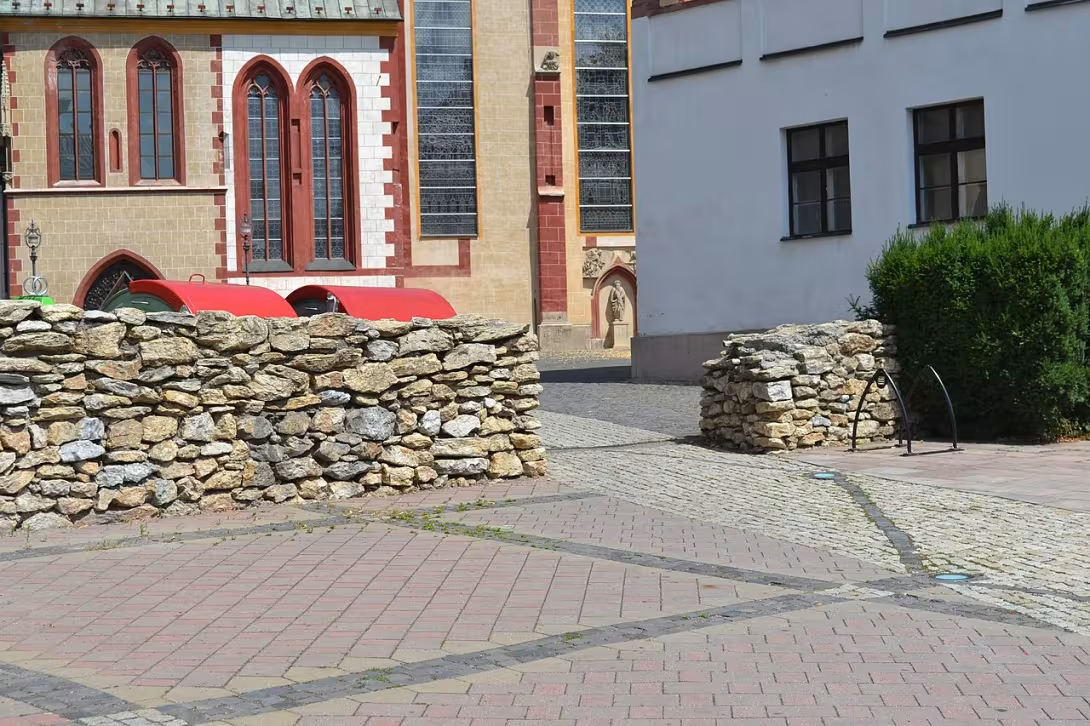
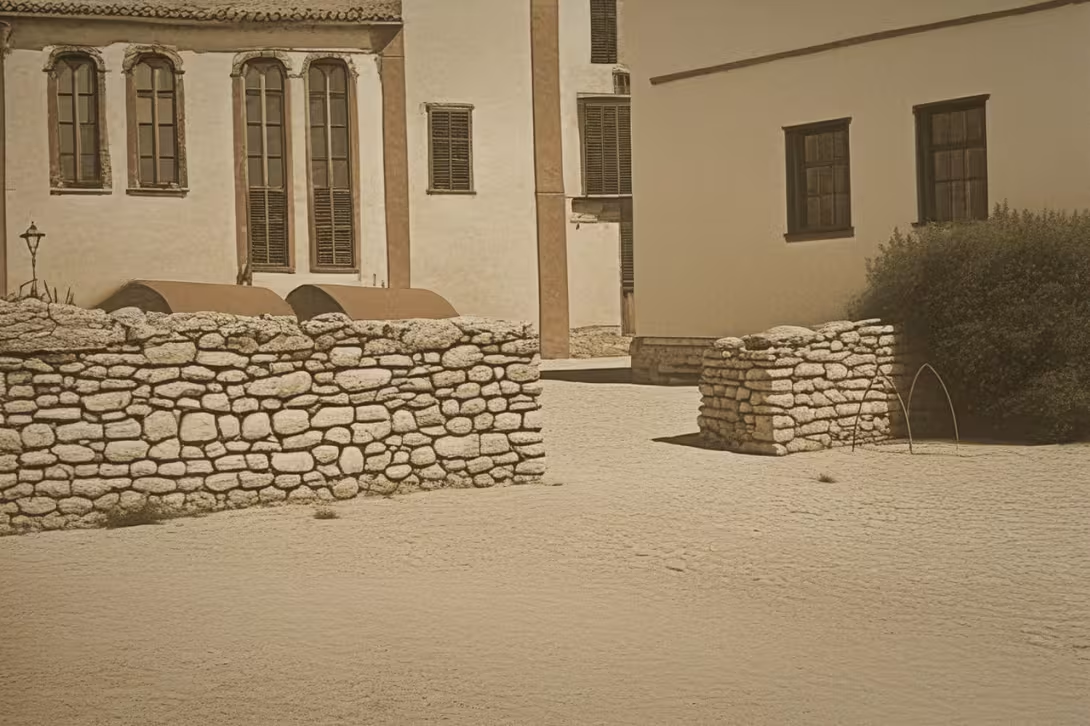
The historical view on the left is a visualisation generated by artificial intelligence and serves as inspiration.
Historical Milestones
- 1586
- Renaissance city fortification and wall.
- The average labour costs of the sampled Union producers developed over the period considered as follows:
- Construction of four bastions of the city fortification in Banská Bystrica.
Heritage surveys
-
2015/03 — Umelecko-hisotrický výskum, Architektonicky-historícký výskum
Čiastkový pamiatkový výskum
Interesting facts
- The town walls in Banská Bystrica come from the second half of the 16th century and are made in Renaissance style. - Their origin dates back to 1586. - The area consists of a wall wall from 1586 and four bastion from the second half of the 16th century. - Memory is registered by the Monument Office of the Slovak Republic under number ÚZPF 2320. - The building is located on the square Š. Moyses.
Guide
Show guide text
The text was prepared by artificial intelligence and has not been editorially reviewed. It may contain inaccuracies.
Welcome to the heart of Banská Bystrica. Right now you are facing one of the most important witnesses of the ancient history of this city, in front of city walls. When you look at them, you may see at the first moment only the remains of the old masonry that flow into the current buildings and landscape, but in fact a quiet guard is standing before you, who for centuries has protected the inhabitants from dangers from the outside. Feel this ambience of antiquity and try to imagine how this place beat up by promoting, when these walls were the main line between safe urban life and the unknown world behind the gates.
Now let's stop at why these walls were created. Although the exact chronology of their construction is not known in detail, their existence was a clear and necessary reason. Banská Bystrica was thanks to its wealth, mainly from the mining of precious metals, strategic and economic center. However, such wealth also brought risks. Urban fortification was not only a symbol of the power and status of the city, but above all a practical tool of defence. Castles had the task of reflecting possible attacks, controlling the flow of goods entering the city and ensuring order. Imagine that at the time the city was developing, these walls were the only guarantee of peace for the craftsmen, merchants, and miners who lived here.
Nyni pay attention to the architecture itself. When viewing these fortification fragments, consider the way they are built. Although today we do not see the complete system with all the details they had at the time of their flowering, you can perceive the massiveness of the structure. Look at the wall surface and see how the material resisted the time test. In such buildings, functionality has always been associated with simplicity. There was no place for unnecessary ornaments, for every detail had to serve one thing - resistance. Try to imagine how these walls had to contain space for guards who had been watching the surrounding hills from above and warning the city of the arrival of strangers.
If we look for specific personalities associated with this place, we will find that the history of the walls is rather a story of a collective rather than a story of a particular architect or ruler. The name of one person to draw these plans is not known, but behind each stone are thousands of the hands of local workers and builders. That is where the power of this place lies. Castles are not a monument to one person, but a monument to the whole city and its ability to organize and protect its values. They were walls that saw the arrival of the merchant caravan, heard the noise of the medieval market, and testified to thousands of stories of the inhabitants who felt safe behind them.
Perhaps you will now be interested in an interesting idea that accompanies many similar fortifications. Castles did not serve as a shield against enemies. They were also administrative tools. The gates in the walls were places where tolls and taxes were collected, where the quality of the goods was checked and where it was decided who could enter the city and who had to stay outside. It is fascinating to think that these walls have defined not only physical space but also social status. Being a wall's place means being part of the urban community, having rights and being protected by the law of the city. Everything that was outside these walls was perceived differently.
Now, when you look again at these historical remains, not as a dead stone, but as an open book from which we have read only a few pages today. Although we do not know exactly when the first stone was laid and who exactly was behind their proposal, their very presence in Banská Bystrica speaks for itself. They are proof of the prosperity, ambition and need of the security that accompany mankind in every century.
Now let me finish this part of our tour. I believe you've felt the depth of history that's embedded in these walls. Now I invite you to walk around these fragments in peace, touch the cool surface of the stone and let your imagination complement those parts of the story that history has failed to give us exactly. Banská Bystrica has many other secrets waiting to be discovered, and these walls are only the beginning of the journey to its fascinating past.
Thank you for your attention and I wish you a pleasant next walk through town.
Tips for visitors
When to visit and why
Spring and autumn months (April to October)
Light is suitable for photography at this time, the surrounding area is green and the walls are visible without summer heat or winter milk. Before 10:00 or after 15:00 light is softer, which improves photo quality.
Winter Months (December - February)
Castles can be covered with ice or snow, which changes the appearance of the historical centre of Banská Bystrica. '] Just come to the city center, where most of the stops are located. You can check the current connections and routes in the mobile public transport application or on the official pages of the city.
What to Take With You
Camera or smartphone
Castles are mainly photogenic in combination with old houses and streets. We recommend zoom lens for detailed images.
Weather-friendly clothing
Banská Bystrica has changing weather. In summer we recommend light clothing, warm and waterproof pieces in winter, or gloves.
Water and small snacks
There is a limited number of refreshments in the city centre, so you can take water and light snacks.
Small bag or bag
It will allow comfortable transfer of things and equipment during a walk.
Photography - places and light
SNP Square and surroundings of the Church of St. Francis Xaverský
Place suitable for compositions with walls in the background and historical buildings in the foreground. The appropriate light is morning or evening, when long shadows add dynamism to photos.
Štefánikova Street and its branches
A street with historic houses and shops, which launder city walls. Images from street level or from balconies are interesting.
Castle bassions and towers
Pictures of the elevated towns in the area allow you to see the walls in general. It is ideal to take pictures at the sun's sidelight, which highlights the texture of stone walls.
Gold and Blue Hours
Photograph during sunrise or sunset for warm or cool tones. The blue hour soon after sunset brings a peaceful atmosphere.
What to visit nearby (within 30 minutes)
Museum of Banská Bystrica
It is located in the historical centre. It contains collections to the history of the city, including models of walls and documents.
St. Francis Xavers' Church
Sacral building in Banská Bystrica with interesting architecture and interior.
SNP square and surroundings
The city center with historic buildings, cafés and shops.
Tips for families with children
Games and search details
Children can look for details on walls, such as stone symbols, towers or old cannons. You can organize a competition to find the most elements.
SNP Square
Place with space to run and play. In the summer months children can use water elements.
Museum of Banská Bystrica
The museum offers interactive exhibitions, historical toys and models of old city buildings.
Small rewards
For attention to history you can reward children with sweets or small historical books.
Frequently asked questions
Can the monument be visited?
This is a structure in a public space that can usually be seen from outside free of charge. We have not verified that this particular one is freely accessible.
Where is the monument?
Location: Nám. Š. Moysesa, Banská Bystrica, Banskobystrický kraj. The map on this page shows the exact spot.
Why is the monument protected?
It is listed in the Central List of the Monuments Fund of the Slovak Republic as a national cultural monument (ÚZPF no. 321-2320).
For children
Close your eyes and imagine you're passing through time. Can you feel the cold wind? Do you smell the smoke from the fireplaces and hear the hog hogging about the stone pavement? You just landed in Banska Bystrica some 440 years ago. The year is 1586 and the city looks completely different than today. There are no cars, there are no asphalt roads, but they are behind all this. Huge, massive and inaccessible. City walls.
Nearby
🏰 Historic sites (115)
- Barbakan 0.0 km web
- Galéria 0.0 km Námestie Š. Moysesa 51/25
- Rex Bela IV. 0.0 km
- Imrich Ďurica 0.1 km
- Banská Bystrica 0.1 km web
- Štefan Moyzes a Karol Kuzmány 0.1 km
- Pápež Ján Pavol II. 0.1 km
- Viliam Pauliny 0.1 km
- Matejov dom 0.1 km Námestie Š. Moysesa 48/20 web
- Morový stĺp 0.1 km
- Chaviva Reiková 0.1 km
- Improvizovaný pancierový vlak Štefánik 0.2 km
- Skanzen ťažkej bojovej techniky 0.2 km web
- Mons. Dr. Andrej Škrábik 0.2 km
- Štefan Moyses 0.2 km
- Thurzov Dom 0.2 km web
- Ladislav Sára 0.2 km
- sv. Ján Pavol II. 0.2 km
- Sovietskej a rumunskej armáde 0.2 km
- Významné lesnícke miesto 0.3 km
🍽️ Restaurants and dining (244)
- Klubovňa 0.0 km
- Steak House 0.1 km
- Mäsiareň tržnica 0.1 km +421 907 956 717 web
- GoodZone Hookah&Bar 0.1 km +421944921144
- Palacinkáreň Bonjour 0.1 km
- mlsnacava 0.1 km
- Esso pod vežou 0.1 km
- Mefisto 0.1 km
- Jazz art café Mefisto 0.1 km Námestie Štefana Moyzesa 15 +421907263764
- Da Luigi 0.1 km
- Plzenská 0.1 km
- Beerstrica 0.1 km web
- Lahodné palacinky 0.2 km
- Chikiti 0.2 km
- Kúria 0.2 km
- Thasos 0.2 km
- Davaj tam het (ci ako to kurna bolo) 0.2 km web
- Slovenská reštaurácia 0.2 km
- Drinkart 0.2 km
- 365.café 0.2 km
🏨 Accommodation (69)
- Gran Hostel 0.1 km Kapitulská 312/11 +421905654006 web
- Penzión Kúria 0.2 km
- Arcade 0.3 km
- YMCA 0.3 km
- Urpin City Residence 0.3 km J. Cikkera 910/3
- Národný dom 0.4 km
- Ubytovňa Stavoprojektu 0.5 km +421 918 109 680 web
- Lux 0.5 km
- Penzión Boca 0.6 km
- Art pension 0.6 km web
- Penzion Uhlisko 1.0 km Lesná 224/3
- Al Corso 1.0 km +421 48 381 1189 web
- Penzión Maják 1.8 km Okružná 592/15
- Bella 2.2 km
- City 2.5 km Partizánska cesta 3806/85
- Penzión Adonai 2.8 km Zvolenská cesta 3744/17
- Madona 3.6 km web
- Chata Vatra 3.7 km
- Penzión u Vinca 4.6 km Kremnička 16 web
- Iliaš 4.8 km
🚲 Rentals and sport (42)
- CoolBike 0.1 km +421 48 415 13 76 web
- Pagy Bike 0.2 km
- Be-cycles 0.2 km Lazovná 22 +421 949 166 133 web
- Trekland 0.2 km
- Bike sport 0.3 km
- Husky 0.6 km Dolná 39
- LESONA poľovnícke potreby 0.6 km Dolná 34 web
- Tenisia - kurty v mestskom parku 0.7 km web
- Tipsport arena 0.7 km
- Fit Arena 1.0 km
- Decathlon 1.0 km
- Športová hala Dukla 1.1 km Cesta olympionikov 1271/2
- Plaváreň Štiavničky 1.2 km Cesta olympionikov 1624/4 +421 48 423 04 01 web
- Yonex aréna 1.2 km
- I 1.3 km
- L 1.3 km
- Z 1.3 km
- Old I 1.3 km
- Rivel sport 1.4 km web
- Trekbikes 1.5 km
🥾 Hiking and nature (339)
- Park Juraja Hudeca 0.2 km
- Veliteľský bunker 0.2 km
- Park Jozefa Dekreta-Matejovie 0.3 km
- Park pod pamätníkom SNP 0.3 km
- Park na Námestí slobody 0.6 km
- Mestský park 0.7 km
- (bývalé) Dopravné ihrisko 0.9 km
- Parčík kráľovnej Alžbety 0.9 km
- Kačica 1.1 km
- Medokýš 1.2 km
- Urpín, vyhliadka 1.3 km
- Urpín 1.4 km
- Oddychová zóna Tajovka 1.5 km web
- Stráž 1.6 km
- Turíčka 1.9 km
- Vartovka 2.1 km
- Bánoš 2.4 km
- Laskomer 3.0 km
- Okrúhle 3.0 km
- Dúbrava 3.1 km
Thematic route
As the list of surroundings is not completed, I propose a thematic route in the area of the main objective:
1. City walls (main building) - Walk on preserved parts of the fortification. 2. Castle bastions - Part of the fortification system with a view of the city and surroundings. 3. Entry portal and gates - Places where the entrance to the city was previously controlled. 4. The area of the walls - Tour of the terrain and the foundations of former defence buildings.
Seasonal recommendations
Spring In the city walls of Banská Bystrica, the spring sun is reflected in stone walls. During this period the fortification is surrounded by green nature, which allows for peaceful walks along the perimeter path. Castles are suitable to visit in the morning or noon, when there is a lower risk of sudden weather changes. Clothing should be layered because the temperature in the evening is rapidly decreasing. We recommend comfortable shoes for feet, as long sections of walls are not asphalted.
Summer In the summer season, the city walls become part of a lively city. Sunlight emphasizes the details of the fortification, from erosion on stone blocks to small architectural features. Around the walls, the treetop provides shade from direct sunlight. The best time to walk is early in the morning or evening after sunset when the temperature drops. In the summer months we recommend having enough water and light, breathable clothing. In the main season, the surrounding walls are filled with tourists, so it is advisable to choose less frequented sections.
Fall Autumn light that breaks against stone walls adds to the fortification nostalgic atmosphere. A mosaic of colors of yellow and orange leaves extends around the walls. During this period, the walls are suitable for photography, especially when the low sun forms long walls. Visit the walls on dry and sunny days to avoid slippery paths. Clothing should be warmer than in summer; layering is crucial due to rapid weather changes. In Advent time it is more busy around the walls, so we recommend a visit outside weekends.
Winter The winter sun is reflected in the snow and stone walls of the city walls. Snow covers the surroundings and the peaks of the complex. In the winter months it is quieter in the fortification because there are fewer tourists. Castles are suitable to visit on bright and sunny days when visibility is best. Clothing should be warm and comfortable - the basis is thick sweaters, gloves and waterproof footwear. We also recommend thermal dots or a warm drink because the surrounding streets and parks keep cool.
Visualisations and artistic views


The visualisations are generated by artificial intelligence and serve as inspiration.
Photographs from the area
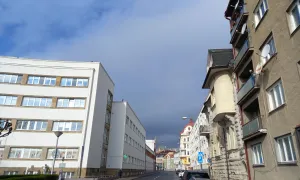
Real photos taken near the monument


Source and licence are given for each image.
Visitor Tips
No tips yet. Be the first!
Log in and add your tip.
Location on Map
More monuments – Banská Bystrica
Show all in the town



Visitor photos
No photos yet. Be the first to add a photo from your visit!
Log in and add your photo or leave a rating.
You get more points for a visit verified in the app — we can tell from the GPS that you are there.
Reviews and comments