








dom ľudový a sýpka Farmer's farmstead
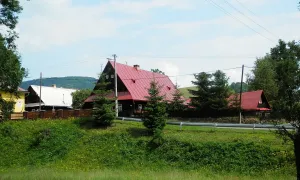
The area of folk house and granary in Drábsk is dating as a national cultural monument of Slovakia. Located in the village of Drábsko, Banská Bystrica district, at Kysuca No. 123. According to the registration of the ÚZPF, it is registered under number 11064 and dates back to 2000. The area represents the folk architecture of the turn of the 19th and 20th centuries.
The area consists of two buildings: folk house and granite. The house is built by log structure, typical for folk construction of this time. The granite has a brick cabin that served to store grain and protect it from pests. Both buildings are part of one unit, which retains the original form of the court.
More detailed construction characteristics cannot be determined precisely from the available data. The register of the ÚZPF only states that it is a folk architecture without a particular disposition, floor plan or floor plan. The area is protected as a national cultural monument, which means that its integrity and authenticity are under state protection.
It is located in the cadastral territory of the village Drábsko, near Kysuce flow. The area is important for its authentic folk architecture and preservation of the tradition of peasant life at the turn of the century.
Historical Milestones
- round 1850-1880
- Creation of types of folk houses and granite with log structure in Banská Bystrica region typical for peasant construction at the turn of the 19th and 20th century.
- 19th century
- Development of folk architecture and expansion of types of peasant houses and granaries in the Slovak Kingdom, including the Banská Bystrica region.
- 190-1920
- Conservation and adaptation of traditions of peasant architecture in the Slovak village, including preservation of types of granaries and folk houses.
Interesting facts
- The area of folk house and granary in Drábsk is dating as a national cultural monument of Slovakia.
- Constructions represent the folk architecture of the turn of the 19th and 20th centuries, namely the log construction of the house and the brick cabin of the granary.
- The area retains the original form of the peasant court and is significant by its authenticity and preservation of the tradition of peasant life.
Guide
Show guide text
The text was prepared by artificial intelligence and has not been editorially reviewed. It may contain inaccuracies.
You can see in Drabsk, where a unique piece of our village heritage - the folk house of the granite, which is a national cultural monument, is unfolding in front of you. You stand in front of a building that is a perfect example of tradition, a successful combination of practical functionality and aesthetic taste of our ancestors. This property, located at No 123 near Kysuca Street, is a living document of how people lived, worked and promoted their culture in Kysuc. Let's take a closer look at this monument together. Before you there is a typical folk building, which consists of two main parts: folk house and granaries. They are both closely connected, which is characteristic of the village architecture, where every inch of land had its meaning. The first impression left by this building is the feeling of authenticity and continuous connection with the past. Note the atmosphere that has been preserved here - as if time stood there. The origin of this monument is not known much concrete information. Neither the name of the architects nor the specific date when it was built. However, such a building is typical for the village architecture of Kysuc, which evolved over the centuries. The granaries, such as this one, served to store grain and other foods from harmful waves, such as insects or moisture. The folk houses attached to them were the center of family life, where they came in, food, slept, and various rituals were carried out. This combination was unique for survival in a difficult mountain environment. Nynyi look at the architecture of this monument. The first look is simple, but every detail has its meaning. Look at the facade - see how storage and windows are arranged. The windows are small, which was typical of village houses, where they tried to minimize the heat treatment. You can also see details such as the wooden details that are located here. Wood was the basic material for village buildings, and its quality and treatment were often sold from generation to generation. Folk houses and granaries were often built near streams or rivers, helping to provide water for household needs. In Drabsk is located on a place that is typical of Kysuce - near Kysuce flow, which was a life source for residents. This position was strategic as it allowed easier transport of wood and other materials as well as water for household needs. The sprout stories and personalities associated with this monument are hidden in its walls. Not known for the specific name of owners or builders, but any such building is connected with many families who lived, worked and promoted their lifestyle. See how this building could have been the centre of social life in the village. Here were held weddings, birthdays, but also various religious and cultural events. This building is like a living story telling its walls. One of the attractions of this monument is its authenticity and preservation of tradition. In many villages, such structures gradually decreased or were renovated according to modern standards, which changed their original appearance and function. However, this monument in Drabsk was preserved in a state close to the original. This is evidence of successful efforts to preserve our village culture and tradition. Let's take a look at some details that may be of interest to you. Look at the connection between the folk house and the granary. See how both buildings are closely connected, typical of village buildings. This combination allowed easier transport of grain and other objects between the two times. Also note details such as wooden stairs or terraces located here. These details are not practical but also aesthetically attractive. Do you know that every building like this has its own story? In the case of this monument it is a story of successful combination of practical functionality and aesthetic taste. This building is a perfect example of how our ancestors managed to create something that was not only useful but also beautiful. See how this building is embedded in the surroundings and how it becomes part of the country. Look around - this monument is not just a building but part of the entire village environment. Drabsko is a small village surrounded by the beautiful nature of Kysuc. See how this building becomes part of the country and how it becomes part of our culture. This monument shows how people lived and worked in the past and how their traditions and culture were preserved until today. Before we say goodbye, I would like to say a few words about how you can view and explore this monument. Take a look at detailed details such as wooden details, windows or facades. Every detail has a story and every detail is proof of the successful combination of practical functionality and aesthetic taste of our ancestors. This monument is not a building but also part of our culture and heritage. See how this building becomes part of our history and how it becomes part of our identity. This monument shows how people lived and worked in the past and how their traditions and culture were preserved until today. Before he leaves, I would like to tell you to go back to Drabsk and look at this memory with a new look. See how this building becomes part of our culture and how it becomes part of our history. This monument shows how people lived and worked in the past and how their traditions and culture were preserved until today. Have a good trip and look at this memory with respect and gratitude. This building is not part of our history, but also part of our culture and heritage. Note its beauty and preserve it for future generations.
Tips for visitors
In the summer months, especially in May and June, nature is around the area of the folk house and granaries bloomed and sunny days frequent. At this time it is most pleasant to walk around and look at the details of folk architecture. In August there are often cultural events that can complement the visit. In summer it is best to see folk crafts and traditions associated with the area. The surroundings are the most accessible at this time - roads are in excellent condition and nature the most beautiful. Current connections and departure times can be verified in the traffic information system or on the carrier's website. Comfortable clothing and shoes are suitable for visiting, as some parts of the area are uneven. A map or GPS for orientation will also help. In the summer months it is appropriate to protect yourself from the sun - sun blazes, sunscreen and plenty of water. The best photos can be photographed in front of the folk house and granary, where the lighting is good and the overall view can be seen. Details of wooden decorations are also interesting in places where they are visible. The best light for photography is in the morning or in the afternoon when the sun is not so intense. It may be interesting for children to watch folk crafts and traditions. In summer there are often cultural events for children. In the surroundings, simple activities can be organized, such as searching for details on the house or granary.
Frequently asked questions
Can the monument be visited?
This is a residential or farm building, not a museum with opening hours. Please view it from public space and respect the owners' privacy. We have no information about access to the interior.
Where is the monument?
Location: č. 123, Kysuca, Drábsko, Banskobystrický kraj. The map on this page shows the exact spot.
Why is the monument protected?
It is listed in the Central List of the Monuments Fund of the Slovak Republic as a national cultural monument (ÚZPF no. 323-11064).
For children
You know, you're lying on a lawn in Drabsk, and you're being laid over by a giant, old granite that looks like it's made by a blacksmith from the best fighting stones. This is no ordinary building - this is the Court of Peasant, a national cultural monument that stood here 50 years ago (yes, as long as your grandmother lives!). And when you look at her, you think, "There must be real stories here!"
Thematic route
Cruise route around the Court of Farmers in Drabsk
1. Peasant's Court (house folk and granite) Folk house with an adjacent granary from the 19th century in Drabsk. It represents a typical peasant building with preserved interior arrangement.
2. St. Nicholas Church in Drabsk Sacral building in the center of the village, adjacent to the Court of Farmers. The interior preserved elements of folk art.
3. Monument zone Drabsko - village raz The village building with folk houses and original paths preserved the authentic atmosphere of the village.
4. Surroundings of Drabska - natural surroundings Forests and fields around the village offer the possibility of a short resting trail or observation of nature.
(All points are in the immediate vicinity of Drabska.)
Seasonal recommendations
In spring, the surroundings of the folk house and granary in Drabsk will wake up to life. Nature flourishes and fresh greenery contrasts with wooden architecture. Fine spring light highlights the details of buildings. For a visit it is appropriate to dress with layers, because the weather in this area may be variable. The best time to visit is noon when the morning dew runs out. In summer, the sun and insects create an intense atmosphere around the courtyard. Wooden walls of the house absorb heat, which gives the town a rural character. In the summer season it is advisable to come in the morning to avoid sunburn. Light, breathable clothing and plenty of drinking water are recommended. In autumn, the landscape around the peasant court is dressed in golden and brown tones. The morning fog clouded by the granite seems mysterious. For walks are suitable waterproof shoes and warmer sweater. The best light for photography can be found during the afternoon ash when the sun is low on the wooden facade. In winter months the snow covers the roofs and the yard, creating a peaceful atmosphere. The contrast of white snow and dark wood gives the place an idyllic appearance. Due to low temperatures, warm clothing is needed.
Visitor Tips
No tips yet. Be the first!
Log in and add your tip.
Visitor photos
No photos yet. Be the first to add a photo from your visit!
Log in and add your photo or leave a rating.
You get more points for a visit verified in the app — we can tell from the GPS that you are there.
Reviews and comments