

memorial parish Parish house and memorial plaque
The memorial parish and the memorial plaque are a national cultural monument in the village Pobedim in Trenčín region. According to the register of the Monument Office of the Slovak Republic, the object comes from the middle of the 17th century and shows signs of classicism.
Area with registration No. ÚZPF 1295 consists of two separate objects. A Memorial parish halfway through The 17th century in the classicistic style is associated with the name John Hollý. The 1934 Memorial tablet is also associated with his person.
The monument is located at No. 1 in the village Pobedim. It is included in the list of national cultural monuments of the Slovak Republic, thus gaining legal protection.
Tehdy a dnes
Drag the slider and compare how the monument might have looked when it was built with the view today.
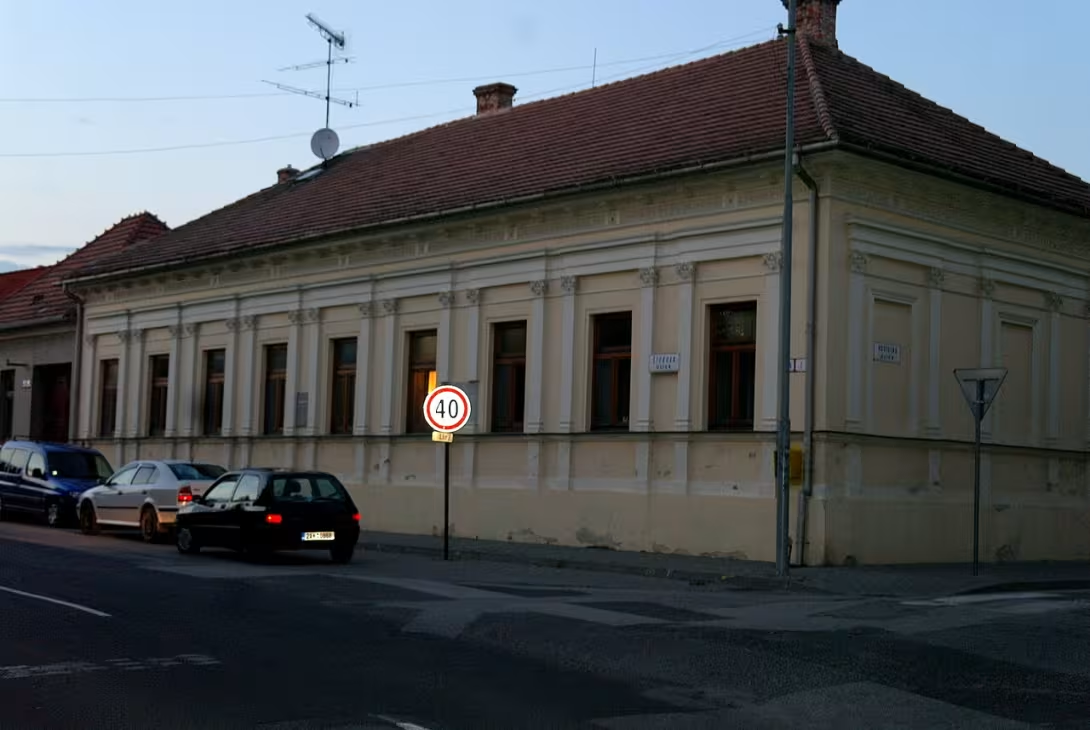
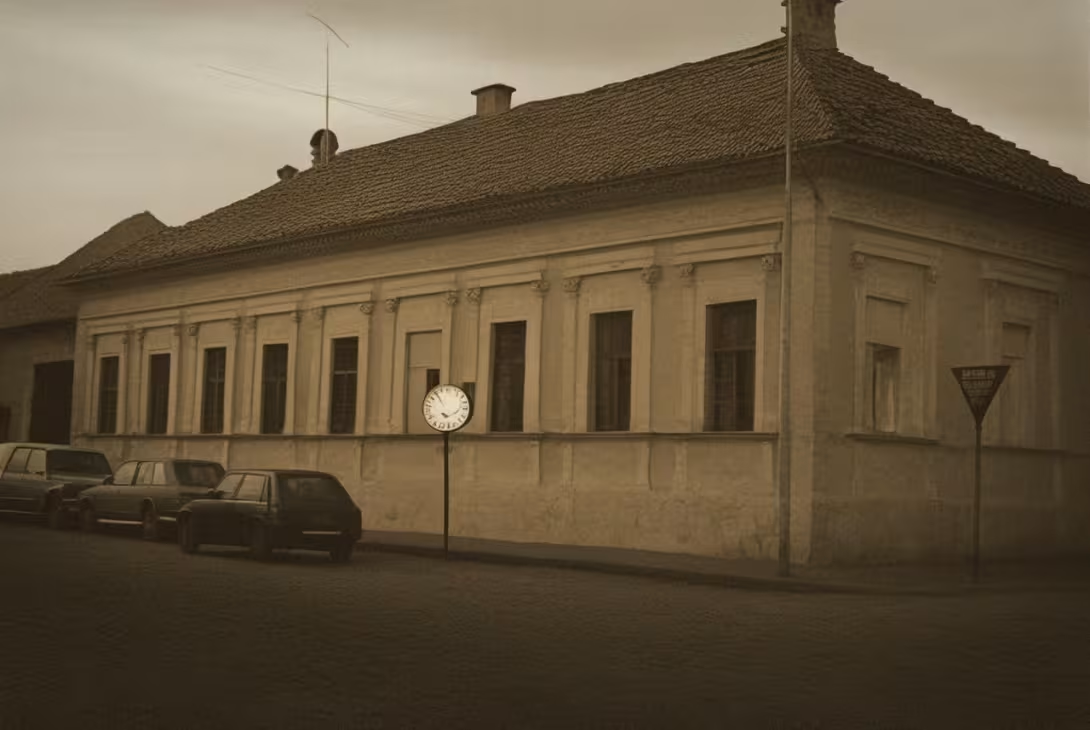
The historical view on the left is a visualisation generated by artificial intelligence and serves as inspiration.
Historical Milestones
- 1650
- Construction of a parish in the classical style in the village Pobedim.
- 1934
- Unveiling of the memorial plaque dedicated to John Hollé.
Restoration history
| Years | Type | Extent | Condition after restoration |
|---|---|---|---|
| 2009 |
Obnova
1785-1849,básnik |
Komplexná | dobrý |
Source: Monuments Board of the Slovak Republic — open data, licence CC BY 4.0
Interesting facts
- The memorial parish comes from the middle of the 17th century and shows signs of classicism. - The memorial parish and the 1934 memorial plaque are associated with the name of John Holly. - The building is included in the list of national cultural monuments of the Slovak Republic.
Guide
Show guide text
The text was prepared by artificial intelligence and has not been editorially reviewed. It may contain inaccuracies.
Welcome to the village of Pobedim, in the heart of the Trenčín region, where we will stop today from a place that carries a quiet memory of the past. You stand in front of a memorial parish and a memorial plaque. The first look at this building can be simple, but it is in this moderation that its strength lies. It is a place that invites us to stop, to think about, and to respect what remains before us. Feel the atmosphere of this place and allow yourself to walk away from the hustle for a while so that you may feel the peace surrounding it.
When we look at the origin and historical context of this monument, we have to admit that time is not always generous with us. The precise chronology of construction is not known today and history is silent on the specific names of architects who designed and implemented the project. It is often the case that the most important clues in the country were left behind by people whose names were lost from writing records, but their work remained as a testimony to an epoch. This parish in Pobedima is exactly that example. Although we do not know exactly when it was built, its very presence in the country tells us about the need for a community to worship its history and to create a point of orientation for future generations.
Nyni pay attention to the building itself. As you look at it, take note of its overall composition and the way it fits into its surroundings. Look at the memorial board that completes the overall form of this monument. The tablet serves as a key to understanding, as a connection between the physical matter of the building and the meaning it has for the local inhabitants and for you visitors. Follow the lines it creates and see how shadow parties change on its surface during the day. Although we cannot define the architectural style precisely due to the lack of foundation, you can see how the building does not try to dominate the surroundings in an aggressive way, but rather coexists harmoniously with it.
Let's now think about who might have been involved with this place. Although we do not see in historical records the specific names of known personalities directly associated with the construction of this parish, it is aware that hundreds of ordinary people are behind each such work. They were local craftsmen, stonemasons, and inhabitants of Pobedim who put their work and effort into creating something lasting. These strange prides are the ones who really shaped the face of this region. Imagine how people met here tens or hundreds of years ago, how travelers might have stopped by, and how this place became part of the daily lives of local families.
You may now wonder what the secret or the attraction of this place is. The mystery of this monument is paradoxically in its silence. In today's world, where every building is documented in detail in digital databases, it is fascinating to meet an object that keeps its secrets. Unknown architect, unknown exact date of construction and absence of noisy legend create space for your own imagination. It's an invitation to ask why this parish was built here and what feelings were carried by the people who put it out. It is this unknownness that gives the memory a certain myth and makes it an object that is not just a dead stone but a living question addressed to the present.
The perception of such monuments teaches us humility. It teaches us that not everything in history is written in books and that sometimes the most powerful experience is the feeling of the unknown. Now that you notice the details of the memorial board and you take a look at the shape of the parsonage, you see it as a dialogue with the ancestors who left this place for us. He is a silent witness to the changes that have passed through Pobedim and the entire Trencin region, as well as the anchor that connects us to the roots of this earth.
Allow yourself to observe this memorial quietly for a while. Perhaps you can take a photo, write down your feelings in a diary, or simply close your eyes and imagine what this place looked like in the time of its greatest glory. Every detail you see now is part of a larger puzzle of our common identity.
Our short trip to the memorial parish in Pobedima ends. I hope that this stop has enriched you and brought you a feeling of peace with history. Now I invite you to continue to explore the beauty of this village and the surrounding region. Discover other hidden treasures, talk to local people, and look for stories that may not be written in any guide but live in the memory of the inhabitants. Thank you for your attention and I wish you a pleasant next day full of new discoveries and interesting meetings. May the Pobedims enjoy your journey and let the curiosity and joy of learning be with you. Make yourself happy and maybe we'll meet again here.
Tips for visitors
Pobiedim is suitable for a visit from April to October. We recommend sunny days for families with children. In winter, a historical part of the parish is available. Current connections and prices can be found on the official website of transport companies or local information systems.
To visit the parish in Pobiedimi we recommend comfortable clothes and shoes suitable for the field. For children you can take toys or books. A smartphone or camera is enough for shooting. Note the warnings about the prohibition on photographing certain details.
Suitable places for photography are the surrounding parish, front facade and windows with historical details. Photography is permitted unless prohibited in the area. The best light is in the morning or full-time.
Within a 30-minute walk or bike ride you can visit the Pobiedim ponds where fishing is possible. Nearby is the Pobiedim Castle, which can be admired from outside, and the Pobiedim Castle with expositions.
Frequently asked questions
Can the monument be visited?
This is a residential or farm building, not a museum with opening hours. Please view it from public space and respect the owners' privacy. We have no information about access to the interior.
Where is the monument?
Location: č. 1, Pobedim, Trenčiansky kraj. The map on this page shows the exact spot.
Why is the monument protected?
It is listed in the Central List of the Monuments Fund of the Slovak Republic as a national cultural monument (ÚZPF no. 224-1295).
For children
In 1934, when two crowns were still played in Slovakia and horses were still seen in the fields. In the small town of Pobedim, where it is only for trips today, there was a simple parish that had its secret.
Nearby
🏰 Historic sites (189)
- Ján Hollý 0.0 km
- sv. Ján Nepomucký 0.1 km
- sv. Florián 0.3 km
- Trojičný stĺp 1.1 km
- Najsvätejšia Trojica 1.8 km
- sv. Vendelín 1.9 km
- Pieta 2.6 km web
- Trojičný stĺp 3.1 km
- Svätá rodina 3.3 km web
- Trojičný stĺp 3.3 km
- Jozef Pánik - SNP 3.3 km
- sv. Florián 3.3 km
- Jozef Marek 3.4 km
- Praveká kniežatská mohyla 3.4 km
- Ježiš Kristus 3.4 km
- Park miniatúr 3.8 km +421 32 743 75 05 web
- Trojičný stĺp 3.9 km web
- sv. Donát 4.2 km
- Najsvätejšie Srdce Ježišovo 4.3 km
- Kaštieľ Častkovce 4.5 km
🍽️ Restaurants and dining (321)
- Rybník Bašovce 2.2 km
- Rio taverna 3.1 km
- Dami 3.1 km
- Kotva 3.1 km
- Restaurant 70 3.1 km
- Reštaurácia Sedliacka stodola 3.3 km +421908097917 web
- Pohostinstvo Martina 3.4 km
- Chilli Caffe 3.5 km web
- Stuart's Pub 3.6 km
- Bufet pod Lipami 3.8 km
- Pizza Mia 4.5 km
- Stop Cafe 4.6 km
- Krčma u Mankyho 4.8 km
- Vrtuľa 5.2 km
- Bar u námorníka 5.3 km
- Pohostinstvo 5.3 km
- U Notára 5.4 km
- Starý šenk 5.4 km web
- Vŕšok 5.5 km
- Majami 5.6 km
🏨 Accommodation (71)
- Penzión u predsedu 5.5 km web
- Abako 5.7 km
- Magura 6.0 km Pod Párovcami 1317/58 web
- Penzión Fuete 6.2 km web
- Astra 6.4 km
- Športhotel 6.5 km
- Penzión Kulko 6.5 km
- Hotel Park 6.6 km +421 337 951 111 web
- Chateau Považany 6.6 km web
- Penzion Diana 6.8 km Matúškova 2935/21
- Löwe 6.8 km
- Penzión Čerenec 6.9 km +421 905 983 855 web
- Penzión Tematín 6.9 km Krížna 350/4 web
- Leier Apartments 6.9 km web
- Park Avenue 7.0 km
- Penzión Hedvika 7.0 km
- Villa Veres 7.0 km
- Balnea Grand 7.1 km
- Balnea Splendid 7.1 km
- Penzión Annavila 7.2 km web
🚲 Rentals and sport (42)
- Oprava bicyklov Peter Rebro 5.5 km
- Plavecká škola 5.8 km A. Hlinku 113A web
- StrapoBikes 5.9 km Žilinská cesta 16A +421 908 953 478 web
- Topšport 6.3 km
- Diplomat aréna 6.4 km Kuzmányho 7820/19
- Extrem šport 6.5 km
- Atletický štadión Piešťany 6.5 km
- Sportisimo 6.5 km web
- F4F športové trofeje, gravírovanie 6.7 km
- Welo, s. r. o. 6.8 km
- Spinning 6.8 km
- Montana sport 6.9 km
- Team Bike 7.0 km +421908616326 web
- EXIsport 7.1 km +421337740507 web
- V-Šport 7.2 km
- Detský bazén 7.2 km
- Bicycle Rental 7.3 km +421 915 270 556
- Kúpalisko Eva 7.3 km +42133775 24 06
- Servis bicyklov Cyklošport 7.5 km Adama Trajana web
- SCT GYM 7.5 km Piešťanská 555/12 web
🥾 Hiking and nature (116)
- Park Alexandra Šindelára 5.6 km
- Biskupské 5.9 km
- Kostolec 6.0 km
- Park na Hoštákoch 6.0 km
- Synagóga 6.4 km
- Kozinec 6.5 km
- Vrbovská veža 6.6 km
- Panská záhrada 6.6 km
- Mestský park 6.8 km
- Akupresúrny chodník 7.0 km
- Skalka 7.4 km
- Veľký Plešivec 7.5 km
- Malý Plešivec 7.6 km
- Salášky 7.7 km
- Drieňovica 7.9 km
- Vrbina 8.0 km
- Bôrovište 8.1 km
- Matiáška 8.3 km
- Chlm 8.4 km
- Ihelník 8.5 km
Thematic route
Thematic cruise route around the memorial church in Pobedima
1. Memorial parish in Pobedima Type: Baroque parish building with memorial plaque Why: 18th-century parish building with a board that documents the events of the village.
2. St. Nicholas church in Pobedima Type: Renaissance-baroque church Why: Located next to the parish in the historical core of the village. The interior with baroque painting and historical furniture complements the site.
3. Following paths and village park Type: Pathways and green area Why: The surroundings of the parish and the church form a village square with paths leading to historic houses. The park at the church serves to relax.
(Trasa focuses on the historical core of the village Pobedim.)
Seasonal recommendations
Jaro
V Pobedim during this period develops natural beauty when the first summer flowers, such as hloe flowers or maple leaves, flourished. At this time, the memorial parish is surrounded by a green landscape where elements of the spring resurrection occur - such as birds that start nesting or springs that begin to teem. The atmosphere is quiet and full of enthusiasm when people return to nature who enjoy cooler gouts and the coming of a new life. For visitors, it is advisable to wear lightweight but durable clothing that is easily removed when the temperature changes during the walk. It is best to visit this object in the morning, when nature is still clean and not human. Since there is not so many visitors at the time, it is possible to observe the surroundings without interference. It is also appropriate to wear protective armor when there are strands or watercourses nearby that can be active during this period. In the main summer season, the surroundings of the memorial turn into a green and sunny world. Water in springs and rivers is warm and ideal for bathing, creating the impression of relaxation. The atmosphere is sunny and warm, but suitable for walking around, where we can admire flower trees and flowery grasses. During this period, it is appropriate to choose the time to visit when the sun is at some roughly midway point of heaven so that there is enough light for detailed observation. It is advisable for visitors to wear lightweight clothing that is probably removed after a walk, and sun protection measures, such as sun denim and sunscreens. It is best to visit this object in the morning or evening when there are fewer visitors and it is possible to enjoy a more pleasant environment. Given the warm nature of the summer season, it is appropriate to avoid visiting at the most early hours when the sun is the largest. Podzim
In the winter period, the surroundings of the memorial are turned into a golden and green palette, as the leaves of the trees begin to shrink and be renamed into barracks that create a fascinating landscape scenery. At this time, the atmosphere is quiet and full of enthusiasm when people return to nature to enjoy the last sundays. The water in the springs is cold, but ideal for cold gouts when we can admire the beauty of winter colors. It is advisable for visitors to wear warm clothes that are superbly removed when the temperature changes during the walk. It is best to visit this object in the middle hours when nature is still active and not so many visitors. It is also appropriate to wear protective armor when there are strands or watercourses nearby that can be active during this period. Given the colder nature of the winter period, it is appropriate to avoid visiting at the coldest hours when there is the greatest risk of failure. Winter
In winter, the surroundings of the memorial turn into a white landscape surrounded by snow and beautiful winter landscapes. Water in the springs is frozen and creates beautiful crystal formations that we can admire from close proximity. The atmosphere is quiet and full of silence when people return to nature to enjoy winter beauty. During this period it is advisable to wear warm and durable clothing that is probably removed when the temperature changes during the walk. It is best to visit this object in the morning, when nature is still clean and not so many visitors. It is also appropriate to wear protective measures against cold, such as warm clothing and footwear. Given the cold nature of the winter season, it is appropriate to avoid visiting in the coldest hours when there is the greatest risk of failure. At this time it is ideal time for observation of winter landscapes and beautiful dream landscapes.
Visualisations and artistic views


The visualisations are generated by artificial intelligence and serve as inspiration.
Photographs from the area
Real photos taken near the monument

Source and licence are given for each image.
Visitor Tips
No tips yet. Be the first!
Log in and add your tip.
Location on Map
More monuments – Pobedim
Show all in the town

Visitor photos
No photos yet. Be the first to add a photo from your visit!
Log in and add your photo or leave a rating.
You get more points for a visit verified in the app — we can tell from the GPS that you are there.
Reviews and comments