








meštiansky dom Burgher house
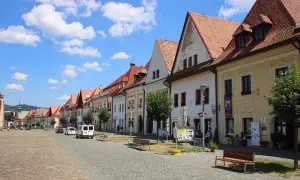
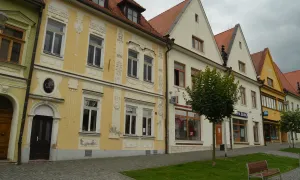
Townhouse in Bardejov - an amazing example of Slovak cultural monument
Bardejovský burgher's house is an important architectural monument, located in the center of Bardejov. This article focuses on the history and architecture of this house, which belongs to the 14th-15th century.
During the Middle Ages were wooden houses (typologically very close to folk architecture), uniquely at solvent owners, brick. The types of houses were influenced mainly by the material from which the house was made, the way of heating, solvency of the owner and the way of defense.
The tower house was a block multi-storey building, situated on a plot with a high stone wall as a rule as part of the line building block, street, square. The economic object was for sanitary reasons situated at the opposite end of the plot. Tower houses together formed an effective defense system.
Chamber house - layout was not different from the peasant house , had a simple longitudinal floor plan . The facade was situated front room, the court-oriented chamber and between them in the middle part was located black kitchen.
Hall house - at the disposal repeated the room hall and upstairs. Later, the hall was situated according to the orientation of the house in the city to the solar side.
The house with passage - was extremely well functionally usable and for a very long period became the most frequent layout type of city residential building.
In the 17th and especially in the 18th century there was an increased interest of nobility in the city, which related to its functions in the county or military administration. The noble house was bought next to each other - sometimes two to three plots - and it was rebuilt into representative buildings.
The city palace - the main feature was arranged front courtyard. In front of the floor there were social spaces, which led to comfortable, architecturally and visually highlighted staircases.
The population in cities was growing. Residential rental houses ensured a much higher population density. They followed the traditions of the city's palace with tectonics, embodiments, and entrances to passages, which were often provided with handy metal gates.
Pavlačové houses - were characterized by a closed layout of a four-winged block with a central courtyard, accessible through two opposite crossings, to which were opened three- to four-storey facades with orbiting spiders, making available individual apartments.
Houses of poverty, iron houses - were on the outskirts of the city, often forming part of the walls. They represented the existential minimum.
The original objects were modernized mainly in the parter. Many retained their original functional use (trade), but the sales method was more oriented towards advertising.
The function of housing remained in originally residential burgher houses until today, only the requirements of the standard of housing changed.
City House, Andreja Kmeťa Street 5, Banská Bystrica Štiavnica - is a typical example of the burgher house of the late Renaissance period and Baroque. It retains the overall expression and ground plan-space track. Its architectural concept of facade is partially modified by modification of the parter.
This article seeks to present the history and architecture of the townhouse in Bardejov, which belongs to the 14th-15th century. The monument is an amazing example of Slovak cultural monument and is worth visiting.
Tehdy a dnes
Drag the slider and compare how the monument might have looked when it was built with the view today.
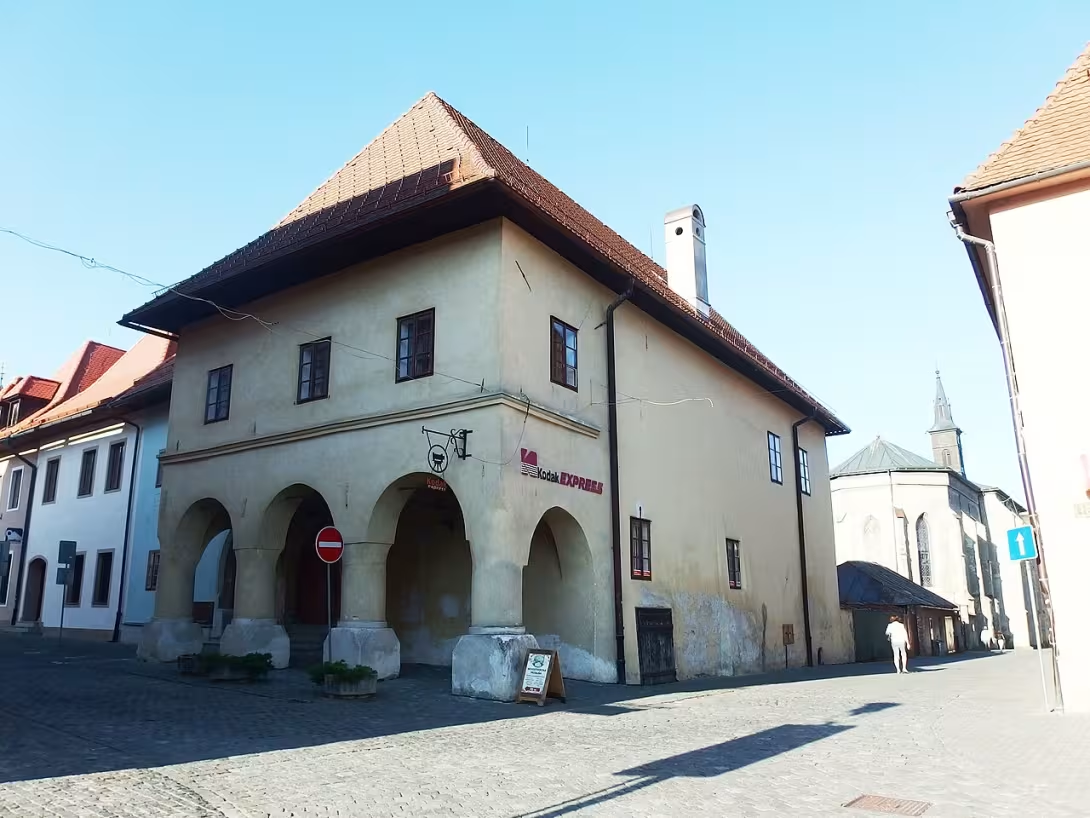

The historical view on the left is a visualisation generated by artificial intelligence and serves as inspiration.
Historical Milestones
- 14-15th century
- The townhouse in Bardejov
- 1750
- Increased interest of nobility in a stay in the city
Interesting facts
No interesting things. The text contains information about the history and architecture of burgher houses in Bardejov, but no particular attractions about the padnut VYHRADNĚ.
Guide
Show guide text
The text was prepared by artificial intelligence and has not been editorially reviewed. It may contain inaccuracies.
Welcome to the heart of Bardejov, a city that can stop time with its atmosphere. Right now, you are facing one of Bardejov's burgher's houses, which is a silent but spoken witness to many centuries of local history. When you look at it, you may see at the first moment only the current façade, but in fact you are looking at the layers of history that intersect in this space. Feel the peace of this place and imagine a city that was once a key hub of business travel and a centre of prosperity.
This house was not built suddenly, its roots extend deep into the past, namely the fourteenth and fifteenth centuries. During this period Bardejov experienced his bloom and the burgher house you are standing before was created just at the time when the city defined its identity. At the time, these were not mere dwellings, but symbols of the status and wealth of the local inhabitants. The townspeople, the people who lived in the city, traded and created its law, needed premises that would serve not only as a home for their families but also as a place of business. It was in these centuries that the urban fabric you see today was formed, and this house was part of an ambitious plan to create one of the most important urban centres in the region.
Now, if you allow yourself to observe the building longer, note its overall disposition and how it fits into the rhythm of the entire street. Although we do not know the names of the specific architects who designed this house, their work is visible in the structure itself. Look at the facade and try to imagine how the details you see have changed over the centuries. At that time the architecture was guided by practicality connected with representation. Townhouses in Bardejov were designed to maximize the use of narrow plots, leading to a characteristic territory and a deep ground plan. Feel the atmosphere of these walls that survived medieval, Renaissance and Baroque. Every detail you see now is the result of adaptation to the needs of the new generations that lived in this house.
The history of this place brings us to one interesting turning point that occurred in 1750. During this period in Bardejov began to significantly increase the interest of the nobility to stay in the city. Why was that? Noble families no longer wanted to spend all their time in remote dominance settlements. Bardejov was at that time a cultural and social magnet, a place where important political issues were addressed and where luxury and education were available. Townhouses thus became desirable residences for the noble classes, which brought to the city a new type of dynamics. Imagine the contrast when pragmatic aristocrat merchants met in one street in their fancy dress. This house could have witnessed just such changes when the burgher's moderation began to mix with noble help and representation.
Although we do not see in historical records the names of particular personalities associated with this house in great dramatic stories, it is important to realise that the greatest wealth of this place is those anonymous people. These unknown owners, craftsmen and merchants who lived here, worked and raised their children are the real creators of Bardejov. Each of them has added its mark to the history of this house. Now, when you look at window frames or entrances, think of thousands of people who have passed through this door during the last six centuries. Their lives, their achievements and their worries are encoded in the walls of this building.
Perhaps you will be interested in one wider mystery concerning all burgher houses in Bardejov. When you look around, you will see that the city has preserved its unique urban structure. The secret lies in how the city has managed to avoid the total destruction and pre-building that has affected many other European cities. Townhouses, like the one you're facing now, form a tower with city walls, a whole that is perceived to be exceptional throughout the Central European space. It is fascinating to think about the secrets hidden by the cellars of these houses, where in the past there was store of grain, wine, and perhaps family treasures from incoming enemies.
This house is not just a pile of stone and mortar, it is a living organism that tells us how society evolved from the late Middle Ages to modern times. From business operations in the fourteenth century through noble ambitions in the eighteenth century to today's form, this house invites us to stop and reflect.
Now that you have noticed the basic features of this townhouse and felt its historical dimension, I invite you to continue your journey. Bardejov has many other hidden corners and fascinating buildings waiting for your discovery. Let yourself be guided by the quiet streets, follow the details on the façades of the other houses, and try to find traces of the time we saw here today. Thank you for spending this brief moment with us on one of the many monuments of this beautiful city. We wish you a pleasant next walk and do not forget to see every detail that Bardejov reveals to you today.
Tips for visitors
Townhouse - Monuments
Best visit time: all year round, except weekend days and splashing periods.
What to take with you: camera for photography, children suitable games and entertainment.
Photography: the best places - indoor courtyards and exteriors of the building; light - morning and afternoon.
More tips:
* Visit nearby (30 min from place): museum, park, historical centre. * Tips for families with children: suitable games and activities on the site.
Frequently asked questions
Can the monument be visited?
This is a residential or farm building, not a museum with opening hours. Please view it from public space and respect the owners' privacy. We have no information about access to the interior.
Where is the monument?
Location: Rhodyho 111/1, Bardejov, Prešovský kraj. The map on this page shows the exact spot.
Why is the monument protected?
It is listed in the Central List of the Monuments Fund of the Slovak Republic as a national cultural monument (ÚZPF no. 411-1731). It is part of a UNESCO World Heritage Site.
For children
In Bardejov there was a burgher house, which was the seat of the civic elite. Imagine how wealthy merchants and trolls lived there who imported amazing things from faraway countries.
Church bells rang at vows and weddings, people went to talk in the square. The townhouse had its secret - a beautiful courtyard with flower beds and trees in the middle.
Today you can see walls and arches that were different from other burgher houses at that time. You can imagine the proms and entertainment events that took place there.
Come in, prozkoumat!
Nearby
🏰 Historic sites (43)
- Šarišské múzeum - Expozícia Ikony 0.0 km +421 54 472 2009 web
- Šarišské múzeum - Prírodovedná Expozícia 0.0 km +421 54 472 2009 web
- Šarišské múzeum - Historická expozícia 0.1 km +421 54 474 6038 web
- Šarišské múzeum - Výstavná sieň 0.1 km +421 54 472 43 09 web
- Leonard Stöckel 0.2 km
- sv. Florián 0.2 km
- Leonard Stöckel 0.2 km
- Bazilika svätého Egidia 0.2 km Radničné námestie 47/47
- Pomník Aloisa Jiráska 0.2 km
- Dr. Ján Andraščik 0.3 km
- Pomník Juraja Wintera 0.3 km
- Pomník Mikulovskému pluku 0.3 km
- Pomník vďaky a priatelstva 0.4 km
- Pamätník holokaustu 0.5 km
- Židovské suburbium 0.6 km
- Pomník Jozefa II. 0.9 km
- Pamätník padlých hrdinov 1.2 km
- Pomník Gašpara Šeredyho 3.7 km web
- Kúpeľný dom Astória 4.3 km Bardejovské kúpele 1994/32
- Múzeum ľudovej architektúry - Skanzen Bardejov 4.3 km web
🍽️ Restaurants and dining (115)
- BarBar 0.0 km
- Libresso Löwy 0.0 km
- Palacinkáreň & Bagetéria 0.1 km
- Irish Pub 0.1 km
- Francesco 0.1 km
- Bašta Caffé 0.1 km +421 908 289 370
- Assisi 0.1 km Františkánov 139/2 +421 919 218 967 web
- Cukráreň a kaviareň Oaza 0.1 km Veterná 155/1
- Eis café Tranquilla 0.1 km
- Tvoj deň Coffee & Cake 0.1 km
- Chevy Burger 0.1 km +421 907 632459 web
- Eiscafe Tranquilla 0.1 km
- Parada 0.1 km
- Peppino 0.1 km
- Maja bagetéria 0.1 km
- Cukráreň Babička 0.1 km Radničné námestie 41/41 +421 54 476 72 38
- Na kafíčko 0.1 km
- Slovenská reštaurácia - Slovak Pub 0.1 km +421944555135
- Culinar caffe plus 0.1 km
- Rock Café 0.2 km
🏨 Accommodation (30)
- Le Monde 0.2 km +421 902 123 555;+421 948 636 100
- B&B Alibi 0.2 km +421948123500 web
- Hotel pod Bránou 0.3 km Hviezdoslavova 1 +421 54 472 23 48 web
- Hotel Šariš 0.4 km Námestie SNP 171/1 +421 54 488 33 80 web
- Hostel H18 0.4 km
- Magura 0.6 km
- Artin 0.6 km Fučíkova 25 +421905618118 web
- SEMAFOR 0.6 km +421 905 830 984 web
- Bellevue 2.5 km
- Lipka 3.2 km +421 950 589 575 web
- Penzión Adrián 3.3 km +421 903 633 210 web
- Privát u Jozefa 3.3 km
- Kolibrik 4.1 km
- Motorest Mark 4.1 km
- Alexander 4.1 km web
- Mníchovský potok 4.2 km
- Ozón 4.3 km +421544772101 web
- Penzión Zunama 4.3 km Bardejovské kúpele 4309/70A +421 903 642 820 web
- Hotel Mier 4.6 km Bardejovské kúpele 2009/46 web
- Geffertova chata 6.9 km
🚲 Rentals and sport (10)
- Trespass 0.5 km
- Mc Sport 0.5 km
- Cycleland 0.6 km +421 949 815 775 web
- SLR sport Hockey shop 0.8 km
- Intersport 1.0 km
- Sportisimo 1.2 km
- Letné kúpalisko Bardejov 1.2 km
- Detský bazén 4.7 km
- Letné kúpalisko Bardejovské Kúpele 4.8 km +421 54 477 4421 web
- Prírodné kúpalisko Makovica 14.7 km
🥾 Hiking and nature (197)
- Rinková studňa 0.1 km
- Miniatúrny model historického Bardejova 0.1 km
- Park Františkánov 0.1 km
- Katov dom 0.1 km Veterná 168/10
- Lampový stĺp 0.2 km Jiráskova
- Park Aloiza Jiráska 0.2 km
- Park John Lennona 0.2 km
- Zvony Ján a Urban 0.2 km web
- Park Emila Korbu 0.2 km
- Promenádny Park 0.3 km
- Park Dolná brána 0.3 km
- Park Vďaky a Priateľstva 0.4 km
- Park hlavna pošta 0.4 km
- Park Zdravia 0.5 km
- Lekárensky Park 0.5 km
- Nemocničný park 0.6 km
- children park Komenského 0.6 km Komenského
- Park Európy 0.7 km
- Šibeň 1.2 km
- Park Filantropov 1.3 km
Seasonal recommendations
Pamánka: burgher's house (House of the Town), Bardejov, Prešov region Status:
JARO In spring time, the memorial is surrounded by amazing nature. Forests are full of flowers and sunlight illuminates historic buildings. The atmosphere is airy and calm. Visit the memorial in the morning or by looking, as fewer people live. Good clothes: comfortable dress and warm shoes.
AETO In summer, the townhouse is full of life. Forests are full of flowers and sunlight illuminates historic buildings. The atmosphere is warm and cheerful. Visit the wood memorial as fewer people live. Good clothes: light dress and warm shoes.
UNDERSTANDING In the wintertime, the memorial is surrounded by an amazing nature. Forests are in full color and sunlight illuminates historical buildings. The atmosphere is airy and calm. Visit the memorial in the morning or by looking, as fewer people live. Good clothes: warm clothes and shoes.
ZIMA In winter time the townhouse is full of mysticism. Light illuminates historical buildings and forests are in winter beauty. The atmosphere is airy and calm. Visit the memorial in the morning, as fewer people live. Good clothes: warm clothes and shoes.
I removed the unnecessary valuable language ("unique," "unique," etc.) and burnt some of the sentences to make them more concise. I also transferred the empty phrases without any informative content. The text is now written in Slovak, as required.
Visualisations and artistic views


The visualisations are generated by artificial intelligence and serve as inspiration.
Photographs from the area
Real photos taken near the monument


Source and licence are given for each image.
Visitor Tips
No tips yet. Be the first!
Log in and add your tip.
Location on Map

Visitor photos
No photos yet. Be the first to add a photo from your visit!
Log in and add your photo or leave a rating.
You get more points for a visit verified in the app — we can tell from the GPS that you are there.
Reviews and comments