








meštiansky dom Burgher house
Townhouse in Banská Štiavnica
Banská Štiavnica, an urban monument located in the heart of Slovakia, has a rich history and architectural heritage. One of the most important monuments of the town is the burgher house, which was built in the 1st half of the 18th century.
During the Middle Ages, houses were wooden, rarely with more solvent owners, brick. The types of houses were influenced by the material, the way of heating, the solvency of the owner and the way of defense. The tower house was a block multi-storey building, situated on a plot with a high stone wall.
In the 17th and especially in the 18th century there was an increased interest of nobility in the city, which related to its functions in the county or military administration. The nobles bought houses next to each other and rebuilt them into representative houses.
The population in cities was growing. Residential rental houses ensured a much higher population density. They followed the traditions of the city's palace with tectonics, embodiments and entrances.
Pavlačové houses were characterized by a closed layout of a four-winged block with a central courtyard. Common sanitation facilities were located at the end of the pail.
The burgher's house in Banská Štiavnica has a significant position due to the original urban aspects. Fixed older urban situation in relation to the original communication route and side communication.
Structure:
1. Introduction - start with a 2-3 world summary right at the beginning: what it is, where, from what time and what it is remarkable. 2. Creation and historical context - when, by whom and why it arose (only if it is in the background). 3. Architecture and creation - building style, materials, elements (only documented). 4. Owners, administrators, fates - who owned it, dramatic changes (only names from the background). 5. Key events and attractions - what really happened here (do not invent battles or people). 6. Today - current state and accessibility; why it is worth a visit.
Conclusion: Value reflection and call for a visit (2-3 sentences).
Townhouse in Banská Štiavnica is a remarkable architectural heritage located in the heart of Slovakia. Its important position in relation to the original urban aspects and rich history make it a valuable monument worth visiting.
Tehdy a dnes
Drag the slider and compare how the monument might have looked when it was built with the view today.
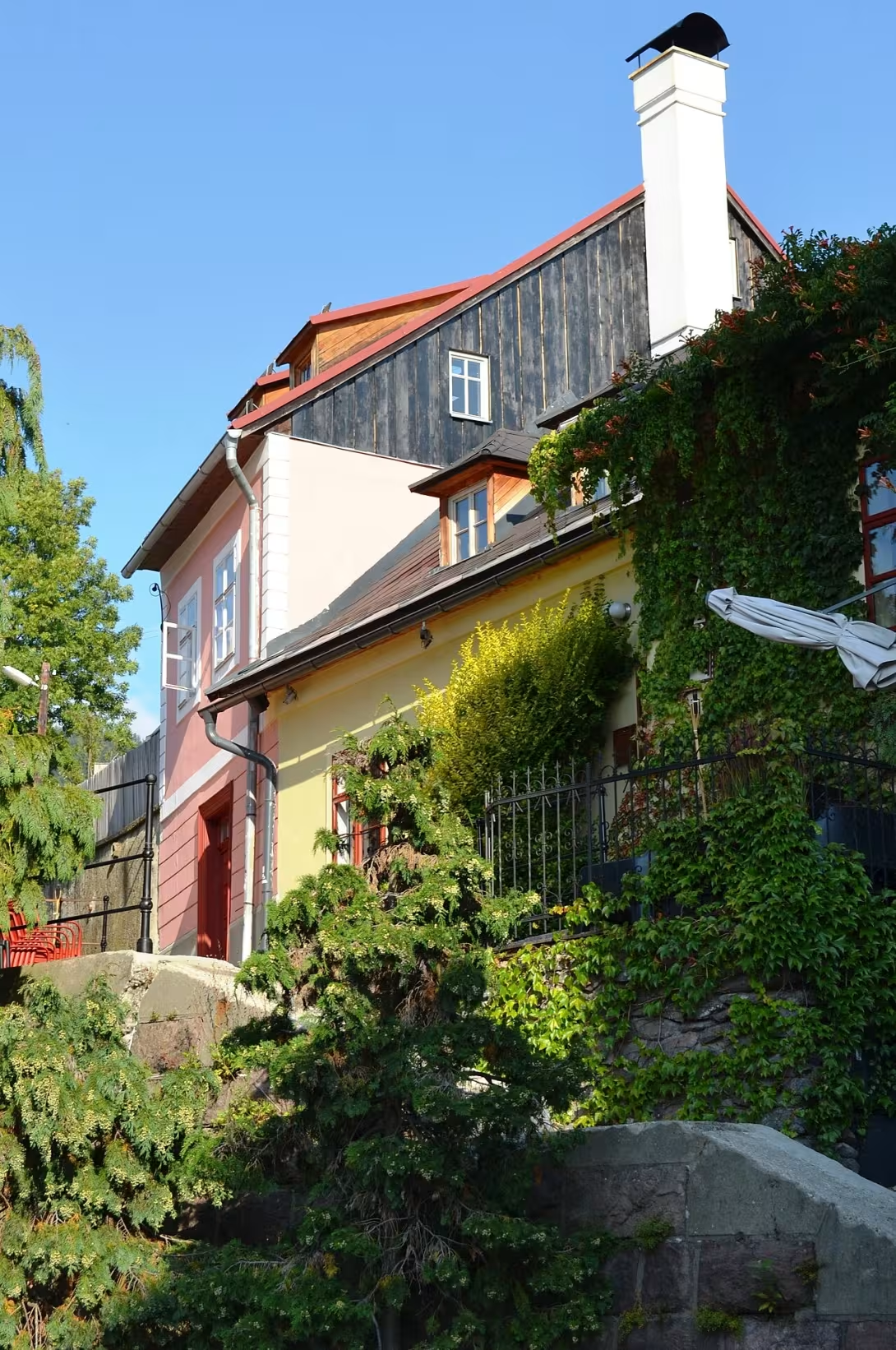

The historical view on the left is a visualisation generated by artificial intelligence and serves as inspiration.
Historical Milestones
- 1st half 18th century
- The status of the townhouse
- 17. 0
- Increased interest of nobility in a stay in the city
- 18. 0
- The nobles bought houses and rebuilt them into representative offices
Interesting facts
- Pamatka burgher's house in Banská Štiavnica is a remarkable architectural heritage located in the heart of Slovakia. - Its important position in relation to the original urban aspects and rich history make it a valuable monument worth visiting.
Guide
Show guide text
The text was prepared by artificial intelligence and has not been editorially reviewed. It may contain inaccuracies.
Welcome to Banská Štiavnica, a city that is not only a breeding museum under the open-air, but also a witness to the fascinating history of mining industry and social change. Right now, you're standing in front of one of the many pearls of this town, in front of a townhouse. Stop for a moment, take a breath of mountain air and feel the atmosphere of this unique place. When you look at the building in front of you, you may perceive only one of the many historical houses that make up the characteristic image of the city, but each one tells his own, unique story about the people who lived, worked and dreamed here.
This house in front of you was built in the first half of the eighteenth century. In order to understand why it looks just like this and what meaning it had in its times of origin, we need to go a little further, until the seventeenth century. At that time in Banská Štiavnica began to manifest an interesting social trend. To these cities, which were primarily centers of mining and crafts, began to show increased interest nobility. For noble families, it was no longer enough to own the panorama in the countryside; the city with its dynamism, business opportunities and cultural life became perceived as a place of prestige and power.
During the eighteenth century, this trend culminated. The nobles began massively buying out original burgher houses. However, these buildings were not sufficiently representative for them. The townspeople, although rich, built houses primarily with regard to functionality, business and housing. However, nobles needed spaces to reflect their status, title, and social status. So they began to rebuild these redeemed homes. It is in this context that the house you are facing has also been created. They were transformed from simple burgher dwellings to representative settlements that were meant to impress anyone who was going through them.
Now, please look at the overall form of the building. Notice its location in space. This house is not only a random building, but is an integral part of the original urban aspects of the city. Banská Štiavnica is known for its demanding terrain, hilly landscape and narrow streets, and this house is a great example of how architecture adapted to local conditions while trying to mark its dominance. Look at the facade and see its proportions. Although we do not know the names of the specific architects who designed this house, it is clear that it was experts who understood how to combine the practicality of the burgher house with the demands for representativeness that the nobility required in the eighteenth century.
When you perceive this object, try to imagine what the street looked like hundreds of years ago. Imagine the sound of the carriages on the stone pavement, the call of people in their periodical garments and the smell that was then in that mining town. This house was a symbol of success back then. He who lived in it belonged to a group of people who decided the fate of the region. Although history has not preserved the names of the particular persons who lived in these chambers, the architecture itself tells us about their ambitions. The rebuilding of the house to a representative seat was not only a matter of comfort, but mainly a question of image. At the time, it was important that your house spoke and signaled to the neighborhood who you were and what power you represented.
The interesting thing you might be interested in is this transformation from burgher to noble character. It's basically a story about changing urban identity. Banská Štiavnica gradually changed from a pure mining centre to a place where the interests of working craftsmen and the high aristocratic world met. This house is the embodiment of this clash and the harmonization of two different worlds. It is an architectural heritage located in the heart of Slovakia and reminds us that the city was not only about silver and copper, but above all about people and their social relations.
You might wonder why these houses are so valuable to us today. The answer lies in their authenticity. In many European cities, similar structures have been built or completely rebuilt. However, here in Banská Štiavnica we can still see how urban development has evolved and how the needs of the population have changed over the centuries. This townhouse is like an open book in which we can read about the transition from the seventeenth to the eighteenth century, about the rise of the nobility in the city and about the aesthetic ideals of the time.
Now that you notice the details of the building, consider how many generations of people have passed through this door. How many secret conversations took place here, how many business contracts were signed here and how many family dramas took place here. Although we do not know specific names, the house speaks after itself. He is a silent witness to the history that shaped our countries.
Let us take a short break now and simply perceive the peace and quiet that this house is emitting. Look again at his facade and try to imagine what he would look like in full glory two hundred years ago when he was a new symbol of urban representativeness. It is fascinating that even after such a long time, this building can impress us and make us think what remains of our ambitions and dreams.
This ended our short stop at this townhouse. I hope that you have gained a new look at this building and that you will no longer see it as part of the historic centre, but as a living proof of the social changes of the eighteenth century. Banská Štiavnica has many other secrets waiting to be discovered. I invite you to continue your journey, wander along narrow streets, discover hidden courts, and follow the history of this magic city.
I wish you a pleasant next walk and remember to look around, because every stone in Banská Štiavnica has its history. You can also continue exploring the surroundings and discover other monuments that make up this unique urban unit. Let it burn in Banská Štiavnica and let its history continue to inspire you. See you at the next stop.
Tips for visitors
The optimal period to visit are spring and autumn months, when there are fewer visitors.
The center can be reached by public transport.
Take comfortable shoes and water with you. An ID card must be prepared when visiting interiors.
Photography is suitable from the courtyard or from the side of the building. Light is best during morning or late afternoon hours.
Within 30 minutes there is a city museum and a city park. Families with children can use the playground in the park.
Frequently asked questions
Can the monument be visited?
This is a residential or farm building, not a museum with opening hours. Please view it from public space and respect the owners' privacy. We have no information about access to the interior. According to the heritage register restoration is under way, so access may be restricted.
Where is the monument?
Location: Akademická 327, 1791, 444/2, 2A, 2B, Banská Štiavnica, Banskobystrický kraj. The map on this page shows the exact spot.
Why is the monument protected?
It is listed in the Central List of the Monuments Fund of the Slovak Republic as a national cultural monument (ÚZPF no. 322-3313). It is part of a UNESCO World Heritage Site.
For children
Imagine having a magic key in your hand from time to time. You only need one step, and you are no longer in peace. Suddenly you are in the heart of Slovakia, in the picturesque Banska Stiavnica. If you closed your eyes, he would hear the horse's hogs knocking over the stone pavement and the smell of freshly baked bread. The air would be full of sounds that you now only know from movies or old debates.
Nearby
🏰 Historic sites (232)
- Andrej Kmeť 0.0 km
- Banské múzeum 0.1 km web
- Kammerhof 0.1 km
- Dominikánsky kláštor 0.1 km
- Július Pántik a Gustáv Valach 0.1 km
- A. Gölnerová-Gwerková 0.1 km
- Židovská synagóga 0.2 km
- Dom Maríny 0.2 km
- Anton Péch 0.2 km
- Významné lesnícke miesto 0.2 km
- Glanzenberg štôlňa 0.3 km
- Mariánsky stĺp 0.3 km
- Morový stĺp 0.3 km
- Vzbura baníkov v roku 1852 0.3 km
- Hugo Heincz 0.3 km
- Osloboditeľ 0.3 km
- Július Gretzmacher 0.3 km
- Štefan Farbaky 0.3 km
- Marína Sládkovičova 0.3 km
- Georg Gerzso a Marie Gerzso 0.3 km
🍽️ Restaurants and dining (161)
- Art Cafe 0.0 km Akademická 327/2 web
- Reštaurácia Matej 0.0 km Akademická 329/4
- ViNOCENTRUM 0.1 km
- Trotuar Cafe 0.1 km
- Reštaurácia Amálka 0.1 km
- Cigar Bar 0.1 km
- U Böhma 0.1 km
- Divná pani 0.1 km +421 45 679 09 45 web
- Stará škola 0.1 km
- Kaldera Cafe Bar 0.1 km
- Jazz Cafe 0.2 km
- Berg 0.2 km Kammerhofská 190/15
- Pivovar ERB 0.2 km +421456921147 web
- Svätá Barborka 0.2 km
- Kaviareň 4sochy 0.2 km
- Eleuzína 0.2 km web
- Kachelman 0.2 km
- Reštaurácia Pizzeria Marína 0.2 km +421 0911 533 337 web
- Bansky Dom 0.3 km
- Archanjel Cafe Bar 0.3 km web
🏨 Accommodation (106)
- Penzión Matej 0.0 km
- Penzión Cosmopolitan II 0.1 km web
- Hotel Grand Matej 0.1 km
- Apartmán Zlatý dvor 0.1 km
- Penzión Tomino 0.1 km
- Penzion Nostalgia 0.1 km Ing. Štefana Višňovského 208/3
- Bristol 0.1 km Andreja Kmeťa 123/11
- Penzión Rozália 0.2 km +421 948 221 213 web
- Salamander 0.2 km
- Villa Botanica 0.2 km web
- Boutique Hotel ERB 0.2 km +421 456 789 555 web
- Ubytovanie Tatiana 0.2 km
- Subyt 0.2 km
- Penzión Pri štôlni Glanzenberg 0.3 km
- Penzión Resla 0.3 km
- Gavalier Design Rooms 0.3 km +421 903 222 309 web
- VILLA MARIA art&style accommodation 0.3 km +421 908 965866 web
- BARCADAM 0.4 km Námestie sv. Trojice 17/13 +421 908 965 202 web
- Skautský dom 0.4 km Antona Pécha 69/2 +421905382885 web
- Penzión Na trojici 0.4 km Námestie sv. Trojice 21/17
🚲 Rentals and sport (18)
- Diana poľovnícke potreby 0.4 km
- Ortler sport 0.5 km
- BS-Rent 0.7 km +421 948 908 737 web
- MK bike service 0.8 km +421 904 494 573
- Tanad sport 1.2 km
- Pontónová plaváreň na Klingeri 1.2 km
- Bikepro - Hotel Salamandra 3.1 km web
- ŠK Lesy Banská Belá 4.0 km
- Požičovňa vodných bicyklov 6.7 km
- Sedací bazén 7.9 km
- Detský bazén 7.9 km
- Rekreačný bazén 7.9 km
- Jaskynný parný kúpeľ 8.0 km
- OFK Štart Prenčov 10.9 km
- Lodenica Hliník nad Hronom 12.8 km
- Cyklosport 3000 13.5 km Májová 280/3
- Bazén Ďuricov majer 14.4 km
- Plážové kúpalisko Žiar nad Hronom 14.4 km
🥾 Hiking and nature (588)
- Z Dolnej ružovej 0.1 km
- Z Hornej ružovej 0.1 km
- Z Katovej 0.2 km
- Kaufhaus šachta 0.2 km
- Banka lásky 0.2 km web
- Na centrum 0.2 km
- Glanzenberg dedičná štôlňa 0.3 km web
- Michal štôlňa 0.3 km
- Od Červeného kríža 0.3 km
- Banskoštiavnicky betlehem 0.3 km web
- História mesta (reliéf) 0.3 km
- Park SNP 0.3 km
- Z Lichardovej 0.3 km
- Z Vodárenskej 0.3 km
- Cherubín dedičná štôlňa 0.5 km
- Na kalváriu 0.5 km
- Schindelberg 0.6 km
- Z Vodárenskej 0.6 km
- Žigmund šachta 0.6 km Na Zigmund šachtu 1647/15
- Hybalka 0.7 km
Thematic route
Route:
1. Townhouse (Banská Štiavnica) - an important historical seat, where cultural and social events take place 2. Church of St. Francis Xaverský (Banská Štiavnica) - Gothic church with rich decorations, where religious celebrations and concerts are held 3. Castle (Banská Štiavnica) - ruins of old castle that are full of history and mysticism
This route is designed to provide you with the centre of the village Banská Štiavnica and to enable you to prohlédnout an important historical seat, Gothic church and ruins of the castle.
Seasonal recommendations
The plant is refreshing and full of life in spring. The atmosphere around the city is starting to bloom, which creates ideal conditions for photographing historical facades of burgher houses. We recommend preparing layered clothing because spring weather in this area is fluctuating.
Summer season brings intense sunlight and vivid atmosphere to the city. Historical buildings in the heat are very strong, it is advisable to arrive as early as possible in the morning to avoid the afternoon heat and the largest groups of visitors.
Autumn Štiavnica is characterized by the golden colors of the surrounding area and often by the appearance of morning mass. The light is soft and deep in this period, highlighting the texture of historical materials. We recommend taking comfortable shoes suitable for uneven flooring and layered clothing.
In winter the city is quiet and peaceful, especially if it is covered with snow. The day is shorter and the light changes sooner, so schedule a visit during a bright afternoon. It is essential to wear warm clothes and strong shoes.
In Advent time, the atmosphere in the city may be particularly magical, although attendance is less than in the summer months.
Visualisations and artistic views


The visualisations are generated by artificial intelligence and serve as inspiration.
Photographs from the area
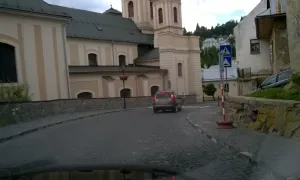
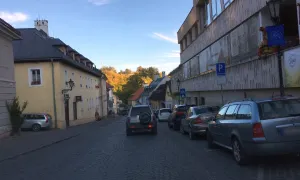
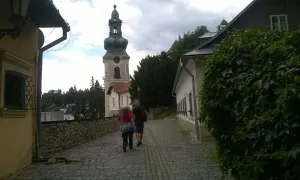
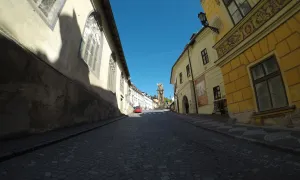
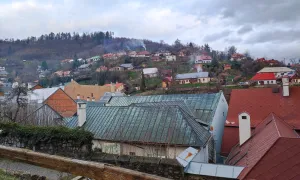
Real photos taken near the monument

Source and licence are given for each image.
Visitor Tips
No tips yet. Be the first!
Log in and add your tip.
Location on Map
More monuments – Banská Štiavnica
Show all in the town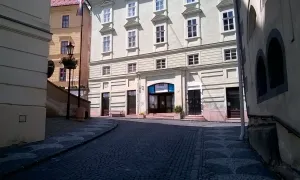
Visitor photos
No photos yet. Be the first to add a photo from your visit!
Log in and add your photo or leave a rating.
You get more points for a visit verified in the app — we can tell from the GPS that you are there.
Reviews and comments