








roľnícka usadlosť Farmer's farmstead
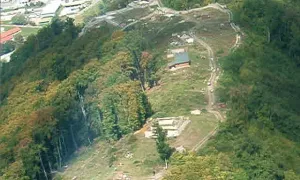
The courtyard is located in the village Dačov Lom in Banská Bystrica region. It is a national cultural monument formed by a brick folk house and chamber.
Historical Milestones
- 18th - 19th century
- Construction of a stone house and a chamber within the farm settlement.
- 19th century
- Period of intensive use of settlements for agricultural purposes.
- Current
- Enrollment of the object in the list of national cultural monuments of Slovakia.
Guide
Show guide text
The text was prepared by artificial intelligence and has not been editorially reviewed. It may contain inaccuracies.
Welcome to the picturesque village of Dačov Lom in Banská Bystrica region. Right now you are facing an authentic peasant settlement that seems to have fallen out of ancient times and stopped your time. When you look around, you see a picture of traditional Slovak countryside, where once lived in close connection with the surrounding nature and hard work in the field. Take a deep breath, close your eyes for a moment, and see the unrepeatable atmosphere of peace that this place radiates. Before us is the settlement, the witness of the past, the silent guardian of the traditions and customs of our ancestors who have left behind a piece of their soul.
Let's go back in time and see how this place originated and what historical context shaped it. Although the exact chronology of the emergence of this peasant settlement is not accurately documented and lost in the dust of the past, its importance for this region is undeniable. We don't know exactly the names of the builders or the particular year when the first person moved here to lay the foundations of the future court. However, we know very well why such people cultivated and built their homes. Life in these parts has always been a struggle for survival, but also a manifestation of the immense tenacity and perseverance of the local population. Farmhouses in Dachovo Lome was not created by chance; they were the answer to people's need to provide livelihoods for their families, to hide from timelessness, and to create a safe home in the midst of the harsh but beautiful nature of Novohrad or Hontian. Every corner of this court breathes the history of everyday days, tireless hard work, the joy of good harvest and the belonging of the entire community that has lived together for centuries.
Now pay attention to the architecture itself and the details you have right in front of you. Look up at the facade, the structure of the walls, and the way the entire settlement is planted in the surrounding terrain. Since accurate architects are not known, the creators of the work were peasants themselves, who built with the help of traditional craftsmen and their own hands. Note the shape of the settlement, the thoughtful arrangement of the individual parts of the court that served their practical purpose with admirable purpose. Each element here had its justification - nothing was built simply for decoration, everything was meant to serve farming and everyday life in the village. Walk through the walls and focus on how the building reacts to the landscape around it. It is a demonstration of loyalty to material that was the closest and most accessible to humans at the time. Without pointless pomp, but with a huge sense of functionality and harmony with nature.
When we think about who was walking on this earth, we come across the interesting fact that specific historical personalities associated with this particular court remain hidden in the anonymity of history. There's no famous nobleman, king, or great politician whose name ties to this place. Yet, this court is linked to the most important people - the common peasants, the ancestors of today's inhabitants, who made up the real history of the region with their quiet and inconspicuous life. Their stories were not written in big books, but passed on by oral mail from generation to generation, encrypted in calluses on hands, in songs at work, and in the wisdom they passed on to their children. The anonymity of these people makes this place even more authentic. It is not marked by the ego of powerful but pure human work.
When we look at what makes this peasant settlement special, we find that its greatest mystery, and at the same time its greatest strength, is its silent resilience. At a time when everything around us changes so quickly and modernizes, this yard stands as a fixed point in time, reminding us of our roots. It is fascinating to see how the settlement has managed to survive changing times, historical shocks, regime changes and agricultural modernisation without losing its original face. He's a silent witness who doesn't need words to tell us something important about our past. All you have to do is stand by, watch, and let the energy of this place affect itself.
At the very conclusion of our stop today, I would like to warmly invite you to further explore the entire area of Dač Loma. Do not hesitate to cross the streets of the village, perceive the genius loci of this distinctive region and discover other hidden treasures of Slovak folk architecture and history. I hope you enjoyed this short dive into the past and that you take away not only nice visual experiences but also deeper inner peace from your visit. Thank you for your attention, I wish you a wonderful rest of the day and goodbye to other wanderings of our history.
Tips for visitors
In the village Dačov Lom we recommend to visit the farmer's settlement during the spring and summer, when in the Banská Bystrica region there is good weather for walks. We recommend a passenger car for transport. Take strong shoes suitable for uneven courtyard terrain, drinking water, and sun protection. In the area you can photograph traditional folk architecture. The appropriate light is early in the morning or before sunset. Other attractions in the region can be found on local information boards.
Frequently asked questions
Can the monument be visited?
This is a residential or farm building, not a museum with opening hours. Please view it from public space and respect the owners' privacy. We have no information about access to the interior.
Where is the monument?
Location: Dačov Lom, Banskobystrický kraj. The map on this page shows the exact spot.
Why is the monument protected?
It is listed in the Central List of the Monuments Fund of the Slovak Republic as a national cultural monument (ÚZPF no. 32A-1819).
For children
Imagine a time without mobile phones, television, and electricity. Without light, press button and refrigerator. Visit the peasant settlement in the village Dačov Lom. You'll see how survival then depended on the clever hands and work of the people who lived here.
Nearby
🏰 Historic sites (39)
- Kostol Lešť 4.3 km
- Branislav Žigmund 5.3 km
- hrad Strahora 6.6 km
- Kováčska vyhňa 9.0 km
- Štefan Tuček 9.1 km
- Kostol Turie Pole 10.3 km
- Pamätná tabuľa J. V. Luňáčka 10.4 km
- Turie Pole (ruiny) 10.4 km
- Rodný dom Samuela Zocha 10.6 km
- Bálint Balassi 10.9 km
- Múzeum bábkarských kultúr a hračiek 10.9 km web
- Modrý Kameň 10.9 km web
- Andrej Hlinka 11.2 km
- sv. Anton Paduánsky 11.2 km
- Obetiam SNP a 2. svetovej vojny 11.2 km
- Mariánsky stĺp 11.3 km
- Cirkevné regionálne vlastivedné múzeum S. Godru 11.7 km
- Július Pántik 11.8 km
- Obetiam 2. svetovej vojny 11.8 km
- Obetiam 1. svetovej vojny 11.8 km
🍽️ Restaurants and dining (35)
- Hradná cukráreň 10.9 km
- Kaffe na hrade Bzovík 11.9 km
- Dolce Vita 12.9 km
- Z Pizza 13.0 km +421 903 222 913
- Hostinec 13.0 km
- Stop Cafe 13.8 km
- Profile 13.9 km +421 918 104 930 web
- Fresh Snack Bar 14.0 km +421 915 830 046
- Hostinec Šťuka 14.0 km
- Noodles&Rice Vietnamské Bistro Krupina 14.0 km
- Pod vrbou 14.1 km
- Charisma 14.1 km
- Galaxia 14.1 km
- Pizzeria Vito 14.1 km
- Marťák 14.2 km Boženy Němcovej
- Hostinec u Lubika 14.2 km Boženy Němcovej
- Atila 14.4 km +421 47 48 25318
- Martiner 14.4 km
- Mafík 14.4 km +421 908 041 230
- Family Pizza 14.4 km
🏨 Accommodation (12)
- Camping Lazy 8.5 km web
- Camping & Glamping Slovakia 9.2 km web
- Chata Španí Laz 10.3 km
- Chalupy NATURAL SLOVAKIA 10.6 km web
- Hotel Koprovnica 11.4 km +421 474 896 303 web
- Turistická ubytovňa 13.4 km Školská 29/15 +421 45 556 2401 web
- Slovan club 13.8 km
- Penzión u Vinára 14.3 km
- Penzión Kaštieľ 14.5 km +421 47 48 311 67 web
- Hanišberg 14.7 km
- Modrá Farma 14.7 km
- Hotel Dolina 15.0 km
🚲 Rentals and sport (6)
- Tepličky 13.6 km
- bicykle Mama šport 14.0 km
- Biokúpalisko Krtko 14.4 km +421 47 48 30819 web
- Mestská plaváreň 14.5 km web
- K Park 14.6 km
- Cyklospol 14.8 km Námestie Augusta Horislava Škultétyho 10
🥾 Hiking and nature (204)
- Záhumnie 0.6 km
- Meričkovka 1.2 km
- Drvotniská 1.3 km
- Barbolisko 1.6 km
- Strážnik 1.6 km
- Strážište 1.9 km
- Malý Hrb 2.3 km
- Lackov vrch 2.3 km
- Nad Stádliskom 2.4 km
- Veľký Hrb 2.4 km
- Babin vrch 2.4 km
- Beškov vrch 2.6 km
- Pálenička 2.6 km
- Lazec 2.7 km
- Tomášov hrb 2.8 km
- Hevešovo záhumnie 2.9 km
- Dubovina 3.5 km
- Kráľov hrb 3.5 km
- Za Kamencom 3.6 km
- Suchánsky previs 3.6 km
Thematic route
Since the list of surrounding interests is empty, I propose a thematic route right inside the monument itself and its immediate area.
1. Peasant's Court (Main Objective) Type: Museum in nature / Historical settlement Why it is worth visiting: The settlement in the village Dačov Lom consists of original buildings and period equipment. It shows regional architecture and way of life in the village in the past.
2. Dvor peasant - residential house (Reservation area) Type: Historical exposure Why it is worth visiting: Interiors of the house contain period room equipment and everyday items. The exhibition documents traditional crafts and everyday life of the inhabitants.
3. Court farm - farm buildings (reservation area) Type: Agricultural exposure Why it is worth visiting: Objects in the past were used for breeding cattle and storing crops. Today there is a collection of original tools used in fieldwork and in the economy.
4. Dvor peasant - courtyard and exterior (Reservation area) Type: Historical Courtyard Why it is worth visiting: The exterior of the settlement shows the spatial arrangement of the traditional Slovak courtyard.
Seasonal recommendations
In the spring season in Dačovo Lom, the surrounding meadows and sides gradually green. The light is gentle and clean in this period, which is ideal for shooting traditional architecture of clay walls and straw roofs of settlements. Spring weather tends to be variable and sprained terrain around the yard requires solid waterproof footwear and layered clothing that protects against colder winds.
Summer is the time of the highest attendance, when the yard comes to life thanks to long sunny days. The light during the early morning and late afternoon highlights the details of farm buildings. Since most visitors arrive in the main summer season, the best time for a peaceful tour is the time immediately after the morning opening. You will avoid the noon heat. It is appropriate to pack your head covering, plenty of drinking water and sunscreen, as the yard provides only limited shade options.
Autumn brings to the region the coloring of nature into yellow, orange and brown shades. The sun is lower above the horizon, creating a soft side light suitable for capturing the structure of wood and stone. Autumn days tend to be dryer and colder. A windproof jacket and warm shoes are recommended, especially if you are staying until late afternoon when it is darker.
In winter, the settlement in Dace Lome is covered with snow. The low sun creates long shadows and lights up the snowy court in the clear sky. It is therefore necessary to put on warm winter clothes, wear insulated footwear with slip soles and adapt the arrival to early dimming.
Visualisations and artistic views

The visualisations are generated by artificial intelligence and serve as inspiration.
Visitor Tips
No tips yet. Be the first!
Log in and add your tip.
Location on Map
More monuments – Dačov Lom
Show all in the town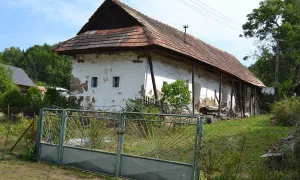

Visitor photos
No photos yet. Be the first to add a photo from your visit!
Log in and add your photo or leave a rating.
You get more points for a visit verified in the app — we can tell from the GPS that you are there.
Reviews and comments