








roľnícka usadlosť Farmer's farmstead
Slovak cultural monument - peasant settlement in Osturne
The area registers the Monument Office of the Slovak Republic under the number ÚZPF 413-10357 and consists of 1 building: folk house (1895).
This courtyard is located in the village Osturna, Prešovský kraj. Location is 49.32906, 20.19934.
Pantin protection: national cultural monument.
The area consists of only one object - folk house. The material from which it was built is unknown. The monument is located at No. 260 in Osturne.
This court is an important monument in Osturne, which is important for the region.
Tehdy a dnes
Drag the slider and compare how the monument might have looked when it was built with the view today.
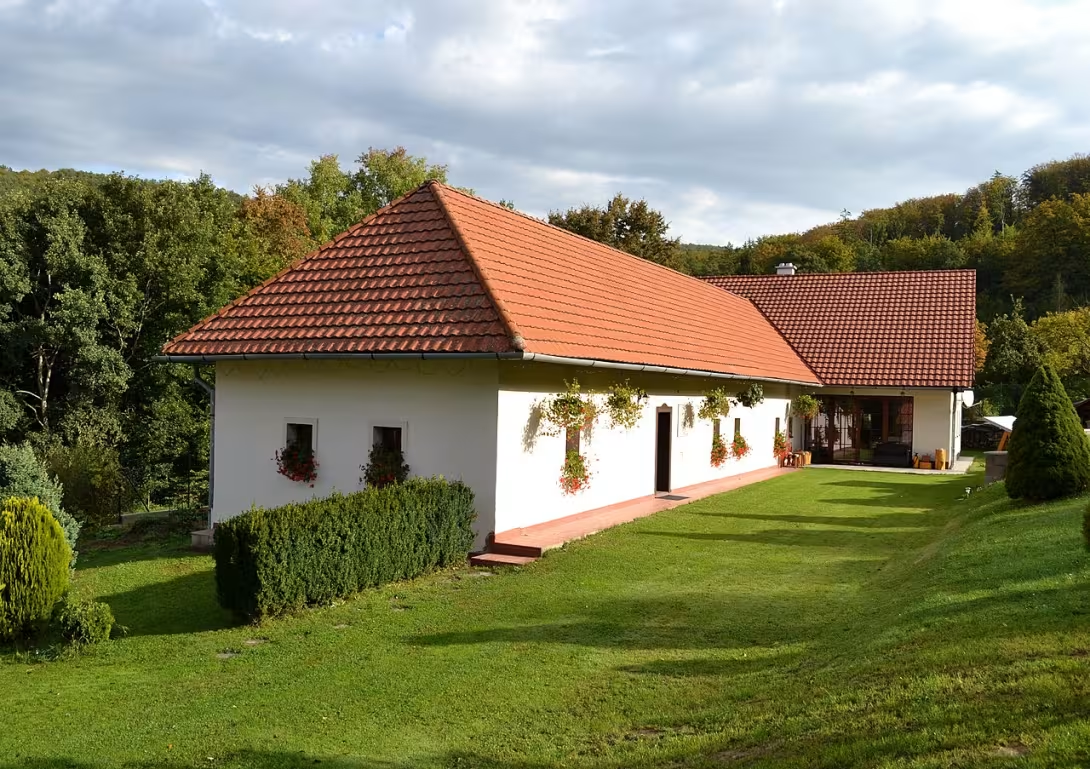

The historical view on the left is a visualisation generated by artificial intelligence and serves as inspiration.
Historical Milestones
- Folk house (rubový construction, folk construction, 1895)
Guide
Show guide text
The text was prepared by artificial intelligence and has not been editorially reviewed. It may contain inaccuracies.
You can see in Osturne, a picturesque village in Prešov region, where time seems to flow slower than in cities. You are now facing a peasant settlement that stands quietly here and testifies to centuries of human life, work, and survival. When you put your headphones on and release yourself into the atmosphere of this place, you are likely to be impressed by the silhouette of the building itself and its connection to the surrounding landscape. It is not a monumental building with high towers or beautiful statues, but a modest but very strong example of traditional Slovak peasant housing. This architecture is not about beauty, but about functionality, resilience and a deep relationship of man to the land he has managed.
Looking at this settlement, note how the building is integrated into the environment. Traditional courtyards in Slovakia, especially in regions such as Prešov region, had their exact rules. The court of the farmer, the so - called court, was the heart of the household. It was usually composed of a house, an economic building where cattle were kept and crops were stored, and often from wood shelters and tools. Although the exact chronicle of this particular building is not fully known and the names of its original builders have been lost in the dust of history, its existence itself is evidence of the permanent settlement of this site. Osturňa is located in an area where the influences of different cultural and ethnic groups meet, which in the past has also manifested itself in architecture and customs.
Let us take a closer look at the details that you can now observe. Although there are no precise architectural plans or names of architects who designed this construction, you can notice the materials that were typical of the given time and region. Probably a combination of wood, clay and stone, materials that were readily available in the area. Wood was a basic building material for beams and roof construction, while clay plasters or log walls provided thermal insulation. Look at the windows and doors. In traditional farming architecture, windows often had simple, functional shapes, sometimes decorated only minimally to preserve their strength. The door, especially the main entrance, could be decorated with simple carvings or symbols designed to protect the household from wicked spirits and bring happiness.
The historical context of this settlement is deeply linked to the life of farmers in the past. For them, the house was not just a place to live, but the center of their entire world. Everything they needed to survive was based on the earth and the season. Spring walls, summer harvests, autumn harvests, and winter housing maintenance - these cycles determined the rhythm of life in such a yard. Construction techniques were transferred from generation to generation, so each new building or repair carried the legacy of previous owners. Although we do not know exactly who was behind the creation of this particular building, we know that it was a community effort and individual law of individual families building their nests here.
An interesting feature of farmers' settlements is their orientation and layout of the premises. Traditionally, houses were built to be best protected from wind and winter, often with the main entrance facing south or southeast to maximise the supply of sunlight. Farm buildings were located near residential areas, facilitating day-to-day work and surveillance of livestock. In some cases, these buildings were joined by shelters, creating an enclosed yard that was protected from rain and snow. This functionality may be less visible today if the building has been reconstructed or changed, but its original character can still be felt in layout and proportions.
When you look at the roof, notice its inclination and material. Roofs of traditional peasant houses were often covered with a straw roof or shingles made of local wood. The straw roof was not only an effective isolator, but also a symbol of the wealth and care of the owner, because its maintenance required a lot of time and skills. Today, these roofs are often replaced with modern materials, but they can still transfer the atmosphere of the past. If the building is in good condition, you can imagine how people lived here in the past, how food was cooked, how it worked here, and how the holidays were celebrated.
One fascinating aspect of such places is their ability to preserve stories that can no longer be found anywhere else. Although we do not know the names of the specific people who lived here, we know that their lives were filled with challenges and joys. The farmers depended on nature and were therefore very sensitive to weather changes and crops. Their daily life was hard but at the same time full of association and mutual assistance. Neighbors helped themselves to harvest, to build houses, and to do other hard work. This community power is an important part of the heritage represented by this settlement.
The mystery that accompanies many peasant buildings is their ability to survive for centuries, although they were built of relatively simple materials. The secret lies in the accuracy of construction techniques and in the care of owners who realized that their house was their largest property. Every piece of wood, every brick and every plaster had its place and function. Today, when you look at this building, you can imagine how generations changed here, how children were born here, how weddings were celebrated, and how they said goodbye to loved ones. This continuity of life is what makes such places so special.
Finally, I would like to invite you to look around and see the atmosphere of this place. The osturna and its surrounding countries are full of similar stories waiting to appear. Every peasant settlement is like a book in which the stories of the people who lived and worked here are written. Although not all sites are readable, the atmosphere and history can be felt. During a walk around the village you can find other traces of the past, whether it is old trees, stone walls or other historical buildings.
Thank you for taking the time to visit this historical monument and to see its value. I believe this walk has brought you new views and understanding for traditional Slovak peasant life. Let this visit stay in your memory as a pleasant experience and inspiration for further discovery. Let us say goodbye to this settlement with respect for its history and hope that it will be preserved for future generations. Thank you
Tips for visitors
It is recommended to visit from April to October, when all parts of the settlements and outside areas are open.
The asphalt road leads to the building.
We recommend shoes suitable for terrain and repellent.
Photography is allowed. Suitable light is in the morning and evening. We recommend footage from the yard towards the buildings.
For families with children there are interactive stations with the introduction of old agricultural tools.
Frequently asked questions
Can the monument be visited?
This is a residential or farm building, not a museum with opening hours. Please view it from public space and respect the owners' privacy. We have no information about access to the interior. According to the heritage register the structure is in poor condition – do not enter it and take care nearby.
Where is the monument?
Location: č. 260, Osturňa, Prešovský kraj. The map on this page shows the exact spot.
Why is the monument protected?
It is listed in the Central List of the Monuments Fund of the Slovak Republic as a national cultural monument (ÚZPF no. 413-10357).
For children
Imagine that you have a key to a secret gate that takes you deep into the past. It's not a modern spaceship, but something much more magical. All we have to do is close our eyes and imagine that we are returning exactly 131 years on the way back in time. Suddenly the world around you will change. You don't see any cars, you don't hear the music from your tablet, and there won't be a lamp in your peace. It was then, around 1895, that the Court of Farmers was established in Osturny.
Nearby
🏰 Historic sites (25)
- 700 r. obce 2.6 km
- Padlým rodákom v 1. sv vojne 2.6 km
- Szałasy 3.5 km
- Zagroda Sołtysów w Jurgowie 4.7 km web
- Lovecký zámoček Hohenlohe 7.4 km +421 905 243 618 web
- Zagroda Korkoszów w Czarnej Górze 8.0 km Zagóra 86 web
- Ždiarsky dom 8.1 km web
- Penzión Tatra 8.2 km
- Kościół pw. Świętej Elżbiety Węgierskiej (dawny) 9.8 km
- Ściana Pamięci 10.8 km
- Pomnik strażaków 11.3 km
- dom Michal Dočolomanský 11.5 km
- Miejsce dawnego dworu obronnego 12.2 km
- prof. Alfred Grosz 12.3 km
- Lukáš Mánek 13.0 km
- Izba Regionalna 13.2 km Księdza Józefa Kosibowicza 13 +48 694477544
- Wozownia 13.4 km
- Dino Kuráň 1971-2012 13.5 km
- Druhnie Oldze Małkowskiej 13.5 km
- Kasztel Berzewiczych we Frydmanie 13.6 km Kasztelańska 1
🍽️ Restaurants and dining (132)
- Mocova Koliba Pohostinstvo Pavlik Ján 2.4 km +421 911 835 392 web
- Harwań 3.4 km Podokólne 1
- Szałas nr. 3 3.5 km
- Pizzeria Margo 4.6 km Jurgów 194 +48 667 484 991 web
- Penzion Strachan 6.4 km
- Reštaurácia Medvedí brloh Strachan 6.4 km +421919171519 web
- Karczma "Koziniec" 6.4 km Nadwodnia 170
- Penzión Ždiaranka 6.5 km +421910999571 web
- Bistro Strednica 6.5 km
- Bury Miś 6.7 km Długa 154 +48 18 2078123 web
- Bigosówka PSTRĄG 6.7 km +48 18 207 76 92 web
- Głodówka Bigosówka 6.7 km +48 18 207 76 92 web
- Penzión Kamzík 6.7 km
- Pohostinstvo u Emila 6.8 km
- Karczma Wanta 6.9 km Leśna 24
- Karczma Widokowa 7.0 km Szymkówka 1 +48513022551 web
- Karczma Giewont 7.1 km
- Schronisko Bukowina 7.2 km Tadeusza Kościuszki 94 +48 732 124 111 web
- Karczma Szarotka 7.3 km
- Gospoda u Michałków 7.3 km
🏨 Accommodation (364)
- Luxury Chalet Katarinka 0.5 km +421 904 512 113 web
- Pokoje u Danki 1.7 km +48885586899
- Tatrzański Biegun 4.1 km web
- Noclegi "U Gieni" 4.5 km Potok Bryjów 39A +48 18 207 78 63 web
- Zbójnik Na Klinie 4.5 km Potok Bryjów 45 +48 182077854
- U Jana 4.7 km +48 18 20 82 242 web
- u Sarapatki 4.8 km
- Willa Zielona Polana 5.5 km Tatrzańska 33
- Pokoje Gościnne Budzowie 5.6 km Tatrzańska 27
- Willa pod Kozińcem 5.6 km Tatrzańska 25 web
- To Tu 5.7 km Tatrzańska 21
- Willa Widokowa- Czarna Góra 5.7 km Cicha 21
- Chatka na Skalnym Brzyzku 5.8 km Nadwodnia 52
- Dworek nad Białką 6.0 km Tatrzańska 4 +48 506539055 web
- U Jakuba 6.2 km Długa 142
- Willa Misiowa Chata 6.2 km Nadwodnia 85K
- Willa u Tomali 6.2 km Wierch Głodowski 70A
- penzión Vasko 6.2 km
- Mountain Resort Apartments 6.3 km +421 911 109 202 web
- Domki Sarnówka 6.3 km Tatrzańska 85F
🚲 Rentals and sport (40)
- Centrum Rekreacji i Wypoczynku "HAWRAŃ" Sp. z o.o. 3.4 km Podokólne 1 +48 696 232 312 web
- wypożyczalnia i szkoła narciarska Ski-Plus 3.4 km Podokólne 1
- E-bike Strachan 6.6 km web
- FUN SPORT 7.5 km Sportowa 14
- corny staw 7.7 km
- Letnie mocydełko 7.7 km
- cepersko płań 7.7 km
- jaskinia nad Porońcem 7.7 km
- Dzika rzeka 9.7 km
- Studnia zimnej wody 9.7 km
- Niecka ze śniegiem 9.7 km
- Grota sztucznej fali 9.7 km
- Wodny plac zabaw 9.8 km
- Dmuchańce 9.8 km
- Slide 9.8 km
- Wypożyczalnia Nart U Maćka 10.7 km Pod Grapą 22a web
- Przystań źeglarska 13.4 km
- przystań gondoli "Czorsztynianka" 13.5 km
- przystań statków "Dunajec" i "Halny" 13.5 km
- Spider park 14.0 km
🥾 Hiking and nature (391)
- Línia zákopov z 2. svetovej vojny 1.0 km
- Línia zákopov z 2. svetovej vojny 1.3 km
- Brija 1.4 km
- Línia zákopov z 2. svetovej vojny 1.6 km
- Línia zákopov z 2. svetovej vojny 1.6 km
- Przełęcz nad Łapszanką 1.7 km
- Línia zákopov z 2. svetovej vojny 1.9 km
- Línia zákopov z 2. svetovej vojny 2.0 km
- Črchľa 2.2 km
- Línia zákopov z 2. svetovej vojny 2.2 km
- Bystrý vrch 2.3 km
- Holowiec 2.3 km
- Línia zákopov z 2. svetovej vojny 2.5 km
- Pusty Wierch 3.0 km
- Dudasowski Wierch 3.1 km
- Górków Wierch 3.2 km
- Petrolovka 3.4 km
- Okrúhla 3.4 km
- Pieskowy Wierch 3.5 km
- Rezerwat Niebieska Dolina 3.6 km
Thematic route
Route: Osturna and surroundings
1. Court peasant - the main culprit, peasant settlement with rich history and cultural value 2. St. Nicholas church - Baroque church in the centre of Osturňa village, significant sacral creation of the region 3. Castle - ruins of the castle from the 18th century, which are now a monument to history and architecture
The route is designed in such a way that visitors can know the main village, peasant settlement, as well as important sacral creatures and historical monuments of the village Osturňa.
Seasonal recommendations
Seasonal recommendations for a visit to the historical monument.
Monument: peasant settlement (Dvor peasant), Osturňa, Prešov region
JAR: Green nature is developing in spring. Practical advice: visit from 9 to 15 hours, suitable clothing is fur coats and warm shoes.
LETO: In summer, the temperature is up to 25 °C. Practical advice: visit from 9 a.m. to 17 p.m., suitable clothing is fur coats, warm boots and sunbolts.
JESUS: In the autumn season the leaves yellow and fall. Practical advice: visit from 9 a.m. to 15 p.m., suitable clothing is fur coats, warm boots and jacket.
ZIMA: In winter it is freezing. Practical advice: visit between 10:00 and 14:00, suitable clothing is fur coats, warm boots and jacket.
Explanation: The farming estate (Dvor peasant) is a cultural and historical monument in Osturni in Prešov region. It is presented through architecture, interiors and ecosystem.
Visualisations and artistic views


The visualisations are generated by artificial intelligence and serve as inspiration.
Photographs from the area
Real photos taken near the monument

Source and licence are given for each image.
Visitor Tips
No tips yet. Be the first!
Log in and add your tip.
Location on Map
More monuments – Osturňa
Show all in the town



Visitor photos
No photos yet. Be the first to add a photo from your visit!
Log in and add your photo or leave a rating.
You get more points for a visit verified in the app — we can tell from the GPS that you are there.
Reviews and comments