








roľnícka usadlosť Farmer's farmstead
The court of the farmer in the village Osturňa, Prešov region, is an object of folk architecture. According to data from the Monument Office of the Slovak Republic comes from the break-through period of the 19th and 20th centuries.
The area is registered under number ÚZPF 413-10305 and consists of three objects: folk house (number 10305/1), barn with stable (number 10305/2) and economic building (number 10305/3). All these objects are built in log structure.
This monument is located at No. 35 in Osturňa and is protected as a national cultural monument. The geographical location of the area is determined by coordinates 49.33434, 20.26652.
The Osturn Court is an example of log folk construction from the break-through period of the 19th and 20th centuries.
Tehdy a dnes
Drag the slider and compare how the monument might have looked when it was built with the view today.
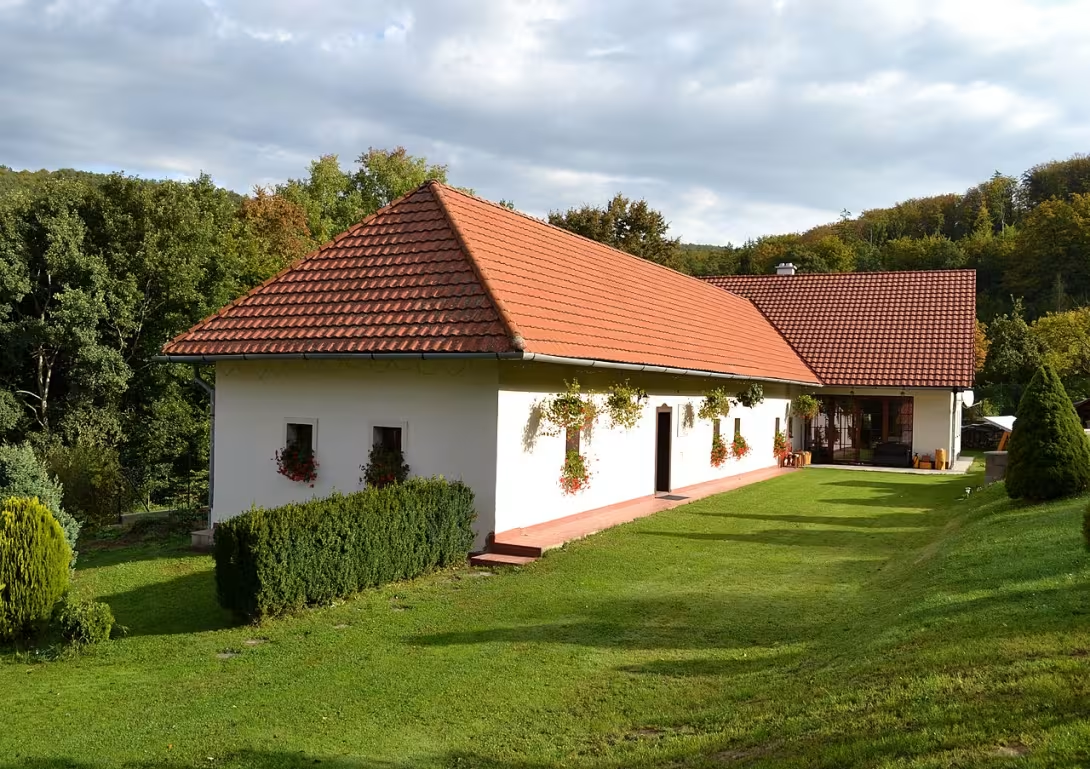

The historical view on the left is a visualisation generated by artificial intelligence and serves as inspiration.
Historical Milestones
- round 1800
- The log building starts to develop in the region.
- 19th century
- Breakthrough period for log architecture.
- 20th century
- Continuing development and maintenance of log structure.
- 2000
- The court peasant is officially registered as a national cultural monument.
Interesting facts
- It is an object of folk architecture from the breakthrough period of the 19th and 20th centuries. - The complex consists of three objects: folk house, barn with stable and economic building. - All objects in the area are built in log structure. The monument is protected as a national cultural monument.
Guide
Show guide text
The text was prepared by artificial intelligence and has not been editorially reviewed. It may contain inaccuracies.
Welcome to the picturesque village Osturňa. You stand right in front of the historical monument, which is the Court of Farmers. Before you take the next step and start walking through the different parts of this place, stop and just feel what you have in front of you. Do you feel the atmosphere? There is something that makes you slow down, delay tired thoughts and pay attention to the environment that has been going on for centuries. Before you lies a settlement that is not just a set of buildings but a living witness to an ancient way of life. Feel the harmony with which these structures were incorporated into the land, and try to imagine how this place worked at a time when it was the heart of the daily struggle for survival.
When you look at the overall picture, you may be surprised at this humility, with which the architecture subordinate to man and nature is associated. Although the exact time at which this court was formed remains unknown in the darkness of history, his presence here speaks with a clear voice. The settlement in this region was not just a place to live. It was a separate unit, microcosmos, which had to provide everything needed for life - from livelihood to shelter to family protection. In this environment, in Prešov region, the character of the people who lived here was formed. The farmer's life was dictated by the rhythm of nature, the rising and sunset, and the necessity of working on the fields that surround you. This court is proof of the constant interdependence between man and his work and the land on which he stood.
Now pay attention to the architecture itself and how the whole settlement is arranged. Look at how individual buildings are distributed in space. Notice it's not random where what's located. Every object, every wall and every space between them had its clearly defined purpose. In traditional courtyards, the key element is often the space that connects all the functional parts - the space that served as the centre of activities, the place of clashes and the place of work. Look at the textures and materials you see. See how buildings operate in the context of the entire courtyard. Although we do not know the names of architects who designed these buildings, we see their genius in simplicity and functionality. Everything here is designed to be practical, to withstand adverse weather conditions and to make maximum use of every piece of rare soil prostor. You see that geometry, that layout logic that makes us feel good and stable.
Although history has not given us the names of the specific people who led this court, nor the stories of individual families who slept here at night and worked during the day, their presence is still there. Every step on this soil, every corner of this settlement was shaped by the hands of unknown people. It was the fathers, the mothers, the sons, and the daughters who built their happiness here and fought with the shocks of fate. These areas reflected their patience, their endurance, and their pride in their own work. Even if their names are wasted on time, their message remains in every border of buildings and every detail of this place. You are standing in a place that has witnessed thousands of small, everyday moments - from the joy of a good harvest to the silent sadness of difficult times. It is this collective memory that you perceive, even if it is not written in any chronicles.
But there's something mysterious in this place. There's this fascinating unknownness here. The unknown exact time of origin, we don't know the faces of the people who lived here, and we don't know the smallest details of their fates. It may seem like a lack of information to you, but it's actually this depth that doesn't know what makes this place so special. This quiet emptiness in the records forces us to our own imagination. The unfamiliarity of chronology does not force us into one particular era, but it allows us to view this court as a symbol of the time that goes on all the time, no matter what we write about it. It's this mystery that gives the place spiritual weight. What happened here centuries ago? What secrets do these walls carry? This question remains unanswered and that is where its strength lies.
Do not forget that this court is not only an isolated object, but an integral part of the wider cultural heritage of this area. It is part of the broader story of people who shaped the country of Prešov region. Now that you decide where to proceed, we recommend you to perceive the whole atmosphere of Osturňa village. Every building, every sidewalk and every view of the surrounding hills tells you a different story about a life that was once much simpler but much more challenging.
Be carried away by this feeling of humility and fascination. Continue your next discovery, go through this space with your attention and enjoy this moment fully in time. The court of the peasant has opened its gates to you, and it is now up to you to find your own answers to the questions that this place has asked you. Thank you for being here with us and for taking part in this journey back to the roots of our history. We wish you a pleasant and inspiring next pass through the entire location.
Tips for visitors
A good time to visit is autumn months. Sunny days allow a good view of the historical settlement and during this period there are fewer visitors.
It is recommended to use public transport or park in nearby villages and continue to the village on foot or by bike.
When visiting the farmhouse in Osturn, we recommend taking sun protection, water and suitable footwear to the backpack. Due to field movement it is advisable to have enough drinking.
Photography is recommended in the morning or evening in light. Historical remains of buildings and panorama surroundings are suitable. When photographing, follow the rules of conservation.
In the vicinity of Osturňa there is a cultural heritage, including the church and other historical buildings. Families with children can visit local parks or programmes in the surrounding villages.
Frequently asked questions
Can the monument be visited?
This is a residential or farm building, not a museum with opening hours. Please view it from public space and respect the owners' privacy. We have no information about access to the interior.
Where is the monument?
Location: č. 35, Osturňa, Prešovský kraj. The map on this page shows the exact spot.
Why is the monument protected?
It is listed in the Central List of the Monuments Fund of the Slovak Republic as a national cultural monument (ÚZPF no. 413-10305).
For children
Hello, little adventurers! Today, we will take the road to the past. Imagine the time 50 years ago. It was during this period that the farmyard was located in Osturni.
Imagine coming back 50 years later. There were green fields around, and trees were roaring. The farmer's court was a place for people who were involved in debauching the soil.
Nearby
🏰 Historic sites (36)
- 700 r. obce 2.4 km
- Padlým rodákom v 1. sv vojne 2.4 km
- Ždiarsky dom 7.1 km web
- Penzión Tatra 7.2 km
- Szałasy 8.3 km
- Pomnik strażaków 8.4 km
- dom Michal Dočolomanský 8.6 km
- Zagroda Sołtysów w Jurgowie 9.4 km web
- Izba Regionalna 9.4 km Księdza Józefa Kosibowicza 13 +48 694477544
- Druhnie Oldze Małkowskiej 9.8 km
- Wozownia 10.4 km
- Miejsce dawnego dworu obronnego 10.4 km
- Zamek Dunajec 10.5 km web
- Zamek Dunajec 10.5 km
- Pawilon wejściowy w Sromowcach Wyżnych - Kątach 10.9 km
- Lovecký zámoček Hohenlohe 11.2 km +421 905 243 618 web
- Zagroda Korkoszów w Czarnej Górze 11.3 km Zagóra 86 web
- Zamek Czorsztyn 11.7 km
- Zamek Czorsztyn 11.7 km web
- Galeria Sztuki Pienińskiej 11.9 km
🍽️ Restaurants and dining (143)
- Pohostinstvo u Emila 1.9 km
- Mocova Koliba Pohostinstvo Pavlik Ján 2.6 km +421 911 835 392 web
- Pizzeria Francesco 4.8 km Świętej Anny 122
- Panorama 6.4 km web
- Hniezdo 6.5 km
- Penzión Kamzík 6.8 km
- Reštaurácia Medvedí brloh Strachan 6.8 km +421919171519 web
- Penzión Ždiaranka 6.8 km +421910999571 web
- Penzion Strachan 6.8 km
- Hotel Sova Ždiar 6.9 km +421 905 926 601 web
- Pizzeria Rustika 6.9 km
- Bufet Livia 7.0 km
- Reštaurácia Goral 7.1 km
- Ždiarsky dom 7.1 km
- Ždiaran 7.1 km web
- Tulipub 7.3 km Hlavná 76/45 +421 949 772 039 web
- Restauracja "Nowak" 7.3 km web
- Bistro Strednica 7.3 km
- Espresso 7.4 km +421 902 390 460
- Strachan 7.5 km
🏨 Accommodation (319)
- Ubytovanie U Emila 2.0 km
- Chata Goral 3.0 km web
- Luxury Chalet Katarinka 4.5 km +421 904 512 113 web
- Pokoje u Danki 5.0 km +48885586899
- Domki pod Sosnami 5.3 km Jutrzenki 21
- Harnaś 5.5 km Świętej Anny
- Hanus 5.7 km
- Vila Janka 5.8 km Spišské Hanušovce 72 web
- No Name Luxury Hotel & Spa 6.0 km Leśna 46 +48 797 502 141 web
- Chata Dana 6.2 km +421905177522
- U Rezbára 6.3 km +421 905 315 658
- Penzion Safran 6.7 km
- Penzión u Pavla 6.7 km +421 907 583 815 web
- Penzión Slovakia 6.7 km web
- Penzion Patrik 6.8 km
- Penzión Ždiaranka 6.8 km +421910999571 web
- Penzion pod Tatrami 6.8 km web
- Privát Za lesíkom 6.8 km web
- Chalúpka 420 6.8 km web
- Penzion Viktoria 6.8 km
🚲 Rentals and sport (38)
- E-bike Strachan 7.3 km web
- Centrum Rekreacji i Wypoczynku "HAWRAŃ" Sp. z o.o. 8.2 km Podokólne 1 +48 696 232 312 web
- wypożyczalnia i szkoła narciarska Ski-Plus 8.3 km Podokólne 1
- Prístav Pltí 10.4 km web
- przystań statków "Dunajec" i "Halny" 10.5 km
- przystań gondoli "Czorsztynianka" 10.6 km
- Przystań źeglarska 10.6 km
- Przystań Spływu Dunajcem 10.9 km
- Prístav Pltí 11.5 km
- Prístav pltí Červený kláštor 11.5 km web
- Przystań gondoli "Czorsztynianka" 11.8 km
- Vito 12.0 km Stylchyn 94
- PTŻ 12.1 km Stylchyn 36 +48 530 523 433 web
- Rafting Pieniny 12.2 km +421 907 477 412 web
- Spider park 12.3 km
- Tri Koruny Rafting 12.3 km web
- Marina Kluszkowce 12.3 km Przedszkolaków 3 +48 609 264 633 web
- FUN SPORT 12.4 km Sportowa 14
- WyskoczNa 12.5 km
- Jacuzzi 12.5 km
🥾 Hiking and nature (382)
- Vŕšok 0.5 km
- Rohová 1.4 km
- Zlomiská 1.8 km
- Malorovka 1.9 km
- Poľana 2.2 km
- Kubuś 2.2 km
- Petrolovka 2.2 km
- Tylki Hawiarskie 2.6 km
- Hora 2.8 km
- Línia zákopov z 2. svetovej vojny 3.0 km
- Lipia Góra 3.0 km
- Rezerwat Niebieska Dolina 3.0 km
- Klęzbarg 3.1 km
- Solisko 3.1 km
- Pod Koszary 3.3 km
- Winterłajd 3.3 km
- Línia zákopov z 2. svetovej vojny 3.3 km
- Pieskowy Wierch 3.6 km
- Kunia 3.6 km
- Línia zákopov z 2. svetovej vojny 3.6 km
Thematic route
1. Courtyard of the Court of Farmers, area. The tour begins in the open space, which connects all parts of the historical settlement.
2. Residential buildings, residential area. Interiors demonstrate the lifestyle and everyday habits of former residents.
3. Houses and economic buildings, economic part. You will find out how crops have been kept in the past and the rural economy has worked.
4. Exposition of folk objects, museum part. The route ends with looking at traditional tools and objects used in this area.
Seasonal recommendations
In the spring in Osturňa will come with a revival of nature and a gentle sunshine, which beautifully highlights the architecture of the farm estate. The valleys begin to green meadows and the air is fresh, creating a peaceful atmosphere suitable for a quiet tour. However, we recommend preparing layered clothing because spring mornings can be even cold and the weather in this region often changes rapidly. Since there are not many visitors in this period, this is the perfect time to observe the historical details in detail without striking rushes.
Summer season brings intense sunlight and full vegetation to the neighborhood, which gives the place a vivid and energetic look. Thanks to the warm weather, the visit to the settlement is pleasant, but higher attendance in the main summer season is to be expected. It is best to come early in the morning to avoid the afternoon heat and crowds of tourists. Do not forget to protect from the sun, the cap and comfortable shoes suitable for uneven terrain.
Autumn visit offers an unmistakable atmosphere thanks to golden colors of wood and surroundings, which complement the historical character of the settlements Dvor peasant. The morning mist in the valleys gives the place a magical, nostalgic touch, ideal for photographers. At this time, however, it is necessary to count on more frequent rain and wind, so take a waterproof jacket with you. It is the best time for those who seek silence and want to enjoy the autumn melancholy in peace.
The winter area in Osturňa turns into a quiet, snowy landscape that contrasts with historical settlements. The snow cover gives the state a dream look, but the environment can be strict and cool. When visiting advent time or freezing days, it is essential to wear warm clothing, including high-quality gloves and strong footwear. Due to the shorter day and lower temperatures we recommend to plan a visit during a bright afternoon.
Visualisations and artistic views


The visualisations are generated by artificial intelligence and serve as inspiration.
Photographs from the area
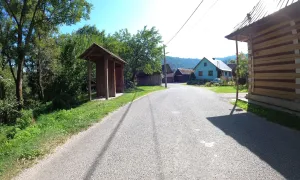
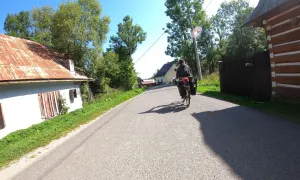
Real photos taken near the monument


Source and licence are given for each image.
Visitor Tips
No tips yet. Be the first!
Log in and add your tip.
Location on Map
More monuments – Osturňa
Show all in the town


Visitor photos
No photos yet. Be the first to add a photo from your visit!
Log in and add your photo or leave a rating.
You get more points for a visit verified in the app — we can tell from the GPS that you are there.
Reviews and comments