








farmhouse Farmer's farmstead
The court of the farmer in the village Osturňa in Prešov region is a national cultural monument. It is an object of folk architecture from the second half of the 20th century, whose origin dates back to 1955.
The area is registered by the Monument Office of the Slovak Republic under number ÚZPF 4190 and consists of three objects. The first of them is the folk house, which was built in 1955 in the log structure according to the principles of folk construction. The second building, registered under the number 4190/2, consists of a barn with a stable of log structure dating back to 1956. The third building, registered under the number 4190/3, is an economic building, built in 1957 also from the log structure within the folk construction.
The monument is located at number 203 in Osturňa. It is protected as a national cultural monument under number ÚZPF 413-4190. The exact location of the area is determined by GPS coordinates 49.32754, 20.22228.
A visit to this area makes it possible to get to know the specific facts of folk construction.
Tehdy a dnes
Drag the slider and compare how the monument might have looked when it was built with the view today.
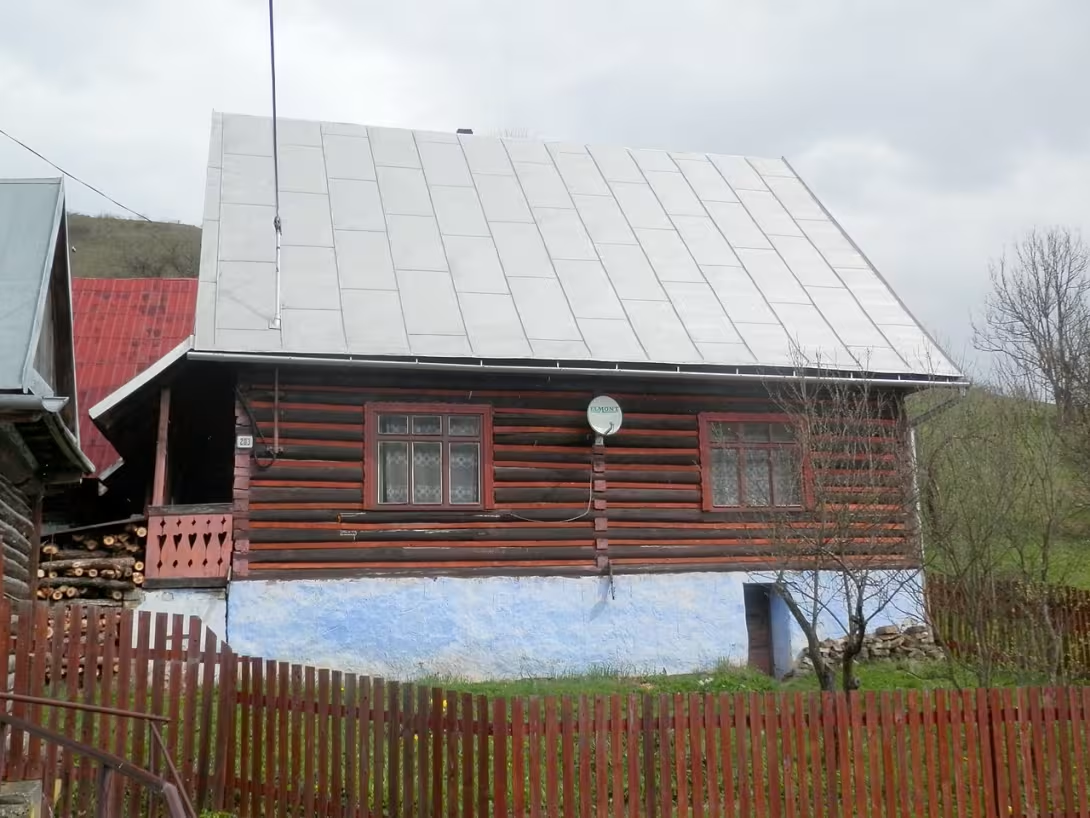

The historical view on the left is a visualisation generated by artificial intelligence and serves as inspiration.
Interesting facts
- The court is a national cultural monument. - It is an object of folk architecture from the second half of the 20th century, created in 1955. - The area consists of three objects: the folk house (1955), barns with stable (1956) and economic construction (1957). - All buildings were built within the principles of folk construction from log structure. - The monument is protected under the number ÚZPF 413-4190.
Guide
Show guide text
The text was prepared by artificial intelligence and has not been editorially reviewed. It may contain inaccuracies.
Welcome to Osturn, in this quiet corner of the Prešov region, where time seems to be stopped and nature slowly takes over everything that remains. You stand before a peasant settlement, a place that has ever been the center of the world for people who have lived, worked and raised their children. The first thing to see when you look at this building is probably a sense of humility before simplicity and functionality. Before you lies a space that is not just a set of walls and roofs, but a witness of thousands of days full of drudgery, hope and constant struggle to survive in harmony with the rhythm of nature.
When we stop at the question of when exactly this settlement arose and who was its builder, we will encounter a deep silence of history. The chronology of this place is not exactly documented and the names of architects, if anyone with such a title existed in the context of the then countryside, were forgotten. It may disappoint you at first glance, but try to look at it differently. It is this unknownness that gives the site a certain mystical dimension. This settlement does not belong to one particular named personality, but it represents the entire professional clergy from this region. It is the embodiment of the collective memory of generations that have built for not fame or recognition, but for the need to hide and manage their economy effectively.
Now look carefully at the overall disposition in front of you. Notice how the settlement is situated in the country. In such areas architecture was not a question of aesthetics in the modern sense, but of survival. Every corner, every wall, every space distribution had a specific purpose. Look at how the building connects with the surrounding terrain. Feel the atmosphere of this court, which has ever been filled with call, animal sounds, and the smell of the freshly prepared earth. Although today you may see only silence and peace, in every detail of the facade and in every connection in the construction, there is a knowledge of how to make optimal use of available resources.
Now let's focus on what you see right in front of you. Look at the windscreens and perceive the texture of the surfaces. Although we do not know exactly in which century the settlement was built, it is clear that its creators understood the materials available to them around Osturn. Note how the building naturally fits into the Prešov region. He doesn't control the neighborhood, but he becomes part of it. Look at the rhythm of windows and doors that talk about the need to keep warm during freezing winter and to provide light for short winter days. Everything here was practical, everything had a purpose.
Although the names of the people who lived here are unknown in historical records, we can imagine their stories. Imagine the mornings when the light first lit and a day full of work began. Here lived people for whom the earth was everything. Their lives were not written in books, but they were engraved in this land and in the walls of this settlement. Each of us standing here today becomes part of their invisible story. These walls witnessed the birth of children, the celebrations of the harvest, but also the difficult times of hunger or sickness. It is fascinating to think that, although we do not know what they were called, their track in the country is still present and we can perceive it tangiblely today.
Nynya, pay attention to one interesting thing that may seem to be a banality at first sight, but it is actually the key to understanding this place. The mystery of this settlement is just its anonymity. In today's world, we are used to everything having to have its date, author and exact description. But this is different. This peasant settlement is like an open book in which some parties are ripped out, but the overall story is still readable. It is this absence of specific names and data that makes us more involved in our own imagination and seek answers in the architecture itself and in the Spirit of the place, the so-called genius loci. It is an invitation to meditate on what really remains in life. Work remains, responsibility toward the earth, and simple efforts to provide a safe home for the family.
Now, when you look around, see the contrast between the silence of today and the dynamics that had to reign here tens of years ago, perhaps hundreds of years ago. Note how light flows through the surfaces of the building and how the perception of space varies according to the angle from which you view the settlement. Every step you take around this monument may reveal something new to you about how it lived in the rural area of the Prešov region.
Before I say goodbye and leave you in the silence of your own thoughts, I would like to invite you to one last thing. Try to stop for a moment, close your eyes and just listen. Listen to the wind that flies through Osturne, and imagine that the same wind was blowing through this court even when children first knelt or when the fate of the entire economy was decided. This settlement is not just a dead object, it is a living bridge between us and our ancestors, whose names we have forgotten, but whose work we still see.
That concludes our short tour of this farmhouse. Now you can continue to explore this fascinating place in peace and unescorted. Let your curiosity guide you, take note of the details that will interest you, and allow yourself time to meditate on the simplicity and power of human life in harmony with nature. Thank you for your attention and I wish you a peaceful and inspiring stay in Osturni. Let this place address you and remind you of the value of the roots and quiet work that built our country. I say goodbye to you and wish you a pleasant rest of the day.
Tips for visitors
The best time to visit a peasant settlement is in the autumn months when the climate is more favourable. This time of year offers mild light suitable for photography. It is recommended to use public transport or park near the nearest village and move to Osturny pěšky or bike. When preparing to visit, take protective clothing and suitable footwear. Photographic equipment is useful for capturing ancient buildings and landscapes. Photo places are the best in the basic settlement where panoramic furniture can be captured. In the vicinity of Osturna it is possible to visit history and natural wonders. You can discover human history or enjoy a peaceful rest in a small village. It is suitable for families with children to visit places for natural activities and short walks.
Frequently asked questions
Can the monument be visited?
This is a residential or farm building, not a museum with opening hours. Please view it from public space and respect the owners' privacy. We have no information about access to the interior.
Where is the monument?
Location: č. 203, Osturňa, Prešovský kraj. The map on this page shows the exact spot.
Why is the monument protected?
It is listed in the Central List of the Monuments Fund of the Slovak Republic as a national cultural monument (ÚZPF no. 413-4190).
For children
Hello little adventurers! Today I am introducing you on amazing trips to the past, exactly 71 years back, when one of the most interesting historical monuments in Osturňa began to be built - this is the peasant settlement Dvor peasant. If you imagine you're a gamer of cattle and you want to build your villages to be like the right country, you'll understand why this place has become a complete wonder.
Nearby
🏰 Historic sites (29)
- 700 r. obce 1.2 km
- Padlým rodákom v 1. sv vojne 1.2 km
- Szałasy 5.0 km
- Zagroda Sołtysów w Jurgowie 6.3 km web
- Ždiarsky dom 7.0 km web
- Penzión Tatra 7.2 km
- Lovecký zámoček Hohenlohe 8.3 km +421 905 243 618 web
- Zagroda Korkoszów w Czarnej Górze 9.2 km Zagóra 86 web
- Pomnik strażaków 10.4 km
- dom Michal Dočolomanský 10.7 km
- Kościół pw. Świętej Elżbiety Węgierskiej (dawny) 10.8 km
- Miejsce dawnego dworu obronnego 11.7 km
- prof. Alfred Grosz 11.9 km
- Ściana Pamięci 12.1 km
- Izba Regionalna 12.1 km Księdza Józefa Kosibowicza 13 +48 694477544
- Druhnie Oldze Małkowskiej 12.4 km
- Wozownia 12.6 km
- Zamek Dunajec 12.7 km web
- Zamek Dunajec 12.7 km
- Lukáš Mánek 12.9 km
🍽️ Restaurants and dining (127)
- Mocova Koliba Pohostinstvo Pavlik Ján 1.0 km +421 911 835 392 web
- Harwań 4.9 km Podokólne 1
- Szałas nr. 3 5.0 km
- Pohostinstvo u Emila 5.2 km
- Reštaurácia Medvedí brloh Strachan 5.8 km +421919171519 web
- Penzion Strachan 5.8 km
- Penzión Ždiaranka 5.8 km +421910999571 web
- Penzión Kamzík 6.0 km
- Bistro Strednica 6.0 km
- Pizzeria Margo 6.2 km Jurgów 194 +48 667 484 991 web
- Hotel Sova Ždiar 6.5 km +421 905 926 601 web
- Pizzeria Rustika 6.6 km
- Bufet Livia 6.7 km
- Ždiaran 7.0 km web
- Ždiarsky dom 7.0 km
- Reštaurácia Goral 7.1 km
- Pizzeria Francesco 7.2 km Świętej Anny 122
- Karczma "Koziniec" 7.8 km Nadwodnia 170
- Restauracja "Nowak" 8.0 km web
- Panorama 8.2 km web
🏨 Accommodation (332)
- Luxury Chalet Katarinka 1.4 km +421 904 512 113 web
- Pokoje u Danki 2.5 km +48885586899
- Ubytovanie U Emila 5.2 km
- Mountain Resort Apartments 5.7 km +421 911 109 202 web
- penzión Vasko 5.7 km
- Mountain Resort Chalets 5.7 km +421 911 109 202 web
- Mountain Resort River 5.8 km +421 911 109 202 web
- Tatrzański Biegun 5.8 km web
- Penzión Ždiaranka 5.8 km +421910999571 web
- Penzion Perla 5.8 km
- Drevenica Anka 5.8 km
- Penzion Safran 5.8 km
- Noclegi "U Gieni" 5.9 km Potok Bryjów 39A +48 18 207 78 63 web
- Zbójnik Na Klinie 5.9 km Potok Bryjów 45 +48 182077854
- Penzión Slovakia 5.9 km web
- Penzión u Pavla 5.9 km +421 907 583 815 web
- Penzion Patrik 6.0 km
- Chalúpka 420 6.0 km web
- Penzión Michal 6.0 km
- Chata Goral 6.0 km web
🚲 Rentals and sport (34)
- Centrum Rekreacji i Wypoczynku "HAWRAŃ" Sp. z o.o. 4.9 km Podokólne 1 +48 696 232 312 web
- wypożyczalnia i szkoła narciarska Ski-Plus 5.0 km Podokólne 1
- E-bike Strachan 6.1 km web
- FUN SPORT 9.2 km Sportowa 14
- corny staw 9.3 km
- Letnie mocydełko 9.3 km
- cepersko płań 9.3 km
- jaskinia nad Porońcem 9.3 km
- Dzika rzeka 11.1 km
- Studnia zimnej wody 11.1 km
- Niecka ze śniegiem 11.1 km
- Grota sztucznej fali 11.1 km
- Wodny plac zabaw 11.2 km
- Dmuchańce 11.2 km
- Slide 11.2 km
- Wypożyczalnia Nart U Maćka 11.9 km Pod Grapą 22a web
- Przystań źeglarska 12.6 km
- przystań statków "Dunajec" i "Halny" 12.7 km
- przystań gondoli "Czorsztynianka" 12.7 km
- Spider park 12.9 km
🥾 Hiking and nature (386)
- Línia zákopov z 2. svetovej vojny 0.2 km
- Línia zákopov z 2. svetovej vojny 0.3 km
- Línia zákopov z 2. svetovej vojny 1.1 km
- Línia zákopov z 2. svetovej vojny 1.1 km
- Línia zákopov z 2. svetovej vojny 1.6 km
- Línia zákopov z 2. svetovej vojny 2.1 km
- Línia zákopov z 2. svetovej vojny 2.1 km
- Bystrý vrch 2.1 km
- Petrolovka 2.2 km
- Línia zákopov z 2. svetovej vojny 2.4 km
- Przełęcz nad Łapszanką 2.5 km
- Holowiec 2.6 km
- Rezerwat Niebieska Dolina 2.8 km
- Brija 2.9 km
- Pieskowy Wierch 3.0 km
- Okrúhla 3.0 km
- Malorovka 3.3 km
- Črchľa 3.3 km
- Vŕšok 3.4 km
- Rohová 3.4 km
Thematic route
This cruise route is designed for an interesting area around the farmers' settlement Dvor peasant in the village Osturňa, which is part of Prešov region.
1. Peasant's Court Type: Farmhouse Proč is worth a visit: This historic courtyard represents traditional Slovak roulnica architecture. Visitors here can get an overview of life and work processes on the sidelines in the past.
2. City Park in Osturňa Type: Park Proč is worth a visit: The picturesque city park is located after a short transition from the Court of Farmers. Ideal for relaxation and walks.
3. St. Michael's Church Type: Church Proč is worth visiting: This church presents Renaissance architecture, making it an important destination for lovers of history and culture.
4. Osturna Castle Type: Lock Proč is worth a visit: This castle offers a view of the historic dwelling and its surroundings, with beautiful panoramic countryside.
5. Bakery in Osturňa Type: Local bakery Proč is worth a visit: This local business offers special local products that are an important part of regional cuisine.
This route proposal provides an insight into the historical and cultural aspects of the area around the Court of Farmers.
Seasonal recommendations
Jaro: In spring, the farming settlement in Osturne is surrounded by flowering greenness. Morning sunshine paprus refresh ancient buildings and create a romantic atmosphere that is suitable for photography. Wearing clothing suitable for colder weather is recommended, as it may still be cold in the morning. The best time to visit are the initial hours.
Leto: In summer, the farming settlement in Osturňa is full of life and light. Long sunny gouts allow relaxing walks in green fields around the monument. The atmosphere is warm and friendly, making it popular among visitors. It is recommended to wear soft clothing and sunglasses. The best time to visit is morning morning or afternoon to avoid larger crowds.
Podzim: The podzim period brings changed colors to the farming establishment. The leaves on the trees change in the pink, yellow, and orange cuttings, providing a varied background for photographic moments. The atmosphere is calm and quiet, ideal for people looking for escape from sensitivity to sunlight. Wearing a little warmer clothes is recommended due to colder weather.
Winter: In winter the farming settlement Osturňa turns into a peaceful and quiet oasis. Iced fields and trees that reveal their structures without leaves form a view of ancient buildings. The atmosphere is nice and calm, making it the perfect time for a quiet visit. Wearing warm clothing, including hat and protective furs, is recommended. The best time to visit are the initial hours, as they can open early.
Visualisations and artistic views


The visualisations are generated by artificial intelligence and serve as inspiration.
Photographs from the area
Real photos taken near the monument

Source and licence are given for each image.
Visitor Tips
No tips yet. Be the first!
Log in and add your tip.
Location on Map
More monuments – Osturňa
Show all in the town




Visitor photos
No photos yet. Be the first to add a photo from your visit!
Log in and add your photo or leave a rating.
You get more points for a visit verified in the app — we can tell from the GPS that you are there.
Reviews and comments